Trauma Tropes and the Lies They Tell: Part 1 Traumatized Person Cured by Love, and Curing Cursed Touch Aversion

Author’s Note: I have been mulling over this one for a while, and there might be a second part to it to talk about another trauma issue, but I wanted to start here. With the dark book of my heart glitzed by 1920s glamor finally finalized, and sent to my agent, trauma thoughts loom. Bringing me here before the next unpacking.

As always, I remind my readers what follows is my opinion only, subject to bias and change, wrongness and flaws. I write (and read) through the western lens of American traditional book publishing. While I have C-PTSD, AuDHD, and touch aversion, I’m not a monolith and cannot speak to experiences besides my own. I don’t intend this to be definitive advice or an opinion representing the whole of any group, nor to be extrapolated beyond the groups described.

CW/TW: Discussion of C-PTSD, assault, abuse, etc. no graphic on page description; discussion of some of these themes and issues in fairytales and YA and Adult Fantasy (with plot overview of the works); minor description of effects of triggering media.


First, Definitions…

Before we begin, I want to address one of my personal pet peeves: the rampant overuse of the word trope. Which is kind of hilarious if you consider what a trope is.

Literary Trope: Traditionally, a literary trope is basically using a figure of speech for artistic effect. This is NOT what people mean when they say “only one bed” or ask what tropes you’ve included in your latest work in progress.

Narrative Trope: Narrative tropes are seen most commonly in genre fiction and can be character foils, plot devices, themes, motifs, storylines, or the like. Some are genre-specific (for example “only one bed” in romance is a plot device trope while “femme fatale” in crime is a character foil trope). These are what I mean when I say the word “trope” is overused. They’re also what I (and most of the rest of the commercial genre fiction world) are referring to when they use the word “trope.”

How does a Trope become Trope-y?

A trope becomes a trope when it’s used frequently enough for people to recognize it. Which is… pretty generic and probably why the word is easily overused.

Which leads me to the two ways I see it overused most commonly:

  1. Used too Broadly: The “trope” is defined as large chunks of something in the relevant genre. Example: One time, I saw someone say they were tired of the “royalty” trope in fantasy. This is… not a trope. “Royalty” isn’t really a character foil (“evil stepmother” is) or a plot device (“palace intrigue” meets that trope requirement). Royalty is just a swooping category of people commonly found in SFF books.
  2. Used Too Narrowly: The “trope” is too specific to be used enough to become a trope. Example: I recently saw someone complain they hated the “get kicked out of the hero’s party to discover you have an ability then do whatever you want” trope. While mildly hilarious, and probably this person is a fan of TJ Klune (same), I do remember looking around and asking, “Is that a trope? I don’t think I’ve ever seen that?” Dear reader, if takes you more than three to five words to say it, it probably isn’t a trope. Also, it does have to be understood to be a trope by the vast majority of the consumers of that genre. Otherwise, it might just be a few books where that weirdly specific thing happened, and it irked you, which, while valid for you, does not make it a discourse.
Black and white photo of a dragon perched atop a second story balcony, mouth open in a scream.
© Sean Thomas on Unsplash.
Dragons = too broad; Dragons the size of dogs who talk and are related to humans = too specific; Dragons attacking the castle = JUST RIGHT. YOU FOUND A FANTASY TROPE.

Why Do I (or should anyone else) Care?

Well… because in addition to tropes being handy for marketing purposes, they’re also handy for other groupings. Like addressing problematic issues and systemic discrimination in our work. Think: “Kill the gays;” “Black character dies first;” “Hurt people hurt people,” “Fat person is lazy” etc. etc. It’s important that genre writers know what tropes exist in their genre, and when those tropes can be problematic, so the author can choose to avoid (or subvert).

It’s also important we know what is too large or not large enough to facilitate this discussion. Losing sight of this can mean creating blow-ups that result in hurting those who are writing good and needed representation.

I saw this sort of happen with the “sexual assault” trope discourse awhile back. There was very little discussion of nuance. A majority of what I saw was, “No more. It’s cancelled.” Nevermind the statement was too broad to properly be a trope, the missing crucial pieces of this potential harmful plot device being things like: “pointless and gratuitous” sexual assault or sexual assult “to prop up a male character’s development.” Nevermind that many of the narratives out there were written by men, and cancelling this narrative meant silencing women, including women like me: survivors of sexual assault. POC talk about this frequently as well even within the context of non-harmful tropes like “vampires” and “elemental magic” being declared dead before they get a bite of the apple.
Photo of a brown girl with long black hair in a black gown sporting black wings standing in front of a dragon statue, hands pressed to chest, looking into the distance.
© Andre Sebastian, Unsplash
Listen, I never really cared for the angel/demon story (another dead for now trope in fantasy), but I would sign up to read this woman’s fall from grace.

I say this all because I want to be clear my intent with the following is not to set off a red alarm leading to “no more.” More is wanted. Needed. Desperately. However, I want the more that comes to be thoughtful, because from what I’ve seen, these… issues, let’s call them, have not always or arguably often been handled with care. I want discussion on ways to change that without ending anything.

For that reason (and because I’m not sure these things even are tropes), I will not call anything in this blog a “trope.” (Despite my clickbait title; sorry, I’m a sucker for alliteration.)

Get to the Point!

Right, so. The general concept is: fantasy books that feature love as a cure for trauma. Second to that is a magic or curse that creates touch aversion and how that is either cured or worked around by the love interest.

Once Upon a Time, I called this entire construct the “Broken Girl Cured by Love” trope, but I have learned that is (a) too gendered; (b) not the kindest categorization of very serious mental health issues (including my own); and (c) as I mentioned, maybe not a trope (or at least not the touch aversion part).

Part A: Traumatized Person Cured by Love

In general, I define the traumatized person cured by love issue to be one where a character (usually female but not always) suffers a serious trauma(s), is rescued by The One, and is instantly cured of all the issues that come with trauma. No more nightmares. No more anxiety. No more agoraphobia. No more hypervigilance. No more touch aversion. Just butterflies and rainbows, engagement and weddings and babies. Tada!

If you can’t think of a fantasy where this happens, you’re not thinking hard enough, or you’re not entirely familiar with trauma.

Fairytales, Trauma, and Damsels Cured by Kisses

There’s a reason I return to retelling fairytales time and time again. A reason they’re the core of my Adult work but not my YA. My relationship with them is as messy as the trauma we’re both steeped in. They’re comforting and damaging. Amidst my violent childhood, they were a safe space, but only because they normalized everything around me that was so unsafe. They, like me, need to grow up, reimagine themselves, and start anew.

I’m not even talking about the older, darker versions of the tales. I’m talking about what I grew up with, what I watched and read. Snow White, an orphan, is sentenced to death by her evil stepmother for being… pretty? The huntsman can’t bring himself to kill her, though, also because she’s… pretty? Then she goes to live with seven strange men in a shoddy hut to… clean for them? Despite being a princess. Then she’s poisoned and basically dies. Until TADA her Prince comes, kisses her without consent, wakes her up, and BOOM! Hello wedding bells, goodbye trauma.

Cinderella, a movie I watched so much as a child my first imaginary friends were named GusGus and Jaq (after the mice in the movie), has a similar plot. Orphan girl, evil stepmother, cleaning, torture, poverty, pain, emotional abuse until TADA! Her literal Prince Charming (that’s his whole name) saves the day. Nevermind he can’t tell what the woman he spent a whole night dancing with looks like without having a shoe fit her. Apparently.

And don’t get me started on Beauty and the Beast. All I remember about that movie is crouching behind the couch, whimpering during the scene when the Beast screams at Belle over his damn rose. Because the noise of a man screaming at a woman was already too much for my five-year-old ears. I hated that movie. To this day, I can’t watch it, nor will I ever be able to relate with the bookworms who answer with, “Belle, duh!” to every survey question or Twitter poll about what Disney princess would you be. Not when all I can think of is five-year-old me behind that couch my mom won on a radio giveaway, clutching my hands to my ears, eyes shut, waiting for it to be over.

Fantasy: From Damsels to Warriors (Who Still Need Sex as Saving)

This issue followed me from my love of fairytales to my love of fantasy. Women who are sexually abused and emotionally manipulated? No worries, their handsome, roguish man of the dark comes to rescue them and BAM! The nightmares are over. Safe in his arms for the first time she can remember. Warrior squires who vomit after their first kill, sword trembling in their hands as they charge into battle? No big deal, their handsome knight and lord will take them into their tent later and soothe their fears… with sex.

Love conquers all, right?

Yeah, right.

Photo of a white woman with white hair in a black and red gown and black cape, laying on a forest floor near a large stump, a sword hilt pressed to her cheek.
© Dmitry Vechorko on Unsplash
Most likely to seduce you, then carve out and consume your heart. That’s the woman I write now.

Part B: Curing Cursed Touch Aversion

This one is a sort of subset of the first, but perhaps too specific to actually be a “trope.” However, I’m starting to see more of it, and as someone who has real life touch aversion caused by trauma, who also has a real live book going on submission that tackles these issues, it’s time for me to dip my toes into the trauma trope do-not do pond.

In fantasy, magic systems are built on the backs of all kinds of wild and whacky things. That’s one of my favorite things about fantasy. Some of these systems are great, some of them aren’t. Some of them can be done right in the hands of some and abused in the hands of other. Not unlike well, any weapon in the hands of those more powerful. And never doubt words can be weapons. But they can also be balms.

Characters who have some kind of magic or curse that prevents them touching and/or being touched is definitely a “proceed with caution” magic system. Because there’s really no way to do it without invoking in real life touch aversion. A thing people (like me) struggle with on a daily basis.

There was a time I used to read every book I saw that had some kind of touch-based magic in it, desperate to read a character like me. Now, I almost never read these kinds of books. I find it’s rare to have good representation of touch aversion, and worse, these magic systems and curses almost always have either a cure or an “exception” for love.

What I mean by that is any character who has a curse or magic that causes them to be unable to be touched or be afraid of touch but OH WAIT, the love interest turns up, and oh, isn’t that strange, THEY’RE TOUCHABLE. Or oh wait, the love interest has the perfect counterbalance magic or curse to the one preventing touch, and TADA! No more touch aversion (because apparently the ability to touch one whole human rids you of something preventing you from touching everyone else). Which leads to the oh-so-often addition of, “It’s so sexy I’m the only one who can touch you,” the strong male love interests says in a growl. Just what we wanted, some manic pixie dream girl action.

If you couldn’t tell, this is… not the the representation I’ve been waiting for. If the love interest cures the curse or “saves” the character from their magic, it’s possibly worse.

Photo of a white girl with blond hair in a blue robe, curled in on herself, submerged in water amongst jellyfish.
© Alice Alinari on Unsplash
MC: My jellyfish are the only ones who understand me, but it’s so lonely in the deep, what with my skin that paralyzes anyone who touches me. LI: DID I MENTION I HAVE MAGICAL VINEGAR SKIN TO COUNTERACT YOUR VENOM?! (Despite that being absolutely pointless and serving zero other plot purpose.) Damn, you’re so hot, you sad, lonely, desperate for touch orphan princess. I definitely won’t manipulate you or take advantage of the fact you have zero other choices. (It’s fine to have no agency when it involves A Soulmate, after all, just not when it involves our author’s first 5-10 sample pages). Trust me.

Part C: How These Things Cause(d Me) Harm

The reason I created a separate section for the harm portion of this program is because I can’t really talk about one of these issues without talking about the other. Not when it comes to my lived experience. Which is the only lived experience I can talk about, but I suspect I can’t be alone.

I have C-PTSD and AuDHD so it’s difficult to say where exactly the touch aversion came from. Would it have existed without the early childhood trauma? Maybe. Maybe not. Maybe it wouldn’t have been the terrible beast it is today. But if you learn anything in trauma therapy, you learn it’s not really worth it to linger on the endless spiral of maybe. I’m touch averse and traumatized. And still alive.

I have a complicated relationship with my touch aversion. The complication is why I think it’s important to have real representation out there. It’s possibly why bad representation has caused me harm. Some folks don’t mind being touch averse. I am not them. I hate it. If I could rid myself of it, I would.

Enter my childhood media whispering a promise of a cure. If only I could find The One.

It might seem ridiculous to think of an adult (even a young adult) dreaming of a whirlwind romance that would cure her of mental illness, but long-term pain makes us desperate. Don’t believe me? Check out some chronic back pain forums to see the shit people try for any small relief. Honestly, look no further than the current opiod epidemic in America.

When I was young, a piece of the child I was or could have been fractured inside me. There she still lives, hidden and sheltered behind massive walls I’ve spent years building and tearing down only to rebuild and tear down again and again. Sometimes, in between demolition and construction, I see her. Not often. More often, I feel her. My own Rapunzel, trapped in her tower, waiting for someone to save her. Now, I know that someone must be me. When I was in my late teens and early twenties, I thought it had to be a man. (Yes, always a man, despite my own sexuality, another blog for another day).

Photo of a girl in a white dress, not facing camera, with long dark hair, looking out through a castle's stone opening into bright light.
© Sean Pierce on Unsplash
What a beautiful fairytale… about a girl in a cage.

Because part of me was emotionally delayed (thanks, trauma), and I live by a rule-based system (AuDHD), I was easily convinced into believing there was a step-by-step process to curing myself of my touch aversion, my night terrors, my agoraphobia, my misery.

Go out. Endure. Find The One. Let him seduce you. Smile when you’re sad. Live Happily Ever After.

But how would I know when I’d found The One? The books I’d cherished gave me a rule for that too: He wouldn’t trigger my touch aversion. He’d be the person I could finally sleep soundly with, encircled in his arms. With him, there would be no nightmares. Only dreams. Obviously.

Right.

I don’t think I have to, nor do I want to, spell out how that formula led me to some seriously fucked up situations. Places I wasn’t safe. People who abused me, manipulated me, beat me. Worse. Then the behaviors to numb it all, so I could hunt again. Only to be abused again. On and on. For years.

Trauma is a hell of a drug. But so, as it turns out, are fairytales.
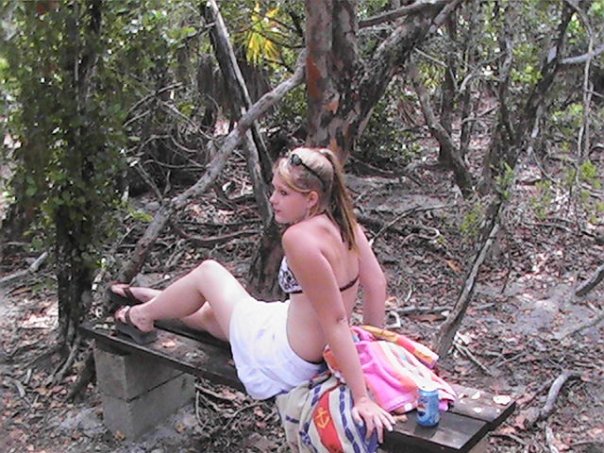
Photo of a white girl (me) with blond hair in a biking top and white skirt sitting on a bench in a forest.
Actual photo of me during this period of my life. The second comment on my Facebook to this day is from a guy who used and humiliated one of my best friends and warns me to “look out for the r*pist behind [me]!” Real Prince Charming.

Part D: Getting It Right (According to Me)

When it comes to trauma and touch aversion, I’m not someone who believes you must have a diagnosis to write characters with trauma or touch aversion. All I ask is authors write with sensitivity and ask for help from people with lived experience before they put anything into the world. To me, representation isn’t about the author, it’s about the character and the reader. If the character reads right to the readers who need the representation, that’s a win.

I would love to go back to the days when I eagerly grabbed books off the shelf and threw them into my buy basket for simply referencing touch or trauma. Of course I would love for my own book featuring a traumatized, touch averse character to be published, but if it isn’t, I want someone’s book to be. Because we need more. A lot more. There’s too few books tackling these topics. Touch aversion especially. Even fewer that do it well.

Who Already Does it Right:

Kaz Brekker in Leigh Bardugo’s Six of Crows gets touch aversion and trauma right. I believe, despite some controversy, that Suzanne Collins’ The Hunger Games series did right by trauma. Marissa Meyer’s Heartless will always be one of my favorite trauma depictions of all time. Melissa Bashardoust’s Girl, Serpent, Thorn gets cursed skin right. Helen Hoang’s The Kiss Quotient (adult romance) gets touch aversion from ASD right.

Of course there are more, especially where trauma is baked in but not the focal point. I think of books like Crown of Feathers by Nicki Pau Preto where the main character wields her kindness and compassion as a weapon against her abuser, and This is How You Lose the Time War by Amal El-Mohtar and Max Gladstone where love persists despite abuse, growing stronger, healing the world if not the lovers, and Maggie Stiefvater’s The Raven Cycle where love and trauma are both thrumming beats of the narrative without love overwhelming trauma to become a magical deus ex machina cure to wrap the characters in their very own happily ever after bows

There are not many I can think of beyond those mentioned that do touch aversion well. Or not that I’ve read. To be fair, this might be because I’ve read enough deeply disturbing narratives where touch aversion is some kind of “madness in the blood,” or “evil,” or the character is treated as damaged goods, or seen as a manic pixie kink because he (sorry, it’s usually a he) is the only one who can touch her (and yes, it’s usually a her) without her getting sick/maimed/killed. Where it’s a sign of “claiming” or dominance. And she loves it.

Photo of a white man with his head bowed and a bun and a white cloak, wearing armor but only from waist down, one hand on shield, other on sword. 
© Gioele Fazzeri on Unsplash
You know the guy I’m talking about. This guy (or some immortal derivative thereof).

My relationship with this latter point is messy. Once upon a time, I loved books like that. Loved them so much I thought I could wish myself into them. I remember twelve-year-old me lying on my front lawn, a quiver of arrows at my hip, my bow and arrow strung around my back, ignoring the pain of the wood in my spine as I pressed a book to my chest and squeezed by eyes shut, whispering into the sky, begging God or whoever was listening to take me away. To whisk me into my book. Into my own adventures where I could finally find love. A cure. Someone to tell me what to do.

Books like this gave me hope. They were wish fulfillment. In my darkest days, they made me believe in something. Books like this are dangerous. They fulfilled the wrong kind of wish. Pushed me to rely on everyone except myself. Made me look to external sources of validation and guidance. Stripped me of barely-born agency I was all too eager to give away because that’s what trauma does. Made it all too easy to believe in the easy thing, not the right thing. What I needed was a bit more real and a lot less sexy.

I needed someone to write me a story of the traumatized person healed by self love.

Some might not want or need healing. They might see their touch aversion as a strength, even. But me? While I see now there isn’t a cure, I’m happy to take healing.

Yet, if I had magic, I would magic this away. If true love’s kiss would do the trick, I’d kiss a bushel of frogs to find my The One True Prince and a night full of dreams instead of nightmares. So it’s hard to begrudge authors this narrative. It’s hard to say “stop” writing those stories that once gave me something to cling to.

Instead, I’ll say, please think. Ask. Learn. Be interested. The traumatized are not your kinks. Or plot devices. No one, but especially not women, need to be hurt to teach their male counterparts a moral lesson about “gee, wowie, women are whole humans, too!” How hot we are isn’t what gives us value any more than our ability to keep a clean house. We aren’t here to be saved so the handsome love interest can get a handy in gratitude. In fact, we don’t need to be saved by a love interest at all. We need healed, and the only ones who can do that is… us. We need that to be just as sexy.

Traumatized person healed by self love. Prince(ss) Charmings optional.
My Pedantic Prose

Author’s Note: First, sorry I’ve been a bit MIA, things at the 9-5 have been hectic! Now, about the following blog: To be totally candid it was originally drafted in a moment of late night, desperate sadness that turned to fury. I’ve subsequently edited it, pulling back on fury to add what I hope comes across as tongue-in-cheek humor at the forefront before asking what I intend to be genuine discussion questions about the lens through which we view not only Adult SFF but literature in general. This piece is primarily about internalized sexism but also touches on race and other marginalized identities. I caveat that I’m female and neurodiverse but not a monolith. I’m also white. This not an attempt to speak on behalf of voices that are not my own but instead to recognize them. Wherever I use the word “woman” please understand this to include trans women and anyone who identifies with or as a woman at any time, including but not limited to nonbinary and gender fluid folks (if there’s a wish to be included!)

To the extent the argument you might put forward in defense of the alleged “dumbing down of fantasy” trend is due to a flood of white women authors entering the market, I make no argument contrary to the actual facts. Those are that the market continues to be depressingly white. I do intend to argue, however, that any argument that women writers of any race or color who include love, romance, sex, or less traditionally “intense” topics in their Adult SFF somehow leads to the “dumbing down of fantasy” begs a critical re-examination for potential internalized sexism. This point is not expressly stated in the piece as I attempt instead to pose questions for consideration, but I don’t want it to go misunderstood or my position on this issue misstated.

TW/CWs: Opaque references to internalized ableism, sexism, racism. Quote from Moby Dick containing offensive language relating to Indigenous Americans and those of Persian descent.

Length Warning: This uh… got out of control. Apologies and congratulations to anyone who makes it through.

pe·dan·tic

/pəˈdan(t)ik/

adjective

of or like a pedant.

An insulting word used to describe someone who annoys others by correcting small errors, caring too much about minor details, or emphasizing their own expertise in some narrow or boring subject matter.

Merriam-Webster online

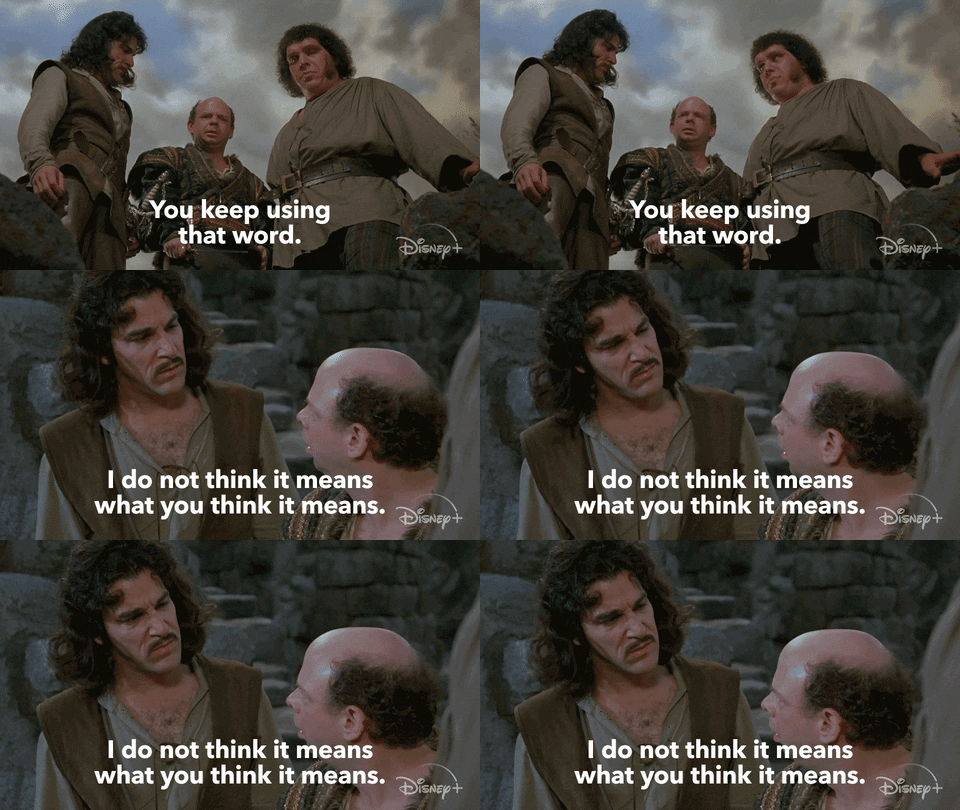
I don’t think this word means what people think it means.

GIF from Princess Bride. Three men, a swordsman, a bald man, and a tall man, look down, the swordsman says, "You keep using thatword. I do not think it means what you think it means." 
Copyright: Disney
Sourced via: GIPHY
You had to know this was coming, right?

I’ve seen it bandied about a few times lately, mostly to describe a trend in Adult SFF toward publishing books that are more accessible to different groups of readers. As in, “I’m so sick of books that read too YA with their pedantic dialogue.” Or, “Can’t anyone read anymore? All these books are so short. In my day, we all read 350,000 word Robert Jordan books in one sitting and waited eagerly for the next!” Or, “My hot take opinion is adult SFF these days is being dumbed down by this trend toward a certain type of book.” Certain type. Yeah. Avoid the comments to those ones if you: (1) know what they’re hinting at; (2) disagree; and (3) are near breakable things.

Good old fashioned elitism, right? How you never cease to amaze me with your inability to do a google. Who needs to google when there’s yelling on Twitter, eh? It’s not like you’re making a hugely elitist literary argument in favor of the “smart” side while using language incorrectly or anything, psh! What a nitpick. To correct you might be well… pedantic.

That Trend, Those Arguments, My oh My

While we’re here, let’s talk about that trend and those arguments.

First, call the spade the spade. The trend is romantasy. Maybe cozy fantasy, too. The argument can be couched however people want to spin it, but here are some of fantasy’s most favorite hate hits: books with protagonists (don’t you know they’re almost always women) who are too “voicey” and/or “immature”; authors who use prose that’s too simple or “commercial” (the calamity! being commercial in business-to-consumer commerce!); authors who don’t write “beautifully”; stories that “feel too YA” (I know you’re shocked to learn it’s female protagonists targeted here, too); short books that “dumb down the genre” (it’s almost like authors are aware of the cost of paper and the demands of their target market or something…), and not a small number of other similar things.

If it walks like a duck and talks like a duck it’s probably a duck.

The argument is elitism. Sexist elitism. My favorite kind.

Photo of a map of Middle Earth with a copy of the Hobbit, a bookmark with a Tolkien quote, a dagger, and white, orange, and yellow flowers.
(c) Aimee Davis @writingwaimee on Instagram
White. Check. Dude. Check. Dead. Check. Faaaaaaancy. P.s. I’m mostly trying to use my own photos at this point because I truly cannot tell what is AI and what isn’t (that’s a me thing not an artist thing, I know you can definitely tell if you know what you’re looking for, but I’m totally clueless on this front and am thus favoring caution).

I’m putting the YA feel and voice/immaturity arguments aside for another day lest this blog become a thesis paper. Instead, I’ll focus on the prose concepts and how we determine what makes a book “smart” or “one of the greats” versus one that apparently single-handedly and without ceremony seeks to destroy via stupidity not only several hundred (arguably thousand) years of sacred literature but quite possibly an entire society. I mean honestly, what’s next? First they canceled cursive, now 500 page tomes, where will it end?

Prose (Pedantic or Otherwise)

What constitutes beautiful prose is subjective, that’s what makes writing art. However, you’ll find in elitist circles *coughlitficcough* there’s certain base criteria for beauty or at the very least what constitutes “great” literature. Can you argue over its meaning? Does it have an ending or passage that leaves you looking like Rodin’s The Thinker? Can you take a single paragraph and dissect it word by word, puzzling over each? Is there a whole curriculum to be spun over a sentence? Has it “stood the test of time” (aka is the author usually white, male, and dead)? If yes to a few of these, take a deep breath and sit down, because you might just be in the presence of greatness.

Ambiguous Prose, Generally

George Bernard Shaw (another dead white dude) famously said, “Youth is wasted on the young.” He’s not wrong. Because if in my youth I’d possessed the self-awareness (and courage) I have now, I would’ve pushed back against some of the elitism drilled into me during my “classic” writing education. Not to say there’s anything wrong with ambiguity1 necessarily but putting it on the pedastal I’ve seen it placed on feels more ableist now that I’m self-aware enough to process the gut feelings I experienced in my younger years.

1To not be ambiguous myself, I note here I’m using this word very colloquially. When I say ambiguity or ambiguous prose I mean, generally, language or plot devices found most notably in works of literary fiction where the reader is left to question authorial intent and in many cases, concepts of sociology, philosophy, or morality. More plainly, I’m referring to every book you’ve ever read in an English class that contained some kind of discussion around, “What do you think was meant by [insert word, sentence, plot point, etc.].”

I always hated Chekhov, for example. I hated his vapid, fragile women who seemed to me to be more objects to move around than real, fully-developed characters. I hated his burly, abusive men with their cheating and dishonor. I even hated that stupid little dog in his story “The Lady with the Dog.” Even now, my nose wrinkles and my tongue curls back in my throat. The neurodiversity in me rages against the grayness of it, the injustice, the lack of resolution or seeming point. Yet my professors lauded this man with his characters’ moral ambiguity and enigmatic existences. So much to analyze! Not for me. Nope me on out, please.

Photo of The Lion, the Witch, and the Wardrobe on a wooden plank surrounded by blue and white flowers and blue butterflies.
(c) Aimee Davis @writingwaimee on Instagram
Admittedly, I don’t have a ton of photos of my extensive “classics” collection primarily because most of the covers are horrid, and I don’t often have fun and happy, grammable things to say about them. This being a beloved exception. Dead white dude tracks.

Short but Still Cryptic Prose

I once sat through a ninety-minute writing workshop where the professor and 11 students discussed and debated a single chapter of Hemingway, including spending twenty minutes on one sentence I used to swear described a character putting a worm on a hook. The used to is important. You see, when I started writing this post, I was sure the book I remembered was The Sun Also Rises. My college copy is still in my possession. So, after I failed to find my so vividly remembered worm sentence via Google, a thing I do to doublecheck my work, (sidenote, Hemingway wrote about fishing a lot), I pulled that book off my shelf. I’ve now read the infamous “fishing chapter” in The Sun Also Rises (Chapter XII if you’re interested) a few times and haven’t located my remembered sentence.

What can I say? Memory is fickle.

If someone remembers a particularly vivid singular sentence from Hemingway (perhaps a short story?) involving a worm (or maybe a cricket?) being put on a hook, please hep me alleviate this brain worm (ha) I’ve now obtained by leaving me a comment!

While I didn’t find my worm, I did find a three word sentence I’d highlighted. “Like Henry’s bicycle.” Next to it, I’d written, “Henry James – was he gay or a bachelor? Maybe a wound?” I guarantee you I did not come up with this “interpretation.” It was most assuredly fed to me by my professor.

Three words about a bicycle and this is where we go. So worm or no, I still have some questions about how we determine greatness or beauty or meaning. Is this truly deeper meaning or could it be pretty-sounding (arguable on the pretty) gibberish we’ve not only been instructed to read into but also on what the interpretation should be? Am I simply a jaded author too stupid to put deep meaning into phrases like this, or have we all been duped? More importantly, does it matter one way or the other if considering the question causes us to think critically?

For the last question, I’ll insert my own opinion. No. It doesn’t matter, with one caveat. Yes, think! Scorn interpretive meaning! Ascribe meaning! However, I caution you not to claim superiority whether you favor ambiguity or clarity. Because honestly, that’s what people are doing when they say this book is “a great” and that one is “trash” or they say “these types of books degrade literature.” They’re claiming superiority by saying there’s a right way to think and read and enjoy literature and that way is theirs and all others are wrong and thus, inferior.

For sale: baby shoes, never worn.

Author unknown

Purple Prose: Hidden meaning, hidden beauty, or cover up?

What about lush prose, then? You know, the stuff if I wrote it would be cut and critiqued for being “purple.” Writing that really can wander into pendantic territory.

Where prose is concerned, size doesn’t seem to matter. Six words or six thousand, I’ve sat in a workshop somewhere and listened to a professor gush about it. As long as there’s something to analyze! Pages on pages and hours on hours on the meaning behind the whiteness of Herman Melville’s whale without hardly a period or breath to separate it all, and do not get me started on Ulysses.

Then, I didn’t question. Now, I’m left wondering.

Who gets to decide what makes something great or beautiful or smart or meaningful? Agents, editors, critics, scholars, readers? And does that apply to now or later? Is there a yes, maybe, never scale? Who makes that? Does the political relevancy of a 200 year old word make it great today? And is it thus more great than something politically relevant in its own time? What’s more important? Age or relevancy?

Now, as a reader, a consumer, a purchaser with the buying power who thus has the ability to influence trends, think for yourself. How does this line of questioning, wherever your answers may have led you, impact what you buy? Is it helping influence a change in literature or keeping it stagnant? Is the change, if any, positive or negative? Does it affect marginalized voices?

Most importantly, though, is it making you a happier reader and a happier human?

As to my opinion? If neurodiversity has taught me anything it’s taught me that brains are as varied and vibrant as art itself. Different brains require different things to spark them. The difference, the variance, the kaleidoscope of culture and thought and concept is what we should celebrate. Not more… well, whiteness.

I’m different. I like different, and I’m really ready for an Adult SFF shelf with more than the same 15 names on it.

“…the innocence of brides, the benignity of age; though among the Red Men of America the giving of the white belt of wampum was the deepest pledge of honor; though in many climes, whiteness typifies the majesty of Justice in the ermine of the Judge, and contributes to the daily state of kings and queens drawn by milk-white steeds; though even in the higher mysteries of the most august religions it has been made the symbol of the divine spotlessness and power; by the Persian fire worshippers, the white forked flame being held the holiest on the altar; and in the Greek mythologies, Great Jove himself being made incarnate in a snow-white bull…”

Herman Melville, Moby Dick

Bringing it Back to Fantasy

The Time Testament: Aka the “Back in My Day” Conundrum

And now, we address head on the great forefathers of fantasy.

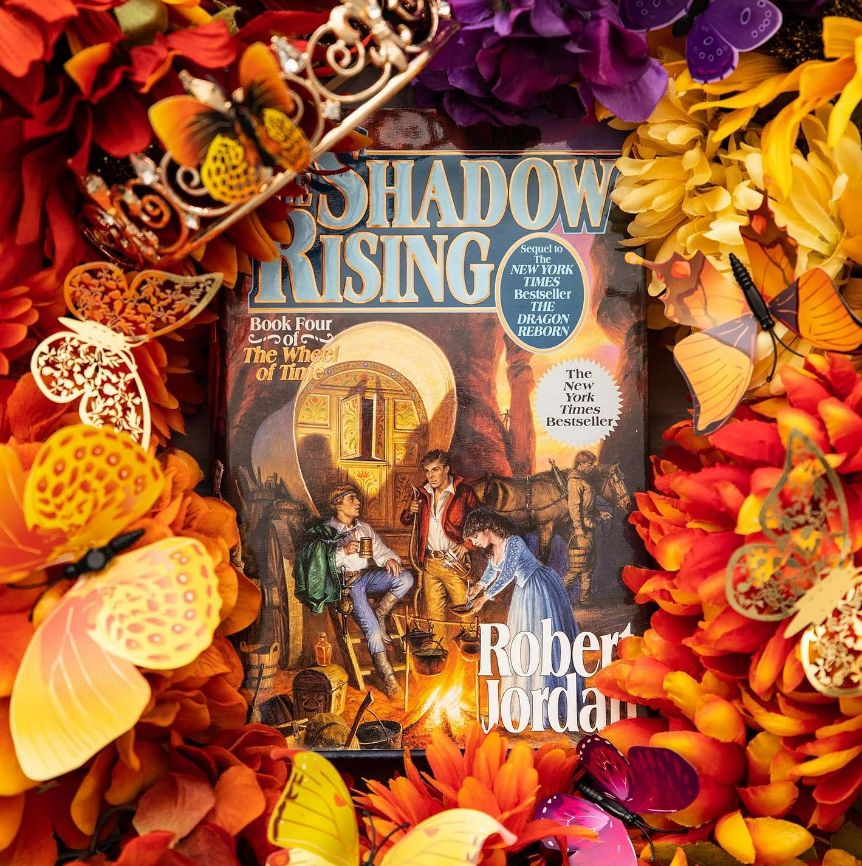
Photo of the book The Shadow Rising from the Wheel of Time series by  Robert Jordan surrounded by orange flowers and orange and gold butterflies. 
(c) Aimee Davis @writingwaimee on Instagram
I’ve said it before, I’ll say it again: Four million word RPG adventure with ample opportunity for “Gather a Wife” sidequests. Good show, though. And if you were keeping score, Robert Jordan (born James Oliver Rigney, Jr.) is white, a man, and dead.

When I was a wee baby writer churning out horrible drafts of fantasy novels with talking Pegacorns and super-powered, teenage mages who had raging hormones and daddy issues for days, I ran into an issue with my reading. I ran out of reading. For the youths, these were the olden times where YA fantasy was not yet a thing, and fantasy books for teenagers, especially girls in love with love, like myself, weren’t plentiful like they are today.

I’d burned through all the Tamora Pierce and Mercedes Lackey and Anne McCaffrey and Kate Elliott and Elizabeth Haydon. Philip Pullman’s His Dark Materials trilogy was a weekend job. I’d read all the one-off retellings I could find: Confessions of An Ugly Stepsister; Wicked; Ella Enchanted. I’d dabbled with Libba Bray and her fantasy fiction. I’d read all the “classics” from Tolkien to C.S. Lewis.

Then, one fateful day, someone, a boy, naturally, told me if I wanted to be a “real” fantasy author I would have to read Robert Jordan’s Wheel of Time series. Because I was young, and unwise, and lacking in confidence, I believed this boy (and others like him) and continued to do so for the next very miserable decade or more. Dutifully but spitefully, I trod through every last word of that series. At some point, I caught up to Jordan’s releasing, and was given reprieves between books. Unfortunately, other boys came to tell me what a “real” fantasy author looked like (spoiler, not me). I was plied with one miserable recommendation after another, then taunted mercilessly when I expressed the tiniest dissatisfaction with the “masters.”

“What a girl!” “You’ll never be a fantasy author!” “You can’t even remember the lineage? This isn’t hard. Are you stupid?” “Poser.” “Fake fantasy fan.” “You’re only here to chase dick.” “She doesn’t even play D&D!” “What, not enough kissing for you? Get a romance novel. This is serious writing.”

High school to college. My days of writing about Pegacorns and escaping into grand quests with talking animals, best friends, and beautiful castles were over. Killed by the steady thrum of turning pages. Pages that sounded like boots. The boots of the (mostly) dead masters come to school me. Rothfuss. Jordan. Sanderson. Lovecraft. Vance. Wells. Brooks. Pratchett. Adams. Scott Card. Vonnegut. Bradbury. Verne. Clarke. On and on and on it went for years.

These books had stood the test of time. Their authors were widely deemed masters of their craft. If I didn’t like any of them, what did that say about me?

Maybe it said I would never be a real fantasy author after all.

Then, I fretted I was defective somehow. Now, I wonder: is a novel “a great” simply because it lasted? If so, what does that mean for the future exactly? What should we be telling young authors about the so-called masters? Do we tell them to replicate this alleged greatness? Nod to it respectfully? Or do we tell them to ignore them entirely and chart their own path? To own the genre and shape it for themselves?

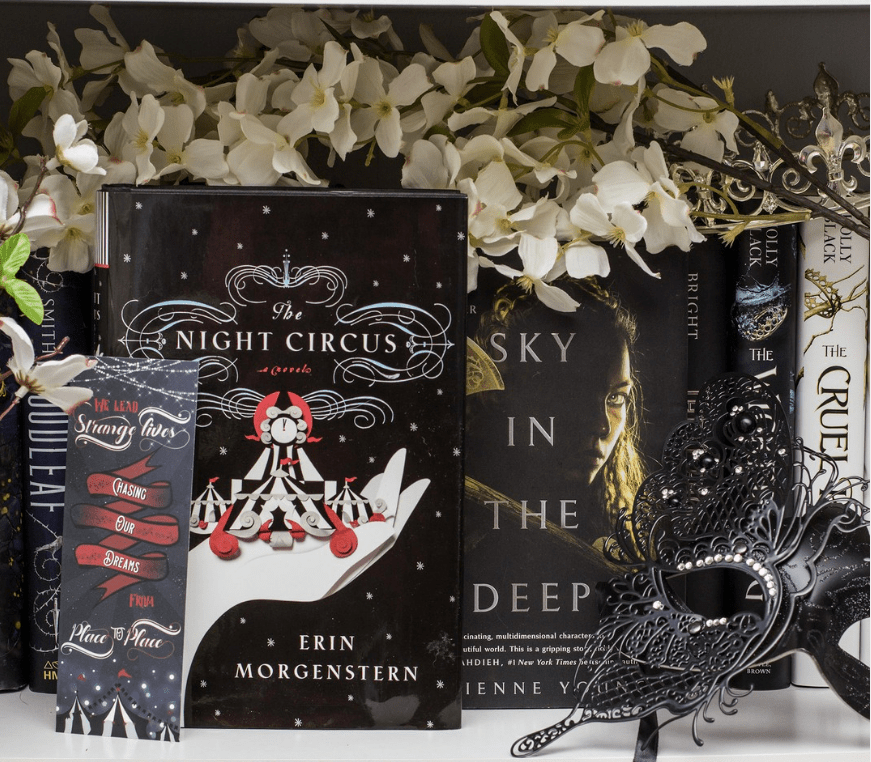
Do we put fantasy elitism on the tower of Tolkien, who spends paragraphs upon paragraphs describing architecture and flies a banner atop “and behold!” or do we look to modern literary fantasy works like Erin Morgenstern’s The Night Circus? If the latter, do we have room to both admire heartbreaking passages you can pluck from the spine and to acknowledge its containment of the usual despised and oh-so-YA insta-love? Can we dissect that work (and ourselves) with a critical but current eye, demanding to know what sets its brand of “immature” insta-love apart from other works being denigrated for dumbing down fantasy?

You may tell a tale that takes up residence in someone’s soul, becomes their blood and self and purpose. That tale will move them and drive them and who knows that they might do because of it, because of your words. That is your role, your gift.

Erin Morgenstern, The Night Circus
Photo of The Night Circus by Erin Morgenstern with Sky in the Deep by Adrienne Young with a bookmark, black mask and white flowers.
(c) Aimee Davis @writingwaimee on Instagram.
Getting warmer but still pretty white up in here.

TL;DR: Write for You First

Really, though, it’s far past time for authors to take—and be granted—the ability to simply say, I write genre fiction. I write to entertain. I write to try to provide a living for myself and my family. I write to please Netflix. (#goals) I write to make people smile and walk away with a happy sigh. I can and do create art that contains multitudes. Those multitudes include people-pleasing and bringing joy. I write stories about magic and adventure and escapism and yes, romance. I write about other things, too, but full stop I do not have to “prove” I belong here by saying, “I write romantasy, but it has trauma!” or, “I write fairytale retellings, but they take a serious look at systemic, real-world power dynamics!”

I belong here. You belong here. Whoever you are. Whatever fantasy you’re writing. Grimdark. Political. Romantasy. Serious. Literary. Mysterious. Cozy. Sweeping. Epic. Contemporary. Urban. Second World or Portal. Entertaining. Hilarious. Fun. Smutty. It’s all making me better to have experienced it, and if it doesn’t, I stop reading. I’m an adult. This is Adult SFF. I can stop if I want.

And really, does art require grandiosity? Deep meaning? To be smarter than the other book? Better yet, what is something grand or meaningful or smart? If you ask me, making people smile is pretty grand. It also has a pretty deep meaning. Those things are pretty smart. If you don’t know why, consider this my #litficmoment and feel free to analyze authorial intent.

I’ve said it once, I’ll say it again. There should be room for everyone at the table. If you don’t see it, imagine. Then fight for it.

This is fantasy, after all. This is what we do. Dream and do battle.

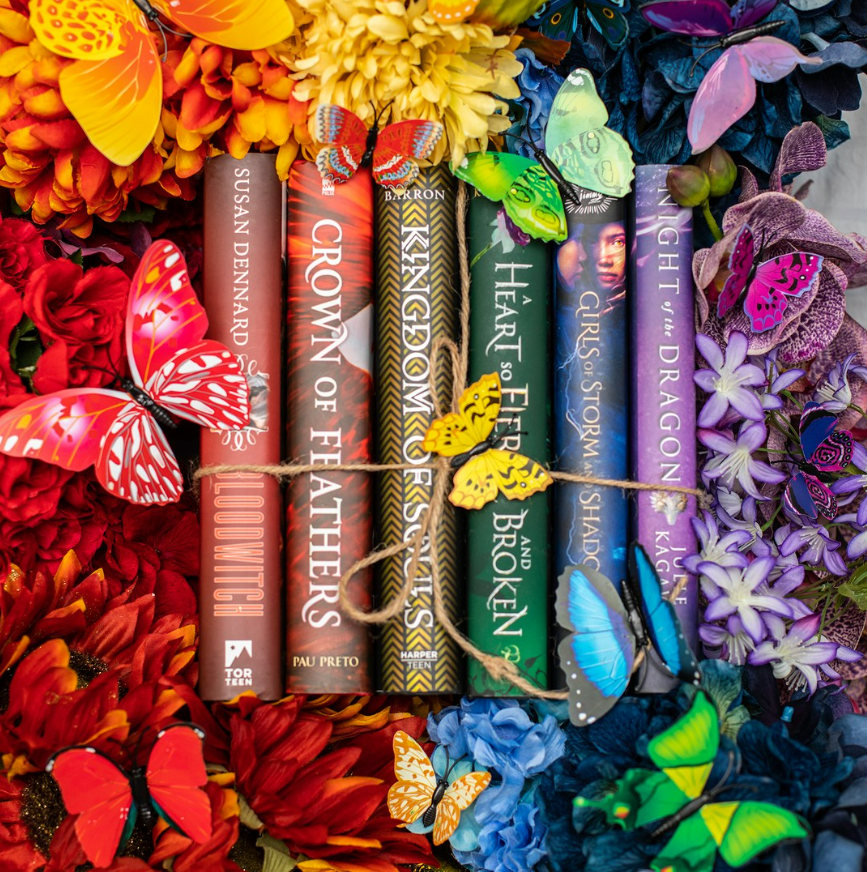
Photo of a rainbow of book spines including Bloodwitch, Crown of Feathers, Kingdom of Souls, A Heart so Fierce and Broken, Girls of Storm & Shadow, and the Night of the Dragon. All surrounded by rainbow flowers and butterflies.
(c) Aimee Davis @writingwaimee
To all the writers, agents, editors, and other publishing professionals fighting to bring us an Adult SFF shelf as diverse and vibrant as the rainbow, I thank you. May all our many stories and voices find their seats at the table ❤

Women with Work Issues: Fairytale Retellings for the Millennial

Author’s Note: While I write both young adult and adult fantasy, this post will focus on my adult fantasy. Also, I am using the term “women” here to encompass a general target audience in publishing (and to make a snazzy title) but don’t intend this term to be narrowly construed and will use gender neutral language throughout.


My college writing program was highly competitive and well-known. Our school of journalism was equally so. As a consequence, sometime during the fall semester of my sophomore year, I found myself at a Starbucks, sitting across from a 4’11”, journalism major from New York who’d emailed me out of the blue requesting an interview with me for a story she was writing about the creative writing program.

I had no idea this petite girl with a less than petite attitude would become one of my closest friends and future roommate. Honestly, I thought we might not ever see one another again because most of the time we spoke she never took notes, so I assumed she didn’t find me particularly interesting. But when I told her I “used to” write fantasy, she pushed her chai tea to one side and picked up her pen. Apparently that was more interesting than anything else I’d said about the writing program, how it worked, or lit fic.

“Why fantasy?”

It was a question that has followed me ever since. My answer hasn’t really changed, though, even if it has probably become more nuanced.

What I told her then was fantasy gave me a way to address things that mattered to me in a way that didn’t seem so on the nose, something I was constantly getting scolded for in my writing classes when it came to my lit fic. “This isn’t a morality tale, Aimee.” Was a not infrequent comment on my short stories. At the time, I hadn’t learned the subtlety needed to nudge in a real world setting.

Possibly because I’d spent my entire life reading fantasy. Possibly because I sort of hated writing lit fic.

But fantasy gave me that outlet and let me make it as bold as I wanted, because with fantasy the reader is steps removed from the real world. They can disconnect when their ideas are being challenged and come back later. It’s a softer way to influence. A more fun way, too.

What I would add now is that issues can also be targeted and isolated in fantasy. You are the builder of your world. You can throw out some things from our world to focus in on others. (That bit admittedly took me much longer to figure out and is always going to be a work in progress).

White hands hold a piece of piece of parchment against a lap draped in a blue dress.
Source: Unplash.com

I’ve written before about fairytale retellings and why it’s important we market them to adults and shelve them as fantasy. But while I was in Boston for work last week, I was (naturally) asked about my books, and why I write fairytales for adults.

What a question. A good one. More complicated than you’d think.

It took me back to college. To that question about why fantasy. But also to a comparative literature class I took about fairytales and how they affected the socialization of children across the years. Spoiler: Walt Disney was pretty sexist, and racist, and all the isms, really.

Yet, fairytales have a structure that appeals to me as a neurodiverse individual. Plus, their goal is the same goal I seek in writing, well, anything: Influence. They are quite literally morality tales.

Children aren’t the only ones who need morality, though. Adults do, too. But it’s different. Like the adult life, it’s messier, grayer, more complicated. So what do I do with that? Well, I take the structure of a fairytale and I bend it, twist it. As my Pitch Wars mentor would say, I often fracture it.

After all, it’s only when something has been broken that it can be put back together.

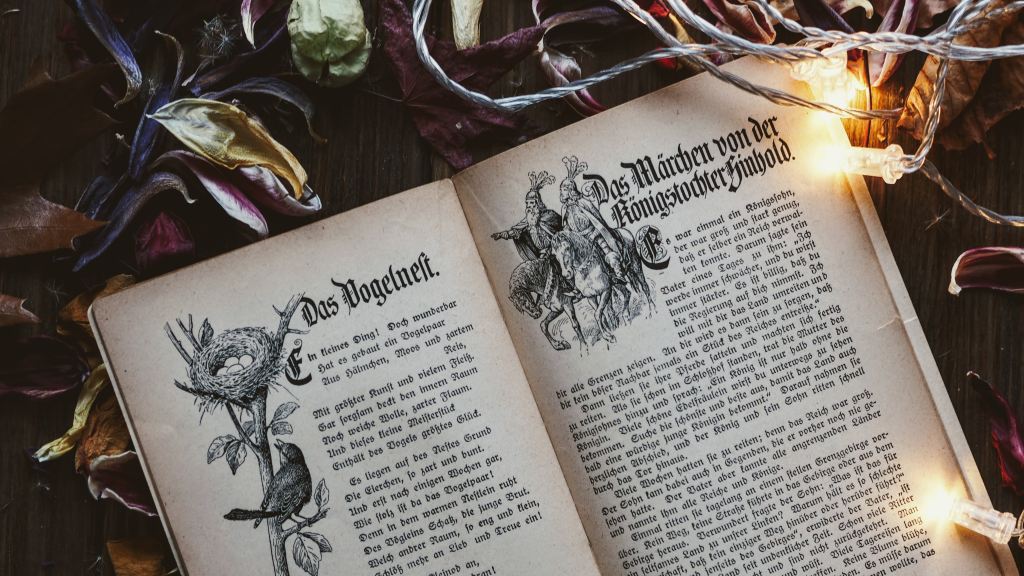
Book in German with script and men on horses on right page with robin's nest on left page lies on pile of dried flowers.
My tales are more than once upon a times and happily ever afters, but strip them down and all the elements of a typical fairytale still remain.

Main Components of a Fairytale

Characters

There are three main types of characters in fairytales: goodies, baddies, and allies. The main character “goodie” is typically young, poor, unhappy, and “pure.” They’re likeable. The one you’re rooting for. The Disney Princesses. The baddie is usually the direct opposite of the goodie. They’re often old, rich, miserable, and “evil.” Often, they’ve stolen from the goodie and intend to keep that just how it is, thanks. The wicked stepmothers and vain witches. Then there’s the allies. The allies are across the board in fairytales. Sometimes they’re animals, sometimes they’re friends, sometimes they’re love interests. Dwarves, princes, helpful mice, a well-placed good witch. The baddies have allies too. Flying monkeys come immediately to mind.

You know what I’m on about, right? There are really neat formulas here. We as readers like the goodies and dislike the baddies. There’s not much gray area, so down the yellow brick road we go.

I mean, unless you’re reading one of my fairytales. Then you might not actually know who’s a goodie or a baddie and the traditional roles might not be what you expect. Because that’s life, right? Sometimes we don’t know who to trust and… oh, I’m spelling out my moral again. Guess you’ll have to read the books someday!

Magic

Fairytales have loads of magic. Not only magic systems with evil (and good) witches but also magic numbers (3 and 7 are big ones). And, of course, magical creatures. This puts fairytales in the fantasy genre.

My magic systems are often based on morality concepts I want to explore. What is selfishness? What is really selfless? What happens when the goodie wants to be a baddie? And what makes a baddie a baddie, anyway? They also often deal with power. Who has it, who wants it, and what it takes to get it.

Obstacles or Tasks

The basic structure of a fairytale requires the goodie to overcome tasks or obstacles that often feel or seem insurmountable to reach their happily ever after. Usually they need magic and allies to accomplish these tasks plus one of their handy and winning traits that makes us love them, like courage or cleverness.

Most stories have obstacles or tasks, if we’re being honest. My fairytales are no different. The tasks are just more adult than in a traditional fairytale. Because they’re for adults! Don’t fall in love with this guy even though he’s sexy. Do this job even though you hate it. Kill this dude so you can reclaim your position. You know, normal life stuff.

Lantern with candle on a bench with fallen leaves in an autumn forest.
Source: Unsplash

Happily Ever After

Most fairytales have a happily ever after BUT NOT ALL. Especially in older tales, this was not as much of a genre convention as it came to be. Depending on your definition of happily ever after, you might see this differently, too. If you’re like my partner and have a taste for dark justice, you might see the version of Snow White where the wicked queen is made to dance wearing red-hot iron shoes until she dies as a suitably happy ending. But probably few see The Little Mermaid telling where the prince marries someone else and the Little Mermaid throws herself into the sea, turning into foam as an HEA.

Today’s fairytales, however, do typically require a happily ever after. Mine have them, but they’re never what you expect. #LitFicTaughtMeThat

The Moral Lesson

This is probably the biggest concept in a fairytale, and the reason I love them as a medium for retelling. Fairytales teach the morals of the time period in which they’re told. It’s why they’re told and retold again and again. It’s why we don’t tell the version of Snow White with the dancing on hot iron shoes, or the version of Sleeping Beauty where she isn’t woken by a chaste kiss but by the kicking of her babies because–surprise!–she’s been sexually assaulted in her sleep. It’s why the new live versions of Disney feature a Princess Jasmine who wants to be a Sultan, and a Black Little Mermaid. It’s why our new fairytales expand to a Queen who loves her sister and is ultimately rescued by her, not a prince; a Polynesian “Daughter of a Chief who isn’t a Princess;” a demi god who self-corrects he’s a hero of men, no women, no all; a Colombian family who is magical but traumatized; and a Mexican boy who wants to chase his dream of playing music.

My tales have moral lessons, too. For the millennial primarily. Things we didn’t get in our versions of Disney. But also things that are important to us now, as adults navigating a world that, in many ways, is different than the one we were prepared for.

I joke that my brand of adult fantasy is “fairytale retellings for women with work issues” because I primarily write retellings centered on women who have some kind of issue with work. All Her Wishes is about a fairy godmother who hates her job. My current retelling is a genderbent Beauty & the Beast about a sorceress who is pissed about a promotion gone all sorts of sideways.

At their hearts, though, my books aren’t really only about work, or even mostly about work. They’re about finding your power and your place in the world. My books have morals, but not the ones I grew up with. Ones I’ve learned along the way. And the thing is, while it might be children are easier to influence, they’re not the only ones who need influencing.

I guess in the end, I ignored those comments about morality tales.

Open book on a wooden bench with a red apple in front of it.
Source: Unsplash

Not the Darling: What if You Just Wrote the Wrong Book?

Note from Aimee: Today’s post has query statistics at the end for those interested. They follow a picture (which picture and alt text was inserted by me, not the author of this post) so they can be more easily avoided for those who don’t like to see stats. The book referenced in this post is described by the author as an adult, second-world grimdark fantasy and is the first novel written by them. I have also included links to the resources listed by the author, but neither this post nor my inclusion of links is an official endorsement of either (and no one was paid to put them here) and you should always research any paid service carefully before pursuing it. Now, without further ado, today’s amazingly raw, amazingly written, amazingly brave story of realness ❤

What if You Just Wrote the Wrong Book?

By: Anonymous

I knew the book I spent 4 years writing was a no-hoper before I ever sent my first query. I knew it as soon as I looked at agent MSWLs in my genre, as soon as I followed agents on Twitter, as soon as I looked for comps. I also know the book I just shelved is the best book I will ever write. 

As a child, I had vague ambitions of becoming a published writer, for the simple reason that I wanted to achieve something in life and wasn’t good at anything else. But financial stability came first, and so I devoted my teens and 20s to academics and demanding jobs, writing only a few short stories over 10 years. It wasn’t until I managed to downshift to a 40-hour-a-week job that didn’t suck up all my mental energy that I had hope of actually finishing a novel. Even then, I struggled to find a work-in-progress I loved enough to stick with–until finally I did.

Finishing that monster of a 135k first draft (later whittled down to 121k) took me almost 4 years. Coming to the end and actually being proud of what I’d written was the most joyful moment of my life to date–until I got on the internet and realized I’d written the exact book nobody wanted.

My book might have been perfect for the SFF market in, say, 2010. But by 2022, my European military fantasy was exactly what agents in this hugely oversaturated market were begging not to see (which, if I’d been reading recent debuts instead of spending years frantically trying to finish my own book, I would already have known). Readers’ tastes had long since changed, but I was still writing for the teenager I’d been.

My book was second-world and epic when everyone wanted “grounded.” It had three POVs and a heaping of military strategy when everyone wanted intimate and character-driven. It was a bloody grimdark hitting every conceivable trigger warning when a lot of readers were hungry for lightness, romance, and hope. And worst of all, it had a female villain protagonist who sought power not to protect loved ones or to fight oppression but for power’s own sake–and thus was really, truly unlikeable to everyone but me. 

I decided to query my book anyway, because what did I have to lose? I left off anyone for whom my book was explicitly anti-MSWL (quite a few), but between US and UK agents, I still had a healthy list to burn.

I came prepared. I scoured r/pubtips, submitted my query to the wonderful Query Shark, and paid far too much for a manuscript assessment by a freelance editor, because I wanted an honest opinion and was worried seeking unpaid betas would take months and plunge me into social media drama. The verdict: the editor couldn’t understand why anyone would write this sort of thing, and also I needed therapy.  

But by far my most valuable investments were three, 10-minute query and sample chapter consultations with literary agents through Manuscript Academy (US) and Jericho Writers (UK). This is the best $49 you as a writer will ever spend, because it is the only time a professional in your target market will tell you exactly what you did wrong, as opposed to just hitting the reject button.

The agents I spoke to were lovely individuals who put real thought into explaining why, no matter how much I revised my query package or my manuscript as a whole, a book with this premise would never sell. Then, much more difficult, they tried to give me some guidance on what would.

Now, 10 months out, I’m at the end of the query journey for the book of my heart. I’m proud of the requests I received, and not at all surprised that they ended in silence or form rejections, given that the book only gets really controversial halfway through. I’m heartened by a few one-liners praising my prose, which I was afraid was too literary and historical for the current market. I’ve also done some thinking about what I need to do to improve my craft: tighten pacing, narrow my scope, and manage word count better as I go.

But as a thirtysomething woman (seemingly ancient for a debut), I can’t figure out for the life of me what to write next. It doesn’t help that I’m the sort of person who takes years to write one book, while most agented writers appear to have churned out a first draft every few months since age 14. Every time I come up with a new premise for a novel, I stumble over the same hurdles. Is this original? Is this “hooky?” Can I imagine one of the 15 acquiring editors in my target market actually acquiring this? Is this–above all–marketable?

I don’t want this post to sound like I feel somehow aggrieved. I’m in the same position as every other casualty of the query trenches, except that I’m privileged to have money and time and not to have to cope with the additional struggles marginalized writers face. Against reason, I still dream of getting an agent and a tradpub deal someday. But writing for the market has killed the joy of writing for me.

Image of a white woman standing in a body of water. She is wearing a white strapless dress and has auburn hair and is wielding a lightning bolt. Above is a red, angry sky, and she is about to bring it down upon the shadowed image of a small island.
Image and alt text added by Aimee, query stats redacted from the post and follow. Image by Enrique Meseguer from Pixabay

Query Statistics as Provided by Author:

Adult second-world grimdark fantasy

Query start date: April 2022

Queries sent: 86

Partial Requests: 1 (rejected)

Full Requests: 7 (4 form rejections, 2 pending, 1 ghost)

Rejections: 58

Closed No Response (CNR): 20

Broken Girl Cured by Love: On Tropes and the Lies They Tell

Author’s Note: For the past few days I’ve been in Tennessee at a workshop hosted by Madcap Retreats about writing cross culturally. It was an incredible, eye-opening experience, and I’m only sharing a snippet of what I learned there, so I highly recommend you participate in one of their workshops if you ever get the chance to. 


There are ways to create narratives of hope that don’t feel like a lie.

~ Leigh Bardugo

To fully understand this post, you’ll need to watch this video (there’s also a transcript, but if you can watch I recommend doing that).

The idea of a single story is (obviously), not mine, but over the weekend, it was one of the concepts that hit nearest my heart. There are single stories for every marginalized group of people. In the video, you’ll hear some of them. During my workshop, I heard others. I’m not going to talk about the stories of others, because you should listen to their voices for that. What I am going to talk about is what the single story for me has been, why it’s hurtful, and why that matters to your writing (and mine).

For those who might not follow this blog regularly, I’ll start by telling you that I’m a twenty-nine year old, cisgender, female. I was raised outside of Philadelphia. I’m privileged. Most people would not think of me as part of a marginalized group. Mostly, I don’t think of myself that way.

I do, however, suffer from complex post traumatic stress disorder, generalized anxiety disorder, OCD, touch aversion, and agoraphobia. I have an invisible marginalization which I can usually hide, but it affects every aspect of my life.

Complex Post Traumatic Stress Disorder is defined as a condition that results from chronic or long-term exposure to emotional or physical trauma over which a victim has little or no control and from which there is little or no hope of escape. (Source). PTSD and CPTSD are slightly different in that PTSD can result from single events, or short-term exposure to extreme stress or trauma whereas CPTSD is generally associated with long-term trauma. That said, most people don’t know what CPTSD is, so I typically tell people I have PTSD.

When I do “out” myself, the most typical question that follows is, “What war?”

This is the single story in action. (If you haven’t watched the Chimamanda Adichie video or read the transcript yet, go ahead and do it now. Here’s another link. Seriously, it’s that important.)

PTSD is most often associated with veterans. That’s the single story literature, television, and film have created for us. And because of that single story, my experience somehow seems less valid. When I don’t play into people’s perceptions or expectations, my experience is diminished. Surely, I must be faking it. Surely, I must be overly sensitive. Surely, nothing can be as traumatizing as war. Surely, my experience doesn’t matter.

For years, I resisted fighting against this narrative because it felt like fighting against veterans who have PTSD. The single story of PTSD made me feel like I had no right to voice my own experience because by telling my story I was challenging their story. This is not, however, the case. I’m not challenging the narrative at all. There are veterans who have PTSD. But there are people who are not veterans who have PTSD as well, and their stories deserve to be told too. We can tell multiple stories without threatening others. We, as people, deserve more than a single story. We deserve more than two or three or ten stories. Every story gives us a fuller life experience.

The above example is contemporary, but the single story concept extends beyond as well. It permeates every facet of literature. In fantasy, especially young adult fantasy, there is another single story narrative pertinent to PTSD that’s repeated over and over, and it is this: Broken Girl meets The One and is fixed through the curative power of Love.

This narrative hurts me. It is a dangerous lie.

Growing up, I often escaped to fantasy worlds to help me cope with what was unraveling around me. I still do. But especially as a young reader, I internalized much of what I read. And this narrative, the “Broken Girl Cured by Love” narrative, buried itself deep. So deep I didn’t realize how much it had shaped my behavior until this weekend, and to be honest, I’m still trying to untangle a lot of it.

What I have realized, however, is that I truly believed I could be cured by love. In fact, up until recently, one of my primary criterion for a partner was that I could spend a night with them and not suffer nightmares. I was sure that somewhere out there someone existed who would save me from my nightmares. This internalized narrative that I picked up from fantasy books is harmful to me in real, tangible ways.

One of the ways my PTSD manifests itself is through touch aversion. When I’m touched (especially by a stranger), I experience physical symptoms. My heart rate rises, my breathing shallows, I become dizzy, I grind my teeth, I sweat, my pulse hammers in my ears so I can’t hear properly. Often, I freeze, completely debilitated by terror. Sometimes, I lash out, verbally or physically. This is not a comfortable feeling.

Yet, because of the Broken Girl Cured by Love narrative, I’ve put myself in this position time and time again. I’ve retraumatized myself  while I search for The One To Defeat The Nightmares. I’ve spent nights with people I was revolted by hoping this time I’ll find The One. This time, the Magical Cure Love will save me from my PTSD. I’ve numbed myself with drugs and alcohol while I try to find The One Who Wields the Cure Love, hoping that when I do I’ll be able to be touched without the need for chemical alteration.

It has not and will not ever happen. Love is not a cure for PTSD. That doesn’t mean there isn’t hope; it simply means this narrative is not the “hope” people like me need. The lie of this single story has damaged me, and I don’t think it takes much extrapolation to understand it could damage other people, or to see the damage done could be more extreme than it has been in my case.

One of the main takeaways from my weekend workshop is that words are powerful, more powerful than we might realize. As writers, we have a responsibility to our readers and that is to tell the Truth as best we can. It’s not easy, and it’s not always pretty, but it is our duty to try, to put in the work, and to hopefully do no harm.

There is no such thing as a single story of the human experience, and it’s far past time we stopped trying to tell one. As Daniel José Older told me over the weekend, “It doesn’t have to be sexy.” I suppose the Truth hardly ever is.

gloves-1601400_1920