Trauma Tropes and the Lies They Tell: Part 1 Traumatized Person Cured by Love, and Curing Cursed Touch Aversion

Author’s Note: I have been mulling over this one for a while, and there might be a second part to it to talk about another trauma issue, but I wanted to start here. With the dark book of my heart glitzed by 1920s glamor finally finalized, and sent to my agent, trauma thoughts loom. Bringing me here before the next unpacking.

As always, I remind my readers what follows is my opinion only, subject to bias and change, wrongness and flaws. I write (and read) through the western lens of American traditional book publishing. While I have C-PTSD, AuDHD, and touch aversion, I’m not a monolith and cannot speak to experiences besides my own. I don’t intend this to be definitive advice or an opinion representing the whole of any group, nor to be extrapolated beyond the groups described.

CW/TW: Discussion of C-PTSD, assault, abuse, etc. no graphic on page description; discussion of some of these themes and issues in fairytales and YA and Adult Fantasy (with plot overview of the works); minor description of effects of triggering media.


First, Definitions…

Before we begin, I want to address one of my personal pet peeves: the rampant overuse of the word trope. Which is kind of hilarious if you consider what a trope is.

Literary Trope: Traditionally, a literary trope is basically using a figure of speech for artistic effect. This is NOT what people mean when they say “only one bed” or ask what tropes you’ve included in your latest work in progress.

Narrative Trope: Narrative tropes are seen most commonly in genre fiction and can be character foils, plot devices, themes, motifs, storylines, or the like. Some are genre-specific (for example “only one bed” in romance is a plot device trope while “femme fatale” in crime is a character foil trope). These are what I mean when I say the word “trope” is overused. They’re also what I (and most of the rest of the commercial genre fiction world) are referring to when they use the word “trope.”

How does a Trope become Trope-y?

A trope becomes a trope when it’s used frequently enough for people to recognize it. Which is… pretty generic and probably why the word is easily overused.

Which leads me to the two ways I see it overused most commonly:

  1. Used too Broadly: The “trope” is defined as large chunks of something in the relevant genre. Example: One time, I saw someone say they were tired of the “royalty” trope in fantasy. This is… not a trope. “Royalty” isn’t really a character foil (“evil stepmother” is) or a plot device (“palace intrigue” meets that trope requirement). Royalty is just a swooping category of people commonly found in SFF books.
  2. Used Too Narrowly: The “trope” is too specific to be used enough to become a trope. Example: I recently saw someone complain they hated the “get kicked out of the hero’s party to discover you have an ability then do whatever you want” trope. While mildly hilarious, and probably this person is a fan of TJ Klune (same), I do remember looking around and asking, “Is that a trope? I don’t think I’ve ever seen that?” Dear reader, if takes you more than three to five words to say it, it probably isn’t a trope. Also, it does have to be understood to be a trope by the vast majority of the consumers of that genre. Otherwise, it might just be a few books where that weirdly specific thing happened, and it irked you, which, while valid for you, does not make it a discourse.

Black and white photo of a dragon perched atop a second story balcony, mouth open in a scream.
© Sean Thomas on Unsplash.
Dragons = too broad; Dragons the size of dogs who talk and are related to humans = too specific; Dragons attacking the castle = JUST RIGHT. YOU FOUND A FANTASY TROPE.

Why Do I (or should anyone else) Care?

Well… because in addition to tropes being handy for marketing purposes, they’re also handy for other groupings. Like addressing problematic issues and systemic discrimination in our work. Think: “Kill the gays;” “Black character dies first;” “Hurt people hurt people,” “Fat person is lazy” etc. etc. It’s important that genre writers know what tropes exist in their genre, and when those tropes can be problematic, so the author can choose to avoid (or subvert).

It’s also important we know what is too large or not large enough to facilitate this discussion. Losing sight of this can mean creating blow-ups that result in hurting those who are writing good and needed representation.

I saw this sort of happen with the “sexual assault” trope discourse awhile back. There was very little discussion of nuance. A majority of what I saw was, “No more. It’s cancelled.” Nevermind the statement was too broad to properly be a trope, the missing crucial pieces of this potential harmful plot device being things like: “pointless and gratuitous” sexual assault or sexual assult “to prop up a male character’s development.” Nevermind that many of the narratives out there were written by men, and cancelling this narrative meant silencing women, including women like me: survivors of sexual assault. POC talk about this frequently as well even within the context of non-harmful tropes like “vampires” and “elemental magic” being declared dead before they get a bite of the apple.

Photo of a brown girl with long black hair in a black gown sporting black wings standing in front of a dragon statue, hands pressed to chest, looking into the distance.
© Andre Sebastian, Unsplash
Listen, I never really cared for the angel/demon story (another dead for now trope in fantasy), but I would sign up to read this woman’s fall from grace.

I say this all because I want to be clear my intent with the following is not to set off a red alarm leading to “no more.” More is wanted. Needed. Desperately. However, I want the more that comes to be thoughtful, because from what I’ve seen, these… issues, let’s call them, have not always or arguably often been handled with care. I want discussion on ways to change that without ending anything.

For that reason (and because I’m not sure these things even are tropes), I will not call anything in this blog a “trope.” (Despite my clickbait title; sorry, I’m a sucker for alliteration.)

Get to the Point!

Right, so. The general concept is: fantasy books that feature love as a cure for trauma. Second to that is a magic or curse that creates touch aversion and how that is either cured or worked around by the love interest.

Once Upon a Time, I called this entire construct the “Broken Girl Cured by Love” trope, but I have learned that is (a) too gendered; (b) not the kindest categorization of very serious mental health issues (including my own); and (c) as I mentioned, maybe not a trope (or at least not the touch aversion part).

Part A: Traumatized Person Cured by Love

In general, I define the traumatized person cured by love issue to be one where a character (usually female but not always) suffers a serious trauma(s), is rescued by The One, and is instantly cured of all the issues that come with trauma. No more nightmares. No more anxiety. No more agoraphobia. No more hypervigilance. No more touch aversion. Just butterflies and rainbows, engagement and weddings and babies. Tada!

If you can’t think of a fantasy where this happens, you’re not thinking hard enough, or you’re not entirely familiar with trauma.

Fairytales, Trauma, and Damsels Cured by Kisses

There’s a reason I return to retelling fairytales time and time again. A reason they’re the core of my Adult work but not my YA. My relationship with them is as messy as the trauma we’re both steeped in. They’re comforting and damaging. Amidst my violent childhood, they were a safe space, but only because they normalized everything around me that was so unsafe. They, like me, need to grow up, reimagine themselves, and start anew.

I’m not even talking about the older, darker versions of the tales. I’m talking about what I grew up with, what I watched and read. Snow White, an orphan, is sentenced to death by her evil stepmother for being… pretty? The huntsman can’t bring himself to kill her, though, also because she’s… pretty? Then she goes to live with seven strange men in a shoddy hut to… clean for them? Despite being a princess. Then she’s poisoned and basically dies. Until TADA her Prince comes, kisses her without consent, wakes her up, and BOOM! Hello wedding bells, goodbye trauma.

Cinderella, a movie I watched so much as a child my first imaginary friends were named GusGus and Jaq (after the mice in the movie), has a similar plot. Orphan girl, evil stepmother, cleaning, torture, poverty, pain, emotional abuse until TADA! Her literal Prince Charming (that’s his whole name) saves the day. Nevermind he can’t tell what the woman he spent a whole night dancing with looks like without having a shoe fit her. Apparently.

And don’t get me started on Beauty and the Beast. All I remember about that movie is crouching behind the couch, whimpering during the scene when the Beast screams at Belle over his damn rose. Because the noise of a man screaming at a woman was already too much for my five-year-old ears. I hated that movie. To this day, I can’t watch it, nor will I ever be able to relate with the bookworms who answer with, “Belle, duh!” to every survey question or Twitter poll about what Disney princess would you be. Not when all I can think of is five-year-old me behind that couch my mom won on a radio giveaway, clutching my hands to my ears, eyes shut, waiting for it to be over.

Fantasy: From Damsels to Warriors (Who Still Need Sex as Saving)

This issue followed me from my love of fairytales to my love of fantasy. Women who are sexually abused and emotionally manipulated? No worries, their handsome, roguish man of the dark comes to rescue them and BAM! The nightmares are over. Safe in his arms for the first time she can remember. Warrior squires who vomit after their first kill, sword trembling in their hands as they charge into battle? No big deal, their handsome knight and lord will take them into their tent later and soothe their fears… with sex.

Love conquers all, right?

Yeah, right.

Photo of a white woman with white hair in a black and red gown and black cape, laying on a forest floor near a large stump, a sword hilt pressed to her cheek.
© Dmitry Vechorko on Unsplash
Most likely to seduce you, then carve out and consume your heart. That’s the woman I write now.

Part B: Curing Cursed Touch Aversion

This one is a sort of subset of the first, but perhaps too specific to actually be a “trope.” However, I’m starting to see more of it, and as someone who has real life touch aversion caused by trauma, who also has a real live book going on submission that tackles these issues, it’s time for me to dip my toes into the trauma trope do-not do pond.

In fantasy, magic systems are built on the backs of all kinds of wild and whacky things. That’s one of my favorite things about fantasy. Some of these systems are great, some of them aren’t. Some of them can be done right in the hands of some and abused in the hands of other. Not unlike well, any weapon in the hands of those more powerful. And never doubt words can be weapons. But they can also be balms.

Characters who have some kind of magic or curse that prevents them touching and/or being touched is definitely a “proceed with caution” magic system. Because there’s really no way to do it without invoking in real life touch aversion. A thing people (like me) struggle with on a daily basis.

There was a time I used to read every book I saw that had some kind of touch-based magic in it, desperate to read a character like me. Now, I almost never read these kinds of books. I find it’s rare to have good representation of touch aversion, and worse, these magic systems and curses almost always have either a cure or an “exception” for love.

What I mean by that is any character who has a curse or magic that causes them to be unable to be touched or be afraid of touch but OH WAIT, the love interest turns up, and oh, isn’t that strange, THEY’RE TOUCHABLE. Or oh wait, the love interest has the perfect counterbalance magic or curse to the one preventing touch, and TADA! No more touch aversion (because apparently the ability to touch one whole human rids you of something preventing you from touching everyone else). Which leads to the oh-so-often addition of, “It’s so sexy I’m the only one who can touch you,” the strong male love interests says in a growl. Just what we wanted, some manic pixie dream girl action.

If you couldn’t tell, this is… not the the representation I’ve been waiting for. If the love interest cures the curse or “saves” the character from their magic, it’s possibly worse.

Photo of a white girl with blond hair in a blue robe, curled in on herself, submerged in water amongst jellyfish.
© Alice Alinari on Unsplash
MC: My jellyfish are the only ones who understand me, but it’s so lonely in the deep, what with my skin that paralyzes anyone who touches me. LI: DID I MENTION I HAVE MAGICAL VINEGAR SKIN TO COUNTERACT YOUR VENOM?! (Despite that being absolutely pointless and serving zero other plot purpose.) Damn, you’re so hot, you sad, lonely, desperate for touch orphan princess. I definitely won’t manipulate you or take advantage of the fact you have zero other choices. (It’s fine to have no agency when it involves A Soulmate, after all, just not when it involves our author’s first 5-10 sample pages). Trust me.

Part C: How These Things Cause(d Me) Harm

The reason I created a separate section for the harm portion of this program is because I can’t really talk about one of these issues without talking about the other. Not when it comes to my lived experience. Which is the only lived experience I can talk about, but I suspect I can’t be alone.

I have C-PTSD and AuDHD so it’s difficult to say where exactly the touch aversion came from. Would it have existed without the early childhood trauma? Maybe. Maybe not. Maybe it wouldn’t have been the terrible beast it is today. But if you learn anything in trauma therapy, you learn it’s not really worth it to linger on the endless spiral of maybe. I’m touch averse and traumatized. And still alive.

I have a complicated relationship with my touch aversion. The complication is why I think it’s important to have real representation out there. It’s possibly why bad representation has caused me harm. Some folks don’t mind being touch averse. I am not them. I hate it. If I could rid myself of it, I would.

Enter my childhood media whispering a promise of a cure. If only I could find The One.

It might seem ridiculous to think of an adult (even a young adult) dreaming of a whirlwind romance that would cure her of mental illness, but long-term pain makes us desperate. Don’t believe me? Check out some chronic back pain forums to see the shit people try for any small relief. Honestly, look no further than the current opiod epidemic in America.

When I was young, a piece of the child I was or could have been fractured inside me. There she still lives, hidden and sheltered behind massive walls I’ve spent years building and tearing down only to rebuild and tear down again and again. Sometimes, in between demolition and construction, I see her. Not often. More often, I feel her. My own Rapunzel, trapped in her tower, waiting for someone to save her. Now, I know that someone must be me. When I was in my late teens and early twenties, I thought it had to be a man. (Yes, always a man, despite my own sexuality, another blog for another day).

Photo of a girl in a white dress, not facing camera, with long dark hair, looking out through a castle's stone opening into bright light.
© Sean Pierce on Unsplash
What a beautiful fairytale… about a girl in a cage.

Because part of me was emotionally delayed (thanks, trauma), and I live by a rule-based system (AuDHD), I was easily convinced into believing there was a step-by-step process to curing myself of my touch aversion, my night terrors, my agoraphobia, my misery.

Go out. Endure. Find The One. Let him seduce you. Smile when you’re sad. Live Happily Ever After.

But how would I know when I’d found The One? The books I’d cherished gave me a rule for that too: He wouldn’t trigger my touch aversion. He’d be the person I could finally sleep soundly with, encircled in his arms. With him, there would be no nightmares. Only dreams. Obviously.

Right.

I don’t think I have to, nor do I want to, spell out how that formula led me to some seriously fucked up situations. Places I wasn’t safe. People who abused me, manipulated me, beat me. Worse. Then the behaviors to numb it all, so I could hunt again. Only to be abused again. On and on. For years.

Trauma is a hell of a drug. But so, as it turns out, are fairytales.
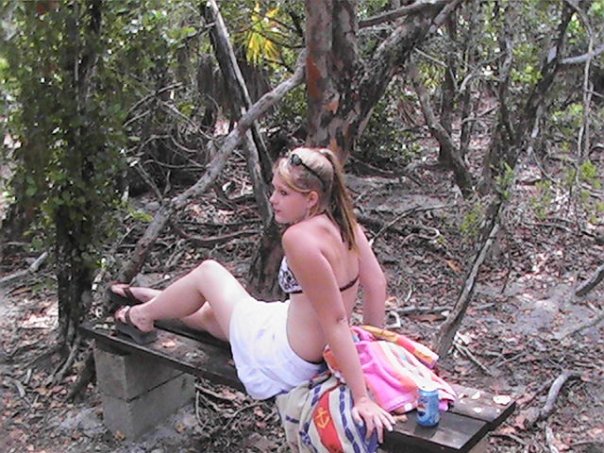
Photo of a white girl (me) with blond hair in a biking top and white skirt sitting on a bench in a forest.
Actual photo of me during this period of my life. The second comment on my Facebook to this day is from a guy who used and humiliated one of my best friends and warns me to “look out for the r*pist behind [me]!” Real Prince Charming.

Part D: Getting It Right (According to Me)

When it comes to trauma and touch aversion, I’m not someone who believes you must have a diagnosis to write characters with trauma or touch aversion. All I ask is authors write with sensitivity and ask for help from people with lived experience before they put anything into the world. To me, representation isn’t about the author, it’s about the character and the reader. If the character reads right to the readers who need the representation, that’s a win.

I would love to go back to the days when I eagerly grabbed books off the shelf and threw them into my buy basket for simply referencing touch or trauma. Of course I would love for my own book featuring a traumatized, touch averse character to be published, but if it isn’t, I want someone’s book to be. Because we need more. A lot more. There’s too few books tackling these topics. Touch aversion especially. Even fewer that do it well.

Who Already Does it Right:

Kaz Brekker in Leigh Bardugo’s Six of Crows gets touch aversion and trauma right. I believe, despite some controversy, that Suzanne Collins’ The Hunger Games series did right by trauma. Marissa Meyer’s Heartless will always be one of my favorite trauma depictions of all time. Melissa Bashardoust’s Girl, Serpent, Thorn gets cursed skin right. Helen Hoang’s The Kiss Quotient (adult romance) gets touch aversion from ASD right.

Of course there are more, especially where trauma is baked in but not the focal point. I think of books like Crown of Feathers by Nicki Pau Preto where the main character wields her kindness and compassion as a weapon against her abuser, and This is How You Lose the Time War by Amal El-Mohtar and Max Gladstone where love persists despite abuse, growing stronger, healing the world if not the lovers, and Maggie Stiefvater’s The Raven Cycle where love and trauma are both thrumming beats of the narrative without love overwhelming trauma to become a magical deus ex machina cure to wrap the characters in their very own happily ever after bows

There are not many I can think of beyond those mentioned that do touch aversion well. Or not that I’ve read. To be fair, this might be because I’ve read enough deeply disturbing narratives where touch aversion is some kind of “madness in the blood,” or “evil,” or the character is treated as damaged goods, or seen as a manic pixie kink because he (sorry, it’s usually a he) is the only one who can touch her (and yes, it’s usually a her) without her getting sick/maimed/killed. Where it’s a sign of “claiming” or dominance. And she loves it.

Photo of a white man with his head bowed and a bun and a white cloak, wearing armor but only from waist down, one hand on shield, other on sword. 
© Gioele Fazzeri on Unsplash
You know the guy I’m talking about. This guy (or some immortal derivative thereof).

My relationship with this latter point is messy. Once upon a time, I loved books like that. Loved them so much I thought I could wish myself into them. I remember twelve-year-old me lying on my front lawn, a quiver of arrows at my hip, my bow and arrow strung around my back, ignoring the pain of the wood in my spine as I pressed a book to my chest and squeezed by eyes shut, whispering into the sky, begging God or whoever was listening to take me away. To whisk me into my book. Into my own adventures where I could finally find love. A cure. Someone to tell me what to do.

Books like this gave me hope. They were wish fulfillment. In my darkest days, they made me believe in something. Books like this are dangerous. They fulfilled the wrong kind of wish. Pushed me to rely on everyone except myself. Made me look to external sources of validation and guidance. Stripped me of barely-born agency I was all too eager to give away because that’s what trauma does. Made it all too easy to believe in the easy thing, not the right thing. What I needed was a bit more real and a lot less sexy.

I needed someone to write me a story of the traumatized person healed by self love.

Some might not want or need healing. They might see their touch aversion as a strength, even. But me? While I see now there isn’t a cure, I’m happy to take healing.

Yet, if I had magic, I would magic this away. If true love’s kiss would do the trick, I’d kiss a bushel of frogs to find my The One True Prince and a night full of dreams instead of nightmares. So it’s hard to begrudge authors this narrative. It’s hard to say “stop” writing those stories that once gave me something to cling to.

Instead, I’ll say, please think. Ask. Learn. Be interested. The traumatized are not your kinks. Or plot devices. No one, but especially not women, need to be hurt to teach their male counterparts a moral lesson about “gee, wowie, women are whole humans, too!” How hot we are isn’t what gives us value any more than our ability to keep a clean house. We aren’t here to be saved so the handsome love interest can get a handy in gratitude. In fact, we don’t need to be saved by a love interest at all. We need healed, and the only ones who can do that is… us. We need that to be just as sexy.

Traumatized person healed by self love. Prince(ss) Charmings optional.

Let’s Talk: Trigger Warnings

Author’s Note: If you’ve been around here awhile you’ll know this is standard fare from me at this point, but I repeat it for new folks: anything in this post is my opinion as one person not as a monolith. Nothing in this post can or should be used against other people in the same communities I describe.

Trigger/Content Warnings: This post talks about trigger/content warning discourse. Also describes in detail what a triggering event can be like. Brief description of child abuse and related triggering event thereafter; flashbacks; disassociation. References to childhood abuse and trauma.


Let me put this right up front for the TL;DR crowd. I am pro using trigger and content warnings. I am anti policing how people ascribe these things to their personal experiences. I am pro self-exploration about using these words more carefully. I also think we need to do a better job explaining what they are, how they’re different, and why we use them. I also believe failure to do so has caused harm to the communities who need them most.

Trigger; Triggering; To be Triggered

To be perfectly frank, because that’s what I do here, I have a very complicated relationship with the way the term “trigger” has evolved. For me, a person who has C-PTSD (and other mental health issues I don’t need or want to list out today), “trigger” has a very specific meaning. That meaning is the one used by most psychiatrists and psychologists and goes something like this: a trigger is a stimulus that causes a painful memory to resurface (usually the definition used in the context of C-PTSD or PTSD), or a stimulus that activates or worsens the symptoms of a mental health condition. Trigger doesn’t mean something offensive or a bit uncomfortable. It isn’t something that makes me a little sad or a little yick or a little anxious. To be triggered for someone like me means to be mentally fucked for a time.

Considering the volume of trauma I’ve been through, I’m not actually triggered that often. When I was younger, it happened more, but honestly, I couldn’t explain to you what the source of the triggering thing was. Now, I can count on one hand the number of times I’ve been truly triggered in the past five years. But I sure as shit know when I am and what caused it. This is a primary goal of trauma work: identifying triggers and finding ways to lessen their impact on your life.

Impact. That’s what triggers have. That’s what that word is meant to mean.

My C-PTSD wasn’t caused by any one thing, that’s what makes it different from PTSD without the C. A bunch of it stems from early childhood trauma though. I grew up in a violent, chaotic, loud environment. So, I have some sensory issues related to noise (as in, I don’t like it) but I don’t consider all noise triggering, or even all loud noise. Sometimes, when I’m overly stressed or highly tuned in, certain noises irritate me, or distract me. They might even become at times physically irritating, almost like a sting beneath my skin. Those aren’t triggers for me. More like irritations. They’re uncomfortable in the way too many bugs flying around you, ruining your otherwise pleasant picnic might be uncomfortable. Maybe it escalates into the bugs taking a bite or two, causing some frustration or agitation. Is it annoying? Yes. Would I rather it not? Yes. Is it outside the realm of a normal human emotion? Not really. I mean maybe in the sense that most people don’t find noise mildly painful, I suppose. But the emotion itself is not wildly disproportionate in a way that escalates my preexisting mental illnesses or causes a flashback or has any real impact on my life beyond fleeting, everyday annoyance.

Close up photo of a fly on a gray surface with black background.
Tbh, this dude might need a trigger warning of his own. I fucking hate bugs. Image by Christian_Crowd from Pixabay

This is where I’m going to describe a triggering event: Yelling, child abuse. And its impacts: Disassociation. Skip until next bold (after the photo of the bathtub).

What is a trigger for me is the particular noise of a mother screaming while beating her child.

Before I moved to my current home, I lived in an apartment complex. One of my neighbors in the same building a few apartments down constantly yelled at her kids. It bothered me but not to the level of a full-blown trigger. However, one day, I heard her screaming at one of her children. The sound carried through the walls, and with it came the very distinct whap of an object against bare skin. The child screamed. Begged. I had a flashback, then disassociated.

The next thing I remember was coming back to myself to find I was sitting in my bathtub, fully clothed, hands over my ears, rocking back and forth while tears streamed down my cheeks. I have no idea how long I’d been there. Long enough my legs ached and my throat hurt from crying, maybe even screaming.

That is triggering. Real live in the flesh triggering for someone who has a bona fide psychological disorder.

Sepia image of an old bathtub filled with plants on a dirty tile floor.
Bathtubs are a safe space for me. I often sit in them fully clothed when I need to get away from something. It’s just a thing, don’t mind me. Image by Peter H from Pixabay

Who determines what is “triggering?”

The person who experiences triggers determines what they are.

The thing about triggers is they’re highly individualized. No two people have the same set of experiences, or the same brain, so it’s impossible to understand how someone will react to a particular stimulus under any set of conditions. I’ve done years and years of trauma work. In the beginning of this work, I was unable to determine what my triggers were. I knew things triggered flashbacks, and disassociation, that something made me start screaming for seemingly no reason, but it was difficult to discern what those things were. A key part of my early trauma work was focused on identifying triggers (or potential triggers) and working on ways to manage them. I did this with a therapist who specializes in trauma treatment.

I mention it because it’s important to understand that for some people, knowing what their own triggers are might be harder than you’d expect. They’re not as clear cut as the neat little warnings we often see at the top of the page. So if triggers “change” for someone, that’s not abnormal. It’s also why triggers are often given in broad contexts sweeping a range of topics: “abuse,” “trauma,” “domestic violence,” “assault,” because people who experience triggers might not know what specific thing in that wide category will trigger them, but they might know that category contains their past and that content should be avoided. Over the years of my personal trauma work, my trigger sensitivity has been seriously reduced. Not everyone is able to do that or is at that stage in their journey.

Basically, this is not the trauma Olympics. We’re not here to put our scars on display for you to evaluate if that’s a “good enough” reason for us to say “this thing is genuinely triggering to me.” You’ll note I didn’t describe the individual Bad Shit that happened to me as a kid in my story above. Because it’s none of your business. You don’t get to decide if whatever I went through was “bad enough” to warrant my response to my neighbor’s behavior. I control that. Well, I don’t actually which is the annoying part. Because, trust me, if I could make my triggers go away, I would. They’re not pleasant. It’s one of the main reasons I’ve been doing trauma work for a million years instead of putting that money toward I don’t know… literally anything else.

“Trigger” should be used with discernment and self-reflection

Here’s where it gets tricky. I do think the terminology has been a bit… overused. That’s why I provided an example of the reaction I have to a trigger. Reminder about the monolith thing I said at the beginning. And of the definition I used of the word trigger. The reaction doesn’t have to be that extreme for you to consider something triggering. However, a trigger is meant to mean more than, “This makes me feel an unpleasant emotion within the realm of the ‘normal’ human experience.” Feeling sad is normal. Feeling anxious is normal. Feeling uncomfortable is normal. Feeling pissed off is normal. Feeling triggered is distinctly not normal.

The reason this matters is because when the word trigger is misappropriated in day-to-day speech, those who need this language to better explain what’s happening to them are stripped of its value. If the word trigger is so frequently used to mean something less than its definition, it’s devalued. This means the only recourse I have to explain my emotional reaction to a stimulus is to put the actual emotional reaction on display (which in and of itself can be retraumatizing).

I have strange feelings about people who ascribe the word “trigger” to something other than what its general psychological definition is, because this word was given to me and people like me who are suffering immense emotional pain so we might explain that pain without having to relive it. I also have an issue with the idea there is a “trauma” trigger and a sort of everyday use of the word trigger. While practically, I think that might at this point true, it again puts the onus of explanation onto the population whose language was stolen. Triggers also apply to communities of people who don’t have trauma, for one. So to exclude them from their language is a poor solution. And for those who do have triggers because of trauma, forcing us to further delineate “trigger” to “trauma trigger” outs us in ways we perhaps did not want to be outed. Finally, many people have comorbidities that cause this discernment to be almost impossible. I joke with close friends pretty regularly about, “Is it trauma or is it my [x other neurodiversity, mental illness, etc.]?” But the joke hides pain. It’s hard to live like this. Constantly questioning what part of your twisted brain made you lose time this time. Putting the burden of waging that battle of defining pieces of self on people already struggling to do it is unfair and to be honest, cruel. A trigger is a trigger. Sometimes it’s trauma, sometimes it’s not. Always it’s more than uncomfortable.

To be clear: I’m not here to police anyone’s use of the word. This is meant to be a self-exploration exercise only. If you’re using the word casually or colloquially or flippantly, or you might be, or you’re asking communities to drill down language that was already intended to mean a specific thing, then a reexamination could be in order because the casual use of the word is doing actual damage to people who need it.

Photo of a small room with a desk and chair and a round mirror with a man's reflection silhouetted.
Image by Peter H from Pixabay

Content Warnings

What is a Content Warning?

Content warnings can be sort of nebulous. However, I put content warnings in the category of the things you maybe shouldn’t be using the word trigger for. In the context of writing, because that’s what this blog is about, content warnings describe things that may be upsetting or uncomfortable or even things people simply don’t want to read about. Or read about at that particular moment, anyway.

Difference between Content and Trigger Warnings

What makes something a Content Warning or a Trigger Warning is not determined by the person writing, it’s determined by the person reading. That’s what makes them difficult for people to differentiate between because the writer has to use them interchangeably to accommodate multiple unknown readers (i.e. something that could be triggering to me might be something that just makes you uncomfortable, or vice versa).

So, if you’re the person doing their level best to alert readers about what’s coming, using content and trigger warnings interchangeably makes sense as you don’t know your reader. If you’re the person talking about your own TWs and CWs, you should delineate to make room for the nuance in the definitions.

For example, for me personally, I have never experienced a trigger in writing. I think that’s probably because of the way my brain processes information. My trauma is triggered by senses. A book doesn’t have much sensory output (in that it’s not yelling, or flashing lights at me, or smelling of alcohol, etc.). However, I prefer not to read books featuring trauma where the author doesn’t have a personal experience of trauma, because I often find the representations to be poor, stereotypical, and sometimes cruel, and I walk away feeling depressed, uncomfortable, or just pissed. A general content warning is helpful for me, so I know to look into the origin of the author (if that information is readily available), or read reviews to see how other people found the representation, or simply tread lightly on a day I have spoons.

Black and white photo of a stuffed bunny lying on a concrete wall.
Image by Andreas from Pixabay

Use of Content and Trigger Warnings

Step One: Use Them

You can’t know someone else’s life or their experiences. Just because you went through some shit and aren’t triggered doesn’t mean other people had the same experience. Again, we are not here to play trauma Olympics with one another. Don’t be an asshole, use CWs and TWs. You should do your best to use them all the time but especially if someone specifically points out they’d like them. Triply if someone is like THE FOLLOWING THINGS TRIGGER ME LET ME KNOW IF I’M ABOUT TO GO THERE.

If you forget, I’ll remind you to be kind to yourself. Messing up happens. We’re all human. I forget sometimes too, and I’m literally here writing this post at 11:00 p.m. on a Friday after working like 75 hours this week because I care about this topic so much. So, give yourself some slack. Unless you’re being an asshole about it and wantonly refusing to use them because you think people should toughen up. If that is you, I’ll remind you to be kinder to others. And honestly maybe yourself. Because you either have no idea what trauma is like, or you do and you think everyone should suck it up like you have and that is… well, a post for another day.

Step Two: Respect Requests to Include Them

Probably the weirdest thing I’ve seen lately in the writing community is people challenging agents on their ask that TWs and CWs be provided. I mean, listen, this is your future career and all, but my advice is to not do that. Besides being a super bad take for all the reasons I mentioned above about people’s need for them, it’s also just not professional to willfully refuse to do something beneficial to the mental health of the person you’re courting to be your future business partner.

Outside of querying, you should still honor requests to use trigger and content warnings by people when they’re given. The requests are likely not made lightly.

Step Three: Do Not Challenge People’s TWs and CWs

This one is harder than it seems and honestly I’m not 100% sure it’s the completely right advice, so bear with me. There are, in my mind, a spectrum of “Challengers.” On one end are people you should aspire to never be. On the other end might actually be me because here I am writing this post. Nuance. Brains. Complicated topics. Oh my.

Type One: That Asshole. You know the one. The one who has a Twitter bio that’s like “White man and proud. Trump 2024. God, guns, guts. Eats libtards for breakfast.” That’s the one who like gets up in people’s Twitter space and say shit like, “Trigger warnings HA! Do you need a safe space too?” Or “I’ll make sure to send you my [exactly the book the agent requests not to see in their inbox] LOL.” Or the slightly less aggressive but still douchey, “I’m not really a big believer in trigger warnings.” Cool, Tom. They’re not for you. And let me get ahead of you to say I don’t give a shit whether you believe my C-PTSD is real or not.

This type you should never, ever be. But I probably don’t need to tell anyone reading this blog that. Still, any variation on this is a no go. Basically, please refrain from aggressively questioning someone’s triggers or content warning needs because it’s invasive and rude. I might be the type to explain to you in a 7 page blog post about why I need trigger and content warnings and what my precise trauma is, but most people aren’t and shouldn’t be asked to. Whatever caused the need for the warnings is probably hard enough as it is.

Type Two: This Asshole. As in very possibly me. I’m not sure. I much prefer people do self-exploration and reflection to determine if their use of these terms is appropriate when they take into consideration the harm it could be doing to communities that need the language, as I’ve mentioned. However, this blog isn’t going to reach everyone. More like a couple hundred someones. That probably isn’t enough to reclaim the language. And not everyone is going to be self-reflective after reading a long ass blog from some random person on the internet. So what about calling out people’s use of the term nicely?

I’ve seen it done tactfully. Kindly. Gently. I’ve seen people say ‘I have this lived experience, and if you’re using this term loosely or in a knee-jerk way please be mindful of the people it hurts.’ I’ve nodded along with these people. Celebrated that someone finally said it. Then watched them get dragged on Twitter for daring to question a fellow survivor’s experience. Annnnnnnd I see that side, too. Who are we to know? I mean, I think I know. Even now I’m half typing out explanations of how I know, but ultimately no one can know their life except them. So reiterations of self-reflection are as far as I’m willing to go. I just… I would hate to be wrong and hurt someone else more than they’ve already been hurt, I guess. Even though I do really see the collective damage it’s doing. Have felt it myself. Understand the desire to make it stop. But I’ve always been about gentle pushes in the right direction more than sweeping gestures that burn hot and fade fast.

Step Four: There is no step four

Tada! I’m done. It was long again. Sorry. Please accept this token picture of my cat, Apollo, who has lived for 16 years through all my bullshit, just as you, dear reader, have lived through this long ass post full of my bullshit.

Photo of a white cat with a red collar sitting on a scale on a kitchen floor.
In case you can’t read it, his collar says “Mom’s Fav Asshole.” And yes, he is the asshole in chief.

Until next random thought, please remember: language matters, and be kind to yourself and others!

Xoxo,

Aimee

Inspiration

Trigger/Content Warning: Discussion of physical and emotional violence against humans and animals in dreams, as well as discussion of sexual assault in dreams. Trauma, nightmares, childhood fears.

Anyone who has written well, just about anything, will have heard this question before: Where do you get all your ideas from?

It’s one of the most basic writing questions of all time, and it remains so because it varies for every single person. Some people get their inspiration from life events, from people they know, from observing what happens in the world around them. Some people get their inspiration from their travels, from their neighbors, from the kids on their block. Some people get their inspiration from politics, from social situations they want to change, or history that fascinates them. Some people get their inspiration from other writers, from poets, from songwriters, from artists of all kinds.

I get my inspiration mainly from nightmares.

My very first memory is of a nightmare. I still remember it as viscerally and vividly now as I did when I was small. In it, I am young–maybe four. My hair is as white as the lace nightgown I wear and hangs just to my shoulders. My pink blanket trails behind me as I walk, barefooted, to the base of a mighty black volcano.

I want to shove my thumb in my mouth for comfort but even there, in my haunted sleep, I think of how my mother says big girls mustn’t suck their thumbs. So, because I’m a big girl (and have always been expected to be), I fold the satin edge of my blanket into a sharp point. Holding the fold together with my thumb and middle finger, I run my pointer finger over the once-soft, now-sharp satin again and again, allowing the pain to ground me.

For reasons only the nightmare knows, I start my ascent to the craggy, gurgling summit.

By the time I reach the top, the volcano is erupting, spewing red-hot lava in all directions. There’s no smoke, and it’s warm (not hot), probably because my young mind still doesn’t know anything about volcanoes other than what it’s seen in books or on TV, but I am afraid nonetheless.

Afraid and not alone. Because awaiting me at that summit is the character I fear most, a horror figure I still–at thirty years old–cannot stomach seeing: Chucky.

His hair is as red as the lava, his demented, painted on smile focused entirely on me. My heart hammers in my chest, but the sound of it is drowned out by the toy’s hysterical laughter.

He’s smaller than me, and he moves like a dead thing–stiff and disjointed. Yet, in this nightmare with its strange, uncontrollable dream logic, I don’t think to run, or fight, or even scream as his short, chubby arms reach for me.

Instead, I do what I’ve always done–what I’ll continue to do for decades more–I freeze.

He lifts me up and chucks me into the angry, open mouth of the volcano. As I fall, tumbling into blackness and certain death, my pink blanket floats down with me, followed by the sounds of Chucky’s maniacal cackle.

Never once do I utter a sound.

This is only the first of many. Over the next twenty-six years (from four to thirty), I will have dreams where I am the villain — bashing in the skulls of girls who tease me. I will have dreams where I am already a ghost, staring at my dead, white body hanging from a noose that hangs from a tree. I will have dreams where people I love are cut up and fed to me. I will have dreams where my dog is shot repeatedly at my feet. I will have dreams where random strangers have their limbs sawed off, and I stand there and watch as they are funneled down a bloody conveyor belt into a large vat. I will have dreams where I am being tortured and brutalized. I’ll have dreams about being raped, a lot.

They will all be different, but they will all be vivid and horrible and full of rage and fear and panic. I will wake from them screaming words like, “Get me down!” or “Don’t touch me!” Sometimes, the screaming will be completely incoherent. I will wake from them ripping my hair out of my head in chunks. I will wake from them with blood and flesh under my fingernails from where I’ve gouged my chest or face. I will wake from them sweating, or crying, or whimpering, or shaking, or some combination of all four. I will wake from them and run to the bathroom to wretch and vomit. Sometimes, I won’t wake from them at all, either because I’m too drugged from the latest cocktail the psychiatrist has cooked up for me, or because the emotion wasn’t quite intense enough to wake me, and there I’ll reside, trapped in the dream until dawn. It will go on and on and on until I wake up naturally, my teeth loose and my jaw aching from the constant gnashing and grinding.

Very few of these nightmares will give me anything except bile and panic and exhaustion. But some–some will give me inspiration. Some will provide me with a vivid picture, a snippet of something that could be. It might only be a character, some sparkle of good in these terrible dreamscapes, or it might be one scene that brought me joy in a night full of horror. But sometimes, an entire plot unveils itself.

And when I wake, I write.

volcano-609104_1920

What about you? Where does your inspiration come from?

❤ Aimee

Let’s Talk: Touch Aversion

Trigger Warning: Discussion of touch aversion/trauma responses including descriptions of panic attacks and discussion of disassociation. 

Anyone who’s been around here for any length of time might remember I’ve mentioned I have touch aversion. If you know me in real life, this is even more apparent due to the fact that I sometimes wear gloves. What isn’t obvious is what touch aversion is and how it affects me.

It recently occurred to me that my touch aversion is something I regularly talk about but never really explain, as if everyone should obviously know what that means. A few days ago, I was having a conversation about relationships with one of my closest friends when I realized she had no idea what the deal with my aversion to touch was about, probably because I’d never explained it, and she felt like it was rude to ask me.

So here we are.

Before we get started, there are some things you should consider while reading this post. First, my touch aversion is a consequence of trauma. Touch aversion is also discussed in the autistic and asexual communities. I’m not a member of those communities, so to hear about touch aversion from their perspective, seek them out. Their experiences are different. Here’s an article about touch aversion from the ace perspective to get you started. Second, as is always the case with marginalized groups, we are not a monolith. My experience may not mirror the experiences of others, even those who have touch aversion stemming from trauma. I’m only one voice.

Furthermore, I don’t expect people to know about my touch aversion, which is why we’re having this conversation. I encourage questions. Not everyone feels the same, though, so respect these boundaries if/when they’re voiced. Mental illness is still extremely stigmatized and some don’t feel (and aren’t) safe discussing their deeply personal experiences. That said, I don’t mind (anymore). It doesn’t make me uncomfortable. If hearing someone talk about these experiences makes you uncomfortable, I encourage you to sit with that and examine why. It likely has to do with some stigma you’ve placed on mental illness that you might want to evaluate further.

Final prefacing note: I have consciously purged this post of the word “suffer”. It’s a loaded word. When I use it, I use it with a great sense of awareness and because I would say it’s an accurate word for my personal experience, but I know it can be painful, so I’ve removed it. Words are powerful.

Okay, this is long, so here we go.

Touch Aversion: An FAQ

Q: What is it?

In its most basic form, touch aversion is exactly what it sounds like. It’s not liking to be touched. When I use it to explain my personal experience, I mean: “Not liking to be touched by other people.” Touch aversion can extend to other living creatures and inanimate objects as well, but for me, it’s mainly people (although when my touch aversion was at its worst, I also had difficulty touching animals, including my own pets).

Touch aversion exists on a spectrum. Some people find human contact to be uncomfortable, others find it debilitating. Some people are okay with hugs but not kissing. It’s all variable and as such, is difficult to nail down. I was going to link to a medical definition, but to be honest, those definitions are all kind of gross to me, using words like “irrational” and “morbid” so I’ll just stick to “not liking to be touched.”

Q: What’s okay and what’s not?

Again, it varies for everyone. For me, I prefer not to make skin-to-skin contact with people (especially strangers). That’s why I’ll often choose to wear gloves when I’m in public. The layer of fabric acts as a shield. If I’m in a situation where I feel relatively safe, I’ll keep them off. If I don’t wear gloves around you, it means I trust you to respect my boundaries.

My stress level can usually be predicted by some common factors: the intimacy of the contact; its duration; my familiarity with the person; and the power dynamics between myself and the person touching me. If someone briefly bumps my exposed skin, I’ll sense it, maybe freeze or falter, but I’ll be able to brush it off quickly. Handshakes I can manage, though I’d prefer to be wearing gloves. Hugs are not my favorite, but I can usually get through them as long as they’re not prolonged, whereas rubbing my back or shoulders (even through clothing) makes me panic. More intimate forms of contact like kissing, cuddling, sex, etc. make me nauseous, skittish, dizzy, and eventually lead to either a full-fledged panic attack, fainting, or an emotional shutdown of some kind (disassociation).

Q: What does it feel like?

It depends. If I’m in a situation where my anxiety is relatively low, the person touching me is someone I trust, and the interaction is short, I’m mostly fine. I notice it, mind you, with acute sensitivity. I consciously register it, whereas someone else might not even think twice, but I can usually move on with relative ease. The flip side is, if I’m in a situation where my anxiety is high and/or with someone I don’t trust and/or am faced with an extended interaction, my anxiety can escalate to dramatic consequence. I might freeze, shake, be unable to breathe, throw up, and in the most extreme cases, pass out. Very, very rarely and exclusively in situations with male romantic partners, I’ll strike. For me, those situations hurt the most. I’m incredibly nonviolent, so when someone pushes me to violence by ignoring my boundaries, it’s soul crushing. The only times this has happened, the end of the relationship followed shortly thereafter.

As to what it feels like in a sensory way, it doesn’t hurt in a traditional sense. It feels almost like an extreme case of caffeine jitters. It’s like an army of ants is crawling just beneath my skin. I want to reach down to my muscles and push them away but can’t. It feels like if there were some way for me to rip my skin open and let all that excess anxiety out, I would feel better. Often, my muscles will twitch and spasm, sometimes lock up and cramp. It’s not pleasant.

Q: Is it worse with certain people?

Yes. I’m much more anxious with men than women, and I have essentially no issue being touched by children. This is definitely tied to power dynamics for me. If you have more power than me (I’m talking mostly physical power, remember, my touch aversion is tied to trauma), then I’m more likely to be on edge.

Trust and choice have big roles to play as well. If it’s someone I trust who gives me the choice to engage (this is where non-physical power comes in), then my level of tolerance for touch tends to be higher.

Q: How does it shape your life?

It’s… hard. Friendships can be hard. Relationships are even harder. Fear of being touched keeps me from public spaces with regularity. For example, before this weekend, I hadn’t been to the grocery store in 6 weeks. People coming near me can throw my entire day into a spiral. It’s physically and emotionally exhausting. I’m worn out all the time from existing on edge. My muscles are constantly knotted, so I live with chronic back pain; I’ve ground my teeth to shit. Because I use clothing as a shield, I wear sweaters and long pants in the summer which can make me sick. I’m prone to fevers and nausea. I throw up so frequently my esophagus never heals, and I vomit blood. And the unhealthy coping mechanisms I’ve tried would take another ten blog posts to unpack.

I walk through life conflicted. Part of me has this deep desire to scream, “I’m not broken, don’t try to fix me.” Side note: If that’s how you feel, that’s incredible and amazing and you are fantastic the way you are. Be you. Whoever you is. If you’re happy, be happy. You don’t owe anyone your touch. You don’t owe society or your therapist or your partner or your friends or your family. It is your body. I cannot say this enough. Because I’m going to talk about change here in the next paragraphs, and I want everyone reading this who might experience touch aversion to understand I am not saying you have to change. If you are happy, be happy. You deserve that. And if you do want to change, dig deep to discern why. Do you want to change because you feel like you have to so you can conform or please someone? Or do you want to change for yourself? That seems like a simple thing, but it’s really, really not. And please, if you’re considering working on this issue, find the right therapist and the right therapy. This is so, so sensitive, and doing damage is so, so easy.

For me, the part of me that wants to say I’m not broken is not a brave voice, proudly declaring, “I’m different, and I am unafraid.” That voice telling me I don’t need to be fixed is the coward within, who is deathly afraid of change. That voice is the voice who says, “This is how I am and there’s nothing to be done about it, so let’s just keep going regardless of whether we’re miserable, regardless of whether we’re doing actual physical and emotional damage.”

Because the truth is, I am miserable. I hate being unable to be touched. It’s a burden. I want to be touched so desperately it hurts. I want to be able to shake hands with someone without flinching, and to have someone jostle my shoulder like a pal without grinding my teeth into nothing, and be able to stand in a checkout line without every muscle in my body tensed, ready to spring away should someone happen to brush up against me. I want to be able to kiss someone without having to turn off my entire emotional experience. I want to be held when I cry. I want so many things most people take for granted, and I can’t have them. And I can’t have them because someone did this to me. I don’t want these things because society tells me I should (though certainly there’s some of that at play), and I wasn’t born this way. This was done to me.

So yes, I’m miserable, and yes, I want to change, and yes, I consciously embrace the language “broken.” I am broken, but I’m not beaten. I’m working to fix myself for myself. Every day I’m working, and I’m getting better. Not better so I can meet some definition my therapists and psychiatrists want to place on me. Not better so I can fit in with the rest of society. Not better so I can please a future partner. I’m getting better for me. I’m defining “better” in a way that’s right for me. And that’s why changing is right for me. I’m not changing to conform, or to “pass”, or to be more pleasing to the rest of the world, I’m changing because I want to.  For me. For my happiness. I’m taking back what was stolen from me.

Have questions? Put them in the comments, and I’ll do my best to answer. And as always, please take care of yourselves.

❤ Aimee

P.s. With regard to touch aversion in literature, Leigh Bardugo’s Kaz in Six of Crows and Crooked Kingdom comes as close to representing me and my experience with touch aversion as I’ve ever read. This is representation of a marginalized group done right.

unnamed

Broken Girl Cured by Love: On Tropes and the Lies They Tell

Author’s Note: For the past few days I’ve been in Tennessee at a workshop hosted by Madcap Retreats about writing cross culturally. It was an incredible, eye-opening experience, and I’m only sharing a snippet of what I learned there, so I highly recommend you participate in one of their workshops if you ever get the chance to. 


There are ways to create narratives of hope that don’t feel like a lie.

~ Leigh Bardugo

To fully understand this post, you’ll need to watch this video (there’s also a transcript, but if you can watch I recommend doing that).

The idea of a single story is (obviously), not mine, but over the weekend, it was one of the concepts that hit nearest my heart. There are single stories for every marginalized group of people. In the video, you’ll hear some of them. During my workshop, I heard others. I’m not going to talk about the stories of others, because you should listen to their voices for that. What I am going to talk about is what the single story for me has been, why it’s hurtful, and why that matters to your writing (and mine).

For those who might not follow this blog regularly, I’ll start by telling you that I’m a twenty-nine year old, cisgender, female. I was raised outside of Philadelphia. I’m privileged. Most people would not think of me as part of a marginalized group. Mostly, I don’t think of myself that way.

I do, however, suffer from complex post traumatic stress disorder, generalized anxiety disorder, OCD, touch aversion, and agoraphobia. I have an invisible marginalization which I can usually hide, but it affects every aspect of my life.

Complex Post Traumatic Stress Disorder is defined as a condition that results from chronic or long-term exposure to emotional or physical trauma over which a victim has little or no control and from which there is little or no hope of escape. (Source). PTSD and CPTSD are slightly different in that PTSD can result from single events, or short-term exposure to extreme stress or trauma whereas CPTSD is generally associated with long-term trauma. That said, most people don’t know what CPTSD is, so I typically tell people I have PTSD.

When I do “out” myself, the most typical question that follows is, “What war?”

This is the single story in action. (If you haven’t watched the Chimamanda Adichie video or read the transcript yet, go ahead and do it now. Here’s another link. Seriously, it’s that important.)

PTSD is most often associated with veterans. That’s the single story literature, television, and film have created for us. And because of that single story, my experience somehow seems less valid. When I don’t play into people’s perceptions or expectations, my experience is diminished. Surely, I must be faking it. Surely, I must be overly sensitive. Surely, nothing can be as traumatizing as war. Surely, my experience doesn’t matter.

For years, I resisted fighting against this narrative because it felt like fighting against veterans who have PTSD. The single story of PTSD made me feel like I had no right to voice my own experience because by telling my story I was challenging their story. This is not, however, the case. I’m not challenging the narrative at all. There are veterans who have PTSD. But there are people who are not veterans who have PTSD as well, and their stories deserve to be told too. We can tell multiple stories without threatening others. We, as people, deserve more than a single story. We deserve more than two or three or ten stories. Every story gives us a fuller life experience.

The above example is contemporary, but the single story concept extends beyond as well. It permeates every facet of literature. In fantasy, especially young adult fantasy, there is another single story narrative pertinent to PTSD that’s repeated over and over, and it is this: Broken Girl meets The One and is fixed through the curative power of Love.

This narrative hurts me. It is a dangerous lie.

Growing up, I often escaped to fantasy worlds to help me cope with what was unraveling around me. I still do. But especially as a young reader, I internalized much of what I read. And this narrative, the “Broken Girl Cured by Love” narrative, buried itself deep. So deep I didn’t realize how much it had shaped my behavior until this weekend, and to be honest, I’m still trying to untangle a lot of it.

What I have realized, however, is that I truly believed I could be cured by love. In fact, up until recently, one of my primary criterion for a partner was that I could spend a night with them and not suffer nightmares. I was sure that somewhere out there someone existed who would save me from my nightmares. This internalized narrative that I picked up from fantasy books is harmful to me in real, tangible ways.

One of the ways my PTSD manifests itself is through touch aversion. When I’m touched (especially by a stranger), I experience physical symptoms. My heart rate rises, my breathing shallows, I become dizzy, I grind my teeth, I sweat, my pulse hammers in my ears so I can’t hear properly. Often, I freeze, completely debilitated by terror. Sometimes, I lash out, verbally or physically. This is not a comfortable feeling.

Yet, because of the Broken Girl Cured by Love narrative, I’ve put myself in this position time and time again. I’ve retraumatized myself  while I search for The One To Defeat The Nightmares. I’ve spent nights with people I was revolted by hoping this time I’ll find The One. This time, the Magical Cure Love will save me from my PTSD. I’ve numbed myself with drugs and alcohol while I try to find The One Who Wields the Cure Love, hoping that when I do I’ll be able to be touched without the need for chemical alteration.

It has not and will not ever happen. Love is not a cure for PTSD. That doesn’t mean there isn’t hope; it simply means this narrative is not the “hope” people like me need. The lie of this single story has damaged me, and I don’t think it takes much extrapolation to understand it could damage other people, or to see the damage done could be more extreme than it has been in my case.

One of the main takeaways from my weekend workshop is that words are powerful, more powerful than we might realize. As writers, we have a responsibility to our readers and that is to tell the Truth as best we can. It’s not easy, and it’s not always pretty, but it is our duty to try, to put in the work, and to hopefully do no harm.

There is no such thing as a single story of the human experience, and it’s far past time we stopped trying to tell one. As Daniel José Older told me over the weekend, “It doesn’t have to be sexy.” I suppose the Truth hardly ever is.

gloves-1601400_1920