Author’s Note: Blog posts have been infrequent lately because I’ve undergone two spine surgeries in a month and also because engagement is way down. (Hello? Is anyone reading these anymore? I will shamelessly admit I miss the dopamine your likes and comments brought me.) But onward we go anyway. Why? I guess this is part my journal and part me trying to keep up some kind of presence for, well, reasons I’m sorta about to discuss.
CW/TW: Discussion of pressure to out one’s identity, diet culture, EDs (including specifically anorexia and binge eating disorder), social media pressures, and the like.
Additional note on CW/TWs regarding EDs: While I am someone who has personally struggled with the listed EDs, I am not a monolith and my experience does not represent the only possible experience. In this piece, I’ve attempted to recognize the toxicity of diet culture while also accurately representing my own messy but true-to-me feelings. I ask you to consider this difficult balance, my imperfections, and your own health before proceeding.
The Dream I Dreamed as a Tween…
When I was a tween, I read an interview with one of my favorite authors though I cannot for the life of me remember which one. I searched online but couldn’t find it, so maybe I made it up. Who knows. That’s not important. What’s important is the story held in my heart all those years. And that goes something like this…
On the plane home from her most recent book tour, an author found herself sitting next to an unassuming businessman. Neatly dressed and pressed, with a briefcase tucked under the arms of his navy blue suit, she had no reason to believe he was anything more than a randomly assigned stranger she’d share this space but no words with before deplaning.
As the plane took flight, the businessman retrieved a broken-spined paperback from his bag. With a practiced hand, he closed and buckled the briefcase, then placed the book on the sturdy leather. Paper crackled as he ran a hand over the book’s middle to smooth it down, settling into his read.
Always interested in what people were reading, the author peeked over. Her chest tightened as she struggled to keep her face neutral and her mouth shut. Her book. It was one of her books.
While her heart pounded so loud in her ears she was sure it’d moved there, she debated her next move. Saying nothing seemed the safest path, less awkward for both of them and less painful for her if he hated the book. She took another quick glance. He didn’t look like he was much past chapter three. Lots of room for him to already hate it but not enough for many readers to have given up quite yet. Saying nothing really did make the most sense.
But as she reached for a book within her crocheted purse, the man licked his lips and turned a page. The motion drew her eye. He seemed too intent to say nothing. So, she said, quiet enough he could pretend he hadn’t heard her, “What are you reading?”
The man looked up. Without hesitation, he gave the author her own name.
She tilted her head as though this was a new set of words and not the name she’d heard called a thousand, thousand times across living rooms and down steps, echoing off grand train station walls, and crackly airport speakers. “Is she any good?”
The man paused, eyebrows turning in as though thinking hard. Meanwhile, the author’s stomach wiggled like a worm on a hook. Why had she done this foolish thing? What a silly, reckless thing to do, spoiling both their otherwise ordinary plane rides.
Before her stomach could really get to squirming, though, the man said, “She is!” Then, sheepish over his own exuberance, he coughed lightly and added a diplomatic, “I think so, anyway. I read everything she writes.”
A little sigh of relief swept from the author’s lips as her brow crinkled in time with her conspiratorial wink toward this stranger who was at present her favorite person in all the world. “I’m glad you think so. She is me.”
When I read this story, I knew without a doubt this is what I wanted for my future. To be a sort of Quiet Famous. To be someone who brings people joy, who is admired, who pursues her craft, all without the stress and worry of true celebrity. Because honestly, who looks at dust jackets and back of book covers and remembers the author’s face?
A life of freedom and choice. What a simple, beautiful thing.

BookTok: A Brief Introduction
That life is dead. Not only for me but for many (most?) authors. The days of selective anonymity are over. The once upon a time story where you might be the kind of writer where your only job is to disappear into the woods with your cats, emerging every ten years or so with your Next Bestseller (but only after your agent proved their loyalty to you by going on a quest to retrieve you first) is just that. A fairytale. (Okay, yes, that one probably always was.) And while I feel as though I’ve spent the past decade or more watching these author dreams die little by little, nothing has made the knell sound so loud as the rise of #BookTok.
For anyone who might still be reading this who doesn’t know what BookTok is (hi, friends and family, you’re heroes!), it’s basically the corner of TikTok where books are discussed, dissected, and ultimately, defined.
There have been social media trends specific to the book community before, of course, like #bookstagram and #booktwitter but I would argue none have made near to the same impact on actual book sales and thus, author futures, as BookTok.
Every author, agent, and editor I know is talking about TikTok. How to TikTok, TikTok follower and view count, TikTok envy, TikTok tutorials, author responsibility for being on TikTok, TikTok popularity, TikTok problematic content, TikTok fame pulling authors from the dregs of unknown to household name with the seven figure net worth to go with it (Colleen Hoover anyone?). Debuts fretting over their very first TikTok video because it has to count, TikTok branding of yourself, your books, your worlds, your fanclubs, TikTok influencers and how to get them to notice you, TikTok influencers signing book deals for amounts no author ever dreamed of, which press knows which influencers, entire new presses springing up seemingly overnight, ready to hit the ground running with sales, marketing, and distribution models all orbiting around influencers and their millions of viewers.
TikTok. TikTok. TikTok.
I hear a clock and another dream has ticked its last.
Before BookTok: Changing Landscapes and Dying Dreams
Before BookTok, I stood still, watching while the landscape shifted into one where authors have to market ourselves as much, if not more, than our books. Time and time again, we’re asked to out ourselves, dox ourselves, deadname ourselves, force our truths into a box that isn’t always neat or pretty or non-problematic yet make it look that way. Perfect. We have to be perfect in our representations of our own lived experiences, so we don’t accidentally contradict someone else’s similar but different lived experience. But we also have to make sure people know we’re not speaking for everyone, only ourselves. We should get sensitivity readers even for our own experiences in case we have ingrained isms, then edit based on that. While also writing what we know and staying in our lanes. But we can’t rely on these readers any more than we can rely on ourselves, because disclaimer, no one is a monolith. So we do our best to give ourselves. But not our whole selves. Our watered down selves that better fit a version that would apply to more people, more readers, more revenue. Except no, we don’t do that.
Or do we?
Maybe it took me too long to get anywhere worth getting to. I’m getting old and tired. Too tired to keep up. But I’ve been pushing so hard for so long I continue out of habit. I have no idea if this new landscape even feels like my old dream, never mind if it could ever become a new dream.
What I do know is sometimes it feels like it moves so quickly I’m not sure I have time to evaluate whether it’s something I want, and sometimes it moves so slowly I’m not sure I want to keep throwing my years, like coal, into the fire of this wasteful machine.
TikTok. TikTok. TikTok.
Before Booktok, we were asked to go on journeys of self-exploration but not to better our craft. No. To find an identity to sell. Never mind if we wanted to, if we were ready to, if we were mature enough, or stable enough, or emotionally able. Never mind if we went and found and wanted to cradle our precious new thing to our heart as it crooned to us things we never knew about ourselves. Sell the precious new thing, we were told as arms from everywhere and nowhere stretched out, ripping it from us. No matter the cost or toll. No matter if we’re left alone, confused and stripped bare. This is capitalism. We should, in fact, be grateful to sell anything to anyone. Books, ourselves, doesn’t matter. A sale is a sale, the check cashes the same (the author’s in 3-4 installations over 2-3 years). We should be glad the robots aren’t here to replace us yet. Sniveling things are we. Shut up and quit complaining. Write faster, faster, faster. Sell faster, faster, faster. Our identities, our traumas, our histories, our dignity, our hearts, our souls. But don’t forget to make all that ugly Instaworthy first.
The reason for sale is good, though. And that matters. Like representation matters. I might not have been the quickest person to understand it, and there are elements and nuances of it that still puzzle and enrage me at times, but the fundamentals are right. Sound. Ethical. Moving toward progress. Representation matters and inauthentic representation has done damage. To correct that damage, some proving is demanded. If the end result is hurting as few people as possible, I’ll do extra legwork every time.
But this new thing? With the branding and the camera presence and the selfie sticks and the lack of attention on anything that lasts longer than 34 seconds or so?
This feels like publishing wants me to sell something in a one step forward, two steps backward type of way, and I’m not loving the impact it’s having on the way I see myself or my art.
The Rise of BookTok (and its Pressure)
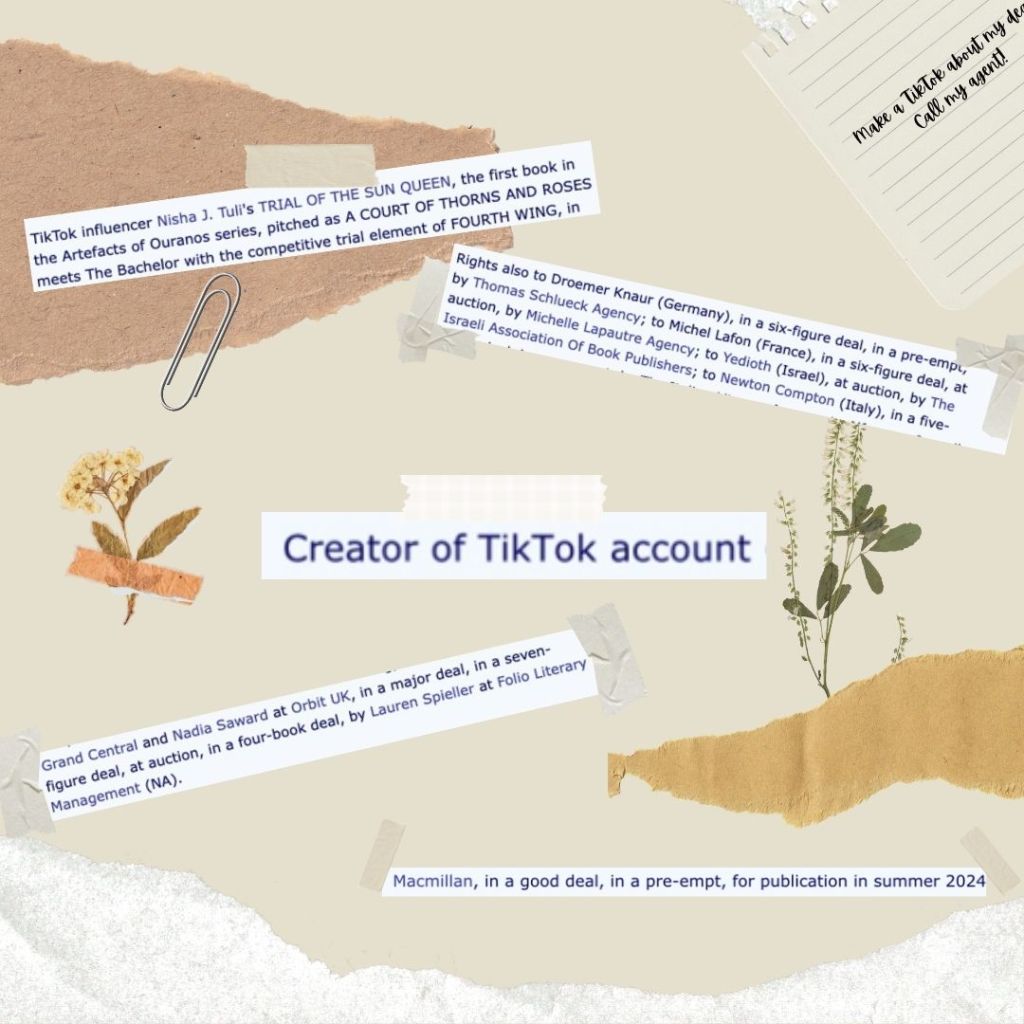
Most of the BookTok influencing isn’t done by a book’s author. It’s done by, well, influencers. Unfortunately, that doesn’t stop the chatter amongst authors, agents, editors, and other publishing professionals about all things TikTok. It also doesn’t stop authors from being asked about their TikTok presence by everyone higher up the food chain from them (which is for most authors, everyone in publishing). It doesn’t stop the fear when huge deals are announced for TikTok influencers’ books. Nor does it stop the feelings of, “That could have been me;” “That should have been me;” “That will never be me.”
We all know, logically, that the algorithm can’t be manipulated as easily as every person peddling a course on how to do it would make it seem. (Sidenote: my day job is in software please don’t @ me on this). But you can’t win if you don’t play, so there’s immense pressure to get in the BookTok game even if you don’t have time, energy, or interest.
“I can’t handle one more social media” is a refrain you’ll hear often in the author community, followed shortly by the opening of another account on TikTok, Bluesky, Threads, Youtube.
My spicy take? Authors should be allowed to spend their precious little free time content creating real live books. It’s already hard enough. They don’t pay us nearly enough for this kind of side hustle. (They don’t pay a lot of us at all.)
These are churned and chewed topics of conversation, though. What I really want to get at, now that my Bad News about my last book is out, is how BookTok pressure is making it harder and harder for me to write real books.
The Fall of My Self-Esteem
Let me get this out of the way. This has nothing to do with publishers or my agent. These are only my thoughts. My messy. Maybe I’m writing this because I’m hoping someone will read it (long as it is) and tell me they think some of these things, too. Maybe we’ll collectively be less alone. Maybe it’ll make someone realize this is a pointless cycle of self-destruction and help them find their way out. Maybe I’ll simply have a few dopamine hits when you push the like button. Whatever it does after, it does, in some ways, start with submission of my first book.
The first time my agent and I discussed TikTok, shortly after my first book had gone on submission, fae made it very clear I had no obligation whatsoever to participate, for which I will be eternally grateful.
Unfortunately, there was no amount of assurance fae could give me to convince me my TikTok abstinence wouldn’t really be a problem if my book sold, maybe even before then. The deals and debuts told me otherwise. My own failures told me otherwise. Hell, my friends told me otherwise. When I commented in writing groups that I didn’t understand the joke or topic because I didn’t know x, y, z influencer I got responses like, “Oh, you know her.” I didn’t. The insistence that I must and derision that followed swathed me in shame. I was behind again.
Like so many of my peers, I stressed over whether TikTok might be the final ingredient to get me over the line of Not Quite Good Enough into Made It.
Quickly on the heels of that thought came several others. BookTok would never work for me. I wasn’t pretty enough, thin enough, young enough, or likable enough for the medium. Nor am I a 21-34 second summary kind of gal, if you couldn’t tell.
Knowing at this point that I will never be able to fix my age or my neurodiversity, I set to obsessing about weight loss. That would have to come before any BookTok debut. After all, all I’d been hearing was how important that very first video would be.
I’ve struggled with weight, body image issues, and eating disorders my entire life. The feeling I get from restricting food intake is the same feeling I get from binge eating is the same feeling I used to get drinking. They’re all addictions, and I have an addict brain. Moderation is not a thing I do well. I’m either at 150% or so burned out I’ve forgotten my name and what day of the week it is.
And because you can’t quit food, my body and I spiral and cycle. Snap. Anorexia—down to 107 pounds. Snap. Binge eating—up to 230 pounds. Snap. Anorexia—down to 118 pounds. Snap. Binge eating—up to 200 pounds. Snap. Scales purchased then pitched then purchased again.
On and on it goes. The addictions I can’t seem to kick. Always waiting for the next snap. Never able to fully convince myself I believe it when I say “fuck diet culture.”
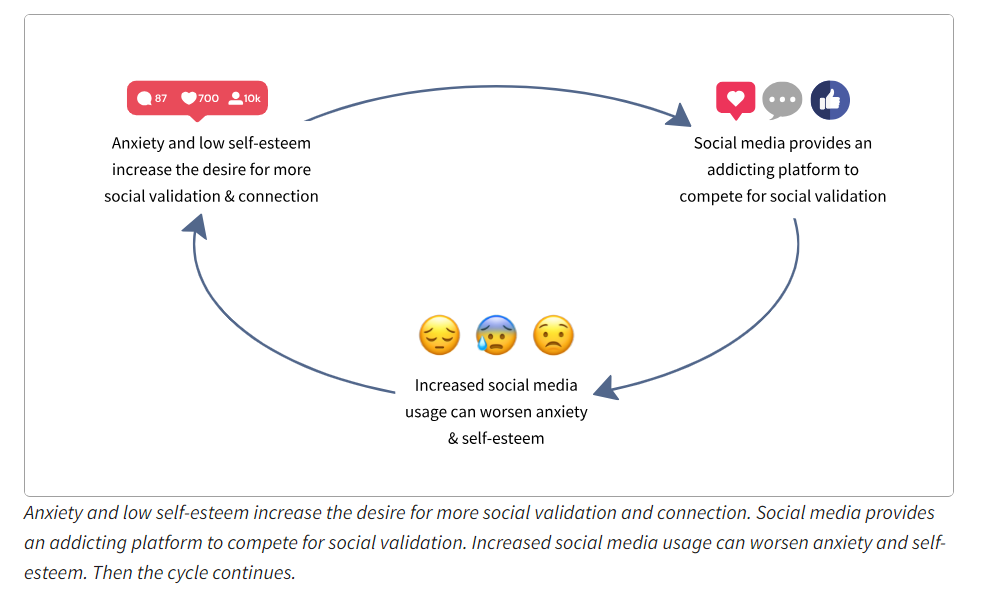
Needless to say, BookTok hasn’t been hugely helpful for my mental or physical health. And I’m not alone. Research has shown that women who watch influencers are less happy with their face while men show increased body anxiety. Source (with additional sources within). The algorithms, with TikTok’s being widely recognized as one of the most powerful, play on the very dopamine cycles I’ve been joking about during this blog (which was on purpose, yes), creating a nasty cycle of anxiety spiraling all their own.
At the time my last book went on submission, I was at arguably the healthiest weight of my life, somewhere around 145 pounds. Moderated. Controlled. Neither binging nor restricting. Neither overexercising or laying around too much.
Enter the BookTok pressure.
Don’t get me wrong, I’d been watching my friends go through this, struggling with the concepts of some of it myself, but submission made it all too real. My agent said I didn’t have to worry about it, but not getting on TikTok meant possibly losing an easy ticket to the top. It was time for me to enter the fray. And while part of my mind (I almost wrote the logical part of my mind but checked myself) said “lose weight” the greater part of it said, “Impending doom. Bunker down and eat everything.”
Snap. Back to 200 pounds.
A damaged spine.
Morbidly obese, they said.
Can you walk up half a flight of steps without getting winded? they asked.
TikTok. TikTok. TikTok.
Beyond the noise, a memory floated to me like a sheet on the wind. An interview I hadn’t thought about in years. The dream I had. The one that perservered through so many failures and rejections. Here it was, smashed upon the surface of authors being forced to become a brand. I remembered too my writing professors scolding me, urging me to let my stories speak for themselves. Yet now here we were, living in a world where other people spoke for our stories. Spoke for our pain, our traumas, our identities, our histories, our sexualities, our 90,000 word journeys of self-discovery all summed up in perfect 34 second snippets about tropes and heat levels.
Everything I’d learned was upside down. Things that were moving too fast skidded to a hault. I stopped reading, stopped writing, stopped engaging with other authors, stopped telling people I was a writer. I tried to regain momentum. In truth I’m still trying, but it feels like dragging lead. Or perhaps more accurately, like dragging 50 pounds of my own dead weight.
I have nothing left to sell. Not even myself. Because I’m not skinny enough for BookTok.
Snap.
 Aimee Davis