Author’s Note: This post is not intended to pass judgment on the books currently being marketed as romantasy or their readers. I support the incorporation of sex positive books into the fantasy market and have always been a huge proponent of this. It is, however, a reflection on the continued narrow mindset that we use to view and sell books and how that mindset continues to hurt marginalized communities.
This is simply my opinion and is not intended to represent the view of any individual or group besides myself. For ease of understanding, I write both YA and Adult Fantasy in the traditional publishing space and am agented but unpublished (as of yet). The following post is a reflection primarily on the Adult Fantasy space but does discuss how YA and Adult intertwine.
Once upon a time, I would have said to you my adult fantasy books were “romantasy.” I would have said that because I believed it to be true. They were a blending of the fantasy and romance genres that still belonged primarily under the fantasy arm. I would also have said this because romantasy was, and continues to be, extremely popular.
Now, you’re more likely to find me calling my books fairytale retellings for grownups.
I’ve broken up with romantasy.
To be honest, I was always a little nervous about calling my books romantasy to begin with. When my agent and I first set this label to my fairytale retelling about a godmother who hated her job, the romantasy moniker was relatively new to the traditional publishing scene. It wasn’t well defined. It still isn’t well defined.
Is it a fantasy that has a strong romantic element or a romance that has a strong fantasy element? Does it require open door, on the page sex? How much? What heat level must it be to be considered romantasy? Is there a real difference between romantasy and fantasy romance? Or romantic fantasy? Where are the lines? What shelf does it go on?
As a neurodiverse individual who spends her days elbow-deep in contracts “not well defined” is not a thing I love.
However, somewhat arrogantly, I thought perhaps I could be one of the trailblazers to define this space.
Spoiler alert: I didn’t. I also have no track record to have ever thought that would be a real ambition. Still, I believed, as so many people do, that romantasy must mean what I wanted it to mean, and it made sense to throw my book into the ring even if it maybe didn’t belong there.
What I wanted romantasy to be was a fantasy-first story with a strong romantic subplot. A book with a pretty hardcover that sat next to Gaiman and Martin and Tolkien. A grown-up version of much of the young adult fantasy you see on the shelves today. Something dealing with grown-up problems (like hating your job and dastardly exes) in grown-up ways (rage quitting and revenge sex) while still maintaining the fantastic elements, fast pace, character-driven plots, and light worldbuiding of YA fantasy.
Like so many, I’d grown out of YA. Insta love and pining wasn’t doing it for me anymore. Nor were love interests who were minors. The days of messy childhood dramas were past. My friends are my allies, my foundation, not my competition. I’m a busy, Millennial woman working in software, usually between 60-80 hours a week. I have a mortgage, a family, responsibilities and appointments to run in and out of. The days of locking myself in my room for a week during spring break to read, only emerging for popcorn and soda, were gone. Now, my fingers ofen find the smallest book on my TBR, not the largest.
YA fantasy no longer offered what I wanted. But neither did adult fantasy, where the books were too long, too dark, too political, too sprawling. I hated maps, and countries, and a million languages and thirteen POVs I couldn’t remember, and flipping back and forth to try to remind myself who was who.
So I set out to write what I wanted. A grown up YA-esque fantasy fit for the adult fantasy shelf and the (now) adult fantasy reader craving something different.
Here’s where I guess I went sideways. Because I didn’t set out to write a romantasy as it existed. I set out to write a thing I personally wanted to read. Romantasy as it existed was a much sexier fantasy than I’ll likely ever write. It became even sexier as the subgenre evolved (and my book moved through submission).
I wasn’t writing for a genre, I was writing for something I thought was missing in the genre. A fantasy with sex in it, sure. A fantasy with a romantic subplot, but a fantasy first. I thought this would fit into the romantasy category, but what I received on submission was a lot of “this is great but it doesn’t fit… anywhere.”
My books aren’t about six pack abs and heat level. I don’t know how spicy they are. I’m touch averse. The fact they contain sex is a miracle in and of itself. The reason they do is a statement. Sex in my books is about reclaiming my power, about seizing female agency and saying, “This goes here, too. We go here, too.” It’s about showing things through a lens I never got to view sex. One that is not as fantastical as my favorite books once had me believe.
But at the end of the day, my books are more about friendship. And power. They’re about breaking down walls and rewriting problematic faves.
I write them because I believe fantasy deserves to have more than grim dark and sword and sworcery and urban darkness. I believe it deserves to have more lightness and simplicity in world building. But I believe romantasy now deserves more, too. Love deserves more. It deserves to be represented in more ways than heat level, and an endless run of tropes, and how many times you can have open door sex in 90,000 words. It deserves to be seen in friendships, and undiscovered sexuality, and self-love, and asexuality, and found family, and redemption, and parents trying and failing, and sex being a place of healing but never healed.
Romantasy deserves a definition. And a place on the FANTASY shelf that is as wide as the genre it’s named after.
Until then, though, I’m breaking up with it.
Until then, I write fairytales for grownups (and the occassional YA).
Author’s Note: First, sorry I’ve been a bit MIA, things at the 9-5 have been hectic! Now, about the following blog: To be totally candid it was originally drafted in a moment of late night, desperate sadness that turned to fury. I’ve subsequently edited it, pulling back on fury to add what I hope comes across as tongue-in-cheek humor at the forefront before asking what I intend to be genuine discussion questions about the lens through which we view not only Adult SFF but literature in general. This piece is primarily about internalized sexism but also touches on race and other marginalized identities. I caveat that I’m female and neurodiverse but not a monolith. I’m also white. This not an attempt to speak on behalf of voices that are not my own but instead to recognize them. Wherever I use the word “woman” please understand this to include trans women and anyone who identifies with or as a woman at any time, including but not limited to nonbinary and gender fluid folks (if there’s a wish to be included!)
To the extent the argument you might put forward in defense of the alleged “dumbing down of fantasy” trend is due to a flood of white women authors entering the market, I make no argument contrary to the actual facts. Those are that the market continues to be depressingly white. I do intend to argue, however, that any argument that women writers of any race or color who include love, romance, sex, or less traditionally “intense” topics in their Adult SFF somehow leads to the “dumbing down of fantasy” begs a critical re-examination for potential internalized sexism. This point is not expressly stated in the piece as I attempt instead to pose questions for consideration, but I don’t want it to go misunderstood or my position on this issue misstated.
TW/CWs: Opaque references to internalized ableism, sexism, racism. Quote from Moby Dick containing offensive language relating to Indigenous Americans and those of Persian descent.
Length Warning: This uh… got out of control. Apologies and congratulations to anyone who makes it through.
pe·dan·tic
/pəˈdan(t)ik/
adjective
of or like a pedant.
An insulting word used to describe someone who annoys others by correcting small errors, caring too much about minor details, or emphasizing their own expertise in some narrow or boring subject matter.
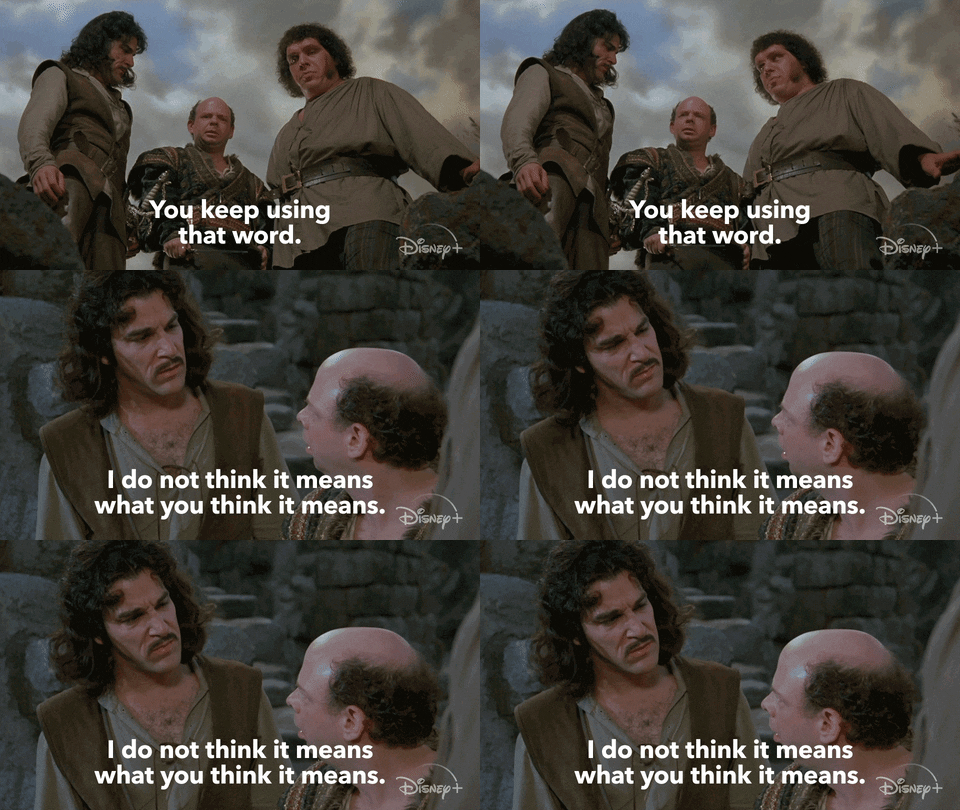
I don’t think this word means what people think it means.
You had to know this was coming, right?
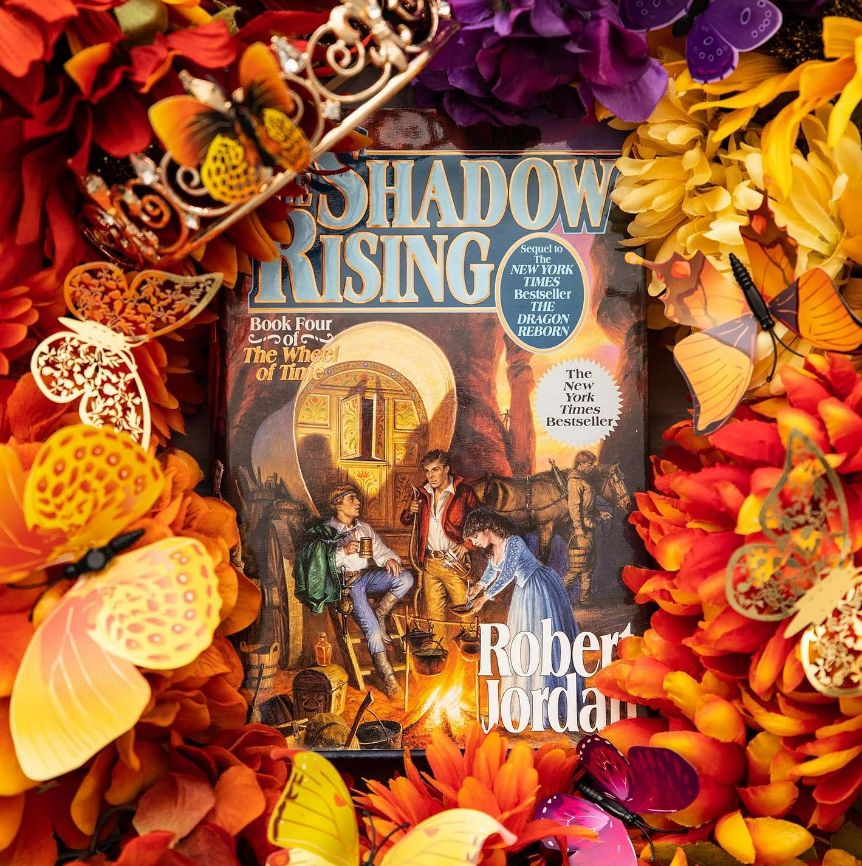
I’ve seen it bandied about a few times lately, mostly to describe a trend in Adult SFF toward publishing books that are more accessible to different groups of readers. As in, “I’m so sick of books that read too YA with their pedantic dialogue.” Or, “Can’t anyone read anymore? All these books are so short. In my day, we all read 350,000 word Robert Jordan books in one sitting and waited eagerly for the next!” Or, “My hot take opinion is adult SFF these days is being dumbed down by this trend toward a certain type of book.” Certain type. Yeah. Avoid the comments to those ones if you: (1) know what they’re hinting at; (2) disagree; and (3) are near breakable things.
Good old fashioned elitism, right? How you never cease to amaze me with your inability to do a google. Who needs to google when there’s yelling on Twitter, eh? It’s not like you’re making a hugely elitist literary argument in favor of the “smart” side while using language incorrectly or anything, psh! What a nitpick. To correct you might be well… pedantic.
That Trend, Those Arguments, My oh My
While we’re here, let’s talk about that trend and those arguments.
First, call the spade the spade. The trend is romantasy. Maybe cozy fantasy, too. The argument can be couched however people want to spin it, but here are some of fantasy’s most favorite hate hits: books with protagonists (don’t you know they’re almost always women) who are too “voicey” and/or “immature”; authors who use prose that’s too simple or “commercial” (the calamity! being commercial in business-to-consumer commerce!); authors who don’t write “beautifully”; stories that “feel too YA” (I know you’re shocked to learn it’s female protagonists targeted here, too); short books that “dumb down the genre” (it’s almost like authors are aware of the cost of paper and the demands of their target market or something…), and not a small number of other similar things.
If it walks like a duck and talks like a duck it’s probably a duck.
The argument is elitism. Sexist elitism. My favorite kind.
White. Check. Dude. Check. Dead. Check. Faaaaaaancy. P.s. I’m mostly trying to use my own photos at this point because I truly cannot tell what is AI and what isn’t (that’s a me thing not an artist thing, I know you can definitely tell if you know what you’re looking for, but I’m totally clueless on this front and am thus favoring caution).
I’m putting the YA feel and voice/immaturity arguments aside for another day lest this blog become a thesis paper. Instead, I’ll focus on the prose concepts and how we determine what makes a book “smart” or “one of the greats” versus one that apparently single-handedly and without ceremony seeks to destroy via stupidity not only several hundred (arguably thousand) years of sacred literature but quite possibly an entire society. I mean honestly, what’s next? First they canceled cursive, now 500 page tomes, where will it end?
Prose (Pedantic or Otherwise)
What constitutes beautiful prose is subjective, that’s what makes writing art. However, you’ll find in elitist circles *coughlitficcough* there’s certain base criteria for beauty or at the very least what constitutes “great” literature. Can you argue over its meaning? Does it have an ending or passage that leaves you looking like Rodin’s The Thinker? Can you take a single paragraph and dissect it word by word, puzzling over each? Is there a whole curriculum to be spun over a sentence? Has it “stood the test of time” (aka is the author usually white, male, and dead)? If yes to a few of these, take a deep breath and sit down, because you might just be in the presence of greatness.
Ambiguous Prose, Generally
George Bernard Shaw (another dead white dude) famously said, “Youth is wasted on the young.” He’s not wrong. Because if in my youth I’d possessed the self-awareness (and courage) I have now, I would’ve pushed back against some of the elitism drilled into me during my “classic” writing education. Not to say there’s anything wrong with ambiguity1 necessarily but putting it on the pedastal I’ve seen it placed on feels more ableist now that I’m self-aware enough to process the gut feelings I experienced in my younger years.
1To not be ambiguous myself, I note here I’m using this word very colloquially. When I say ambiguity or ambiguous prose I mean, generally, language or plot devices found most notably in works of literary fiction where the reader is left to question authorial intent and in many cases, concepts of sociology, philosophy, or morality. More plainly, I’m referring to every book you’ve ever read in an English class that contained some kind of discussion around, “What do you think was meant by [insert word, sentence, plot point, etc.].”
I always hated Chekhov, for example. I hated his vapid, fragile women who seemed to me to be more objects to move around than real, fully-developed characters. I hated his burly, abusive men with their cheating and dishonor. I even hated that stupid little dog in his story “The Lady with the Dog.” Even now, my nose wrinkles and my tongue curls back in my throat. The neurodiversity in me rages against the grayness of it, the injustice, the lack of resolution or seeming point. Yet my professors lauded this man with his characters’ moral ambiguity and enigmatic existences. So much to analyze! Not for me. Nope me on out, please.
Admittedly, I don’t have a ton of photos of my extensive “classics” collection primarily because most of the covers are horrid, and I don’t often have fun and happy, grammable things to say about them. This being a beloved exception. Dead white dude tracks.
Short but Still Cryptic Prose
I once sat through a ninety-minute writing workshop where the professor and 11 students discussed and debated a single chapter of Hemingway, including spending twenty minutes on one sentence I used to swear described a character putting a worm on a hook. The used to is important. You see, when I started writing this post, I was sure the book I remembered was The Sun Also Rises. My college copy is still in my possession. So, after I failed to find my so vividly remembered worm sentence via Google, a thing I do to doublecheck my work, (sidenote, Hemingway wrote about fishing a lot), I pulled that book off my shelf. I’ve now read the infamous “fishing chapter” in The Sun Also Rises (Chapter XII if you’re interested) a few times and haven’t located my remembered sentence.
What can I say? Memory is fickle.
If someone remembers a particularly vivid singular sentence from Hemingway (perhaps a short story?) involving a worm (or maybe a cricket?) being put on a hook, please hep me alleviate this brain worm (ha) I’ve now obtained by leaving me a comment!
While I didn’t find my worm, I did find a three word sentence I’d highlighted. “Like Henry’s bicycle.” Next to it, I’d written, “Henry James – was he gay or a bachelor? Maybe a wound?” I guarantee you I did not come up with this “interpretation.” It was most assuredly fed to me by my professor.
Three words about a bicycle and this is where we go. So worm or no, I still have some questions about how we determine greatness or beauty or meaning. Is this truly deeper meaning or could it be pretty-sounding (arguable on the pretty) gibberish we’ve not only been instructed to read into but also on what the interpretation should be? Am I simply a jaded author too stupid to put deep meaning into phrases like this, or have we all been duped? More importantly, does it matter one way or the other if considering the question causes us to think critically?
For the last question, I’ll insert my own opinion. No. It doesn’t matter, with one caveat. Yes, think! Scorn interpretive meaning! Ascribe meaning! However, I caution you not to claim superiority whether you favor ambiguity or clarity. Because honestly, that’s what people are doing when they say this book is “a great” and that one is “trash” or they say “these types of books degrade literature.” They’re claiming superiority by saying there’s a right way to think and read and enjoy literature and that way is theirs and all others are wrong and thus, inferior.
For sale: baby shoes, never worn.
Author unknown
Purple Prose: Hidden meaning, hidden beauty, or cover up?
What about lush prose, then? You know, the stuff if I wrote it would be cut and critiqued for being “purple.” Writing that really can wander into pendantic territory.
Where prose is concerned, size doesn’t seem to matter. Six words or six thousand, I’ve sat in a workshop somewhere and listened to a professor gush about it. As long as there’s something to analyze! Pages on pages and hours on hours on the meaning behind the whiteness of Herman Melville’s whale without hardly a period or breath to separate it all, and do not get me started on Ulysses.
Then, I didn’t question. Now, I’m left wondering.
Who gets to decide what makes something great or beautiful or smart or meaningful? Agents, editors, critics, scholars, readers? And does that apply to now or later? Is there a yes, maybe, never scale? Who makes that? Does the political relevancy of a 200 year old word make it great today? And is it thus more great than something politically relevant in its own time? What’s more important? Age or relevancy?
Now, as a reader, a consumer, a purchaser with the buying power who thus has the ability to influence trends, think for yourself. How does this line of questioning, wherever your answers may have led you, impact what you buy? Is it helping influence a change in literature or keeping it stagnant? Is the change, if any, positive or negative? Does it affect marginalized voices?
Most importantly, though, is it making you a happier reader and a happier human?
As to my opinion? If neurodiversity has taught me anything it’s taught me that brains are as varied and vibrant as art itself. Different brains require different things to spark them. The difference, the variance, the kaleidoscope of culture and thought and concept is what we should celebrate. Not more… well, whiteness.
I’m different. I like different, and I’m really ready for an Adult SFF shelf with more than the same 15 names on it.
“…the innocence of brides, the benignity of age; though among the Red Men of America the giving of the white belt of wampum was the deepest pledge of honor; though in many climes, whiteness typifies the majesty of Justice in the ermine of the Judge, and contributes to the daily state of kings and queens drawn by milk-white steeds; though even in the higher mysteries of the most august religions it has been made the symbol of the divine spotlessness and power; by the Persian fire worshippers, the white forked flame being held the holiest on the altar; and in the Greek mythologies, Great Jove himself being made incarnate in a snow-white bull…”
Herman Melville, Moby Dick
Bringing it Back to Fantasy
The Time Testament: Aka the “Back in My Day” Conundrum
And now, we address head on the great forefathers of fantasy.
I’ve said it before, I’ll say it again: Four million word RPG adventure with ample opportunity for “Gather a Wife” sidequests. Good show, though. And if you were keeping score, Robert Jordan (born James Oliver Rigney, Jr.) is white, a man, and dead.
When I was a wee baby writer churning out horrible drafts of fantasy novels with talking Pegacorns and super-powered, teenage mages who had raging hormones and daddy issues for days, I ran into an issue with my reading. I ran out of reading. For the youths, these were the olden times where YA fantasy was not yet a thing, and fantasy books for teenagers, especially girls in love with love, like myself, weren’t plentiful like they are today.
I’d burned through all the Tamora Pierce and Mercedes Lackey and Anne McCaffrey and Kate Elliott and Elizabeth Haydon. Philip Pullman’s His Dark Materials trilogy was a weekend job. I’d read all the one-off retellings I could find: Confessions of An Ugly Stepsister; Wicked;Ella Enchanted. I’d dabbled with Libba Bray and her fantasy fiction. I’d read all the “classics” from Tolkien to C.S. Lewis.
Then, one fateful day, someone, a boy, naturally, told me if I wanted to be a “real” fantasy author I would have to read Robert Jordan’s Wheel of Time series. Because I was young, and unwise, and lacking in confidence, I believed this boy (and others like him) and continued to do so for the next very miserable decade or more. Dutifully but spitefully, I trod through every last word of that series. At some point, I caught up to Jordan’s releasing, and was given reprieves between books. Unfortunately, other boys came to tell me what a “real” fantasy author looked like (spoiler, not me). I was plied with one miserable recommendation after another, then taunted mercilessly when I expressed the tiniest dissatisfaction with the “masters.”
“What a girl!” “You’ll never be a fantasy author!” “You can’t even remember the lineage? This isn’t hard. Are you stupid?” “Poser.” “Fake fantasy fan.” “You’re only here to chase dick.” “She doesn’t even play D&D!” “What, not enough kissing for you? Get a romance novel. This is serious writing.”
High school to college. My days of writing about Pegacorns and escaping into grand quests with talking animals, best friends, and beautiful castles were over. Killed by the steady thrum of turning pages. Pages that sounded like boots. The boots of the (mostly) dead masters come to school me. Rothfuss. Jordan. Sanderson. Lovecraft. Vance. Wells. Brooks. Pratchett. Adams. Scott Card. Vonnegut. Bradbury. Verne. Clarke. On and on and on it went for years.
These books had stood the test of time. Their authors were widely deemed masters of their craft. If I didn’t like any of them, what did that say about me?
Maybe it said I would never be a real fantasy author after all.
Then, I fretted I was defective somehow. Now, I wonder: is a novel “a great” simply because it lasted? If so, what does that mean for the future exactly? What should we be telling young authors about the so-called masters? Do we tell them to replicate this alleged greatness? Nod to it respectfully? Or do we tell them to ignore them entirely and chart their own path? To own the genre and shape it for themselves?
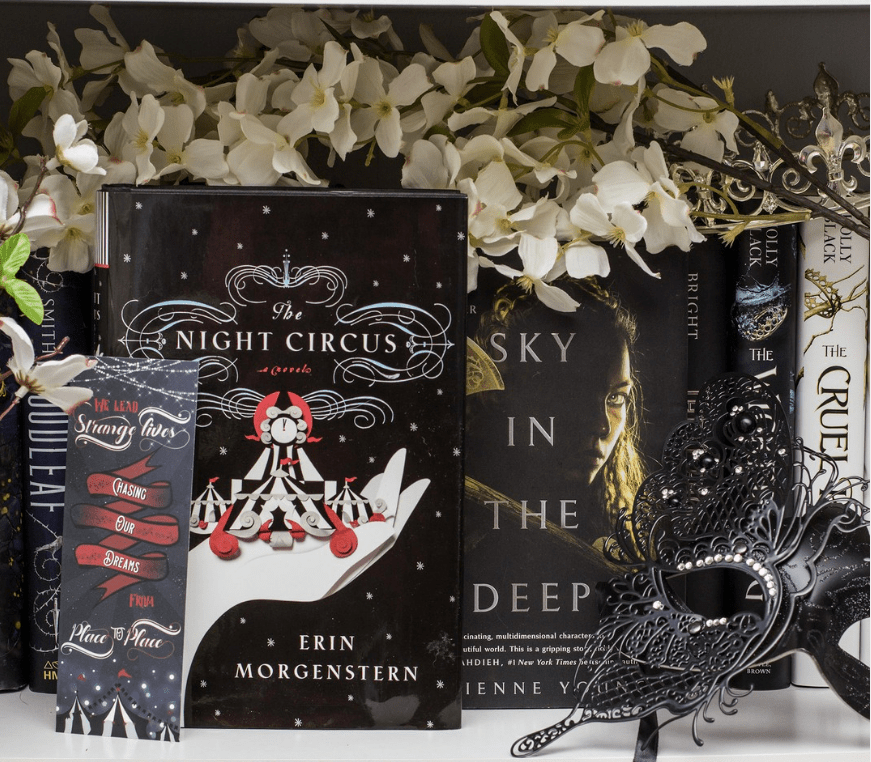
Do we put fantasy elitism on the tower of Tolkien, who spends paragraphs upon paragraphs describing architecture and flies a banner atop “and behold!” or do we look to modern literary fantasy works like Erin Morgenstern’s The Night Circus? If the latter, do we have room to both admire heartbreaking passages you can pluck from the spine and to acknowledge its containment of the usual despised and oh-so-YA insta-love? Can we dissect that work (and ourselves) with a critical but current eye, demanding to know what sets its brand of “immature” insta-love apart from other works being denigrated for dumbing down fantasy?
You may tell a tale that takes up residence in someone’s soul, becomes their blood and self and purpose. That tale will move them and drive them and who knows that they might do because of it, because of your words. That is your role, your gift.
Erin Morgenstern, The Night Circus
Getting warmer but still pretty white up in here.
TL;DR: Write for You First
Really, though, it’s far past time for authors to take—and be granted—the ability to simply say, I write genre fiction. I write to entertain. I write to try to provide a living for myself and my family. I write to please Netflix. (#goals) I write to make people smile and walk away with a happy sigh. I can and do create art that contains multitudes. Those multitudes include people-pleasing and bringing joy. I write stories about magic and adventure and escapism and yes, romance. I write about other things, too, but full stop I do not have to “prove” I belong here by saying, “I write romantasy, but it has trauma!” or, “I write fairytale retellings, but they take a serious look at systemic, real-world power dynamics!”
I belong here. You belong here. Whoever you are. Whatever fantasy you’re writing. Grimdark. Political. Romantasy. Serious. Literary. Mysterious. Cozy. Sweeping. Epic. Contemporary. Urban. Second World or Portal. Entertaining. Hilarious. Fun. Smutty. It’s all making me better to have experienced it, and if it doesn’t, I stop reading. I’m an adult. This is Adult SFF. I can stop if I want.
And really, does art require grandiosity? Deep meaning? To be smarter than the other book? Better yet, what is something grand or meaningful or smart? If you ask me, making people smile is pretty grand. It also has a pretty deep meaning. Those things are pretty smart. If you don’t know why, consider this my #litficmoment and feel free to analyze authorial intent.
I’ve said it once, I’ll say it again. There should be room for everyone at the table. If you don’t see it, imagine. Then fight for it.
This is fantasy, after all. This is what we do. Dream and do battle.
To all the writers, agents, editors, and other publishing professionals fighting to bring us an Adult SFF shelf as diverse and vibrant as the rainbow, I thank you. May all our many stories and voices find their seats at the table ❤
Author’s Note: While I write both young adult and adult fantasy, this post will focus on my adult fantasy. Also, I am using the term “women” here to encompass a general target audience in publishing (and to make a snazzy title) but don’t intend this term to be narrowly construed and will use gender neutral language throughout.
My college writing program was highly competitive and well-known. Our school of journalism was equally so. As a consequence, sometime during the fall semester of my sophomore year, I found myself at a Starbucks, sitting across from a 4’11”, journalism major from New York who’d emailed me out of the blue requesting an interview with me for a story she was writing about the creative writing program.
I had no idea this petite girl with a less than petite attitude would become one of my closest friends and future roommate. Honestly, I thought we might not ever see one another again because most of the time we spoke she never took notes, so I assumed she didn’t find me particularly interesting. But when I told her I “used to” write fantasy, she pushed her chai tea to one side and picked up her pen. Apparently that was more interesting than anything else I’d said about the writing program, how it worked, or lit fic.
“Why fantasy?”
It was a question that has followed me ever since. My answer hasn’t really changed, though, even if it has probably become more nuanced.
What I told her then was fantasy gave me a way to address things that mattered to me in a way that didn’t seem so on the nose, something I was constantly getting scolded for in my writing classes when it came to my lit fic. “This isn’t a morality tale, Aimee.” Was a not infrequent comment on my short stories. At the time, I hadn’t learned the subtlety needed to nudge in a real world setting.
Possibly because I’d spent my entire life reading fantasy. Possibly because I sort of hated writing lit fic.
But fantasy gave me that outlet and let me make it as bold as I wanted, because with fantasy the reader is steps removed from the real world. They can disconnect when their ideas are being challenged and come back later. It’s a softer way to influence. A more fun way, too.
What I would add now is that issues can also be targeted and isolated in fantasy. You are the builder of your world. You can throw out some things from our world to focus in on others. (That bit admittedly took me much longer to figure out and is always going to be a work in progress).
I’ve written before about fairytale retellings and why it’s important we market them to adults and shelve them as fantasy. But while I was in Boston for work last week, I was (naturally) asked about my books, and why I write fairytales for adults.
What a question. A good one. More complicated than you’d think.
It took me back to college. To that question about why fantasy. But also to a comparative literature class I took about fairytales and how they affected the socialization of children across the years. Spoiler: Walt Disney was pretty sexist, and racist, and all the isms, really.
Yet, fairytales have a structure that appeals to me as a neurodiverse individual. Plus, their goal is the same goal I seek in writing, well, anything: Influence. They are quite literally morality tales.
Children aren’t the only ones who need morality, though. Adults do, too. But it’s different. Like the adult life, it’s messier, grayer, more complicated. So what do I do with that? Well, I take the structure of a fairytale and I bend it, twist it. As my Pitch Wars mentor would say, I often fracture it.
After all, it’s only when something has been broken that it can be put back together.
My tales are more than once upon a times and happily ever afters, but strip them down and all the elements of a typical fairytale still remain.
Main Components of a Fairytale
Characters
There are three main types of characters in fairytales: goodies, baddies, and allies. The main character “goodie” is typically young, poor, unhappy, and “pure.” They’re likeable. The one you’re rooting for. The Disney Princesses. The baddie is usually the direct opposite of the goodie. They’re often old, rich, miserable, and “evil.” Often, they’ve stolen from the goodie and intend to keep that just how it is, thanks. The wicked stepmothers and vain witches. Then there’s the allies. The allies are across the board in fairytales. Sometimes they’re animals, sometimes they’re friends, sometimes they’re love interests. Dwarves, princes, helpful mice, a well-placed good witch. The baddies have allies too. Flying monkeys come immediately to mind.
You know what I’m on about, right? There are really neat formulas here. We as readers like the goodies and dislike the baddies. There’s not much gray area, so down the yellow brick road we go.
I mean, unless you’re reading one of my fairytales. Then you might not actually know who’s a goodie or a baddie and the traditional roles might not be what you expect. Because that’s life, right? Sometimes we don’t know who to trust and… oh, I’m spelling out my moral again. Guess you’ll have to read the books someday!
Magic
Fairytales have loads of magic. Not only magic systems with evil (and good) witches but also magic numbers (3 and 7 are big ones). And, of course, magical creatures. This puts fairytales in the fantasy genre.
My magic systems are often based on morality concepts I want to explore. What is selfishness? What is really selfless? What happens when the goodie wants to be a baddie? And what makes a baddie a baddie, anyway? They also often deal with power. Who has it, who wants it, and what it takes to get it.
Obstacles or Tasks
The basic structure of a fairytale requires the goodie to overcome tasks or obstacles that often feel or seem insurmountable to reach their happily ever after. Usually they need magic and allies to accomplish these tasks plus one of their handy and winning traits that makes us love them, like courage or cleverness.
Most stories have obstacles or tasks, if we’re being honest. My fairytales are no different. The tasks are just more adult than in a traditional fairytale. Because they’re for adults! Don’t fall in love with this guy even though he’s sexy. Do this job even though you hate it. Kill this dude so you can reclaim your position. You know, normal life stuff.
Happily Ever After
Most fairytales have a happily ever after BUT NOT ALL. Especially in older tales, this was not as much of a genre convention as it came to be. Depending on your definition of happily ever after, you might see this differently, too. If you’re like my partner and have a taste for dark justice, you might see the version of Snow White where the wicked queen is made to dance wearing red-hot iron shoes until she dies as a suitably happy ending. But probably few see The Little Mermaid telling where the prince marries someone else and the Little Mermaid throws herself into the sea, turning into foam as an HEA.
Today’s fairytales, however, do typically require a happily ever after. Mine have them, but they’re never what you expect. #LitFicTaughtMeThat
The Moral Lesson
This is probably the biggest concept in a fairytale, and the reason I love them as a medium for retelling. Fairytales teach the morals of the time period in which they’re told. It’s why they’re told and retold again and again. It’s why we don’t tell the version of Snow White with the dancing on hot iron shoes, or the version of Sleeping Beauty where she isn’t woken by a chaste kiss but by the kicking of her babies because–surprise!–she’s been sexually assaulted in her sleep. It’s why the new live versions of Disney feature a Princess Jasmine who wants to be a Sultan, and a Black Little Mermaid. It’s why our new fairytales expand to a Queen who loves her sister and is ultimately rescued by her, not a prince; a Polynesian “Daughter of a Chief who isn’t a Princess;” a demi god who self-corrects he’s a hero of men, no women, no all; a Colombian family who is magical but traumatized; and a Mexican boy who wants to chase his dream of playing music.
My tales have moral lessons, too. For the millennial primarily. Things we didn’t get in our versions of Disney. But also things that are important to us now, as adults navigating a world that, in many ways, is different than the one we were prepared for.
I joke that my brand of adult fantasy is “fairytale retellings for women with work issues” because I primarily write retellings centered on women who have some kind of issue with work. All Her Wishes is about a fairy godmother who hates her job. My current retelling is a genderbent Beauty & the Beast about a sorceress who is pissed about a promotion gone all sorts of sideways.
At their hearts, though, my books aren’t really only about work, or even mostly about work. They’re about finding your power and your place in the world. My books have morals, but not the ones I grew up with. Ones I’ve learned along the way. And the thing is, while it might be children are easier to influence, they’re not the only ones who need influencing.
I guess in the end, I ignored those comments about morality tales.
Trigger and Content Warnings: This post will delve into my past so contains references to trauma/domestic abuse/childhood abuse. Also contains gaslighting/verbal abuse from a domestic partner. Very brief reference to potential infertility struggles (one sentence, vague reference).
Author’s Note: This is sort of a companion piece to This One where I talk about expanding the options available to readers of Adult SFF but focuses more on the YA/Adult Fantasy differences, why Adult Fairytale Retellings and Romantasy are perfect for a certain target market, and why we should not exclude these from Fantasy shelves.
Disclaimer: I am writing this post at 1:15 a.m. after not having slept more than 2-3 hours a night for 12 consecutive days. I will edit it prior to posting; however, please understand that any references to “Millennials” should not be construed as an attempt to encompass the entirety of this huge and diverse group of people but is being anecdotally genericized for purposes of this post based on trends I’ve noticed, things I’ve watched over the years, being part of this group myself, and having many conversations on this topic with other Millennials. Similarly, the “Target Market” has been roughly defined but is not meant to contain every member of the group stated or exclude any group not specifically stated. Where there are references to fairytale retellings or mythos, I have attempted to acknowledge and honor non-western mythos and tales as well as western mythos, but the reader should understand I write western fairytale retellings from a western lens (even that word, “western” is loaded because it really means American and European, doesn’t it? A specific kind of European, even). There are nuances that go into all kinds of ways of storytelling that cannot be encapsulated well here, but which are all valid, and I believe deserve recognition and seats at the table. Finally, I have attempted to be sensitive of the current discourse regarding this conversation and want to acknowledge the ace and aro perspectives. I have done my best to avoid aro/ace erasure in this regard but acknowledge I am not perfect and welcome input if anyone feels erased or harmed by this post.
Once upon a time, there lived a lonely little girl. She lived a lonely little life in a small house made smaller by violence and noise. With no brothers or sisters to play with, and parents who declared loudly they did not want her and beat her when they saw her (if they could be bothered to stop beating one another), she spent most of her days hidden away with nothing but books and animals for friends.
The little girl grew up, as little girls so often do. Her house got bigger. Her world did not. Violence and noise followed her wherever she went. Like moths to a flame, people like her parents were drawn to her. She let them in. One by one by one. They came, they destroyed, they abandoned. Until she was a ghost of a thing.
Always, though, she had her books.
Me, circa senior year of high school.
Among her favorites were fairytales. Not because they had happily ever afters, because many do not, but because they had rules. They followed a pattern. At the end was a lesson explaining what was right and what was wrong. If you trust blindly, you will be eaten. If you open that door you’re told you shouldn’t, you’ll be murdered. If you work hard, you’ll be rewarded. If you abuse your children, your eyes will be pecked out (all right, maybe she liked that one for its ending).
Justice. Order. Black and white. Right and wrong. In all the chaos, fairytales soothed something inside her. They gave her peace and fortitude. The strength to continue to flit and flirt and smile and laugh while the moths gathered and ate up her insides chunk by chunk.
Until one day, one of the moths who she loved more than all the others said he was done with her, too. It was a pattern she should have recognized, because she was so very good at recognizing patterns. But she wasn’t ready to let go. So she did something she hardly ever did. She fought. With words and tears and fisted hands, she screamed and raged and begged like a wild thing caged. The world was big around her but inside her head it was so very small. She thrashed against it. Begging to be freed.
The moth looked upon her with disgust, this caged creature he only now realized was more beast than girl, and he said, “That’s the problem with you. You think life is a fucking fairytale. It’s not. Grow up.” He flickered away.
That day, the girl who was a beast became a woman.
Now you know my origin story. You know my anecdote and perhaps one reason why I believe there is true power behind fairytales. But there are practical reasons I write fairytales beyond spiting that asshole who told me life isn’t one (which, obviously). Specific reasons I write Adult Fairytale Retellings despite that being the harder path for an author who writes both Young Adult Fantasy (where fairytale retellings exist and are popular) and Adult Fantasy (where they are not). Why do I choose to make things so much harder for myself? Well, I’m so glad you asked.
But First! An Announcement!
This post is about traditional publishing. Specifically, Big Five traditional publishing (and their imprints). I can’t encompass the whole of everything going on in fantasy, this is already too long, but it is important to note that what is trending in the self-publishing space and the indie publishing space (i.e. smaller, independent presses producing primarily digital only or digital first editions of books) is not always the same as what is trending in Big Five traditional publishing. I would argue that is the case in fantasy right now. With the rise of BookTok, this nuance seems to have been lost. For readers who perhaps don’t know or care where their books are coming from (which is awesome, I am highly supportive of self-publishing and indie presses getting more attention), the distinction might not seem to matter, but for authors it does. This disconnect should not be ignored.
Are my posts long? Yes. But this is precisely why. There is so much nuance it’s impossible to capture it all even in a blog, let alone a Twitter thread. Still, when we speak let us try to be clear. When I speak, I will do my best to be so. Self-publishing and indie publishing are not the same as Big Five traditional publishing. What is trending on BookTok does not necessarily represent the whole of traditional publishing (it might not even be traditionally published). For example, Adult Fantasy Romance is killing it in the self-published space right now (thanks in good part to BookTok) and has been for several years. In traditional publishing this is not the case. Do readers know that when they expect certain things from traditionally published adult fantasy authors who are facing different struggles in their markets (which are not Romance, by the way, a point I’ll talk about in a minute)? Perhaps not. Should they care? Also maybe not. But the authors certainly do, and I am about to argue that traditional publishers (specifically the Big Five presses and imprints thereof) should, too.
All right, back to fairytales, and why I tell them for adults…
I Write Adult Fantasy for Millennials
For my Adult Fantasy, my target market is primarily adult women aged 27-42 (aka today’s Millennials). Birth years for this age group range from about 1981-1996. This will be important for the timeline I’m about to set up.
Millennials and Young Adult Literature – A Brief HistorySource of some of the below, some gathered from life experience
While young adult literature has arguably existed since S.E. Hinton’s The Outsiders (1967), most of the popular young adult literature of the 60s, 70s, 80s, and 90s was contemporary, with the first “Golden Age of YA” occurring in the 1970s ushered in by books such as Go Ask Alice, Beatrice Sparks; The Chocolate War, Robert Cormier; Forever, Judy Blume; and Flowers in the Attic, V.C. Andrews.
In the early 2000s, (when our Millennial age group was aged between 4-19) YA experienced the second Golden Age of YA. This new resurgence in popularity of young adult titles was led by speculative fiction. Since then, fantasy has largely dominated young adult fiction with only recent shifts toward contemporary preferences. Meaning that for a majority of Millennial readers, speculative fiction was the Thing to Read during their formative years with such titles as Harry Potter, JK Rowling (technically shelved as Middle Grade in some instances but crossover as it ages up); Twilight, Stephanie Meyer; City of Bones, Cassandra Clare; and The Hunger Games, Suzanne Collins appearing in the 2000s (and their subsequent books coming out far beyond).
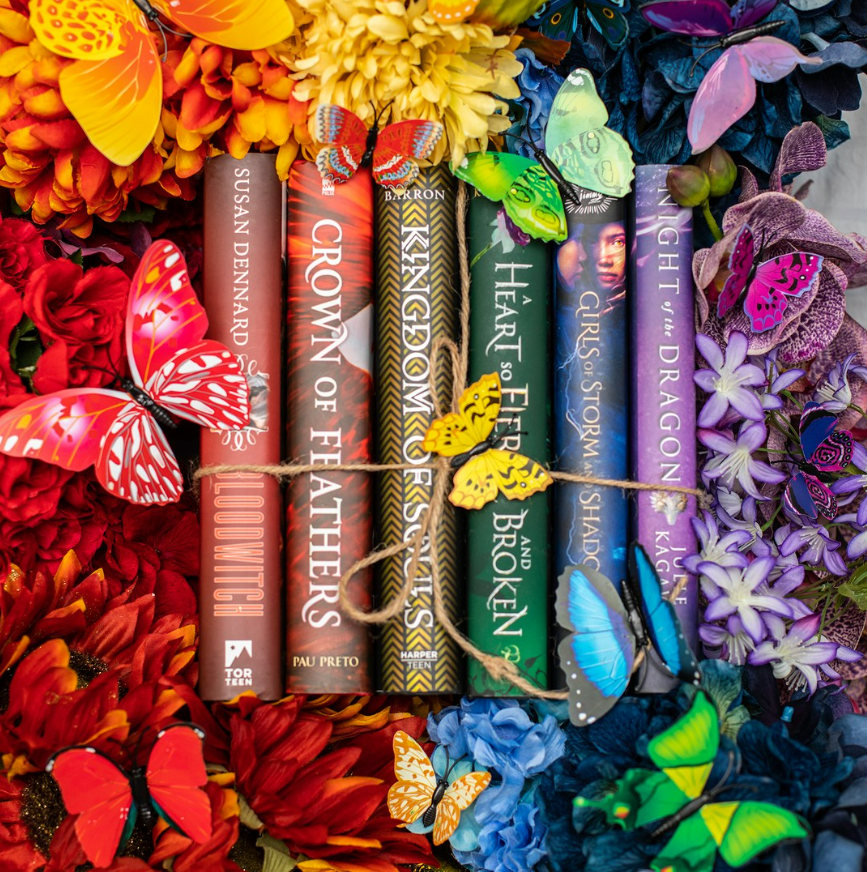
Continuing this trend, in the next decade (when our Millennial age group was aged between 14-29) came the YA powerhouses most of us will know best today: A Court of Thorn and Roses, Sarah J. Maas; Six of Crows, Leigh Bardugo; Ember in the Ashes, Sabaa Tahir; The Young Elites, Marie Lu; Scythe, Neal Schusterman; Children of Blood and Bone, Tomi Adeyemi; The Cruel Prince, Holly Black; The Raven Boys, Maggie Stiefvater; and many, many more.
Less than halfway through this decade, however, by 2014 in fact, our Millennials had “aged out” of YA if you use the technical definition of YA as being for readers between the ages of 12-18.
It was time for them to move upward and onward into greener pastures.
Adult Fantasy, here we…
Wait.
OMG, look! It’s a vague, faceless, white guy telling me not to go hang out in Adult Fantasy. I wonder why? Let’s go find out! Image by Arek Socha from Pixabay
Adult Fantasy v. Young Adult Fantasy
Until recently (within the last couple years), I would argue that Adult Fantasy made no meaningful attempts to appeal to a big chunk of Millennials. That chunk being primarily women and marginalized voices. By “Adult Fantasy” I mean traditional publishers, not authors. There were for sure people trying to get things published. But gatekeepers going to gatekeep.
Meanwhile, YA Fantasy continued to offer things that appealed to those people. Like what? Well, like this list I’m about to caveat. Caveat: this list is not intended to be exhaustive, or to represent every point of view from every marginalized group (clearly), nor is it intended to absolve YA of anything that hasn’t happened, hasn’t happened fast enough, or got messy along the way.
The List of Cool Things YA Fantasy has that appeal to Millennials even though we’re now Certifiably Old:
Targeted efforts to diversify the stories told (both through movements to push for the publication of more diverse authors and via non-marginalized authors paying more attention to how they depict marginalized people in their works)
Faster-paced books
Character-focused fantasy that gets deeper into human interiority
Shorter books (+ more standalones and duologies as options versus trilogies and beyond)
SUBGENRES: High Fantasy; Contemporary Fantasy; Urban Fantasy; Fairytale Retellings (from western and non-western origins); Steampunk; Paranormal Romance; Dystopian (which arguably falls under the Sci-Fi umbrella but in YA, fantasy seems to own it); Portal Fantasies; and Romantic Fantasies (aka Romantasies)
Second world fantasy with lighter, more grounded world building and less complex magic systems
While YA has been doing this, Adult Fantasy has largely stayed sort of exactly the same. It’s still primarily dominated by white, cis, male authors writing massive tomes that are grimdark, epic, and/or sword or sorcery. Are there exceptions? Absolutely. Are they hard to find. Fucking yes. And even where the authors themselves are not meeting the classic fantasy author archetype, much of the work still is. Long. Political. Dark. Violent. In short, the age group hasn’t evolved in step with its YA counterpart.
Oh hey, maybe this person can scry me up an Adult Fantasy that isn’t more depressing than the year 2020. Photo by petr sidorov on Unsplash
Why This Matters
I’ll be real. I’ve been trying to age myself into Adult Fantasy since YA authors started talking about how creepy it is for grown ass women to be shipping teenage characters. Which I think was the YA Twitter tea of like… 2017. So it’s been a minute.
I’ve tried to embrace Adult Fantasy. I’ve listened to YA readers (who I write for as well) and done my best to remove myself from their space. I hear MG and YA authors (and teachers and librarians and booksellers) now in 2023 begging for YA for younger teens. Wishing for a ramp from MG to YA. Especially for boys. YA Fantasy has become so oversaturated with a particular kind of book (the one appealing to my referenced target market, in fact) that there’s no room for other books actual teens not only want but need. We (authors but also sort of society) are losing readers. This is an actual issue. I hear you. And I agree 100%.
But because there are no books for people like me in Adult Fantasy as it currently exists, we keep reading YA. Because we want to read something. And no, we can’t all just get a BookTok and a Kindle and read self-published authors, nor do we all want to. Plus, many people simply don’t know about BookTok or Kindle Unlimited, because they’re regular people not plugged into the online book communities. They get their books from what’s trending on Amazon, or what they see on the end cap at Barnes & Noble, or what’s recommended by a friend or local bookseller or librarian, and all that marketing force is still dominated primarily by traditional publishing.
So, because publishing is a business that operates on the good old fashioned principles of supply and demand and the facts are that 35 year old women have more buying power than 14 year old boys, publishing keeps feeding the demand. They also keep pushing “YA” further and further up in age. I read a YA book not too long ago that featured characters who were in their early twenties, one of whom was happily married and contentedly pregnant. Listen, I know fantasy is not contemporary, but please point me in the direction of a teen who can relate to the experience of being happily married and contentedly pregnant. I mean I’m sure they exist, there’s an exception to every “rule” of life, but that’s certainly not the teenage norm. Teen pregnancy is absolutely a subject to be covered in YA, but that was not the take I was expecting. Because it’s an adult take gussied up as YA, because YA authors know their real readership is 35 year old ladies who probably are (or perhaps want to be) happily married and contentedly pregnant. (Not this reader, but that’s personal preference).
Basically, for YA Fantasy to be able to grow beyond its current state and embrace even more voices and bring in even more readers, Adult Fantasy has to do the same thing. Which makes sense. Not really sure why it didn’t happen 10 years ago when Millennials were all aging into adult but who am I?
Adult Fairytale Retellings – The Millennial Net
Back to Adult Fairytale Retellings (aka back to me). So, we’ve now learned that my target market is into a Type. The type is short, whimsical, fast-paced, character driven, diverse, with light worldbuilding, and yes, romance (not to be confused with Romance—the genre—which has a set of conventions not at play here, also not to be confused with Fantasy Romance, a subgenre of the Romance genre also not at play).
Adult Fairytale Retellings are perfectly suited for this kind of story for all the reasons I loved them as a child. They’re ordered, meaning there’s something to be reordered. Deconstructed. Genderbent. Twisted. Fractured. Examined from a new perspective. BUT they’re still familiar (if you’re writing from a western lens to a western audience, this can be different if you’re writing from a different mythos, but I would argue that’s still appealing to the target market) so the worldbuilding required isn’t from the ground up. They often don’t require as much exposition or info dumping, which helps the author jump right into the action and the characters’ heads. This quickens pacing and increases interiority (as well as reduces length). Check, check, check. And, they’re very well-suited to romance. But because we’re retelling them, we can make the romance better.
In short, the Adult Fairytale Retelling is the perfect ramp for adults who want to move from YA to Adult Fantasy. BONUS, there are loads of points of views in even western fairytales not yet explored because they are “older” characters not suitable to YA. Which gives fun, fresh, and relevant to the Millennial life stories to tell.
Millennials: Please tell me you’re not interested in stories about magic folks hating their jobs, juggling kids and their work as a dragon tamer, getting divorced and having to split the castle, figuring out if they’re too old to go back to sorcery school, and other modern day Millennial tales. I’ll wait. Copyright mine.
Romantasy – Yes, it is Fantasy
Similar to Adult Fairytale Retellings (and sometimes one in the same), Romantasy (Romantic Fantasy) is another fantastic way to ensnare the target market and lure them away from YA Fantasy and into Adult Fantasy.
To clarify, Fantasy Romance is different. It’s a subgenre of Romance. The central plot of a Fantasy Romance is the romance. A Fantasy Romance follows the genre conventions of Romance (from the meet cute to the dark moment to the happily ever after). I’m not talking about Fantasy Romance. Not because it doesn’t matter or isn’t great or I don’t have Thoughts (because DO I EVER DON’T GET ME STARTED ON THE POLITICS BEHIND EMOTIONAL WOUNDS), but because it isn’t the same natural pathway from YA Fantasy to Adult Fantasy because it is, again, shelved under Romance not Fantasy.
Romantasy or Romantic Fantasy is what most people mean when they say “there’s a ton of romance in YA Fantasy these days” (or some less polite variation). The primary plot is the external fantasy conflict (curse, heist, palace intrigue, revenge, overthrow the government, save the world, whatever), and the secondary (but often very similarly weighted) plot is the romance. You can extract the romance from a Romantasy and still have a story structure. It might be less meaty with less conflict and not as interesting, but a story would still exist. You cannot extract the romance from a Fantasy Romance and still have a story structure (in theory, I’m sure there are some who would love to argue that with me).
OMG are you still talking? If yes, please tell me why people can’t just read Fantasy Romance and leave Adult Fantasy alone?
The devil is in the details, I suppose. First of all, Fantasy Romance is also sorely lacking in material in traditional publishing. Most of what is available is digital only through indie presses and self-published authors. Not that these aren’t viable options, they’re just not always the easiest to find for the reasons I mentioned above. Or screen. Especially where self-publishing is concerned. There is some… problematic stuff out there and going back to that target market I’m harping on, problematic content isn’t going to hit right with many marginalized groups for somewhat obvious reasons. Does that mean traditional publishing doesn’t also publish problematic content? Nope. But you sure as shit hear about it if you’re plugged in. Versus self-published works there’s so much of it, flagging problematic content is much more challenging. As a person with multiple marginalizations who self-published NA Romantic Fantasy and is hugely supportive of self-published authors and has read a lot of Fantasy Romance, I can assure you I have been burned enough times now I read only trusted self-published recommendations or traditionally published works. It’s just too much to be hit with otherwise.
Further, many people who grew up reading YA Fantasy in the Second Golden Age of YA, while they might want romance, don’t necessarily want only romance. They still love fantasy. They want Katniss to overthrow the Capitol (and fall in love with Peeta), and Kaz Brekker and company to pull off that impossible heist (while falling all over each other along the way), and Laia to save her brother from the clutches of the Empire (while Elias tries to save her from the Commandant). It seems a silly distinction, perhaps, but it is an important one that Fantasy Romance does not often meet.
A Love Story has a right to exist in Fantasy – and in fact makes a statement by doing so
I’ve touched on this before and this post is already massive, so I won’t do it again. The TL;DR version is that despite what it might seem, there’s not actually a lot of Romantasy on Adult Fantasy shelves in Barnes & Noble right now, and excluding a book from the fantasy shelf because it has romance in it is elitist at best, misogynistic at worst.
Fantasy is a genre about imagination being pushed to its fullest potential. Why wouldn’t its arms be opened to the full gambit of potential human experience? Why would anything be excluded?
Opening the shelf to these books not only gives room BACK to YA Fantasy to create more readers while also satisfying a known market demand in Adult Fantasy (so is therefore good business), but it makes a statement about Adult Fantasy and where it wants to go. Which is hopefully forward.
Xoxo,
Aimee
I’m just a modern day Millennial making out with my dog. Because I am childfree by choice. Another GREAT topic to talk about in Adult Fantasy!







 Aimee Davis