Trauma Tropes and the Lies They Tell: Part 2 Hurt People Hurt People

Author’s Note: This is the Part 2 I mentioned in my last post. The doozy of all doozies when it comes to trauma and dealing with it sensitively. I’ve spent A LOT of time thinking on this topic. It is, after all, one of the main themes of the darkest book of my heart. It’s also a theme of my life. But it’s not an easy subject to tackle because it involves unpacking truths and myths about people just like me. Maybe about me, too. Necessary work is never easy.

As always, I remind my readers what follows is my opinion only, subject to bias and change, wrongness and flaws. I write (and read) through the western lens of American traditional book publishing. While I have C-PTSD, AuDHD, and touch aversion, I’m not a monolith and cannot speak to experiences besides my own. I don’t intend this to be definitive advice or an opinion representing the whole of any group, nor to be extrapolated beyond the groups described.

CW/TW: Discussion of trauma, mass murder, serial killing, etc. no graphic on page description; discussion of some of these themes and issues in history, literature, and film. Some violent imagery in photo form.


Hurt people hurt people.

Source unknown; earliest recorded source, Charles Eads, 1959, Amarillo-Globe Times.

The History of Hurt People Hurt people

In my last post on trauma tropes in narrative fiction, I discussed the definition of tropes. I won’t recreate that wheel here where you can read it there. Instead, I want to talk about the history of this curious, clever, corrupting little phrase. Hurt people hurt people.

As mentioned above, the source of the phrase is really unknown. The earliest recorded instance of it being used is by a man named Charles Eads in 1959 in a review in the Amarillo-Globe Times but there’s evidence to suggest he heard it from someone else, who maybe heard it from someone else, and back and back it goes.

The phrase itself became part of the American mainstream in the early 1990s when several self-help writers picked it back up, including a Christian family therapist named Sandra D. Wilson, who wrote a book with the same title in 1993.

However, the concept of the phrase didn’t have the sebatical the phrase did. Throughout the 70s and 80s, the US was rocked by wave after wave of notorious serial killers. Men like Dennis Rader (the BTK Killer), Ted Bundy, John Wayne Gacy, Sam Little, Jeffrey Dahmer, and David Berkowitz (the Son of Sam) stole life after life with little explanation.

The country wanted answers. They wanted assurances. In all the instability, people wanted to know why these men went beyond murder. The police could answer who, how, what, where, and when. Those things weren’t what people wanted, though. Not when it was over and the bad guy was behind bars. Then, when they felt safe again, people wanted to know one more thing. Why. Psychiatry rose to the occasion, ready with its answer.

Hurt people hurt people.

Black and white photo of a white man, back to the camera, holding a knife to his spine. © Reza Hasannia, Unsplash

Before sitting down to write this post, I spent some time learning about the history behind this phrase. During that research, I learned about a psychiatrist named Dorothy Otnow Lewis whose research “with” (or on) violent juveniles led her to testifying on behalf of some of the most infamous serial killers.

Not guilty by reason of insanity.

Lewis’ research (which can be summarized by her in her own words in HBO’s documentary Crazy, Not Insane), indicated that most serial killers shared two things in common: (1) Childhood trauma (being abused or witnessing abuse); and (2) a neurological “issue*” (dissociative identity disorder, schizophrenia, bipolar disorder, depression, autism, etc.).

*What is really being said here is someone who is neurodiverse but that word is not always adopted by modern psychiatry and certainly wasn’t when Lewis was doing her work. For this post, I will use neurodiverse but mention this so you can see the hurt even in the definition described. “Issue” I have an issue with.

Why do serial killers do the psychotic things they do? Because hurt (neurodiverse) people hurt people, that’s why.

It wasn’t immediately clear to me from watching the documentary whether Ms. Lewis believes dissociative identity disorder (formerly called multiple-personality disorder), could in fact be a symptom of trauma. It wasn’t clear to me what she thought might be caused by trauma (besides killing people, I suppose). Could all the types of neurodiversity she discussed be a syptom of trauma? A side effect of the brain being broken so young? Schizophrenia. Bipolar. Autism. What can be made by trauma? The film left me wondering if any or even all the things rattling against a broken brain could trace back to the same source: childhood trauma. I’m not sure anyone knows the answer to that at present. If they do, I’d sure like to find out for myself.

Those whys didn’t matter to the public, though, nor do they for most of you, dear readers. They might not have mattered or even been pondered upon by Ms. Lewis. They matter greatly to me, but that’s a different unpacking not meant for here. What’s important is this hypothesis that hurt people hurt people (regardless of how the hurt manifests) never stopped snaking its way through society.

Which is how it found its way to literature, film, and me.

A black and white photo of a white woman with her hair in a bun, head pressed into her knees. © Zohre Namati on Unsplash.

How ‘Hurt People Hurts People’ Hurts People

It’s probably not hard to figure out why we shouldn’t assume every neurodiverse person with childhood trauma will become a serial killer. Anyone who has seen Minority Report or read a dystopian novel about robots stopping crime before it starts can spot where that story goes wrong. The more difficult topics to address are the more subtle takes on this tale.

Should we suspect a hurt person will hurt us? Might it be safer for everyone to approach with caution someone who might, at any moment, become a mirror of their own monster? These questions roll around in my head day in and day out. Because when you’re a survivor of childhood abuse, you’re often someone who was hurt by someone else who was also hurt. Your abuser is frequently also a victim. In some ways, you can’t be the innocent, unsuspecting victim of a monster. Not when you can empathize so completely with the monster. When you have walked a day in their shoes. Not when their rage runs through your blood as well, an ever present whisper against your skull.

Not like them. Not like them. Not like them.

In modern day media, it’s not serial killers who take the front page, but mass murderers. But today we aren’t focused as much on the why these people (usually young, white, straight men just like serial killers) did it. We’re busying defending why the guns didn’t. “I think that mental health is your problem here,” Donald Trump said after a man killed 26 churchgoers in 2017. Mental health. Many hundreds of diagnoses in the voluminous DSM swept into a soundbite.

And maybe mental health plays a role. But what exactly about mental health? Dr. Michael Stone, a forensic psychiatrist at Columbia, maintains a database that shows 1 out of 5 mass murderers are psychotic or delusional (versus the national population where this is only about 1%). Reserachers at the DOJ have found that almost half have ADHD.

It’s easy to study people in cages, though. Or people who can no longer speak for themselves. It’s harder to study those of us living in the real world. Hell, it’s nearly impossible to get statistics on so many of us because women are so often underdiagnosed and misdiagnosed, and men are so often afraid to seek help at all.

Simple answers, then. That will keep the normal people safe. Not gun control for the whole country. Not less stigma on mental health so more people seek treatment. Not healthcare reform that actually gives people real outlets to real therpaists and psychiatrists. Take the guns out of the hands of the crazies, not ours. That will fix it. Anyone who has been hospitalized for a psychiatric condition should be on the government’s list. Watch them. Group them together and strip them of rights given to other citizens. Surveil them.

When do they start caging us? I wonder every time a new tragedy unfolds on the TV screen and the debate turns once again to mental health instead of weapons of war being available to everyone with an ID and access to a Wal-mart. Every time I read a dystopian novel and have to put it down because it looks a little bit too much like home. Every time I read a fantasy where the heroes walk away from horrendous battles with physical scars but no mental ones yet the villains monologue about their terrible childhoods as a way to humanize not them but the person about to stick a blade through their chest. Of course they became this. It’s a mercy to put them down, really. What a hero.

Don’t give them a choice at controlling their own redemption.

It’s no surprise I’ve always related more to well-written villains than heroes, I suppose.

And I wonder… what does it do to someone to relate more often with villains than heroes? What are we saying to those who have that whisper against their ear and rage in their blood that no matter what we do we will fail? That we are just as we were made to be? Without choice or voice. A foil to those better and more deserving than us. Someone to prop them up.

Not like them. Not like them. Not like them.

Oh, these stories tell us, but you are. You have no choice but to be. And what a wonder it is, to be relieved of that thing ripped from you so long ago. What a burden choice is. How easy it is to surrender it. Even now…
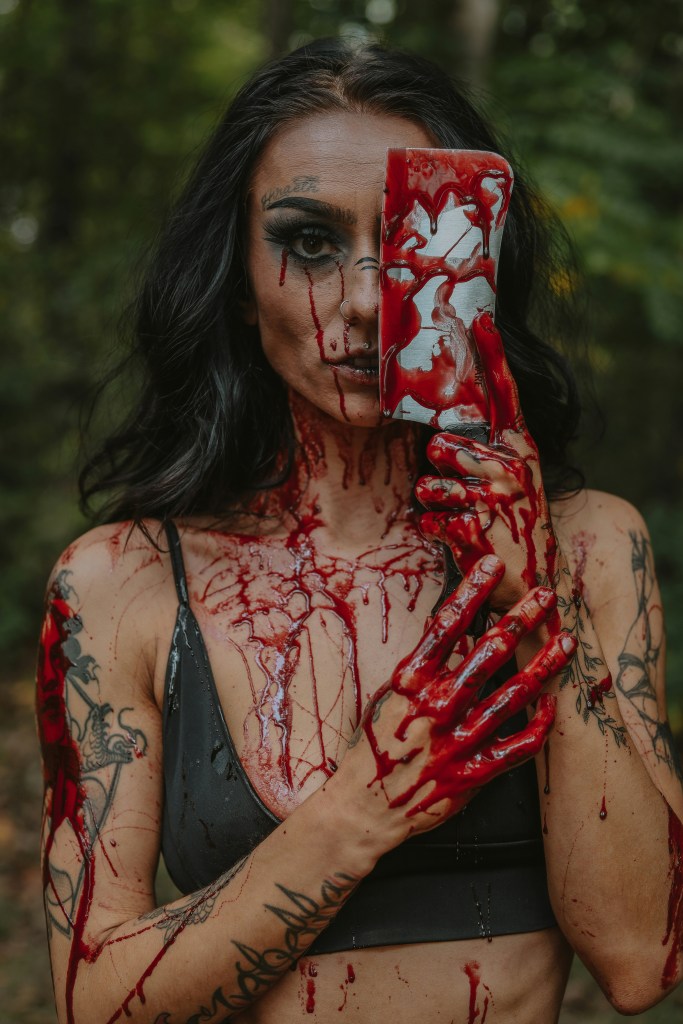
Photo of a brown-skinned woman with long black hair holding a butcher's knife over one eye, covered in blood. © Sierra Koder, Unsplash

How to Not Hurt People Who are Hurt

This part is tricky, because avoiding the representation erases us, but trauma has a generational component. Hurt people don’t get hurt on their own. Not usually. And the people who hurt them, well, it’s true they were most usually victims once.

I’ve struggled with this my whole life. How to make it real but not messy.

You can’t.

The truth is, trauma is nothing if not messy. Hurt people do sometimes hurt people. Maybe more often than not. It’s hard to say when the statistics focus on the fantastic, and people in cages easily studied and not people in the real world, simply living. People who are often afraid to seek help because they know what the world thinks of them. That said, it’s not entirely wrong to be without caution. Trauma has taught me many things, but that most of all. Vigilance.

But for every serial killer and mass murderer out there, there are many dozens more hurt people breaking the generational rules. One thing I’ve always loved about animal rescue is that it’s a place where you’ll find people like this. Almost without fail. People who once needed rescuing now doing the rescuing. You’ll find them working jobs as teachers, therapists, mental health counselors, nurses, doctors, and yes, psychiatrists. People rewriting their own stories, reclaiming their own voices. Hurt people becoming heroes. Who channel their hurt into helping.

They deserve their stories told, too. Kids who have only ever seen the monsters society makes us deserve to see not the terror in choice, but the beauty. Not in bright, shiny glory earned by people they will never relate to, but in monsters like them. They deserve to see how anger can be molded into a force for good, not evil. How power can be seized, then wielded with empathy. They deserve to see stories where the hero is sometimes the villain and the villain can sometimes be redeemed. They deserve to see stories where the hero isn’t perfect. Where they are hurt. Just like them.

So my advice if you’re going to depict this: Leave the messy versions to those of us living in those skins, asking the deep and tangled whys every day. Living in vigilance and monstrous skin. Let us fight our battles and show them on page. However messy they may be.

For you, don’t erase us, but stop making us your monsters, your villains, your people to shy away from, your morality tales. Instead, consider giving us new narratives. The one we need to seep into society to overtake the old.

Hurt people help people.

Photo of a girl with short brown hair wearing a white dress with white and red wings. © Alexander Jawfox on Unsplash.

Trauma Tropes and the Lies They Tell: Part 1 Traumatized Person Cured by Love, and Curing Cursed Touch Aversion

Author’s Note: I have been mulling over this one for a while, and there might be a second part to it to talk about another trauma issue, but I wanted to start here. With the dark book of my heart glitzed by 1920s glamor finally finalized, and sent to my agent, trauma thoughts loom. Bringing me here before the next unpacking.

As always, I remind my readers what follows is my opinion only, subject to bias and change, wrongness and flaws. I write (and read) through the western lens of American traditional book publishing. While I have C-PTSD, AuDHD, and touch aversion, I’m not a monolith and cannot speak to experiences besides my own. I don’t intend this to be definitive advice or an opinion representing the whole of any group, nor to be extrapolated beyond the groups described.

CW/TW: Discussion of C-PTSD, assault, abuse, etc. no graphic on page description; discussion of some of these themes and issues in fairytales and YA and Adult Fantasy (with plot overview of the works); minor description of effects of triggering media.


First, Definitions…

Before we begin, I want to address one of my personal pet peeves: the rampant overuse of the word trope. Which is kind of hilarious if you consider what a trope is.

Literary Trope: Traditionally, a literary trope is basically using a figure of speech for artistic effect. This is NOT what people mean when they say “only one bed” or ask what tropes you’ve included in your latest work in progress.

Narrative Trope: Narrative tropes are seen most commonly in genre fiction and can be character foils, plot devices, themes, motifs, storylines, or the like. Some are genre-specific (for example “only one bed” in romance is a plot device trope while “femme fatale” in crime is a character foil trope). These are what I mean when I say the word “trope” is overused. They’re also what I (and most of the rest of the commercial genre fiction world) are referring to when they use the word “trope.”

How does a Trope become Trope-y?

A trope becomes a trope when it’s used frequently enough for people to recognize it. Which is… pretty generic and probably why the word is easily overused.

Which leads me to the two ways I see it overused most commonly:

  1. Used too Broadly: The “trope” is defined as large chunks of something in the relevant genre. Example: One time, I saw someone say they were tired of the “royalty” trope in fantasy. This is… not a trope. “Royalty” isn’t really a character foil (“evil stepmother” is) or a plot device (“palace intrigue” meets that trope requirement). Royalty is just a swooping category of people commonly found in SFF books.
  2. Used Too Narrowly: The “trope” is too specific to be used enough to become a trope. Example: I recently saw someone complain they hated the “get kicked out of the hero’s party to discover you have an ability then do whatever you want” trope. While mildly hilarious, and probably this person is a fan of TJ Klune (same), I do remember looking around and asking, “Is that a trope? I don’t think I’ve ever seen that?” Dear reader, if takes you more than three to five words to say it, it probably isn’t a trope. Also, it does have to be understood to be a trope by the vast majority of the consumers of that genre. Otherwise, it might just be a few books where that weirdly specific thing happened, and it irked you, which, while valid for you, does not make it a discourse.
Black and white photo of a dragon perched atop a second story balcony, mouth open in a scream.
© Sean Thomas on Unsplash.
Dragons = too broad; Dragons the size of dogs who talk and are related to humans = too specific; Dragons attacking the castle = JUST RIGHT. YOU FOUND A FANTASY TROPE.

Why Do I (or should anyone else) Care?

Well… because in addition to tropes being handy for marketing purposes, they’re also handy for other groupings. Like addressing problematic issues and systemic discrimination in our work. Think: “Kill the gays;” “Black character dies first;” “Hurt people hurt people,” “Fat person is lazy” etc. etc. It’s important that genre writers know what tropes exist in their genre, and when those tropes can be problematic, so the author can choose to avoid (or subvert).

It’s also important we know what is too large or not large enough to facilitate this discussion. Losing sight of this can mean creating blow-ups that result in hurting those who are writing good and needed representation.

I saw this sort of happen with the “sexual assault” trope discourse awhile back. There was very little discussion of nuance. A majority of what I saw was, “No more. It’s cancelled.” Nevermind the statement was too broad to properly be a trope, the missing crucial pieces of this potential harmful plot device being things like: “pointless and gratuitous” sexual assault or sexual assult “to prop up a male character’s development.” Nevermind that many of the narratives out there were written by men, and cancelling this narrative meant silencing women, including women like me: survivors of sexual assault. POC talk about this frequently as well even within the context of non-harmful tropes like “vampires” and “elemental magic” being declared dead before they get a bite of the apple.

Photo of a brown girl with long black hair in a black gown sporting black wings standing in front of a dragon statue, hands pressed to chest, looking into the distance.
© Andre Sebastian, Unsplash
Listen, I never really cared for the angel/demon story (another dead for now trope in fantasy), but I would sign up to read this woman’s fall from grace.

I say this all because I want to be clear my intent with the following is not to set off a red alarm leading to “no more.” More is wanted. Needed. Desperately. However, I want the more that comes to be thoughtful, because from what I’ve seen, these… issues, let’s call them, have not always or arguably often been handled with care. I want discussion on ways to change that without ending anything.

For that reason (and because I’m not sure these things even are tropes), I will not call anything in this blog a “trope.” (Despite my clickbait title; sorry, I’m a sucker for alliteration.)

Get to the Point!

Right, so. The general concept is: fantasy books that feature love as a cure for trauma. Second to that is a magic or curse that creates touch aversion and how that is either cured or worked around by the love interest.

Once Upon a Time, I called this entire construct the “Broken Girl Cured by Love” trope, but I have learned that is (a) too gendered; (b) not the kindest categorization of very serious mental health issues (including my own); and (c) as I mentioned, maybe not a trope (or at least not the touch aversion part).

Part A: Traumatized Person Cured by Love

In general, I define the traumatized person cured by love issue to be one where a character (usually female but not always) suffers a serious trauma(s), is rescued by The One, and is instantly cured of all the issues that come with trauma. No more nightmares. No more anxiety. No more agoraphobia. No more hypervigilance. No more touch aversion. Just butterflies and rainbows, engagement and weddings and babies. Tada!

If you can’t think of a fantasy where this happens, you’re not thinking hard enough, or you’re not entirely familiar with trauma.

Fairytales, Trauma, and Damsels Cured by Kisses

There’s a reason I return to retelling fairytales time and time again. A reason they’re the core of my Adult work but not my YA. My relationship with them is as messy as the trauma we’re both steeped in. They’re comforting and damaging. Amidst my violent childhood, they were a safe space, but only because they normalized everything around me that was so unsafe. They, like me, need to grow up, reimagine themselves, and start anew.

I’m not even talking about the older, darker versions of the tales. I’m talking about what I grew up with, what I watched and read. Snow White, an orphan, is sentenced to death by her evil stepmother for being… pretty? The huntsman can’t bring himself to kill her, though, also because she’s… pretty? Then she goes to live with seven strange men in a shoddy hut to… clean for them? Despite being a princess. Then she’s poisoned and basically dies. Until TADA her Prince comes, kisses her without consent, wakes her up, and BOOM! Hello wedding bells, goodbye trauma.

Cinderella, a movie I watched so much as a child my first imaginary friends were named GusGus and Jaq (after the mice in the movie), has a similar plot. Orphan girl, evil stepmother, cleaning, torture, poverty, pain, emotional abuse until TADA! Her literal Prince Charming (that’s his whole name) saves the day. Nevermind he can’t tell what the woman he spent a whole night dancing with looks like without having a shoe fit her. Apparently.

And don’t get me started on Beauty and the Beast. All I remember about that movie is crouching behind the couch, whimpering during the scene when the Beast screams at Belle over his damn rose. Because the noise of a man screaming at a woman was already too much for my five-year-old ears. I hated that movie. To this day, I can’t watch it, nor will I ever be able to relate with the bookworms who answer with, “Belle, duh!” to every survey question or Twitter poll about what Disney princess would you be. Not when all I can think of is five-year-old me behind that couch my mom won on a radio giveaway, clutching my hands to my ears, eyes shut, waiting for it to be over.

Fantasy: From Damsels to Warriors (Who Still Need Sex as Saving)

This issue followed me from my love of fairytales to my love of fantasy. Women who are sexually abused and emotionally manipulated? No worries, their handsome, roguish man of the dark comes to rescue them and BAM! The nightmares are over. Safe in his arms for the first time she can remember. Warrior squires who vomit after their first kill, sword trembling in their hands as they charge into battle? No big deal, their handsome knight and lord will take them into their tent later and soothe their fears… with sex.

Love conquers all, right?

Yeah, right.

Photo of a white woman with white hair in a black and red gown and black cape, laying on a forest floor near a large stump, a sword hilt pressed to her cheek.
© Dmitry Vechorko on Unsplash
Most likely to seduce you, then carve out and consume your heart. That’s the woman I write now.

Part B: Curing Cursed Touch Aversion

This one is a sort of subset of the first, but perhaps too specific to actually be a “trope.” However, I’m starting to see more of it, and as someone who has real life touch aversion caused by trauma, who also has a real live book going on submission that tackles these issues, it’s time for me to dip my toes into the trauma trope do-not do pond.

In fantasy, magic systems are built on the backs of all kinds of wild and whacky things. That’s one of my favorite things about fantasy. Some of these systems are great, some of them aren’t. Some of them can be done right in the hands of some and abused in the hands of other. Not unlike well, any weapon in the hands of those more powerful. And never doubt words can be weapons. But they can also be balms.

Characters who have some kind of magic or curse that prevents them touching and/or being touched is definitely a “proceed with caution” magic system. Because there’s really no way to do it without invoking in real life touch aversion. A thing people (like me) struggle with on a daily basis.

There was a time I used to read every book I saw that had some kind of touch-based magic in it, desperate to read a character like me. Now, I almost never read these kinds of books. I find it’s rare to have good representation of touch aversion, and worse, these magic systems and curses almost always have either a cure or an “exception” for love.

What I mean by that is any character who has a curse or magic that causes them to be unable to be touched or be afraid of touch but OH WAIT, the love interest turns up, and oh, isn’t that strange, THEY’RE TOUCHABLE. Or oh wait, the love interest has the perfect counterbalance magic or curse to the one preventing touch, and TADA! No more touch aversion (because apparently the ability to touch one whole human rids you of something preventing you from touching everyone else). Which leads to the oh-so-often addition of, “It’s so sexy I’m the only one who can touch you,” the strong male love interests says in a growl. Just what we wanted, some manic pixie dream girl action.

If you couldn’t tell, this is… not the the representation I’ve been waiting for. If the love interest cures the curse or “saves” the character from their magic, it’s possibly worse.

Photo of a white girl with blond hair in a blue robe, curled in on herself, submerged in water amongst jellyfish.
© Alice Alinari on Unsplash
MC: My jellyfish are the only ones who understand me, but it’s so lonely in the deep, what with my skin that paralyzes anyone who touches me. LI: DID I MENTION I HAVE MAGICAL VINEGAR SKIN TO COUNTERACT YOUR VENOM?! (Despite that being absolutely pointless and serving zero other plot purpose.) Damn, you’re so hot, you sad, lonely, desperate for touch orphan princess. I definitely won’t manipulate you or take advantage of the fact you have zero other choices. (It’s fine to have no agency when it involves A Soulmate, after all, just not when it involves our author’s first 5-10 sample pages). Trust me.

Part C: How These Things Cause(d Me) Harm

The reason I created a separate section for the harm portion of this program is because I can’t really talk about one of these issues without talking about the other. Not when it comes to my lived experience. Which is the only lived experience I can talk about, but I suspect I can’t be alone.

I have C-PTSD and AuDHD so it’s difficult to say where exactly the touch aversion came from. Would it have existed without the early childhood trauma? Maybe. Maybe not. Maybe it wouldn’t have been the terrible beast it is today. But if you learn anything in trauma therapy, you learn it’s not really worth it to linger on the endless spiral of maybe. I’m touch averse and traumatized. And still alive.

I have a complicated relationship with my touch aversion. The complication is why I think it’s important to have real representation out there. It’s possibly why bad representation has caused me harm. Some folks don’t mind being touch averse. I am not them. I hate it. If I could rid myself of it, I would.

Enter my childhood media whispering a promise of a cure. If only I could find The One.

It might seem ridiculous to think of an adult (even a young adult) dreaming of a whirlwind romance that would cure her of mental illness, but long-term pain makes us desperate. Don’t believe me? Check out some chronic back pain forums to see the shit people try for any small relief. Honestly, look no further than the current opiod epidemic in America.

When I was young, a piece of the child I was or could have been fractured inside me. There she still lives, hidden and sheltered behind massive walls I’ve spent years building and tearing down only to rebuild and tear down again and again. Sometimes, in between demolition and construction, I see her. Not often. More often, I feel her. My own Rapunzel, trapped in her tower, waiting for someone to save her. Now, I know that someone must be me. When I was in my late teens and early twenties, I thought it had to be a man. (Yes, always a man, despite my own sexuality, another blog for another day).

Photo of a girl in a white dress, not facing camera, with long dark hair, looking out through a castle's stone opening into bright light.
© Sean Pierce on Unsplash
What a beautiful fairytale… about a girl in a cage.

Because part of me was emotionally delayed (thanks, trauma), and I live by a rule-based system (AuDHD), I was easily convinced into believing there was a step-by-step process to curing myself of my touch aversion, my night terrors, my agoraphobia, my misery.

Go out. Endure. Find The One. Let him seduce you. Smile when you’re sad. Live Happily Ever After.

But how would I know when I’d found The One? The books I’d cherished gave me a rule for that too: He wouldn’t trigger my touch aversion. He’d be the person I could finally sleep soundly with, encircled in his arms. With him, there would be no nightmares. Only dreams. Obviously.

Right.

I don’t think I have to, nor do I want to, spell out how that formula led me to some seriously fucked up situations. Places I wasn’t safe. People who abused me, manipulated me, beat me. Worse. Then the behaviors to numb it all, so I could hunt again. Only to be abused again. On and on. For years.

Trauma is a hell of a drug. But so, as it turns out, are fairytales.

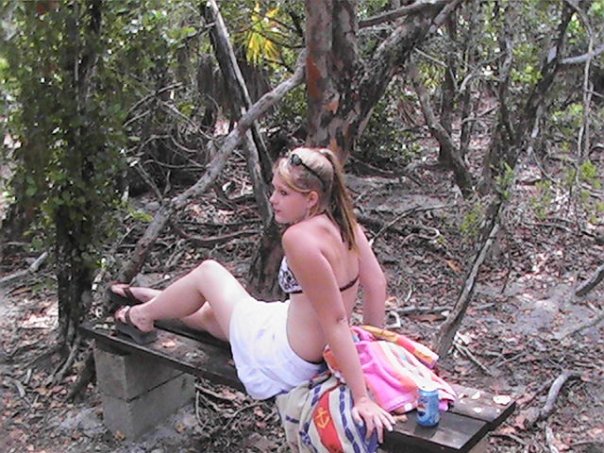
Photo of a white girl (me) with blond hair in a biking top and white skirt sitting on a bench in a forest.
Actual photo of me during this period of my life. The second comment on my Facebook to this day is from a guy who used and humiliated one of my best friends and warns me to “look out for the r*pist behind [me]!” Real Prince Charming.

Part D: Getting It Right (According to Me)

When it comes to trauma and touch aversion, I’m not someone who believes you must have a diagnosis to write characters with trauma or touch aversion. All I ask is authors write with sensitivity and ask for help from people with lived experience before they put anything into the world. To me, representation isn’t about the author, it’s about the character and the reader. If the character reads right to the readers who need the representation, that’s a win.

I would love to go back to the days when I eagerly grabbed books off the shelf and threw them into my buy basket for simply referencing touch or trauma. Of course I would love for my own book featuring a traumatized, touch averse character to be published, but if it isn’t, I want someone’s book to be. Because we need more. A lot more. There’s too few books tackling these topics. Touch aversion especially. Even fewer that do it well.

Who Already Does it Right:

Kaz Brekker in Leigh Bardugo’s Six of Crows gets touch aversion and trauma right. I believe, despite some controversy, that Suzanne Collins’ The Hunger Games series did right by trauma. Marissa Meyer’s Heartless will always be one of my favorite trauma depictions of all time. Melissa Bashardoust’s Girl, Serpent, Thorn gets cursed skin right. Helen Hoang’s The Kiss Quotient (adult romance) gets touch aversion from ASD right.

Of course there are more, especially where trauma is baked in but not the focal point. I think of books like Crown of Feathers by Nicki Pau Preto where the main character wields her kindness and compassion as a weapon against her abuser, and This is How You Lose the Time War by Amal El-Mohtar and Max Gladstone where love persists despite abuse, growing stronger, healing the world if not the lovers, and Maggie Stiefvater’s The Raven Cycle where love and trauma are both thrumming beats of the narrative without love overwhelming trauma to become a magical deus ex machina cure to wrap the characters in their very own happily ever after bows

There are not many I can think of beyond those mentioned that do touch aversion well. Or not that I’ve read. To be fair, this might be because I’ve read enough deeply disturbing narratives where touch aversion is some kind of “madness in the blood,” or “evil,” or the character is treated as damaged goods, or seen as a manic pixie kink because he (sorry, it’s usually a he) is the only one who can touch her (and yes, it’s usually a her) without her getting sick/maimed/killed. Where it’s a sign of “claiming” or dominance. And she loves it.

Photo of a white man with his head bowed and a bun and a white cloak, wearing armor but only from waist down, one hand on shield, other on sword. 
© Gioele Fazzeri on Unsplash
You know the guy I’m talking about. This guy (or some immortal derivative thereof).

My relationship with this latter point is messy. Once upon a time, I loved books like that. Loved them so much I thought I could wish myself into them. I remember twelve-year-old me lying on my front lawn, a quiver of arrows at my hip, my bow and arrow strung around my back, ignoring the pain of the wood in my spine as I pressed a book to my chest and squeezed by eyes shut, whispering into the sky, begging God or whoever was listening to take me away. To whisk me into my book. Into my own adventures where I could finally find love. A cure. Someone to tell me what to do.

Books like this gave me hope. They were wish fulfillment. In my darkest days, they made me believe in something. Books like this are dangerous. They fulfilled the wrong kind of wish. Pushed me to rely on everyone except myself. Made me look to external sources of validation and guidance. Stripped me of barely-born agency I was all too eager to give away because that’s what trauma does. Made it all too easy to believe in the easy thing, not the right thing. What I needed was a bit more real and a lot less sexy.

I needed someone to write me a story of the traumatized person healed by self love.

Some might not want or need healing. They might see their touch aversion as a strength, even. But me? While I see now there isn’t a cure, I’m happy to take healing.

Yet, if I had magic, I would magic this away. If true love’s kiss would do the trick, I’d kiss a bushel of frogs to find my The One True Prince and a night full of dreams instead of nightmares. So it’s hard to begrudge authors this narrative. It’s hard to say “stop” writing those stories that once gave me something to cling to.

Instead, I’ll say, please think. Ask. Learn. Be interested. The traumatized are not your kinks. Or plot devices. No one, but especially not women, need to be hurt to teach their male counterparts a moral lesson about “gee, wowie, women are whole humans, too!” How hot we are isn’t what gives us value any more than our ability to keep a clean house. We aren’t here to be saved so the handsome love interest can get a handy in gratitude. In fact, we don’t need to be saved by a love interest at all. We need healed, and the only ones who can do that is… us. We need that to be just as sexy.

Traumatized person healed by self love. Prince(ss) Charmings optional.