Author’s Note: This blog should really come with a subtitle. Don’t Major in Writing: Some Curmudgeonly Advice from an Elder Millennial Who Deeply Regrets It. I don’t mean it as blanket advice, obviously. There are maybe some reasons to major in writing, though I can’t think of any practical ones right now. Also, you probably won’t listen. 18-year-old me definitely would not have listened.
Finally, I’m not entirely sure I’m an Elder Millennial. Pretty sure I fall smack dab in the middle, but at age 35, I’m feeling Elder and am a Millennial so there you have it. Anyway, this is partly some joking, tongue-in-cheek advice, partly some blowing off of steam on my part, and partly something you might be able to call practical. Don’t take it (or life) too seriously. But also don’t take it so unseriously that you end up majoring in writing.
Checking out of yet another blissful, fun-filled, fourteen-hour-day in software compliance where the phrase “leave it to the real lawyer” gets thrown in my face for about the 872nd time is delightful. Exactly how I thought I’d be spending my thirties, in fact. Who doesn’t dream of long hours, burning eyes, people yelling at you, endless existential crises, doomspiraling, feelings of inadequacy backed up by seething rage about a lack of a singular piece of paper, followed by eating shit you know you’ll regret later while you wonder if your jeans will ever fit again?
Oh, I can think of one person. Eighteen-year-old me.

Eighteen-year-old me had more dreams than she knew what to do with, truth be told, but the shiniest of them all was becoming A Famous Author. To that end, she, quite reasonably and without any reservations whatsoever, applied to one single college, intending to enter the writing program there.
Pro tip: If college is your track, don’t apply to only one. I mean I’m sure almost everyone applying to college knows this, but it’s a horrible idea. It worked out for past me, but I really had no idea how much fire I was playing with there. And don’t worry, the hubris caught up. Then lapped me a few times.
I got into The One Single College (UNC Chapel Hill) and immediately registered as an English major with a minor in creative writing, headed toward the honors writing track. Nevermind I couldn’t start the writing program until I was a sophomore. Single-minded, I headed forward, never once considering any other option or career path.
No thought when my professor on the first day of my first writing class suggested to the students if anyone could do anything else they should leave to pursue that. Some did. Shocking no one, I did not.
Pro tip: You absolutely CAN do something besides write. You will almost certainly have to if paying your bills is a thing you want to do. You can be successful at the something else, too. Even more successful if you have the appropriate degree, I expect. The notion that writers can only write and that’s why they write is outdated and ridiculous. Would writing full time be better for many? Sure. For me? Uh… yeah. Does that mean you can’t do anything else? No. You are so much more talented than tying your entire skillset to like… one thing.

I didn’t second guess when my friends asked me what the hell I would do with a writing degree, “Teach?” Um, no, be a novelist, obviously. Apparently, I was the only one missing out on this joke.
Pro tip: You can’t actually teach writing with an undergrad degree in writing (or English, either) in a vast majority of public (and even private) schools. You have to have a teaching degree and a whole bunch of certifications to go with it. I learned this when I graduated, couldn’t find a job, thought back to that joke, and was like hmmmm… Nope. Not even private schools would hire me. My lack of teaching degree might have been overlooked if I had a masters or a PhD. But. Alas. I actually couldn’t even get a slot to teach a single writing workshop for free at a local university when my first self-published book was published, and the professor who wanted me to teach the workshop put in a good word in for me. No MFA, no entry. Nor could I get a gig doing a guest appearance at my own high school.
When my impending graduation loomed in the worst economy since The Great Depression, and I had no idea what my prospects were and everyone else I knew was headed to grad school to get a degree in something more uh… useful, I charged forward.
I was unconcerned. My success was on the horizon.
Spoiler. It wasn’t.
Not where writing is concerned, and actually not where my current career is concerned, either. My first job out of college was working at a horse farm on 10-12 hour shifts doing hard labor shoveling literal shit for $8 an hour. This was in 2010, you can adjust for inflation how you will, anyone who majored in anything useful like business or finance or accounting or…
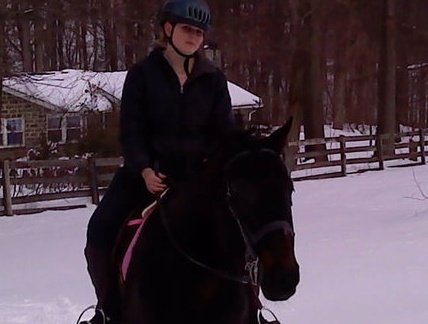
My second job was working as a clerk at a law firm answering phones, running (literally, we had a tough set of lawyers) errands, and making hundreds of copies on a single page copy machine. You know, the ones like you have at home where the feeder always breaks and you have to use the glass? Yeah. I made $10 an hour, had no benefits, no time off, and worked at a cramped desk in a fire exit in a basement.
I had no idea what a fax machine was, or how to answer a phone, and despite my impressive English literature degree and minor in creative writing, I’m pretty sure I spelled the word subpoena wrong on the spelling test I had to take to get the job. That’s right. A spelling test.
No one gave a shit about my transcripts, or that I knew how to interpret Milton’s Paradise Lost, or that I had a complicated relationship with Chekhov. In fact, the clerk who took the afternoon shift from me some days (because nope this wasn’t entirely full time) was a high school junior.
When I asked for a raise, I was told frankly, “We pay the position. Not the person.”
To be fair, I was a shit employee. I called out a lot, drank a lot, ditched a lot, and in general was very unpleasant to be around when I was around. At that point, I’d been in a riding accident that damaged nerves in my back permanently, and I was in constant pain. I’d sold my horse. Gained a ton of weight that made the pain worse. I’d quit writing. Hell, I’d quit dreaming. I ducked and covered, pulling into my trauma defenses. Survival was the name of the game. I hardened as I listened to the lectures. To my parents, my bosses, my boyfriends all call me lazy and useless and good for nothing, a waste of space and time and energy, while my degree and my dreams rotted inside this shell I’d become.
The reality is publishing is not really a full-time option for the vast majority of authors. It takes forever to get published, when you finally do the advances are split into unsustainable pieces, the royalties are small, you have to build up backlist which again, takes awhile. It’s a brutal, uncertain business with no health benefits, no steady paycheck, no guarantees. And before the self-publishing folks come in, I wrote a post on that. That’s no piece of cake, either.

By the time I started looking for a better job, I didn’t actually think I was capable of working full time I’d been called lazy so many times.
Good news. I was totally capable. Full time and then some. Eventually, I found a place willing to take a real shot on me. Another law firm. The job I applied for was as a legal secretary, a term I think most firms don’t use anymore but would be the equivalent of an administrative assistant. I had to beg the managing partner to give me the job, because he thought my education made me overqualified. He was sure I would get bored and leave.
I stayed at that job for 11 years. Until the day came that uh… I got bored. But more than that, I felt the walls pressing in. They’d done well by me for a small firm. I’d become a paralegal, then a senior litigation paralegal managing a small staff, then a benefits specialist with a fancy certification from Wharton. But I would never be “lawyer.”
In the back of my mind, my ambition wouldn’t let that go.
Majoring in writing was a terrible mistake. Not continuing my education was a bigger one.
Here’s the thing about being a writer: you don’t need a piece of paper to be one. You write, you’re a writer.
Yes, yes, easy for me to say with a writing degree and a literary agent right? Sure. I hear you, mysterious internet voices. But let me tell you, I struggled to get that agent for a looooong time and a big part of how I did involved purging my writing of almost everything I learned during college. First of all, in my writing workshops, we read, wrote, and workshopped literary fiction and short stories in particular. Writing a novel is a totally different thing. A genre novel even different. Everything I learned about writing a novel came from critique partners, beta readers, practice, reading, and craft books I read post-college.
My college courses didn’t talk about beats or accepted word counts or tropes or genre conventions or age groups or anything you need to publish an actual book. We never wrote or discussed a query, a synopsis, an elevator pitch. It was all metaphor and line level and what’s the Deeper Meaning. Flowers with deep meanings, and men having existential mid-life crises, and women with small dogs that mean something, and the fall of the southern aristocracy. They encouraged a lot of things frowned upon in a lot of genre fiction (like writing outside your lane with… abandon.)
What you do need a piece of paper to be is many other things. Doctor, lawyer, pharmacist, veterinarian, actuary, accountant, human resources professional, the list goes on. And those things are the things that put food on the table and a roof over your head. Unless you’re very lucky.
Pro tip: Don’t ever count on being lucky.
There isn’t a day that goes by that I don’t regret going to law school. Or vet school. Or business school. Or majoring in journalism instead of English. Have I done all right for myself? Absolutely. But it’s 10:00 p.m. on a Monday, and all I hear is, “Let the real lawyer…”
Somewhere in the multiverse, I hope the real lawyer version of me is happier.
You know what I could do without a writing degree? Write that story. You know what I can’t be without a law degree? That other version of me.
Do yourself a favor, cut out the multiverse. Don’t major in writing.

 Aimee Davis