Trauma Tropes and the Lies They Tell: Part 2 Hurt People Hurt People

Author’s Note: This is the Part 2 I mentioned in my last post. The doozy of all doozies when it comes to trauma and dealing with it sensitively. I’ve spent A LOT of time thinking on this topic. It is, after all, one of the main themes of the darkest book of my heart. It’s also a theme of my life. But it’s not an easy subject to tackle because it involves unpacking truths and myths about people just like me. Maybe about me, too. Necessary work is never easy.

As always, I remind my readers what follows is my opinion only, subject to bias and change, wrongness and flaws. I write (and read) through the western lens of American traditional book publishing. While I have C-PTSD, AuDHD, and touch aversion, I’m not a monolith and cannot speak to experiences besides my own. I don’t intend this to be definitive advice or an opinion representing the whole of any group, nor to be extrapolated beyond the groups described.

CW/TW: Discussion of trauma, mass murder, serial killing, etc. no graphic on page description; discussion of some of these themes and issues in history, literature, and film. Some violent imagery in photo form.


Hurt people hurt people.

Source unknown; earliest recorded source, Charles Eads, 1959, Amarillo-Globe Times.

The History of Hurt People Hurt people

In my last post on trauma tropes in narrative fiction, I discussed the definition of tropes. I won’t recreate that wheel here where you can read it there. Instead, I want to talk about the history of this curious, clever, corrupting little phrase. Hurt people hurt people.

As mentioned above, the source of the phrase is really unknown. The earliest recorded instance of it being used is by a man named Charles Eads in 1959 in a review in the Amarillo-Globe Times but there’s evidence to suggest he heard it from someone else, who maybe heard it from someone else, and back and back it goes.

The phrase itself became part of the American mainstream in the early 1990s when several self-help writers picked it back up, including a Christian family therapist named Sandra D. Wilson, who wrote a book with the same title in 1993.

However, the concept of the phrase didn’t have the sebatical the phrase did. Throughout the 70s and 80s, the US was rocked by wave after wave of notorious serial killers. Men like Dennis Rader (the BTK Killer), Ted Bundy, John Wayne Gacy, Sam Little, Jeffrey Dahmer, and David Berkowitz (the Son of Sam) stole life after life with little explanation.

The country wanted answers. They wanted assurances. In all the instability, people wanted to know why these men went beyond murder. The police could answer who, how, what, where, and when. Those things weren’t what people wanted, though. Not when it was over and the bad guy was behind bars. Then, when they felt safe again, people wanted to know one more thing. Why. Psychiatry rose to the occasion, ready with its answer.

Hurt people hurt people.

Black and white photo of a white man, back to the camera, holding a knife to his spine. © Reza Hasannia, Unsplash

Before sitting down to write this post, I spent some time learning about the history behind this phrase. During that research, I learned about a psychiatrist named Dorothy Otnow Lewis whose research “with” (or on) violent juveniles led her to testifying on behalf of some of the most infamous serial killers.

Not guilty by reason of insanity.

Lewis’ research (which can be summarized by her in her own words in HBO’s documentary Crazy, Not Insane), indicated that most serial killers shared two things in common: (1) Childhood trauma (being abused or witnessing abuse); and (2) a neurological “issue*” (dissociative identity disorder, schizophrenia, bipolar disorder, depression, autism, etc.).

*What is really being said here is someone who is neurodiverse but that word is not always adopted by modern psychiatry and certainly wasn’t when Lewis was doing her work. For this post, I will use neurodiverse but mention this so you can see the hurt even in the definition described. “Issue” I have an issue with.

Why do serial killers do the psychotic things they do? Because hurt (neurodiverse) people hurt people, that’s why.

It wasn’t immediately clear to me from watching the documentary whether Ms. Lewis believes dissociative identity disorder (formerly called multiple-personality disorder), could in fact be a symptom of trauma. It wasn’t clear to me what she thought might be caused by trauma (besides killing people, I suppose). Could all the types of neurodiversity she discussed be a syptom of trauma? A side effect of the brain being broken so young? Schizophrenia. Bipolar. Autism. What can be made by trauma? The film left me wondering if any or even all the things rattling against a broken brain could trace back to the same source: childhood trauma. I’m not sure anyone knows the answer to that at present. If they do, I’d sure like to find out for myself.

Those whys didn’t matter to the public, though, nor do they for most of you, dear readers. They might not have mattered or even been pondered upon by Ms. Lewis. They matter greatly to me, but that’s a different unpacking not meant for here. What’s important is this hypothesis that hurt people hurt people (regardless of how the hurt manifests) never stopped snaking its way through society.

Which is how it found its way to literature, film, and me.

A black and white photo of a white woman with her hair in a bun, head pressed into her knees. © Zohre Namati on Unsplash.

How ‘Hurt People Hurts People’ Hurts People

It’s probably not hard to figure out why we shouldn’t assume every neurodiverse person with childhood trauma will become a serial killer. Anyone who has seen Minority Report or read a dystopian novel about robots stopping crime before it starts can spot where that story goes wrong. The more difficult topics to address are the more subtle takes on this tale.

Should we suspect a hurt person will hurt us? Might it be safer for everyone to approach with caution someone who might, at any moment, become a mirror of their own monster? These questions roll around in my head day in and day out. Because when you’re a survivor of childhood abuse, you’re often someone who was hurt by someone else who was also hurt. Your abuser is frequently also a victim. In some ways, you can’t be the innocent, unsuspecting victim of a monster. Not when you can empathize so completely with the monster. When you have walked a day in their shoes. Not when their rage runs through your blood as well, an ever present whisper against your skull.

Not like them. Not like them. Not like them.

In modern day media, it’s not serial killers who take the front page, but mass murderers. But today we aren’t focused as much on the why these people (usually young, white, straight men just like serial killers) did it. We’re busying defending why the guns didn’t. “I think that mental health is your problem here,” Donald Trump said after a man killed 26 churchgoers in 2017. Mental health. Many hundreds of diagnoses in the voluminous DSM swept into a soundbite.

And maybe mental health plays a role. But what exactly about mental health? Dr. Michael Stone, a forensic psychiatrist at Columbia, maintains a database that shows 1 out of 5 mass murderers are psychotic or delusional (versus the national population where this is only about 1%). Reserachers at the DOJ have found that almost half have ADHD.

It’s easy to study people in cages, though. Or people who can no longer speak for themselves. It’s harder to study those of us living in the real world. Hell, it’s nearly impossible to get statistics on so many of us because women are so often underdiagnosed and misdiagnosed, and men are so often afraid to seek help at all.

Simple answers, then. That will keep the normal people safe. Not gun control for the whole country. Not less stigma on mental health so more people seek treatment. Not healthcare reform that actually gives people real outlets to real therpaists and psychiatrists. Take the guns out of the hands of the crazies, not ours. That will fix it. Anyone who has been hospitalized for a psychiatric condition should be on the government’s list. Watch them. Group them together and strip them of rights given to other citizens. Surveil them.

When do they start caging us? I wonder every time a new tragedy unfolds on the TV screen and the debate turns once again to mental health instead of weapons of war being available to everyone with an ID and access to a Wal-mart. Every time I read a dystopian novel and have to put it down because it looks a little bit too much like home. Every time I read a fantasy where the heroes walk away from horrendous battles with physical scars but no mental ones yet the villains monologue about their terrible childhoods as a way to humanize not them but the person about to stick a blade through their chest. Of course they became this. It’s a mercy to put them down, really. What a hero.

Don’t give them a choice at controlling their own redemption.

It’s no surprise I’ve always related more to well-written villains than heroes, I suppose.

And I wonder… what does it do to someone to relate more often with villains than heroes? What are we saying to those who have that whisper against their ear and rage in their blood that no matter what we do we will fail? That we are just as we were made to be? Without choice or voice. A foil to those better and more deserving than us. Someone to prop them up.

Not like them. Not like them. Not like them.

Oh, these stories tell us, but you are. You have no choice but to be. And what a wonder it is, to be relieved of that thing ripped from you so long ago. What a burden choice is. How easy it is to surrender it. Even now…
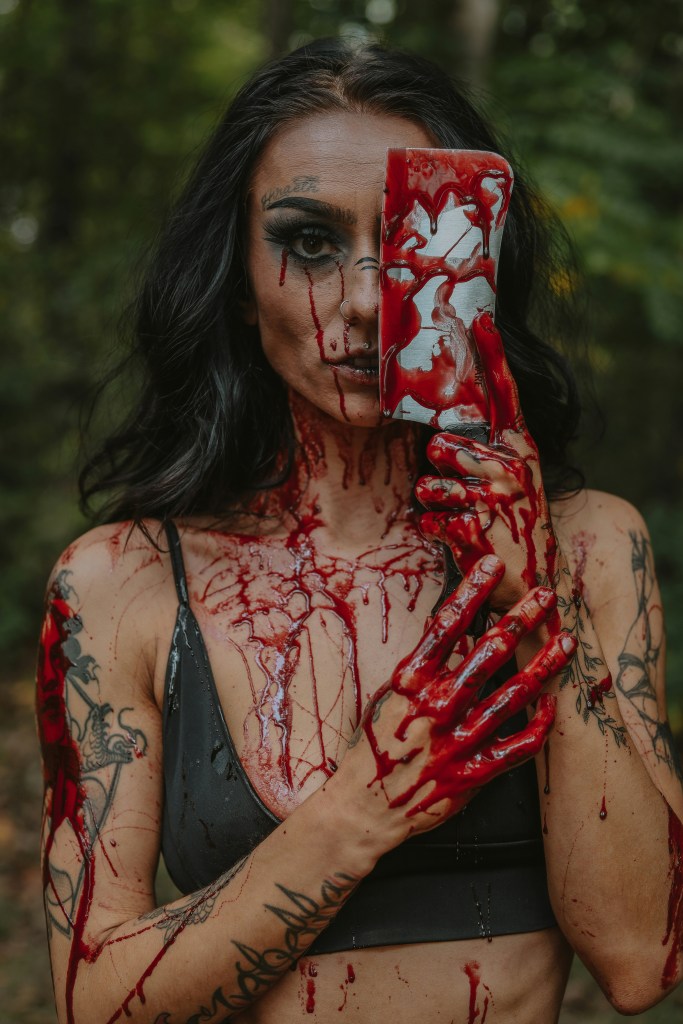
Photo of a brown-skinned woman with long black hair holding a butcher's knife over one eye, covered in blood. © Sierra Koder, Unsplash

How to Not Hurt People Who are Hurt

This part is tricky, because avoiding the representation erases us, but trauma has a generational component. Hurt people don’t get hurt on their own. Not usually. And the people who hurt them, well, it’s true they were most usually victims once.

I’ve struggled with this my whole life. How to make it real but not messy.

You can’t.

The truth is, trauma is nothing if not messy. Hurt people do sometimes hurt people. Maybe more often than not. It’s hard to say when the statistics focus on the fantastic, and people in cages easily studied and not people in the real world, simply living. People who are often afraid to seek help because they know what the world thinks of them. That said, it’s not entirely wrong to be without caution. Trauma has taught me many things, but that most of all. Vigilance.

But for every serial killer and mass murderer out there, there are many dozens more hurt people breaking the generational rules. One thing I’ve always loved about animal rescue is that it’s a place where you’ll find people like this. Almost without fail. People who once needed rescuing now doing the rescuing. You’ll find them working jobs as teachers, therapists, mental health counselors, nurses, doctors, and yes, psychiatrists. People rewriting their own stories, reclaiming their own voices. Hurt people becoming heroes. Who channel their hurt into helping.

They deserve their stories told, too. Kids who have only ever seen the monsters society makes us deserve to see not the terror in choice, but the beauty. Not in bright, shiny glory earned by people they will never relate to, but in monsters like them. They deserve to see how anger can be molded into a force for good, not evil. How power can be seized, then wielded with empathy. They deserve to see stories where the hero is sometimes the villain and the villain can sometimes be redeemed. They deserve to see stories where the hero isn’t perfect. Where they are hurt. Just like them.

So my advice if you’re going to depict this: Leave the messy versions to those of us living in those skins, asking the deep and tangled whys every day. Living in vigilance and monstrous skin. Let us fight our battles and show them on page. However messy they may be.

For you, don’t erase us, but stop making us your monsters, your villains, your people to shy away from, your morality tales. Instead, consider giving us new narratives. The one we need to seep into society to overtake the old.

Hurt people help people.

Photo of a girl with short brown hair wearing a white dress with white and red wings. © Alexander Jawfox on Unsplash.

Trauma Tropes and the Lies They Tell: Part 1 Traumatized Person Cured by Love, and Curing Cursed Touch Aversion

Author’s Note: I have been mulling over this one for a while, and there might be a second part to it to talk about another trauma issue, but I wanted to start here. With the dark book of my heart glitzed by 1920s glamor finally finalized, and sent to my agent, trauma thoughts loom. Bringing me here before the next unpacking.

As always, I remind my readers what follows is my opinion only, subject to bias and change, wrongness and flaws. I write (and read) through the western lens of American traditional book publishing. While I have C-PTSD, AuDHD, and touch aversion, I’m not a monolith and cannot speak to experiences besides my own. I don’t intend this to be definitive advice or an opinion representing the whole of any group, nor to be extrapolated beyond the groups described.

CW/TW: Discussion of C-PTSD, assault, abuse, etc. no graphic on page description; discussion of some of these themes and issues in fairytales and YA and Adult Fantasy (with plot overview of the works); minor description of effects of triggering media.


First, Definitions…

Before we begin, I want to address one of my personal pet peeves: the rampant overuse of the word trope. Which is kind of hilarious if you consider what a trope is.

Literary Trope: Traditionally, a literary trope is basically using a figure of speech for artistic effect. This is NOT what people mean when they say “only one bed” or ask what tropes you’ve included in your latest work in progress.

Narrative Trope: Narrative tropes are seen most commonly in genre fiction and can be character foils, plot devices, themes, motifs, storylines, or the like. Some are genre-specific (for example “only one bed” in romance is a plot device trope while “femme fatale” in crime is a character foil trope). These are what I mean when I say the word “trope” is overused. They’re also what I (and most of the rest of the commercial genre fiction world) are referring to when they use the word “trope.”

How does a Trope become Trope-y?

A trope becomes a trope when it’s used frequently enough for people to recognize it. Which is… pretty generic and probably why the word is easily overused.

Which leads me to the two ways I see it overused most commonly:

  1. Used too Broadly: The “trope” is defined as large chunks of something in the relevant genre. Example: One time, I saw someone say they were tired of the “royalty” trope in fantasy. This is… not a trope. “Royalty” isn’t really a character foil (“evil stepmother” is) or a plot device (“palace intrigue” meets that trope requirement). Royalty is just a swooping category of people commonly found in SFF books.
  2. Used Too Narrowly: The “trope” is too specific to be used enough to become a trope. Example: I recently saw someone complain they hated the “get kicked out of the hero’s party to discover you have an ability then do whatever you want” trope. While mildly hilarious, and probably this person is a fan of TJ Klune (same), I do remember looking around and asking, “Is that a trope? I don’t think I’ve ever seen that?” Dear reader, if takes you more than three to five words to say it, it probably isn’t a trope. Also, it does have to be understood to be a trope by the vast majority of the consumers of that genre. Otherwise, it might just be a few books where that weirdly specific thing happened, and it irked you, which, while valid for you, does not make it a discourse.
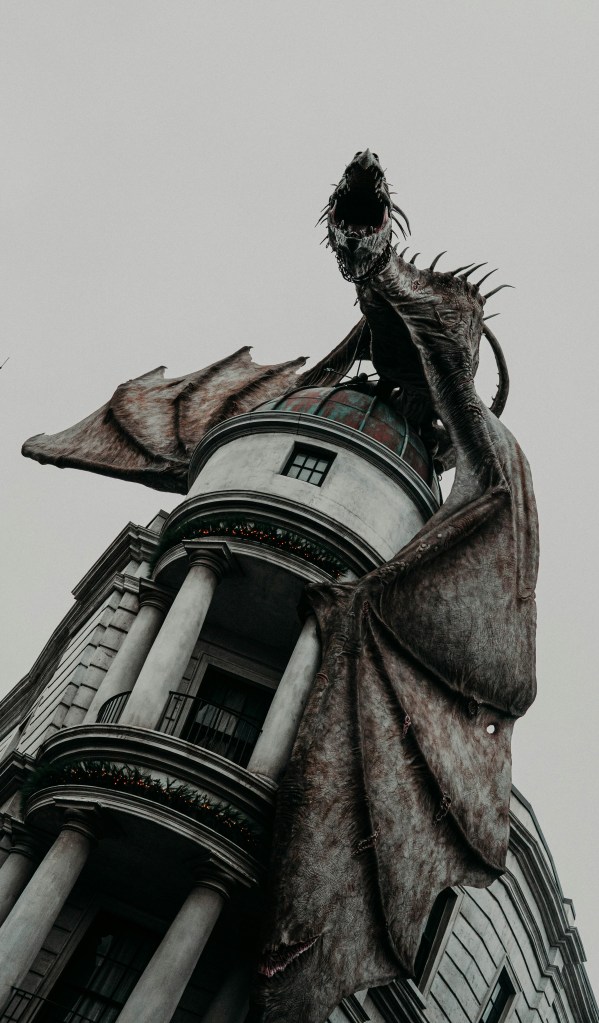
Black and white photo of a dragon perched atop a second story balcony, mouth open in a scream.
© Sean Thomas on Unsplash.
Dragons = too broad; Dragons the size of dogs who talk and are related to humans = too specific; Dragons attacking the castle = JUST RIGHT. YOU FOUND A FANTASY TROPE.

Why Do I (or should anyone else) Care?

Well… because in addition to tropes being handy for marketing purposes, they’re also handy for other groupings. Like addressing problematic issues and systemic discrimination in our work. Think: “Kill the gays;” “Black character dies first;” “Hurt people hurt people,” “Fat person is lazy” etc. etc. It’s important that genre writers know what tropes exist in their genre, and when those tropes can be problematic, so the author can choose to avoid (or subvert).

It’s also important we know what is too large or not large enough to facilitate this discussion. Losing sight of this can mean creating blow-ups that result in hurting those who are writing good and needed representation.

I saw this sort of happen with the “sexual assault” trope discourse awhile back. There was very little discussion of nuance. A majority of what I saw was, “No more. It’s cancelled.” Nevermind the statement was too broad to properly be a trope, the missing crucial pieces of this potential harmful plot device being things like: “pointless and gratuitous” sexual assault or sexual assult “to prop up a male character’s development.” Nevermind that many of the narratives out there were written by men, and cancelling this narrative meant silencing women, including women like me: survivors of sexual assault. POC talk about this frequently as well even within the context of non-harmful tropes like “vampires” and “elemental magic” being declared dead before they get a bite of the apple.

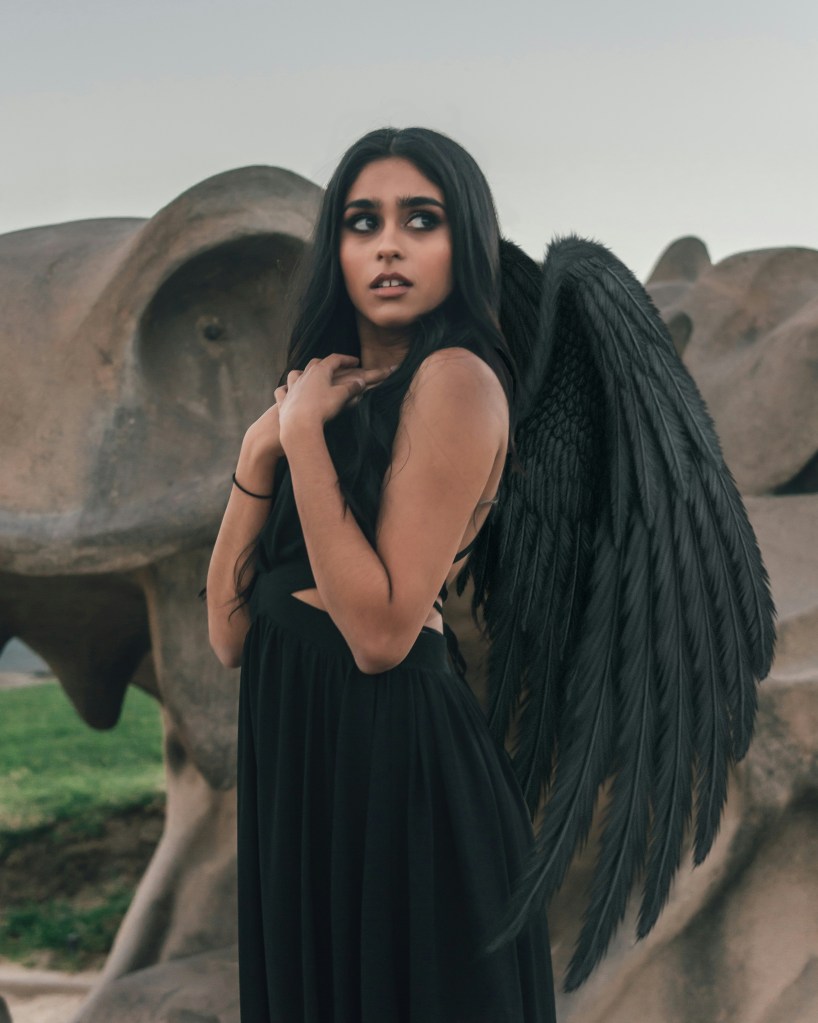
Photo of a brown girl with long black hair in a black gown sporting black wings standing in front of a dragon statue, hands pressed to chest, looking into the distance.
© Andre Sebastian, Unsplash
Listen, I never really cared for the angel/demon story (another dead for now trope in fantasy), but I would sign up to read this woman’s fall from grace.

I say this all because I want to be clear my intent with the following is not to set off a red alarm leading to “no more.” More is wanted. Needed. Desperately. However, I want the more that comes to be thoughtful, because from what I’ve seen, these… issues, let’s call them, have not always or arguably often been handled with care. I want discussion on ways to change that without ending anything.

For that reason (and because I’m not sure these things even are tropes), I will not call anything in this blog a “trope.” (Despite my clickbait title; sorry, I’m a sucker for alliteration.)

Get to the Point!

Right, so. The general concept is: fantasy books that feature love as a cure for trauma. Second to that is a magic or curse that creates touch aversion and how that is either cured or worked around by the love interest.

Once Upon a Time, I called this entire construct the “Broken Girl Cured by Love” trope, but I have learned that is (a) too gendered; (b) not the kindest categorization of very serious mental health issues (including my own); and (c) as I mentioned, maybe not a trope (or at least not the touch aversion part).

Part A: Traumatized Person Cured by Love

In general, I define the traumatized person cured by love issue to be one where a character (usually female but not always) suffers a serious trauma(s), is rescued by The One, and is instantly cured of all the issues that come with trauma. No more nightmares. No more anxiety. No more agoraphobia. No more hypervigilance. No more touch aversion. Just butterflies and rainbows, engagement and weddings and babies. Tada!

If you can’t think of a fantasy where this happens, you’re not thinking hard enough, or you’re not entirely familiar with trauma.

Fairytales, Trauma, and Damsels Cured by Kisses

There’s a reason I return to retelling fairytales time and time again. A reason they’re the core of my Adult work but not my YA. My relationship with them is as messy as the trauma we’re both steeped in. They’re comforting and damaging. Amidst my violent childhood, they were a safe space, but only because they normalized everything around me that was so unsafe. They, like me, need to grow up, reimagine themselves, and start anew.

I’m not even talking about the older, darker versions of the tales. I’m talking about what I grew up with, what I watched and read. Snow White, an orphan, is sentenced to death by her evil stepmother for being… pretty? The huntsman can’t bring himself to kill her, though, also because she’s… pretty? Then she goes to live with seven strange men in a shoddy hut to… clean for them? Despite being a princess. Then she’s poisoned and basically dies. Until TADA her Prince comes, kisses her without consent, wakes her up, and BOOM! Hello wedding bells, goodbye trauma.

Cinderella, a movie I watched so much as a child my first imaginary friends were named GusGus and Jaq (after the mice in the movie), has a similar plot. Orphan girl, evil stepmother, cleaning, torture, poverty, pain, emotional abuse until TADA! Her literal Prince Charming (that’s his whole name) saves the day. Nevermind he can’t tell what the woman he spent a whole night dancing with looks like without having a shoe fit her. Apparently.

And don’t get me started on Beauty and the Beast. All I remember about that movie is crouching behind the couch, whimpering during the scene when the Beast screams at Belle over his damn rose. Because the noise of a man screaming at a woman was already too much for my five-year-old ears. I hated that movie. To this day, I can’t watch it, nor will I ever be able to relate with the bookworms who answer with, “Belle, duh!” to every survey question or Twitter poll about what Disney princess would you be. Not when all I can think of is five-year-old me behind that couch my mom won on a radio giveaway, clutching my hands to my ears, eyes shut, waiting for it to be over.

Fantasy: From Damsels to Warriors (Who Still Need Sex as Saving)

This issue followed me from my love of fairytales to my love of fantasy. Women who are sexually abused and emotionally manipulated? No worries, their handsome, roguish man of the dark comes to rescue them and BAM! The nightmares are over. Safe in his arms for the first time she can remember. Warrior squires who vomit after their first kill, sword trembling in their hands as they charge into battle? No big deal, their handsome knight and lord will take them into their tent later and soothe their fears… with sex.

Love conquers all, right?

Yeah, right.

Photo of a white woman with white hair in a black and red gown and black cape, laying on a forest floor near a large stump, a sword hilt pressed to her cheek.
© Dmitry Vechorko on Unsplash
Most likely to seduce you, then carve out and consume your heart. That’s the woman I write now.

Part B: Curing Cursed Touch Aversion

This one is a sort of subset of the first, but perhaps too specific to actually be a “trope.” However, I’m starting to see more of it, and as someone who has real life touch aversion caused by trauma, who also has a real live book going on submission that tackles these issues, it’s time for me to dip my toes into the trauma trope do-not do pond.

In fantasy, magic systems are built on the backs of all kinds of wild and whacky things. That’s one of my favorite things about fantasy. Some of these systems are great, some of them aren’t. Some of them can be done right in the hands of some and abused in the hands of other. Not unlike well, any weapon in the hands of those more powerful. And never doubt words can be weapons. But they can also be balms.

Characters who have some kind of magic or curse that prevents them touching and/or being touched is definitely a “proceed with caution” magic system. Because there’s really no way to do it without invoking in real life touch aversion. A thing people (like me) struggle with on a daily basis.

There was a time I used to read every book I saw that had some kind of touch-based magic in it, desperate to read a character like me. Now, I almost never read these kinds of books. I find it’s rare to have good representation of touch aversion, and worse, these magic systems and curses almost always have either a cure or an “exception” for love.

What I mean by that is any character who has a curse or magic that causes them to be unable to be touched or be afraid of touch but OH WAIT, the love interest turns up, and oh, isn’t that strange, THEY’RE TOUCHABLE. Or oh wait, the love interest has the perfect counterbalance magic or curse to the one preventing touch, and TADA! No more touch aversion (because apparently the ability to touch one whole human rids you of something preventing you from touching everyone else). Which leads to the oh-so-often addition of, “It’s so sexy I’m the only one who can touch you,” the strong male love interests says in a growl. Just what we wanted, some manic pixie dream girl action.

If you couldn’t tell, this is… not the the representation I’ve been waiting for. If the love interest cures the curse or “saves” the character from their magic, it’s possibly worse.

Photo of a white girl with blond hair in a blue robe, curled in on herself, submerged in water amongst jellyfish.
© Alice Alinari on Unsplash
MC: My jellyfish are the only ones who understand me, but it’s so lonely in the deep, what with my skin that paralyzes anyone who touches me. LI: DID I MENTION I HAVE MAGICAL VINEGAR SKIN TO COUNTERACT YOUR VENOM?! (Despite that being absolutely pointless and serving zero other plot purpose.) Damn, you’re so hot, you sad, lonely, desperate for touch orphan princess. I definitely won’t manipulate you or take advantage of the fact you have zero other choices. (It’s fine to have no agency when it involves A Soulmate, after all, just not when it involves our author’s first 5-10 sample pages). Trust me.

Part C: How These Things Cause(d Me) Harm

The reason I created a separate section for the harm portion of this program is because I can’t really talk about one of these issues without talking about the other. Not when it comes to my lived experience. Which is the only lived experience I can talk about, but I suspect I can’t be alone.

I have C-PTSD and AuDHD so it’s difficult to say where exactly the touch aversion came from. Would it have existed without the early childhood trauma? Maybe. Maybe not. Maybe it wouldn’t have been the terrible beast it is today. But if you learn anything in trauma therapy, you learn it’s not really worth it to linger on the endless spiral of maybe. I’m touch averse and traumatized. And still alive.

I have a complicated relationship with my touch aversion. The complication is why I think it’s important to have real representation out there. It’s possibly why bad representation has caused me harm. Some folks don’t mind being touch averse. I am not them. I hate it. If I could rid myself of it, I would.

Enter my childhood media whispering a promise of a cure. If only I could find The One.

It might seem ridiculous to think of an adult (even a young adult) dreaming of a whirlwind romance that would cure her of mental illness, but long-term pain makes us desperate. Don’t believe me? Check out some chronic back pain forums to see the shit people try for any small relief. Honestly, look no further than the current opiod epidemic in America.

When I was young, a piece of the child I was or could have been fractured inside me. There she still lives, hidden and sheltered behind massive walls I’ve spent years building and tearing down only to rebuild and tear down again and again. Sometimes, in between demolition and construction, I see her. Not often. More often, I feel her. My own Rapunzel, trapped in her tower, waiting for someone to save her. Now, I know that someone must be me. When I was in my late teens and early twenties, I thought it had to be a man. (Yes, always a man, despite my own sexuality, another blog for another day).

Photo of a girl in a white dress, not facing camera, with long dark hair, looking out through a castle's stone opening into bright light.
© Sean Pierce on Unsplash
What a beautiful fairytale… about a girl in a cage.

Because part of me was emotionally delayed (thanks, trauma), and I live by a rule-based system (AuDHD), I was easily convinced into believing there was a step-by-step process to curing myself of my touch aversion, my night terrors, my agoraphobia, my misery.

Go out. Endure. Find The One. Let him seduce you. Smile when you’re sad. Live Happily Ever After.

But how would I know when I’d found The One? The books I’d cherished gave me a rule for that too: He wouldn’t trigger my touch aversion. He’d be the person I could finally sleep soundly with, encircled in his arms. With him, there would be no nightmares. Only dreams. Obviously.

Right.

I don’t think I have to, nor do I want to, spell out how that formula led me to some seriously fucked up situations. Places I wasn’t safe. People who abused me, manipulated me, beat me. Worse. Then the behaviors to numb it all, so I could hunt again. Only to be abused again. On and on. For years.

Trauma is a hell of a drug. But so, as it turns out, are fairytales.

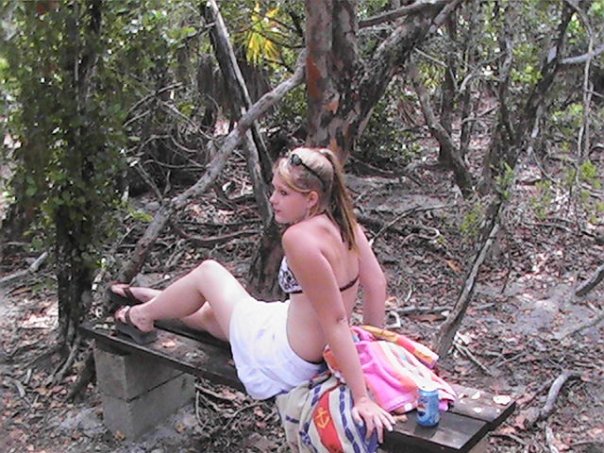
Photo of a white girl (me) with blond hair in a biking top and white skirt sitting on a bench in a forest.
Actual photo of me during this period of my life. The second comment on my Facebook to this day is from a guy who used and humiliated one of my best friends and warns me to “look out for the r*pist behind [me]!” Real Prince Charming.

Part D: Getting It Right (According to Me)

When it comes to trauma and touch aversion, I’m not someone who believes you must have a diagnosis to write characters with trauma or touch aversion. All I ask is authors write with sensitivity and ask for help from people with lived experience before they put anything into the world. To me, representation isn’t about the author, it’s about the character and the reader. If the character reads right to the readers who need the representation, that’s a win.

I would love to go back to the days when I eagerly grabbed books off the shelf and threw them into my buy basket for simply referencing touch or trauma. Of course I would love for my own book featuring a traumatized, touch averse character to be published, but if it isn’t, I want someone’s book to be. Because we need more. A lot more. There’s too few books tackling these topics. Touch aversion especially. Even fewer that do it well.

Who Already Does it Right:

Kaz Brekker in Leigh Bardugo’s Six of Crows gets touch aversion and trauma right. I believe, despite some controversy, that Suzanne Collins’ The Hunger Games series did right by trauma. Marissa Meyer’s Heartless will always be one of my favorite trauma depictions of all time. Melissa Bashardoust’s Girl, Serpent, Thorn gets cursed skin right. Helen Hoang’s The Kiss Quotient (adult romance) gets touch aversion from ASD right.

Of course there are more, especially where trauma is baked in but not the focal point. I think of books like Crown of Feathers by Nicki Pau Preto where the main character wields her kindness and compassion as a weapon against her abuser, and This is How You Lose the Time War by Amal El-Mohtar and Max Gladstone where love persists despite abuse, growing stronger, healing the world if not the lovers, and Maggie Stiefvater’s The Raven Cycle where love and trauma are both thrumming beats of the narrative without love overwhelming trauma to become a magical deus ex machina cure to wrap the characters in their very own happily ever after bows

There are not many I can think of beyond those mentioned that do touch aversion well. Or not that I’ve read. To be fair, this might be because I’ve read enough deeply disturbing narratives where touch aversion is some kind of “madness in the blood,” or “evil,” or the character is treated as damaged goods, or seen as a manic pixie kink because he (sorry, it’s usually a he) is the only one who can touch her (and yes, it’s usually a her) without her getting sick/maimed/killed. Where it’s a sign of “claiming” or dominance. And she loves it.

Photo of a white man with his head bowed and a bun and a white cloak, wearing armor but only from waist down, one hand on shield, other on sword. 
© Gioele Fazzeri on Unsplash
You know the guy I’m talking about. This guy (or some immortal derivative thereof).

My relationship with this latter point is messy. Once upon a time, I loved books like that. Loved them so much I thought I could wish myself into them. I remember twelve-year-old me lying on my front lawn, a quiver of arrows at my hip, my bow and arrow strung around my back, ignoring the pain of the wood in my spine as I pressed a book to my chest and squeezed by eyes shut, whispering into the sky, begging God or whoever was listening to take me away. To whisk me into my book. Into my own adventures where I could finally find love. A cure. Someone to tell me what to do.

Books like this gave me hope. They were wish fulfillment. In my darkest days, they made me believe in something. Books like this are dangerous. They fulfilled the wrong kind of wish. Pushed me to rely on everyone except myself. Made me look to external sources of validation and guidance. Stripped me of barely-born agency I was all too eager to give away because that’s what trauma does. Made it all too easy to believe in the easy thing, not the right thing. What I needed was a bit more real and a lot less sexy.

I needed someone to write me a story of the traumatized person healed by self love.

Some might not want or need healing. They might see their touch aversion as a strength, even. But me? While I see now there isn’t a cure, I’m happy to take healing.

Yet, if I had magic, I would magic this away. If true love’s kiss would do the trick, I’d kiss a bushel of frogs to find my The One True Prince and a night full of dreams instead of nightmares. So it’s hard to begrudge authors this narrative. It’s hard to say “stop” writing those stories that once gave me something to cling to.

Instead, I’ll say, please think. Ask. Learn. Be interested. The traumatized are not your kinks. Or plot devices. No one, but especially not women, need to be hurt to teach their male counterparts a moral lesson about “gee, wowie, women are whole humans, too!” How hot we are isn’t what gives us value any more than our ability to keep a clean house. We aren’t here to be saved so the handsome love interest can get a handy in gratitude. In fact, we don’t need to be saved by a love interest at all. We need healed, and the only ones who can do that is… us. We need that to be just as sexy.

Traumatized person healed by self love. Prince(ss) Charmings optional.

Copyright 101: FAQ For Authors

Legal Disclaimer: I am not an attorney so nothing in this blog should be construed as legal advice. It is not comprehensive and as you’re about to see, this is a nuanced subject that is very fact intensive. If you think your copyright or other intellectual property right has been infringed upon, please consult legal counsel well versed in intellectual property right matters.


As I sit here, preparing my next book to go on submission, reading other books to compare it to in the submission packet, the Twitter discourse of the day rages in the background. Fears of idea theft, copyright infringement, whether authors should participate in pitch events because someone might “steal” something from them.

I’ve written about copyright on this blog before, but that was primarily with regard to the AI and copyright infringement debate and the deeply nuanced concept of Fair Use. What I’m now coming to realize is that many writers need a 101 guide to copyright. No shame in that. Copyright is complicated and there’s a lot of bullshit on the internet.

None of what I’m about to go through will necessarily alleviate the fear of “idea theft.” Just because something isn’t expressly illegal doesn’t mean it doesn’t or can’t happen, or that people have no reason to be afraid of it. So, I’ll preface with this: Ideas have been done and redone a thousand times over. Your story is uniquely yours not because of the idea but because of the bits of you left within it. Sometimes you hit with that story, sometimes you don’t. Sometimes it’s the right moment. Sometimes it isn’t. That doesn’t mean that someone who was inspired by your idea and wrote something similar or compared their story to yours (as I am now doing at this exact moment), did it better or worse. It was simply different. It’s been said a thousand times by a thousand people wiser and pithier than me, but if you want to survive in this industry, comparing yourself to others is a thing you must do your best every day to battle. Fears of idea theft are a good place to start.

Now, onward!

Photo of a book, Revelle by Lyssa Mia Smith, surrounded by pink, purple and blue flowers, and pink and purple butterlifes. © Aimee Davis @writingwaimee on Instagram (or will be when I post it).
One of the books I’m looking at comping for my YA about to go on sub. Also by a fellow Pitch Wars alum (and mentor during my year). 1920s vibe is not copyrightable as you’re about to learn, and I had no idea this book existed before Pitch Wars.

Copyright FAQs (For Authors)

The following FAQ is based on federal, United States copyright law, primarily the United States Copyright Act of 1976, as amended, 17 U.S.C. §, 101, et seq. While US copyright law is generally reciprocated internationally, if the US is not your home jurisdiction, this is going to be less helpful. There are also some state laws around copyright that may up the ante on the federal law that I will not be getting into here. Again, not a lawyer and even if I was, here are just some of the reasons why it’s important to discuss your specific facts with counsel in your jurisdiction.

What does copyright mean?

In general, copyright is one of several forms of intellectual property (IP) protections available to creators and inventors. Other IP protections include things like patent, trademark, and trade secret. Each IP protection covers specific things and has specific laws that cover it (including in the case of patent law, a separate bar that must be passed by practicing attorneys). Copyright is indicated using ©. This mark can be used whether the work is actually registered with the US Copyright Office or not (unlike trademark where there are separate symbols for registered and unregistered marks).

What does copyright protect?

Copyright protects original works of authorship in the following categories:

  • Literary works
  • Musical works (including lyrics)
  • Dramatic works (including music/score)
  • Pantomimes and choreographic works
  • Pictorial, graphic, or sculptural works
  • Motion pictures and other audiovisual works
  • Sound recordings
  • Architectural works

While works may fall into more than one category, for the rest of this FAQ, I will be focusing on copyright protection in general and as it relates to literary works.

What doesn’t copyright protect?

Specifically exlcuded from copyright protection are the following:

  • Ideas
  • Processes
  • Systems
  • Methods of operation
  • Concepts
  • Principles
  • Discoveries, even if they are described, explained, illustrated, or embodied in an otherwise protectable work (this means your great sci-fi tech or computer algorithm is not patentable or copyrightable because you put it in a copyrighted book)

What is a literary work?

Literary works are broadly defined as works, other than audiovisual works, expressed in words, numbers, or other verbal or numerical symbols or indicia, regardless of the nature of the material objects. This includes things like:

  • Books
  • Periodicals
  • Manuscripts
  • Phonorecords
  • Film
  • Tapes
  • Disks
  • Cards
  • Software code (see Apple Comput., Inc. v. Franklin Comput. Corp., 714 F.2d 1240, 1249 (3d Cir. 1983)).

Pertinent to literary works, the US Copyright Act also provides copyright protection to compilations, collective, and derivative works. A compilation is a new arrangement of works (whether they are copyrightable in their own right or not) that is unique and original. A collective work is a specific type of compilation consisting of preexisting copyrightable works including things like encyclopedias, periodicals, and anthologies. A derivative is a transformation or adaptation of one or more preexisting works into something new. These include things like fictionalized versions of factual accounts, movies based on books, abridgements, condensed versions, and my personal favorite, retellings.

The copyright owner of a compilation, collection, or derivative does not inherit the copyright of the original work, only gains copyright ownership over the new work. In simpler terms, this means I don’t get copyright over every Beauty & the Beast story because I’m writing a retelling. I only get protection over my retelling.

When does a work become protected by copyright?

Your work is automatically protected by law as soon as you create it as long as it is something covered under the Copyright Act and is both original (meaning it is independently created by the author and is minimally creative) and fixed (meaning it’s been written or typed somewhere). More on this original bit in a second. There are some weird situations for work produced between 1978 and 1989, but I’m going to assume most of y’all are not interested in copyright for things produced before I was born.

Reminder that a work produced solely by AI is not copyrightable. This was recently upheld by the US District Court of Columbia in Thaler v. Perlmutter, 2023 WL 5333236 (D.D.C. Aug. 18, 2023) (refusal to register a work created entirely by an AI computer system without any human involvement).

What does “original” really mean?

Under the law? Not much. Basically, for a work to be original, you have to have not copied large swaths of it word for word from something else. A work doesn’t have to new or unique to receive protection. It can be damn near identical to something else, even, so long as you did not copy it. Remember, this is COPYright we’re talking about here. Not IDEAright. And honestly, thank goodness? The amount of times I see an idea that has my heart in my throat because how did we think of the same thing and will that get to market before me and… yeah. If that could all be copyrighted a majority of us would never write again.

The work doesn’t even have to be hugely creative. “Minimal” creativity is the standard. Artistic value or merit doesn’t matter (which again, thank goodness). These are judges, after all, not art critics. The amount of effort spent is also irrelevant. If this stings to read, I know it, but let it burn and hopefully soothe because sometimes the cool slap of logic is what we all need.

Essentially, you can copyright just about anything that you wrote on your own with a minimal level of creative thought or assembly. What you cannot copyright is anything made by a robot, stolen word-for-word from another copyrighted work, and things like:

  • Short phrases and single words
  • Book titles
  • Headlines
  • Slogans
  • Typefaces

Some of these may be trademarkable, though. I’d advise (not as a lawyer but as an author who has been around awhile) not trademarking popular words or phrases in your genre and just letting other people have the same title as you. It happens. Both the same title thing and the trademarking phrases thing.

Photo of a book, The Whispering Dark, by Kelly Andrew, surrounded by purple flowers and purple butterflies. © Aimee Davis @writingwaimee on Instagram when I post it.
Photos, like this one, are also copyrightable. The ideas contained in the book depicted are not.

How long does a copyright last?

In general, copyrights for written works last for 70 years after an author’s death.

Do I keep the copyright after I get published?

It depends. If you’re self-publishing, yes. That’s one of the advantages. If you’re publishing traditionally, not usually. While there might be some indie/small presses out there that allow you to retain copyrights or joint-copyrights of some sort, the entire point of having a copyright is to give the owner of the copyright the ability to produce and distribute the copyrighted material. For ease, most traditional publishers require you to transfer your copyrights to whatever they’re publishing to them, that’s essentially what they’re buying. Your agent can help you navigate what rights you’re selling versus keeping and if you don’t have one, there are agents who will still help you negotiate a small press contract if you have questions.

If there’s an issue with you and your press before the book is published, there are often ways to get your copyrights back built into the contract or a way to negotiate for them, but after the book has been published and distributed, that’s usually the end of the road, at least for a good long while, because again, the point of copyright ownership is the distribution and sale. That is what the press bought.

I think someone stole my book, what do I do?

First ask yourself, did they really, or do they have some similar ideas or concepts as you? Even if they stole the idea, it’s not copyright infringement. Even if they have the first twenty pages of your book and a synopsis and tweaked them and wrote their own book, it’s not copyright infringement. It might be professionally yikes when it comes to ethics in my opinion, but it’s not infringement. My advice here? Not as a lawyer but as an author who has been putting her shit out there for a looooong time? Fuck ’em. Learn from this that they’re shady and move along. Only you can write the true book of your heart anyway. Your idea won’t sing to them the way it does to you. If you’re discouraged, put it away and write another thing.

Don’t be afraid to put your work out there, though. The reality is that eventually, you have to. Whether it’s self-publishing or querying or pitching or publishing with a small press or a Big Five, eventually you’re going to put it out there. That’s why you wrote it. If you didn’t, well kudos to you honestly you’re better and more humble than I will ever be. Feel free to lock it down and never put it out there again. For the rest of folks, putting things out there is a great confidence boost on some days and a real lesson on thickening your skin in others. You will need both in this brutal industry.

Now, if they word for word stole your book and you have evidence? I would say call a Real Lawyer™. (Fun fact, the ™ stands for a trademark that is not yet registered with the US Patent Office while the ® stands for a trademark that has been registered).

Happy writing! And sharing!

Photo of a book, Nightbirds, by Kate J. Armstrong, surrounded by blue flowers and blue butterflies. © Aimee Davis @writingwaimee on Instagram whenever I post there again.
Meanwhile, I’m going back to reading these lovely comps. Which definitely will not make me feel insecure about my own book’s chances. Not at all.

Breaking up with Romantasy

Author’s Note: This post is not intended to pass judgment on the books currently being marketed as romantasy or their readers. I support the incorporation of sex positive books into the fantasy market and have always been a huge proponent of this. It is, however, a reflection on the continued narrow mindset that we use to view and sell books and how that mindset continues to hurt marginalized communities.

This is simply my opinion and is not intended to represent the view of any individual or group besides myself. For ease of understanding, I write both YA and Adult Fantasy in the traditional publishing space and am agented but unpublished (as of yet). The following post is a reflection primarily on the Adult Fantasy space but does discuss how YA and Adult intertwine.


Once upon a time, I would have said to you my adult fantasy books were “romantasy.” I would have said that because I believed it to be true. They were a blending of the fantasy and romance genres that still belonged primarily under the fantasy arm. I would also have said this because romantasy was, and continues to be, extremely popular.

Now, you’re more likely to find me calling my books fairytale retellings for grownups.

I’ve broken up with romantasy.

Photo of an ornately framed mirror being shattered on a black background.
Image by creatifrankenstein from Pixabay.

To be honest, I was always a little nervous about calling my books romantasy to begin with. When my agent and I first set this label to my fairytale retelling about a godmother who hated her job, the romantasy moniker was relatively new to the traditional publishing scene. It wasn’t well defined. It still isn’t well defined.

Is it a fantasy that has a strong romantic element or a romance that has a strong fantasy element? Does it require open door, on the page sex? How much? What heat level must it be to be considered romantasy? Is there a real difference between romantasy and fantasy romance? Or romantic fantasy? Where are the lines? What shelf does it go on?

As a neurodiverse individual who spends her days elbow-deep in contracts “not well defined” is not a thing I love.

However, somewhat arrogantly, I thought perhaps I could be one of the trailblazers to define this space.

Spoiler alert: I didn’t. I also have no track record to have ever thought that would be a real ambition. Still, I believed, as so many people do, that romantasy must mean what I wanted it to mean, and it made sense to throw my book into the ring even if it maybe didn’t belong there.

What I wanted romantasy to be was a fantasy-first story with a strong romantic subplot. A book with a pretty hardcover that sat next to Gaiman and Martin and Tolkien. A grown-up version of much of the young adult fantasy you see on the shelves today. Something dealing with grown-up problems (like hating your job and dastardly exes) in grown-up ways (rage quitting and revenge sex) while still maintaining the fantastic elements, fast pace, character-driven plots, and light worldbuiding of YA fantasy.

Like so many, I’d grown out of YA. Insta love and pining wasn’t doing it for me anymore. Nor were love interests who were minors. The days of messy childhood dramas were past. My friends are my allies, my foundation, not my competition. I’m a busy, Millennial woman working in software, usually between 60-80 hours a week. I have a mortgage, a family, responsibilities and appointments to run in and out of. The days of locking myself in my room for a week during spring break to read, only emerging for popcorn and soda, were gone. Now, my fingers ofen find the smallest book on my TBR, not the largest.

YA fantasy no longer offered what I wanted. But neither did adult fantasy, where the books were too long, too dark, too political, too sprawling. I hated maps, and countries, and a million languages and thirteen POVs I couldn’t remember, and flipping back and forth to try to remind myself who was who.

So I set out to write what I wanted. A grown up YA-esque fantasy fit for the adult fantasy shelf and the (now) adult fantasy reader craving something different.

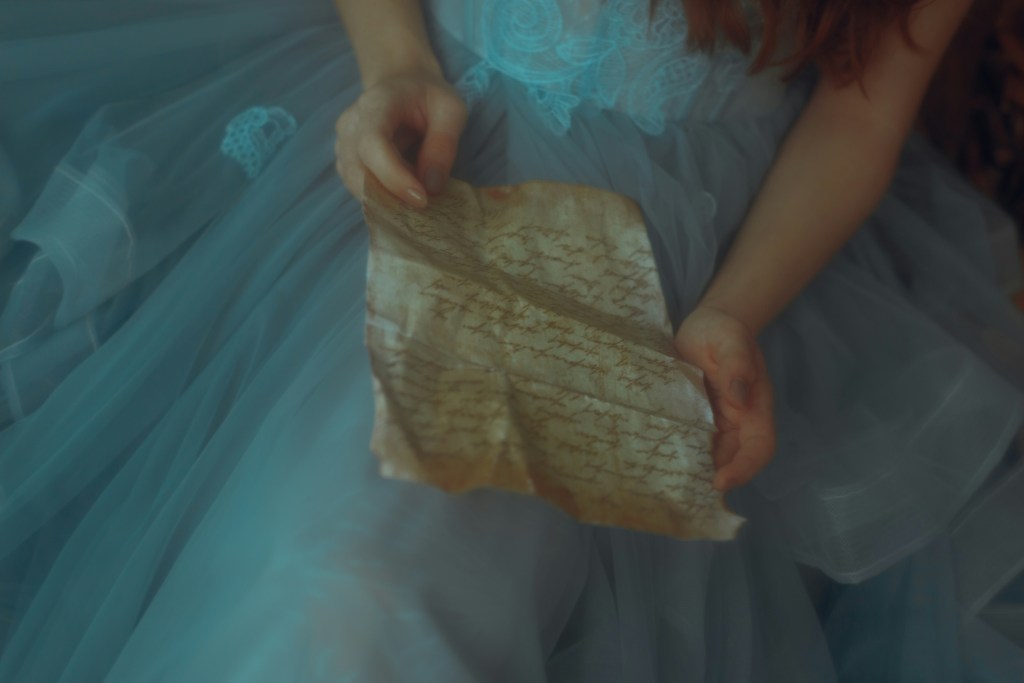
Image of the torso of a girl in a blue ruffled gown reading a piece of parchment. 
Photo by SAMANTA SANTY on Unsplash

Here’s where I guess I went sideways. Because I didn’t set out to write a romantasy as it existed. I set out to write a thing I personally wanted to read. Romantasy as it existed was a much sexier fantasy than I’ll likely ever write. It became even sexier as the subgenre evolved (and my book moved through submission).

I wasn’t writing for a genre, I was writing for something I thought was missing in the genre. A fantasy with sex in it, sure. A fantasy with a romantic subplot, but a fantasy first. I thought this would fit into the romantasy category, but what I received on submission was a lot of “this is great but it doesn’t fit… anywhere.”

My books aren’t about six pack abs and heat level. I don’t know how spicy they are. I’m touch averse. The fact they contain sex is a miracle in and of itself. The reason they do is a statement. Sex in my books is about reclaiming my power, about seizing female agency and saying, “This goes here, too. We go here, too.” It’s about showing things through a lens I never got to view sex. One that is not as fantastical as my favorite books once had me believe.

But at the end of the day, my books are more about friendship. And power. They’re about breaking down walls and rewriting problematic faves.

I write them because I believe fantasy deserves to have more than grim dark and sword and sworcery and urban darkness. I believe it deserves to have more lightness and simplicity in world building. But I believe romantasy now deserves more, too. Love deserves more. It deserves to be represented in more ways than heat level, and an endless run of tropes, and how many times you can have open door sex in 90,000 words. It deserves to be seen in friendships, and undiscovered sexuality, and self-love, and asexuality, and found family, and redemption, and parents trying and failing, and sex being a place of healing but never healed.

Romantasy deserves a definition. And a place on the FANTASY shelf that is as wide as the genre it’s named after.

Until then, though, I’m breaking up with it.

Until then, I write fairytales for grownups (and the occassional YA).

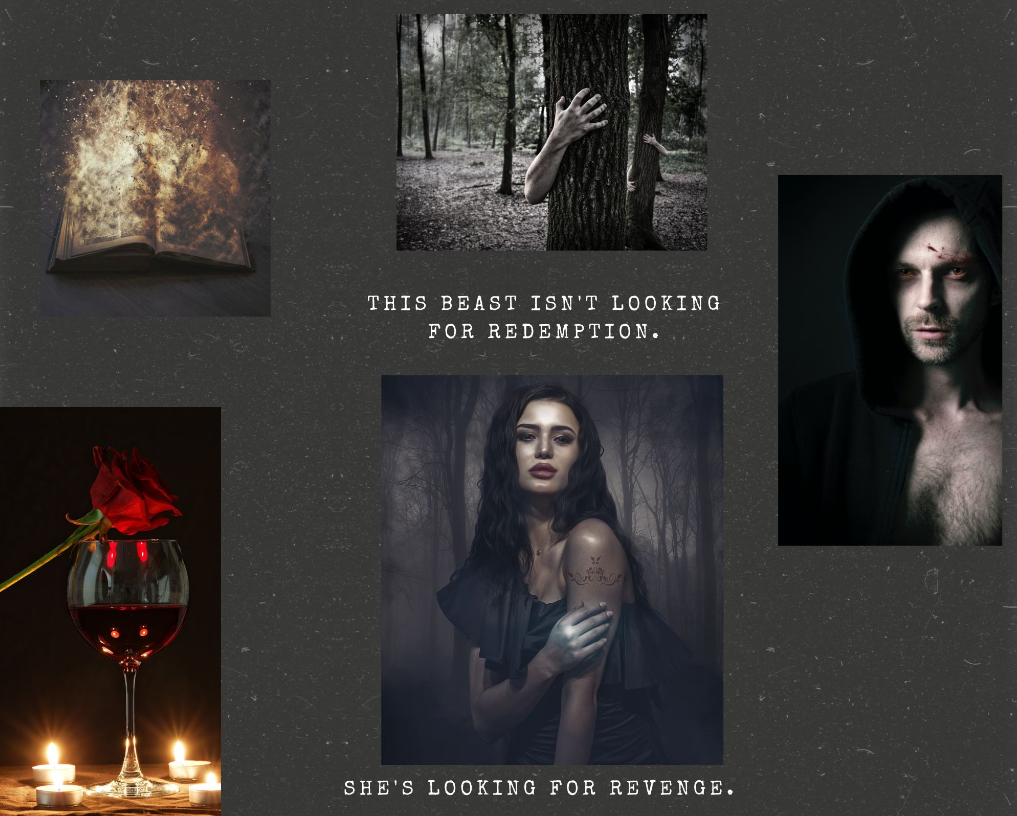
Mood board with rose and wine glass, woman with black hair in a forest, man with a bare chest and hoodie with blood over his eye, trees with hands, and a book on fire with words that read "This beast isn't looking for redemption. She's looking for revenge."
Current WIP

Not Skinny Enough for BookTok

Author’s Note: Blog posts have been infrequent lately because I’ve undergone two spine surgeries in a month and also because engagement is way down. (Hello? Is anyone reading these anymore? I will shamelessly admit I miss the dopamine your likes and comments brought me.) But onward we go anyway. Why? I guess this is part my journal and part me trying to keep up some kind of presence for, well, reasons I’m sorta about to discuss.

CW/TW: Discussion of pressure to out one’s identity, diet culture, EDs (including specifically anorexia and binge eating disorder), social media pressures, and the like.

Additional note on CW/TWs regarding EDs: While I am someone who has personally struggled with the listed EDs, I am not a monolith and my experience does not represent the only possible experience. In this piece, I’ve attempted to recognize the toxicity of diet culture while also accurately representing my own messy but true-to-me feelings. I ask you to consider this difficult balance, my imperfections, and your own health before proceeding.


The Dream I Dreamed as a Tween…

When I was a tween, I read an interview with one of my favorite authors though I cannot for the life of me remember which one. I searched online but couldn’t find it, so maybe I made it up. Who knows. That’s not important. What’s important is the story held in my heart all those years. And that goes something like this…

On the plane home from her most recent book tour, an author found herself sitting next to an unassuming businessman. Neatly dressed and pressed, with a briefcase tucked under the arms of his navy blue suit, she had no reason to believe he was anything more than a randomly assigned stranger she’d share this space but no words with before deplaning.

As the plane took flight, the businessman retrieved a broken-spined paperback from his bag. With a practiced hand, he closed and buckled the briefcase, then placed the book on the sturdy leather. Paper crackled as he ran a hand over the book’s middle to smooth it down, settling into his read.

Always interested in what people were reading, the author peeked over. Her chest tightened as she struggled to keep her face neutral and her mouth shut. Her book. It was one of her books.

While her heart pounded so loud in her ears she was sure it’d moved there, she debated her next move. Saying nothing seemed the safest path, less awkward for both of them and less painful for her if he hated the book. She took another quick glance. He didn’t look like he was much past chapter three. Lots of room for him to already hate it but not enough for many readers to have given up quite yet. Saying nothing really did make the most sense.

But as she reached for a book within her crocheted purse, the man licked his lips and turned a page. The motion drew her eye. He seemed too intent to say nothing. So, she said, quiet enough he could pretend he hadn’t heard her, “What are you reading?”

The man looked up. Without hesitation, he gave the author her own name.

She tilted her head as though this was a new set of words and not the name she’d heard called a thousand, thousand times across living rooms and down steps, echoing off grand train station walls, and crackly airport speakers. “Is she any good?”

The man paused, eyebrows turning in as though thinking hard. Meanwhile, the author’s stomach wiggled like a worm on a hook. Why had she done this foolish thing? What a silly, reckless thing to do, spoiling both their otherwise ordinary plane rides.

Before her stomach could really get to squirming, though, the man said, “She is!” Then, sheepish over his own exuberance, he coughed lightly and added a diplomatic, “I think so, anyway. I read everything she writes.”

A little sigh of relief swept from the author’s lips as her brow crinkled in time with her conspiratorial wink toward this stranger who was at present her favorite person in all the world. “I’m glad you think so. She is me.”

When I read this story, I knew without a doubt this is what I wanted for my future. To be a sort of Quiet Famous. To be someone who brings people joy, who is admired, who pursues her craft, all without the stress and worry of true celebrity. Because honestly, who looks at dust jackets and back of book covers and remembers the author’s face?

A life of freedom and choice. What a simple, beautiful thing.

Arial photo of winding mountain road with green grass and red foliage and evening clouds behind. 
Image by Frank Winkler via Pixabay.
Take a deep breath and enjoy the happy zen moment. Per usual, I’m about to smash it with a reality hammer.

BookTok: A Brief Introduction

That life is dead. Not only for me but for many (most?) authors. The days of selective anonymity are over. The once upon a time story where you might be the kind of writer where your only job is to disappear into the woods with your cats, emerging every ten years or so with your Next Bestseller (but only after your agent proved their loyalty to you by going on a quest to retrieve you first) is just that. A fairytale. (Okay, yes, that one probably always was.) And while I feel as though I’ve spent the past decade or more watching these author dreams die little by little, nothing has made the knell sound so loud as the rise of #BookTok.

For anyone who might still be reading this who doesn’t know what BookTok is (hi, friends and family, you’re heroes!), it’s basically the corner of TikTok where books are discussed, dissected, and ultimately, defined.

There have been social media trends specific to the book community before, of course, like #bookstagram and #booktwitter but I would argue none have made near to the same impact on actual book sales and thus, author futures, as BookTok.

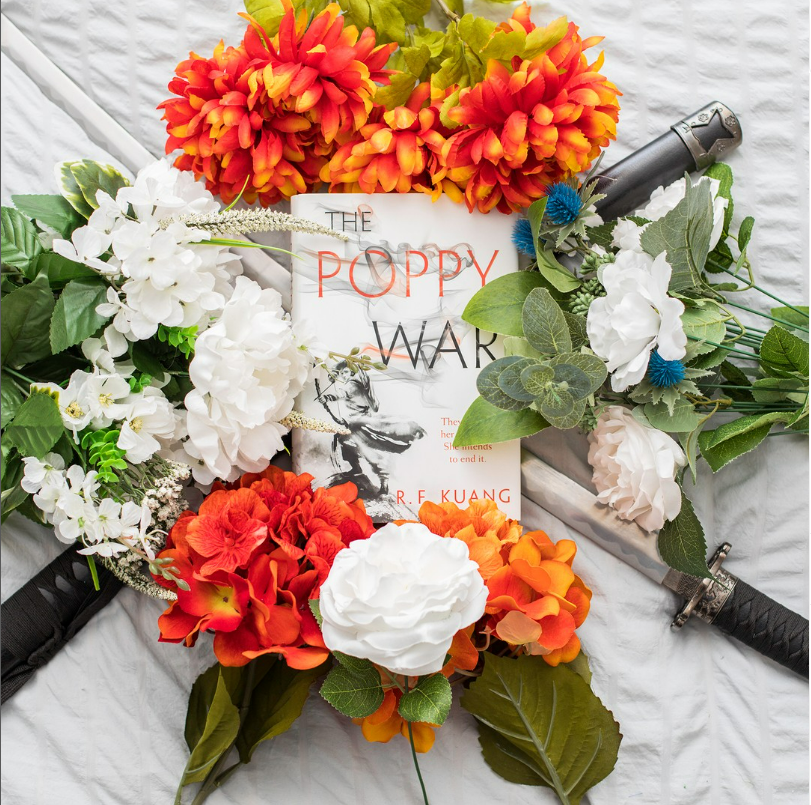
A photo of The Poppy War by R. F. Kuang lying atop two Katanas surrounded by fake orange and white flowers. 
© Aimee Davis (@writingwaimee on Instagram)
I used to be very active on #bookstagram but stopped participating when it became all about Reels, not photos (soooo basically BookTok but less popular. Sorry, Meta. Truth hurts, doesn’t it?)

Every author, agent, and editor I know is talking about TikTok. How to TikTok, TikTok follower and view count, TikTok envy, TikTok tutorials, author responsibility for being on TikTok, TikTok popularity, TikTok problematic content, TikTok fame pulling authors from the dregs of unknown to household name with the seven figure net worth to go with it (Colleen Hoover anyone?). Debuts fretting over their very first TikTok video because it has to count, TikTok branding of yourself, your books, your worlds, your fanclubs, TikTok influencers and how to get them to notice you, TikTok influencers signing book deals for amounts no author ever dreamed of, which press knows which influencers, entire new presses springing up seemingly overnight, ready to hit the ground running with sales, marketing, and distribution models all orbiting around influencers and their millions of viewers.

TikTok. TikTok. TikTok.

I hear a clock and another dream has ticked its last.


Before BookTok: Changing Landscapes and Dying Dreams

Before BookTok, I stood still, watching while the landscape shifted into one where authors have to market ourselves as much, if not more, than our books. Time and time again, we’re asked to out ourselves, dox ourselves, deadname ourselves, force our truths into a box that isn’t always neat or pretty or non-problematic yet make it look that way. Perfect. We have to be perfect in our representations of our own lived experiences, so we don’t accidentally contradict someone else’s similar but different lived experience. But we also have to make sure people know we’re not speaking for everyone, only ourselves. We should get sensitivity readers even for our own experiences in case we have ingrained isms, then edit based on that. While also writing what we know and staying in our lanes. But we can’t rely on these readers any more than we can rely on ourselves, because disclaimer, no one is a monolith. So we do our best to give ourselves. But not our whole selves. Our watered down selves that better fit a version that would apply to more people, more readers, more revenue. Except no, we don’t do that.

Or do we?

Maybe it took me too long to get anywhere worth getting to. I’m getting old and tired. Too tired to keep up. But I’ve been pushing so hard for so long I continue out of habit. I have no idea if this new landscape even feels like my old dream, never mind if it could ever become a new dream.

What I do know is sometimes it feels like it moves so quickly I’m not sure I have time to evaluate whether it’s something I want, and sometimes it moves so slowly I’m not sure I want to keep throwing my years, like coal, into the fire of this wasteful machine.

TikTok. TikTok. TikTok.

Image © prettysleepy1 on Pixabay.
See also, those melting clocks by Dali. Pretty sure that’s what the inside of my brain looks like right now.

Before Booktok, we were asked to go on journeys of self-exploration but not to better our craft. No. To find an identity to sell. Never mind if we wanted to, if we were ready to, if we were mature enough, or stable enough, or emotionally able. Never mind if we went and found and wanted to cradle our precious new thing to our heart as it crooned to us things we never knew about ourselves. Sell the precious new thing, we were told as arms from everywhere and nowhere stretched out, ripping it from us. No matter the cost or toll. No matter if we’re left alone, confused and stripped bare. This is capitalism. We should, in fact, be grateful to sell anything to anyone. Books, ourselves, doesn’t matter. A sale is a sale, the check cashes the same (the author’s in 3-4 installations over 2-3 years). We should be glad the robots aren’t here to replace us yet. Sniveling things are we. Shut up and quit complaining. Write faster, faster, faster. Sell faster, faster, faster. Our identities, our traumas, our histories, our dignity, our hearts, our souls. But don’t forget to make all that ugly Instaworthy first.

The reason for sale is good, though. And that matters. Like representation matters. I might not have been the quickest person to understand it, and there are elements and nuances of it that still puzzle and enrage me at times, but the fundamentals are right. Sound. Ethical. Moving toward progress. Representation matters and inauthentic representation has done damage. To correct that damage, some proving is demanded. If the end result is hurting as few people as possible, I’ll do extra legwork every time.

But this new thing? With the branding and the camera presence and the selfie sticks and the lack of attention on anything that lasts longer than 34 seconds or so?

This feels like publishing wants me to sell something in a one step forward, two steps backward type of way, and I’m not loving the impact it’s having on the way I see myself or my art.


The Rise of BookTok (and its Pressure)

Most of the BookTok influencing isn’t done by a book’s author. It’s done by, well, influencers. Unfortunately, that doesn’t stop the chatter amongst authors, agents, editors, and other publishing professionals about all things TikTok. It also doesn’t stop authors from being asked about their TikTok presence by everyone higher up the food chain from them (which is for most authors, everyone in publishing). It doesn’t stop the fear when huge deals are announced for TikTok influencers’ books. Nor does it stop the feelings of, “That could have been me;” “That should have been me;” “That will never be me.”

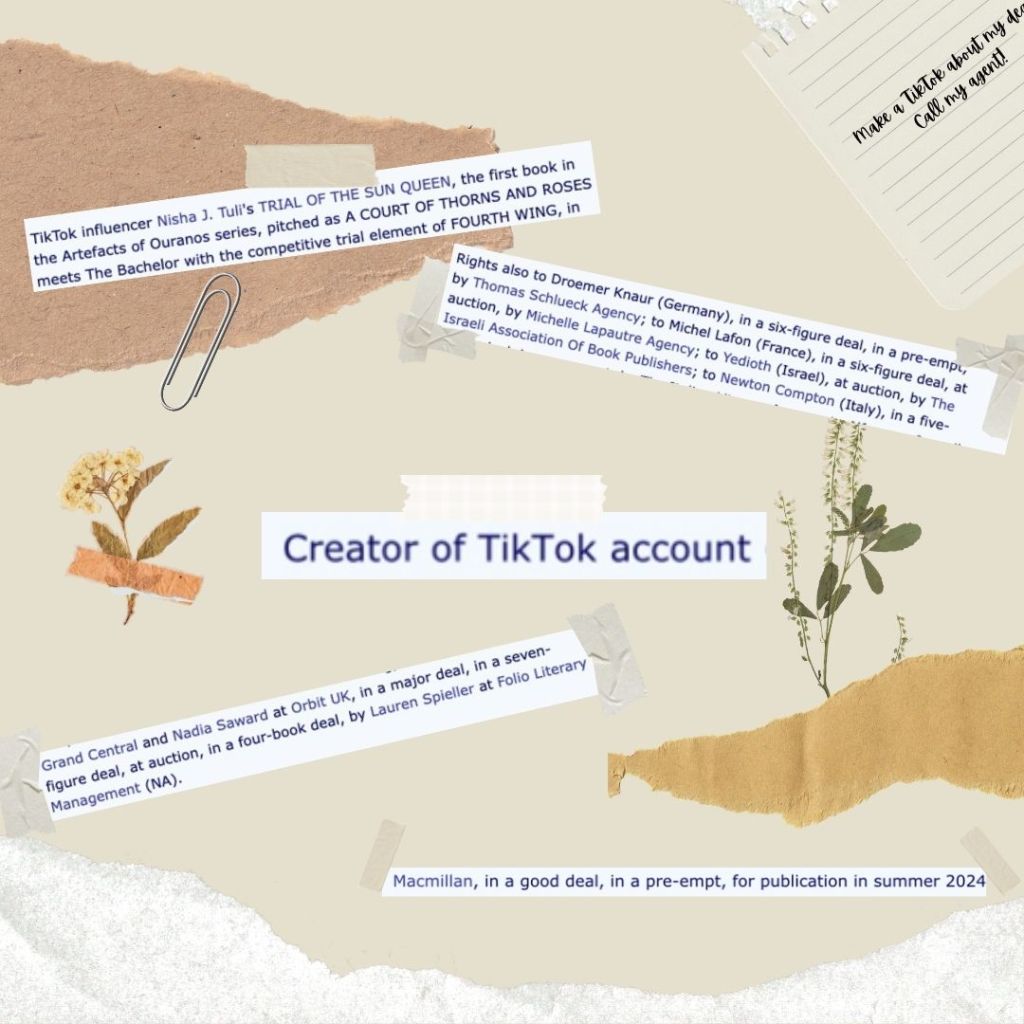
Canva image showing snippings from two Publishers Marketplace deal announcements for TikTok influencers, one of which is a seven figure deal with rights sold to 12 other countries some in 6+ figures at auction themselves. 
Created by me using Canva.
The success is amazing for them. I just think holding others (or yourself) to anything near this is about as unrealistic as, well, TikTok.

We all know, logically, that the algorithm can’t be manipulated as easily as every person peddling a course on how to do it would make it seem. (Sidenote: my day job is in software please don’t @ me on this). But you can’t win if you don’t play, so there’s immense pressure to get in the BookTok game even if you don’t have time, energy, or interest.

“I can’t handle one more social media” is a refrain you’ll hear often in the author community, followed shortly by the opening of another account on TikTok, Bluesky, Threads, Youtube.

My spicy take? Authors should be allowed to spend their precious little free time content creating real live books. It’s already hard enough. They don’t pay us nearly enough for this kind of side hustle. (They don’t pay a lot of us at all.)

These are churned and chewed topics of conversation, though. What I really want to get at, now that my Bad News about my last book is out, is how BookTok pressure is making it harder and harder for me to write real books.


The Fall of My Self-Esteem

Let me get this out of the way. This has nothing to do with publishers or my agent. These are only my thoughts. My messy. Maybe I’m writing this because I’m hoping someone will read it (long as it is) and tell me they think some of these things, too. Maybe we’ll collectively be less alone. Maybe it’ll make someone realize this is a pointless cycle of self-destruction and help them find their way out. Maybe I’ll simply have a few dopamine hits when you push the like button. Whatever it does after, it does, in some ways, start with submission of my first book.

The first time my agent and I discussed TikTok, shortly after my first book had gone on submission, fae made it very clear I had no obligation whatsoever to participate, for which I will be eternally grateful.

Unfortunately, there was no amount of assurance fae could give me to convince me my TikTok abstinence wouldn’t really be a problem if my book sold, maybe even before then. The deals and debuts told me otherwise. My own failures told me otherwise. Hell, my friends told me otherwise. When I commented in writing groups that I didn’t understand the joke or topic because I didn’t know x, y, z influencer I got responses like, “Oh, you know her.” I didn’t. The insistence that I must and derision that followed swathed me in shame. I was behind again.

Like so many of my peers, I stressed over whether TikTok might be the final ingredient to get me over the line of Not Quite Good Enough into Made It.

Quickly on the heels of that thought came several others. BookTok would never work for me. I wasn’t pretty enough, thin enough, young enough, or likable enough for the medium. Nor am I a 21-34 second summary kind of gal, if you couldn’t tell.

Knowing at this point that I will never be able to fix my age or my neurodiversity, I set to obsessing about weight loss. That would have to come before any BookTok debut. After all, all I’d been hearing was how important that very first video would be.

I’ve struggled with weight, body image issues, and eating disorders my entire life. The feeling I get from restricting food intake is the same feeling I get from binge eating is the same feeling I used to get drinking. They’re all addictions, and I have an addict brain. Moderation is not a thing I do well. I’m either at 150% or so burned out I’ve forgotten my name and what day of the week it is.

And because you can’t quit food, my body and I spiral and cycle. Snap. Anorexia—down to 107 pounds. Snap. Binge eating—up to 230 pounds. Snap. Anorexia—down to 118 pounds. Snap. Binge eating—up to 200 pounds. Snap. Scales purchased then pitched then purchased again.

On and on it goes. The addictions I can’t seem to kick. Always waiting for the next snap. Never able to fully convince myself I believe it when I say “fuck diet culture.”

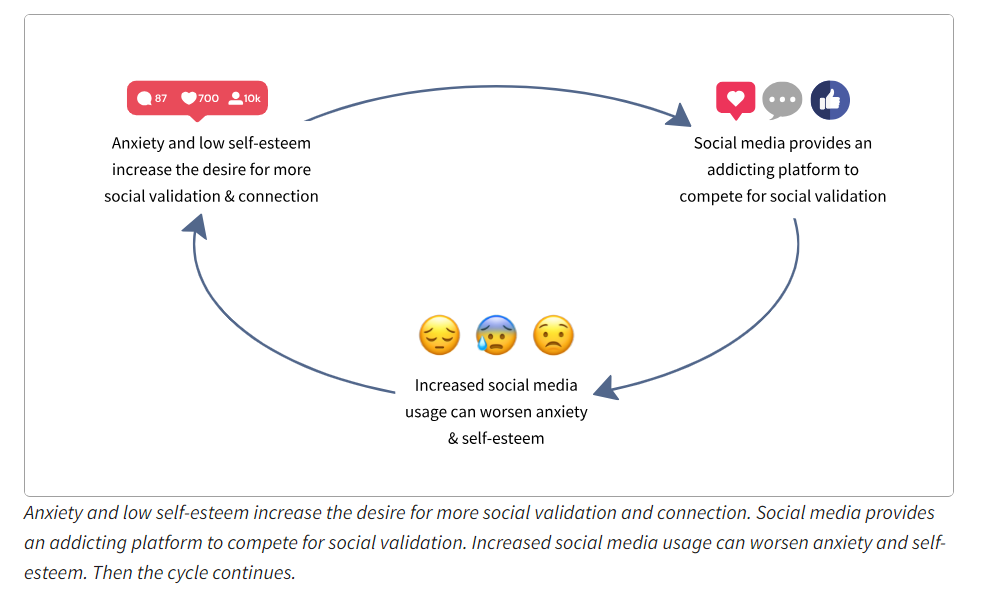
Needless to say, BookTok hasn’t been hugely helpful for my mental or physical health. And I’m not alone. Research has shown that women who watch influencers are less happy with their face while men show increased body anxiety. Source (with additional sources within). The algorithms, with TikTok’s being widely recognized as one of the most powerful, play on the very dopamine cycles I’ve been joking about during this blog (which was on purpose, yes), creating a nasty cycle of anxiety spiraling all their own.

Graphic of a spiral of anxiety and low self esteem leading to social media providing validation but also competition leading to increased anxiety and self esteem. 
Sourced from The Center for Humane Technology https://www.humanetech.com/attention-mental-health
The Center for Humane Technology, where this is from, is doing great work if you don’t know them. You can also check out the Netflix documentary The Social Dilemma for more info.

At the time my last book went on submission, I was at arguably the healthiest weight of my life, somewhere around 145 pounds. Moderated. Controlled. Neither binging nor restricting. Neither overexercising or laying around too much.

Enter the BookTok pressure.

Don’t get me wrong, I’d been watching my friends go through this, struggling with the concepts of some of it myself, but submission made it all too real. My agent said I didn’t have to worry about it, but not getting on TikTok meant possibly losing an easy ticket to the top. It was time for me to enter the fray. And while part of my mind (I almost wrote the logical part of my mind but checked myself) said “lose weight” the greater part of it said, “Impending doom. Bunker down and eat everything.”

Snap. Back to 200 pounds.

A damaged spine.

Morbidly obese, they said.

Can you walk up half a flight of steps without getting winded? they asked.

TikTok. TikTok. TikTok.

Beyond the noise, a memory floated to me like a sheet on the wind. An interview I hadn’t thought about in years. The dream I had. The one that perservered through so many failures and rejections. Here it was, smashed upon the surface of authors being forced to become a brand. I remembered too my writing professors scolding me, urging me to let my stories speak for themselves. Yet now here we were, living in a world where other people spoke for our stories. Spoke for our pain, our traumas, our identities, our histories, our sexualities, our 90,000 word journeys of self-discovery all summed up in perfect 34 second snippets about tropes and heat levels.

Everything I’d learned was upside down. Things that were moving too fast skidded to a hault. I stopped reading, stopped writing, stopped engaging with other authors, stopped telling people I was a writer. I tried to regain momentum. In truth I’m still trying, but it feels like dragging lead. Or perhaps more accurately, like dragging 50 pounds of my own dead weight.

I have nothing left to sell. Not even myself. Because I’m not skinny enough for BookTok.

Snap.

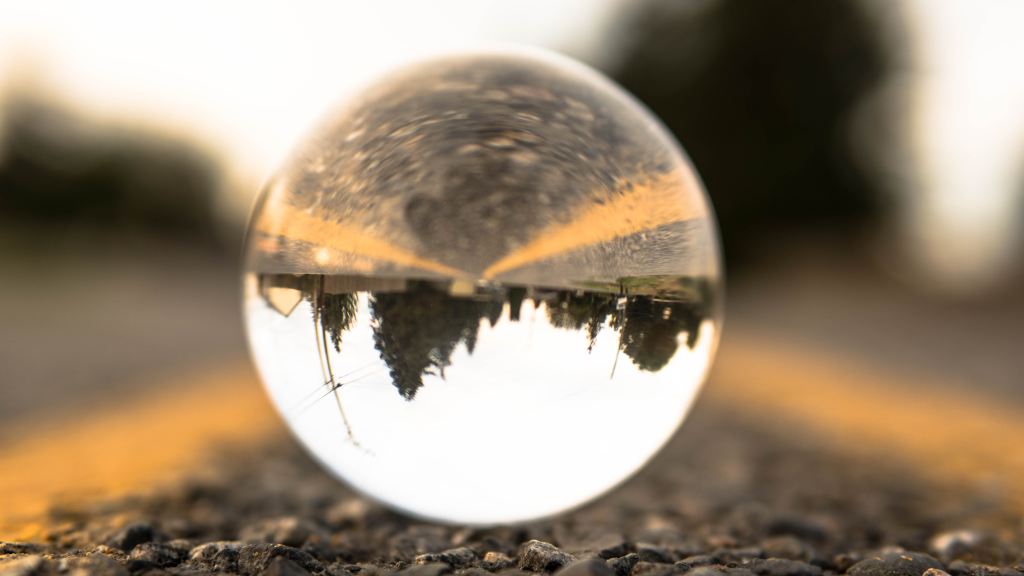
Photo of a crystal ball on a road showing an upside down town in the distance. 
Photo © Trevin Rudy on Unsplash

This Book Dies in the End: A Submission Story

Author’s Note and TW/CW: Hi all! This post is a bit dark and sad and deals heavily with rejection and my processing of rejection which is probably not healthy and is done from a neurodiverse lens (e.g. it’s got rejection sensitive dysphoria allllll over it). There’s an undertone of depression/melancholy and isolation. Please read this only if you’re in the right headspace for such a post. And, if you’re having trouble, please also feel free to reach out. I’ve been extremely disconnected lately (more on that in the blog), but part of the reason I’m writing this is to extend a hand to anyone who might be feeling anything similar. You’re not alone.

Mostly, though, this post is to fulfill a promise. When I became agented, I said I would continue to tell the truth, even if ugly. So, here we go.


In the summer, I dreamt.

I was an old man. Anime-esque in my ancient body—frail—with knock knees, a curved spine, and a long, white beard. My only clothes a dirty loin cloth, ragged wool cloak, and worn shoes.

A gnarled wooden walking stick sometimes in my hand, sometimes not. It came with a vague sense of trekking up a mountain in the Himalayas. I remembered ice scraping my face, battering my paper thin, pockmarked white skin. Caves. Lean fires I barely kept burning. Meals of “soup” made of nothing but melted snow. Nights awake, shaking, stomach growling, thinking I should turn back. But the start was now further than the finish. Forward was the only option.

Yet these nights were not where the dream started. It started where dreams so often do: in media res. Somewhere a decision would be made. Beaten, bruised, dehydrated, desperate, it would come down to these next few moments. In my chest, a heavy, resolute heart thumped.

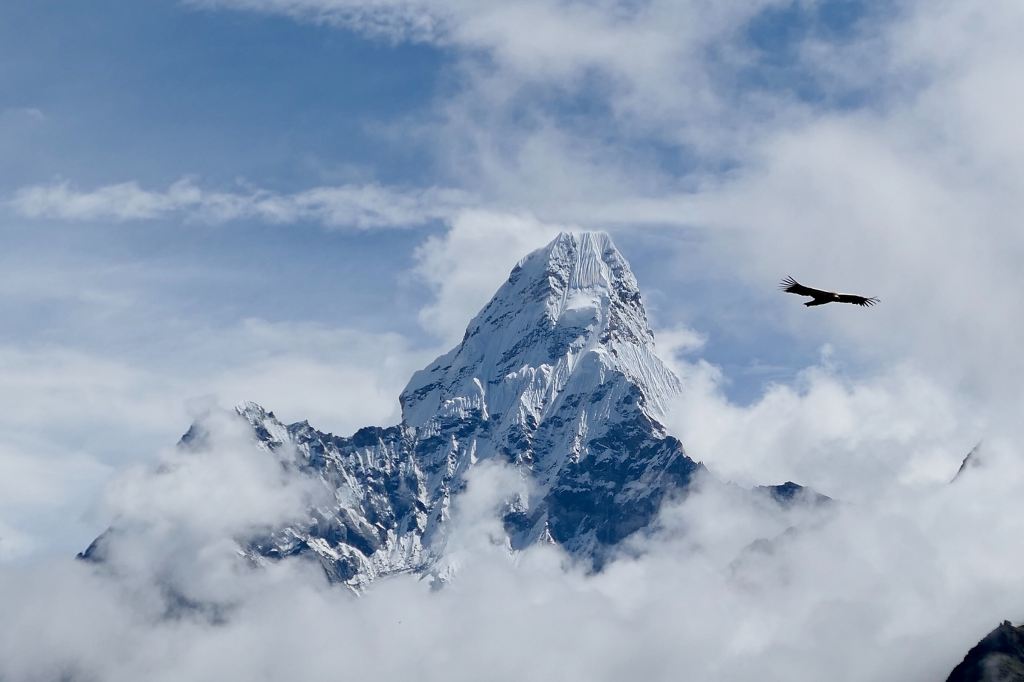
Photo of a snow-capped mountain covered in mist with an eagle soaring above.
Photo sourced via Unsplash, © Ben Lowe

In front of me, nearly buried in the side of the mountain, sat a stone cabin. White smoke wafted from the chimney in whisps as ghostly as the tufts of hair hanging from the sides of my otherwise bald head.

I took another step. My foot sank into a small drift of snow. My malnourished body teetered. I gnashed my teeth, the skin on my nose wrinkling. My heart thumped again. Twice for good measure. Another step. Another. Another. Each one harder than the last but closer, too.

The toe of my threadbare shoe hit something colder and firmer than the snow. Had there been air in my lungs or circulation in my feet to feel the stub, I might have cried out. As it was, I simply toppled forward, knees slamming against the cabin’s stone doorway. My fingers stretched out, thin and gnarled like sticks. The nubs of my chewed off fingernails scraped the base of the cabin’s wooden door.

My chest hit the stone next, but my fingers continued to seek the warmer, softer wood. Yet before long, even that effort became too much, and my hand flopped to the side.

A noise escaped my throat. More whimper than cry, barely audible over the wind. A sound better suited to someone coming into the world than leaving it. Deep in my chest, I strained for breath, for strength to push out something louder, something that might be heard, but the effort only left me wheezing.

The door flew open. What I thought must be hell’s very own horses came stampeding forward, shocking me with their searing heat. I blinked back tears and pulled my arm into my chest. All the while, the rest of me shifted on the stone, inching closer to the warmth of the cabin’s fire like a sunflower seeking a far off sun after 100 years of night.

When my tears dried, I looked up to find a man looking down. My head felt like a thousand pound stone, but I forced myself to hold his gaze. He needed to see me. To help me. To look into my eyes and know I was here. To know I was real. That I had fought each step to end up on his very door. Surely he would see the battle scars, the tragedies, the toll it had taken. Surely, he would see I had conquered the pain. I hadn’t quit. Surely, that meant something. He would make sure my efforts amounted to something.

The man’s lip pulled back, nose wrinkling. He was round and healthy, cheeks flushed pink, black hair slicked with oil, dressed in deftly embroidered silks of the deepest shades of red, blue, yellow, purple. I had to tuck my chin into my chest to keep the colors from ricocheting off the snow, burning my eyes just as the warmth of his hearth had burned my fingers.

He saw me, and his brilliance burned me.

As ever, I had to look away.

Photo of a wilted sunflower in the dark.
Image sourced via Unsplash. © Kilian Peschel

I told my writing friends about the dream. Said it ended here, with my fate undecided.

It didn’t end there.

In the dream I really had, the man turned with a whoosh of his silk robes and a door slam that made my molars chatter. Even now, my skin prickles, haunted by the gust of warm air followed by the cold clattering of an iron door knocker and the even colder howl of another storm on the horizon.

Strange, how cold can burn.

I tried not to think of the dream as prophetic, which is why I didn’t tell my friends the ending, but for months, it’s been my shadow.

The day after the dream, my first book to ever go on submission was scheduled for acquisitions.

I knew from the beginning it went there to die.

There are some people for whom acquisitions does not matter. Barack Obama, Prince Harry, Leigh Bardugo, debuts with 582 likes in prestigious pitch competitions and 13 offers of representation before the day is out.

For most other authors—midlisters, debuts, those of us who are decidedly Not the Darlings—acquisitions is too often the place books go to gasp their last dying breath on the doorstep of Almost but Not Quite.

So it has been with me and the book I’ve been working on since May 2020. 42 months of work. 13 drafts. Four nearly total rewrites. Author Mentor Match. Rejection. Pitch Wars. Selection. Revision. Showcase. Hopes. Defeats. Tears. Restarting. Querying. Quitting. Restarting again.

Poof. Gone. Dead.

Photo of a dying pink rose against a black background.
Image sourced via Unsplash. © Alexander Grey

Part of me wants to default to some technical post about “What is Acquisitions” and “Why do I Care” (oh look! I did end up doing that!) but the other part of me wants to write what I know best: Failure. But I’m afraid, too. The stakes are higher than ever, not only for me now, but for my agent, who took a chance on the writer most well-known for talking openly about failure. I don’t have a ton of marketing experience (oh, hey, I failed at that, too), but I’m willing to bet building a sort of brand around personal failings isn’t exactly screaming, “Pick me for your next best seller!”

Yet the biggest of truths is actually this: I’m tired of failing. I’m ready for my time. My chance. My Big Deal Announcement. My good news. I’m ready to answer the question, “When is your book coming out?” with real information instead of, “Likely never, but hold on! It’s not because I’m a bad writer, and the book is great I promise. It’s because publishing is wild. Here are some colorful charts I made explaining uh… that.”

In short, I am absolutely unspecial in wanting what all of publishing wants: To be special. For once.

And damn if I didn’t think this time was finally going to be the time.

When my agent told me I was going to acquisitions, I was eating strawberry shortcake in Boston’s Quincy Market. My coworker and I were killing some time before our flight home to Philadelphia after a conference. They snapped this photo of me right after I got the news.

Photo of me (a white girl with dirty blond hair in a bun) wearing a gray hoodie and gloves, with a piece of strawberry shortcake almost to my mouth. 
Image (c) my coworker.
I’ve been waiting to share this picture on Twitter/the blog/social forever. Along with *news*. If I don’t get the news I figure I can at least share the picture.

I hadn’t been that excited since getting into Pitch Wars. I had no idea what the hell acquisitions was, but it seemed like we were almost there. Finally. After such a long, winding road, my turn had come.

Within 15 minutes, my agent had explained what acquisitions was, and I had promptly smothered my joy. Looking back at that photo, I wish I hadn’t. It’s honestly one of my favorite photos of myself. I usually hate photos of me, but I don’t know that anyone had ever captured true joy on my face before this photo.

The thing is, I smother excitement and lower expectations to protect myself, hoping that will dull the pain. Across thousands of rejections of my work by professors, peers, workshops, literary magazines, journals, mentorship contests, beta readers, critque partners, agents, editors, booksellers, hell, even my own high school library, you’d think I’d be tougher by now. Poetry, songs, screenplays, short stories, creative non-fiction, young adult, new adult, adult, literary fiction, fantasy, romance. You name it, I’ve likely been rejected for it. Still, I cry.

The further along I get in this journey, the more I realize I’ll never acclimate to the pain. No matter what I do or how I try to protect myself. It’ll always be there. Sometimes more, sometimes less. Sometimes expected, sometimes a jolt like a splinter. Yet always present in some form or fashion. The only thing that changes is me allowing myself less and less joy to look back on to remind myself what made the pain worth it in the first place.

That’s why I love this photo. Because in it, joy persists.

It persists in other, subtler ways, too. For a few days after the acquisitions notification, I let myself try to find connections. Cake connections, to be exact. The backstory is when I signed with my agent, I ordered a specialty cake complete with glass slipper for my very own happily ever after. I froze some of it (like freezing the top of a wedding cake), promising myself that when (not if) the book sold I would eat it to celebrate.

Then, the acquisitions update comes and of all things to be doing at 10:00 a.m. in Boston, I’m eating cake. My coworker who was with me has a friend who owns a cheesecake shop in Baltimore. Baltimore where my Pitch Wars mentor lives. The date for acquisitions was my boyfriend’s birthday. I’d be eating strawberry shortcake. I convinced myself it was all connected: by cake!

Image of a blue cake with gold leaf topped by a glass slipper. 
Image copyright Aimee Davis.

But before my cake and its hope could do too much damage with those pesky roots, I braced my fingers around the base and yanked. No more hope. Not for the girl who built a brand on failure. The truth, my truth, is to be Not the Darling. Not the exception.

Self-fulfilling prophecy, perhaps. Or perhaps I know the brutal routes of my own life and luck.

The book didn’t make it through acquisitions. Not when it went that first time in the summer. Not when it got very close again with someone different in the fall. Not when it was “there but for one more approval” with a third press in the winter.

The first time, I gave such a play by play of acquisitions and my detailed divination over cake that my coworker sent me cheesecake to “celebrate.” I took photos of it with my favorite bookmark and cried when it all fell apart. The second time, I only told a few people. Only one person asked how it went. By the third time, I didn’t even update my partner. It’s hard to be the one failing all the time, but I think it might be harder to be the one powerless to help the person you love.
Another hard truth: I’m tired of putting this burden on my friends, my family, my agent, my partner. There’s nowhere for the grief to go, yet it never seems to stop coming.

Sometime between summer and fall, I disappeared from my writing groups. It was a me problem. I no longer knew what to say that wasn’t sad or somehow wrong, but I could no longer bear the weight of pretending I was okay. I wasn’t jealous of my friends’ success. I was, am, and will always be incredibly proud of them. I have all their books on preorder and yell about them frequently to anyone who will listen, sending links to coworkers with declarations of “I KNOW HER/THEM!”

What I was (and continue to be) is ashamed of myself. For failing. Again. I know it isn’t logical but there it still is.

Sometime in the fall, I stopped talking to all but one IRL friend. I buried myself in work. My 12 hour days became 16, 17, 18 hours. Anything to keep me from having to think about books, or submission, or if I was the only person in history to have come so close so many times only to have the door slammed in her face.

Dead on submission.

Dead. There’s no primer for how appropriate that word is. The death of hope. Of joy. Of what little self-confidence you managed to cobble together in this Alice in Wonderland industry. The death of five million words spilled over the course of 30 years as I struggled to get to this point. As I climbed every mountain ahead of me, feet bleeding, heart ripped out and raw, offered on a plate, freezing and frail. The sacrifices I made, the lives I could have lived. Only to arrive here at the gate, my destination in plain sight.

To die.

No cake for me.

No happily ever after.

Because spoiler alert: This book dies in the end.

Digital painting of a white man and a white woman in a near-embrace. The man has black hair and is wearing a long double-breasted coat while he does magic with one hand. The woman has auburn hair and is wearing a light green day dress, holding a wand in her right hand.
Isabelle and Adrien. © Jaria Rambaran

The Story of Rat Park

Author’s Note: Doing a bit of a slightly off-brand (?) pivot today. The following is a short story/creative nonfiction essay based on my stay in a short-term, inpatient, dual-diagnosis behavioral health facility (almost eight years sober!) Identifiers have been removed and some details have been changed to protect people’s anonymity. Why here? I suppose I talk about my ‘lit fic’ background but don’t show it much, so here it sort of is. Plus, I needed some creative muscle stretch and an outlet to share something.

Content/Trigger Warnings: Addiction, inpatient treatment, brief mention of incarceration, mention of self-harm, mentions of drug and alcohol abuse, psychological abuse, trauma, domestic violence, mention of experimentation involving animals. No graphic on page violence or animal death or harm.


Ring the bell. Give the food. Ring the bell. Give the food. Ring the bell.

Wait.

The dog salivates. The bell inextricably linked with food.

Of mice and men and rats and dogs. Do the drug. Get sick. Do the drug. Get sick. Do the drug.

Wait.

In rehab, a counselor demonstrates this “lesson” about classical conditioning by denying us our cigarette break at the designated time. The clock chimes. Give the cigarette. The clock chimes. Give the cigarette. The clock chimes.

Wait.

He’s done this before. Smug smile, self-important use of vocabulary he’s sure we won’t know. Oh yes. He’s done this as frequently as Pavlov rang that God damn bell.

Time for him to learn a lesson in fucking off.

I stand, nearly sending my plastic chair flying into the cheap Formica table behind us. “We’re not Pavlov’s fucking dogs. We’re people.”

His smirk drips to the floor like a Dali painting. “You know Pavlov?” He presses a finger to his lips. Like he’s never considered an addict could do something as extraordinary as know things.

I tighten my fingers. Chewed down nails scrabble for purchase against soft, white palms. My jaw clenches. Muscles protest, sore from grinding teeth, but I ignore my body’s bullshit. Same as always.

My head spins, turning my stomach. Days since I’ve slept more than minutes. Still, my alcohol withdrawal doesn’t seem nearly as bad after watching my eighteen-year-old roommate writhe from her drug of choice. Heroin.

I press the heels of my palms to watering eyes. Night blends into day. So do sounds. This counselor’s nasally lecture, then my roommate’s hiccuping, repetitive cries. I want to go home. I want to go home. I want to…

No three clicks of her heels. Not here. Her ruby slippers are rehab and a clean piss test. The yellow brick road is a broken bitch full of potholes and more than one wicked witch. Her father called the cops on her when she stole from him. Rehab or jail, the judge said. Clean or homeless, her father said.

Photo of a red jeweled mask on a red background. Image sourced via Unsplash.
Photo by Scarlett Alt on Unsplash

From my plastic-covered mattress I listen and think. Of her. Of me. Of my college education and good job I’ve somehow managed not to lose. Of the apartment that’s all mine. Of my cats who I hope are being fed according to my strict instructions. Of the world waiting for me on the other side of this hell. Gratitude floods my veins like wine once did. Fear sneaks in alongside.

I shiver. Now or last night. I’m not sure. Losing time and my body again.

A blanket that’s too small to cover me, too thin to warm me. When I asked for another one, the nurse refused. In the shitty half-light of our room, my roommate—frizzy, light brown hair framing her round face and small voice—shyly explained how the One Blanket Policy prevented noose-making.

Fucked up. That’s what you call the situation in which an eighteen-year-old girl who cries for her father every night explains this to you with a sheepish smile.

Hell. That’s what you call this place run by aids who check on you every fifteen minutes, flooding your darkness with light, snatching your sleep, nurses who come every four hours to take more and more blood, and counselors and doctors who see us as experiments to test their hypotheses. Not people. Never that.
Silhouette of a figure with a dark crown ringed in red all set on black background.
Photo by Jr Korpa on Unsplash

I pull my chair into its place at the edge of the semi-circle and sit back down, sucking in a breath so deep my tar-filled lungs strain at their edges. “I know Pavlov,” I say, running my finger over the pattern of scars my pink pajama pants hide. “And Skinner. Operant conditioning, the quadrants, antecedent, behavior, consequence. I know Bruce Alexander’s Rat Park.” I lift my gaze. “We’re not stupid. We’re sick.”

The counselor leans forward, eyes shrewd. I imagine him older, his shaggy brown hair graying, glasses touching the tip of his freckled white nose. Thick hands twisted from arthritis and all the writing of grand, scholarly articles.

Content in his self-righteousness, he sits in a plush leather chair. Blue scrubs traded for an argyle vest, white shirt rolled up to the elbows, one leg crossed over the other, notepad in hand, he listens to a woman cry. Murmured platitudes, coping strategies, and I understands are exchanged.

Nothing. He understands nothing.

“What’s Rat Park?” A man with light-brown skin that should be darker perks up. His brown eyes hint at smiling the way his voice hints at a Mexican accent.

The counselor leans back in his blue plastic chair, smirk retrieved. He sweeps his arm across the group like a king gesturing toward his court. “Go ahead then, if you’re smart enough to teach my lesson.”

Bait. Provoke. Wait.

I take it. Of course I do. Taking the bait is how I ended up here. Not in a Reagan’s gateway drug sort of way but because proving people wrong about me is my real drug. Failure to do so the thing leading to the downward spiral.

Behavior, antecedent, consequence.

I face the group. Lift my chin. Straighten my spine. My eyes feel sharper than they have in a long time. He thinks he’s teaching classical conditioning, but he’s teaching me an entirely different lesson. Addiction has branded me for life. A new scarlet letter. Tagged by society as other. Lesser. Weaker.

The thing inside me that hates when the world gets away with wrong flails against my ribs like a feral cat trapped in a cage. Not fair. Not fair. Not fair. It becomes my heartbeat. My war cry.

In that moment between breaths, between the tautness of my latissimus dorsi muscles, and the slowly waking synapses firing in my brain like an old engine sputtering to life after years of dormancy, I realize two important things.

One. I will never prove to assholes like soon to be Dr. Whoever the Fuck they’re wrong. I will never convince them I’m more. We are more. Stronger. Smarter. Braver.

Two. I don’t have to.

This guy doesn’t matter. We do. The ones in this room. We matter, and we have more to offer. More than the needles in our arms and the vodka on our breath. More than what we’ve done and who we’ve been. We’re a whole world of untapped potential waiting to conquer the dreams left behind.

But first, we have to break free.

Photo of a bird cage left open in a wooded area.
Photo by Deleece Cook on Unsplash

“Rat Park was an experiment conducted by a psychologist named Bruce Alexander back in the ‘70s,” I say. “To test a hypothesis about addiction, he put rats in different environments. Some lived in small, empty cages alone. No other rats. No little wheel. Just them and the cage.”

The man who asked the question draws back, a shudder racing from his neck to the tips of his fingers. Thick biceps ripple with the motion, goosebumps appearing on his lighter than it should be brown skin. Prison. That’s where he’s spent the last eight years. Trading one cage for another. Doomed by society to play this age-old story on repeat. Stamped forever like the rest of us. Doubly condemned for the color of his skin. Triply for the lilt in his voice.

But we aren’t Alexander’s rats any more than we’re Pavlov’s dogs. We’re people. This one loves his brother with a ferocity to rival the sun’s heat. Who loves his nieces even more. He wants what we all want. It’s the thing that binds us together, here in hell clinging to hope.

Freedom from our cages.

I tilt my head. No, we’re not rats. We’re snakes, shedding our skin. Becoming better.

One day at a time.

“The other rats he put in Rat Park.” I smile. Twist my voice like my mom did reading me a story when I was little. The way that makes everything feel more magical.

She made our cage disappear with stories. Downstairs, the enemy wasn’t a man drunk on cheap gin snoring atop vomit and piss-soaked couch cushions. It was a dragon huffing out puffs of smoke in her lair amidst a pile of jewels. My mother wasn’t a battered wife with a black eye and a broken nose. She was the first female knight in her realm, fastening her glistening armor tight.

In a story, you can change everything. Even how people see themselves.

“In Rat Park, the rats were allowed to socialize with other rats, including have sex, very important to mention that.” A few people chuckle. “The rats formed family units and social groups. They had treats and toys, soft places to make their beds. There were activities for them, wheels, puzzles, whatever rats like doing. Rat Park was a cage, too, because it’s all a cage really, but it was a fucking awesome cage. The rats had their friends, their family, things to do and eat and play with. Best of all, there were no predators. It was safe.”

An elderly Black woman with crinkled skin and a tough as nails attitude scoots her walker closer. Her dark brown eyes, sclera yellow where they should be white, wide as a child’s as she waves at me to continue.

Crack. She’s here because her daughter threatened to stop paying her rent if she didn’t check herself in. When she told me her drug of choice, I wondered how someone with a walker bought hard street drugs, then what kind of person sold them to her. Fortunately, my mother also taught me to be polite, so I kept these questions to myself.

“Alexander gave all the rats two bottles to drink from. One had plain water. One was laced with morphine.”

A white woman in her mid-forties with bleach-burnt blond hair and a frame a novelist would describe as bird-like settles her chin on her hand and lets out a sigh as weary as the bags under her blue eyes. “I know where this is going.”

Next to her, a tall, Puerto Rican woman in her early thirties smacks her lightly. “Let her finish!” Once upon a few months ago, she was a nurse in this very facility. Until meth stole her license, then tried to steal her life. She still wears scrubs and pulls her thick, curly black hair into a bun neater than any of the other nurses. Still defends every patient with a mother’s instinct. Her kids are the reason she’s here, the threat of losing them all too real now her ex has called CPS.

I nod my chin. Yes, the bird-like woman does know where this is going. But I’m intent on telling it regardless. “In the small cages, the rats chose the bottle laced with morphine as soon as they knew what it was, or, more importantly, what it would do. But over in Rat Park…”

I stumble. Swallow hard. I know this story. It even has a happily ever after with a moral at the end, my favorite kind. I know the point I wanted to make. Rat Park is a thing we have to create for ourselves.

Fear shocks me like an ice bath. It isn’t breath that stops but heart. What if we can’t? What if the too small cages aren’t only in the world but in each of us?

What if our minds have become our cages?

“Over in Rat Park what? You can’t just stop like that and leave this dude to tell the rest.” The man who asked the question to start has returned from the place I sent him with my talk of tiny cages. His thick arms twine around the chair he straddles, a refusal to sit in it “properly” like one of the douchier aids insists.

Behind him, leaning against the back wall, still in a drug-induced haze that glasses over what might be hazel eyes once the broken blood vessels heal, a ghost of a boy shifts his hands from across his chest to the pockets of his baggy sweats. It’s the longest he’s been quiet since the police brought him in less than two days ago, screaming with a fury that made spit fly from bloody lips.

Meth, he told us later. He was living under a bridge with some friends. When the snowstorm hit, the police rounded them up and brought them here, so they didn’t freeze to death. Three squares and 72 hours, the maximum they can hold someone committed against their will, and he’d be back out there, he promised. This is his fourth stint. 

In stories, you can make people see themselves differently.

Maybe I can do that with stories, too.

If our cages are our minds, we’ll tear them down and build our own Rat Park in their place. A feat of a thing, for sure. But there are no stronger people.

Photo of a county fair at night with rides in lights, carousel and roller coaster in the background.
Photo by Devon Rogers on Unsplash

“Over in Rat Park, the rats picked the plain water,” I say. “They tried the morphine water, a few came back once in a while for another sip, but mostly, they drank the plain water.”

For the first time since I started, I look at the counselor. He nods once. Not approval. Permission.

“You usually only hear that part of the story,” I say. “It’s simple, don’t you know? Make the world better, people stop using.” I roll my eyes, the gesture accompanied by a chorus of disgruntled snorts and “sure rights.”

“But Alexander wasn’t done.” I shove my elbows into my thick thighs and prop my head on my closed fists. “He didn’t just leave all the rats where they were. Some, he moved. One group he took from their cages and put into Rat Park. Another group from Rat Park he put into cages.”

A tennis ball from the Black woman’s walker squeaks against the white floor. I take a deep breath. The room smells of diluted bleach and coffee. My heart pounds its war cry in my chest, my ears, my wrists.

Everyone focuses on the rats moved into Rat Park. The “cured” ones. But we aren’t rats. There’s no cure for the brands we bear. Some deeper than addiction. More visible, too. Trauma. Sexuality. Skin color. Gender identity. Nationality. Body type. Economic status. There are a thousand ways to be branded. Addiction is but one. One that gives no fucks about the others. One that somehow, against all odds, has brought us together.

“The rats moved into Rat Park stopped drinking the morphine water, as predicted.”

Pause. Breathe. Wait.

Time to talk about the rats the world forgets.

“As for the rats moved into cages?” I pivot, fast as a snake strike, eyes locking on our counselor. “They started drinking the morphine. Turns out we’re all addicts when locked in a sufficiently small cage.” 

Image of a snake behind a mouse on a black mirror. Image via Unsplash.
Photo by Phil Robson on Unsplash

My Pedantic Prose

Author’s Note: First, sorry I’ve been a bit MIA, things at the 9-5 have been hectic! Now, about the following blog: To be totally candid it was originally drafted in a moment of late night, desperate sadness that turned to fury. I’ve subsequently edited it, pulling back on fury to add what I hope comes across as tongue-in-cheek humor at the forefront before asking what I intend to be genuine discussion questions about the lens through which we view not only Adult SFF but literature in general. This piece is primarily about internalized sexism but also touches on race and other marginalized identities. I caveat that I’m female and neurodiverse but not a monolith. I’m also white. This not an attempt to speak on behalf of voices that are not my own but instead to recognize them. Wherever I use the word “woman” please understand this to include trans women and anyone who identifies with or as a woman at any time, including but not limited to nonbinary and gender fluid folks (if there’s a wish to be included!)

To the extent the argument you might put forward in defense of the alleged “dumbing down of fantasy” trend is due to a flood of white women authors entering the market, I make no argument contrary to the actual facts. Those are that the market continues to be depressingly white. I do intend to argue, however, that any argument that women writers of any race or color who include love, romance, sex, or less traditionally “intense” topics in their Adult SFF somehow leads to the “dumbing down of fantasy” begs a critical re-examination for potential internalized sexism. This point is not expressly stated in the piece as I attempt instead to pose questions for consideration, but I don’t want it to go misunderstood or my position on this issue misstated.

TW/CWs: Opaque references to internalized ableism, sexism, racism. Quote from Moby Dick containing offensive language relating to Indigenous Americans and those of Persian descent.

Length Warning: This uh… got out of control. Apologies and congratulations to anyone who makes it through.

pe·dan·tic

/pəˈdan(t)ik/

adjective

of or like a pedant.

An insulting word used to describe someone who annoys others by correcting small errors, caring too much about minor details, or emphasizing their own expertise in some narrow or boring subject matter.

Merriam-Webster online

I don’t think this word means what people think it means.

GIF from Princess Bride. Three men, a swordsman, a bald man, and a tall man, look down, the swordsman says, "You keep using thatword. I do not think it means what you think it means." 
Copyright: Disney
Sourced via: GIPHY
You had to know this was coming, right?

I’ve seen it bandied about a few times lately, mostly to describe a trend in Adult SFF toward publishing books that are more accessible to different groups of readers. As in, “I’m so sick of books that read too YA with their pedantic dialogue.” Or, “Can’t anyone read anymore? All these books are so short. In my day, we all read 350,000 word Robert Jordan books in one sitting and waited eagerly for the next!” Or, “My hot take opinion is adult SFF these days is being dumbed down by this trend toward a certain type of book.” Certain type. Yeah. Avoid the comments to those ones if you: (1) know what they’re hinting at; (2) disagree; and (3) are near breakable things.

Good old fashioned elitism, right? How you never cease to amaze me with your inability to do a google. Who needs to google when there’s yelling on Twitter, eh? It’s not like you’re making a hugely elitist literary argument in favor of the “smart” side while using language incorrectly or anything, psh! What a nitpick. To correct you might be well… pedantic.

That Trend, Those Arguments, My oh My

While we’re here, let’s talk about that trend and those arguments.

First, call the spade the spade. The trend is romantasy. Maybe cozy fantasy, too. The argument can be couched however people want to spin it, but here are some of fantasy’s most favorite hate hits: books with protagonists (don’t you know they’re almost always women) who are too “voicey” and/or “immature”; authors who use prose that’s too simple or “commercial” (the calamity! being commercial in business-to-consumer commerce!); authors who don’t write “beautifully”; stories that “feel too YA” (I know you’re shocked to learn it’s female protagonists targeted here, too); short books that “dumb down the genre” (it’s almost like authors are aware of the cost of paper and the demands of their target market or something…), and not a small number of other similar things.

If it walks like a duck and talks like a duck it’s probably a duck.

The argument is elitism. Sexist elitism. My favorite kind.

Photo of a map of Middle Earth with a copy of the Hobbit, a bookmark with a Tolkien quote, a dagger, and white, orange, and yellow flowers.
(c) Aimee Davis @writingwaimee on Instagram
White. Check. Dude. Check. Dead. Check. Faaaaaaancy. P.s. I’m mostly trying to use my own photos at this point because I truly cannot tell what is AI and what isn’t (that’s a me thing not an artist thing, I know you can definitely tell if you know what you’re looking for, but I’m totally clueless on this front and am thus favoring caution).

I’m putting the YA feel and voice/immaturity arguments aside for another day lest this blog become a thesis paper. Instead, I’ll focus on the prose concepts and how we determine what makes a book “smart” or “one of the greats” versus one that apparently single-handedly and without ceremony seeks to destroy via stupidity not only several hundred (arguably thousand) years of sacred literature but quite possibly an entire society. I mean honestly, what’s next? First they canceled cursive, now 500 page tomes, where will it end?

Prose (Pedantic or Otherwise)

What constitutes beautiful prose is subjective, that’s what makes writing art. However, you’ll find in elitist circles *coughlitficcough* there’s certain base criteria for beauty or at the very least what constitutes “great” literature. Can you argue over its meaning? Does it have an ending or passage that leaves you looking like Rodin’s The Thinker? Can you take a single paragraph and dissect it word by word, puzzling over each? Is there a whole curriculum to be spun over a sentence? Has it “stood the test of time” (aka is the author usually white, male, and dead)? If yes to a few of these, take a deep breath and sit down, because you might just be in the presence of greatness.

Ambiguous Prose, Generally

George Bernard Shaw (another dead white dude) famously said, “Youth is wasted on the young.” He’s not wrong. Because if in my youth I’d possessed the self-awareness (and courage) I have now, I would’ve pushed back against some of the elitism drilled into me during my “classic” writing education. Not to say there’s anything wrong with ambiguity1 necessarily but putting it on the pedastal I’ve seen it placed on feels more ableist now that I’m self-aware enough to process the gut feelings I experienced in my younger years.

1To not be ambiguous myself, I note here I’m using this word very colloquially. When I say ambiguity or ambiguous prose I mean, generally, language or plot devices found most notably in works of literary fiction where the reader is left to question authorial intent and in many cases, concepts of sociology, philosophy, or morality. More plainly, I’m referring to every book you’ve ever read in an English class that contained some kind of discussion around, “What do you think was meant by [insert word, sentence, plot point, etc.].”

I always hated Chekhov, for example. I hated his vapid, fragile women who seemed to me to be more objects to move around than real, fully-developed characters. I hated his burly, abusive men with their cheating and dishonor. I even hated that stupid little dog in his story “The Lady with the Dog.” Even now, my nose wrinkles and my tongue curls back in my throat. The neurodiversity in me rages against the grayness of it, the injustice, the lack of resolution or seeming point. Yet my professors lauded this man with his characters’ moral ambiguity and enigmatic existences. So much to analyze! Not for me. Nope me on out, please.
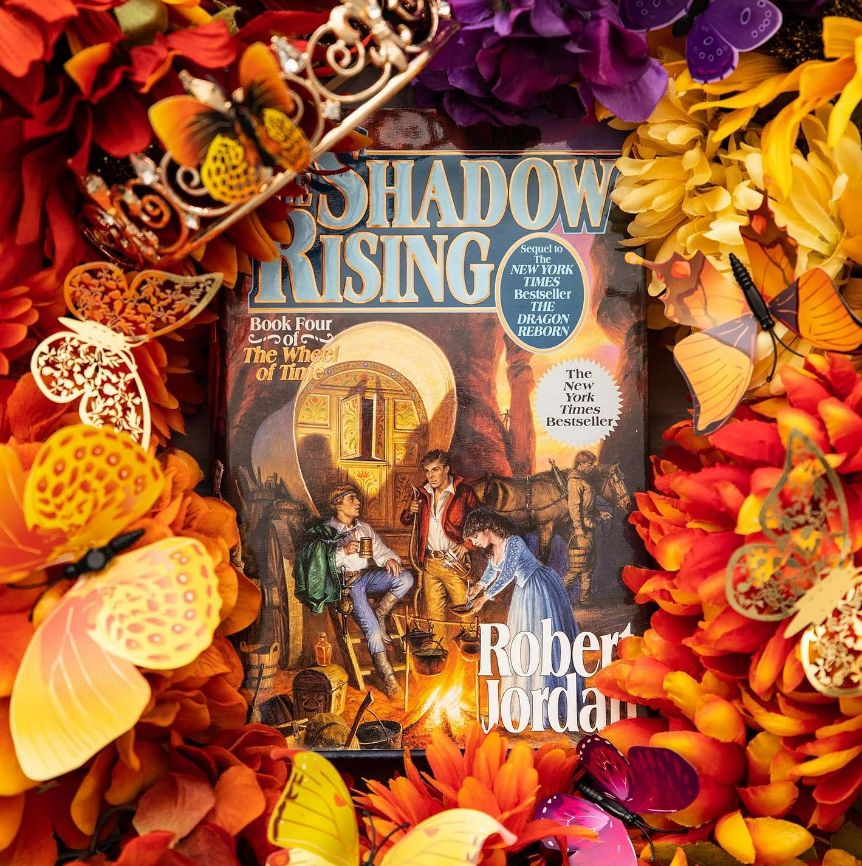
Photo of The Lion, the Witch, and the Wardrobe on a wooden plank surrounded by blue and white flowers and blue butterflies.
(c) Aimee Davis @writingwaimee on Instagram
Admittedly, I don’t have a ton of photos of my extensive “classics” collection primarily because most of the covers are horrid, and I don’t often have fun and happy, grammable things to say about them. This being a beloved exception. Dead white dude tracks.

Short but Still Cryptic Prose

I once sat through a ninety-minute writing workshop where the professor and 11 students discussed and debated a single chapter of Hemingway, including spending twenty minutes on one sentence I used to swear described a character putting a worm on a hook. The used to is important. You see, when I started writing this post, I was sure the book I remembered was The Sun Also Rises. My college copy is still in my possession. So, after I failed to find my so vividly remembered worm sentence via Google, a thing I do to doublecheck my work, (sidenote, Hemingway wrote about fishing a lot), I pulled that book off my shelf. I’ve now read the infamous “fishing chapter” in The Sun Also Rises (Chapter XII if you’re interested) a few times and haven’t located my remembered sentence.

What can I say? Memory is fickle.
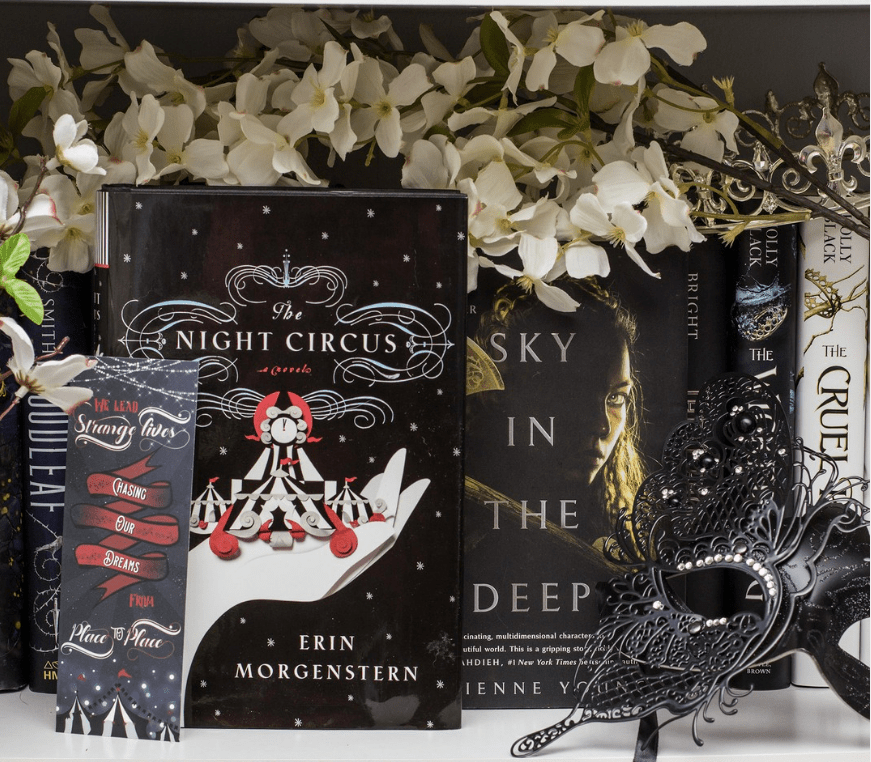
If someone remembers a particularly vivid singular sentence from Hemingway (perhaps a short story?) involving a worm (or maybe a cricket?) being put on a hook, please hep me alleviate this brain worm (ha) I’ve now obtained by leaving me a comment!

While I didn’t find my worm, I did find a three word sentence I’d highlighted. “Like Henry’s bicycle.” Next to it, I’d written, “Henry James – was he gay or a bachelor? Maybe a wound?” I guarantee you I did not come up with this “interpretation.” It was most assuredly fed to me by my professor.

Three words about a bicycle and this is where we go. So worm or no, I still have some questions about how we determine greatness or beauty or meaning. Is this truly deeper meaning or could it be pretty-sounding (arguable on the pretty) gibberish we’ve not only been instructed to read into but also on what the interpretation should be? Am I simply a jaded author too stupid to put deep meaning into phrases like this, or have we all been duped? More importantly, does it matter one way or the other if considering the question causes us to think critically?

For the last question, I’ll insert my own opinion. No. It doesn’t matter, with one caveat. Yes, think! Scorn interpretive meaning! Ascribe meaning! However, I caution you not to claim superiority whether you favor ambiguity or clarity. Because honestly, that’s what people are doing when they say this book is “a great” and that one is “trash” or they say “these types of books degrade literature.” They’re claiming superiority by saying there’s a right way to think and read and enjoy literature and that way is theirs and all others are wrong and thus, inferior.

For sale: baby shoes, never worn.

Author unknown

Purple Prose: Hidden meaning, hidden beauty, or cover up?

What about lush prose, then? You know, the stuff if I wrote it would be cut and critiqued for being “purple.” Writing that really can wander into pendantic territory.

Where prose is concerned, size doesn’t seem to matter. Six words or six thousand, I’ve sat in a workshop somewhere and listened to a professor gush about it. As long as there’s something to analyze! Pages on pages and hours on hours on the meaning behind the whiteness of Herman Melville’s whale without hardly a period or breath to separate it all, and do not get me started on Ulysses.

Then, I didn’t question. Now, I’m left wondering.

Who gets to decide what makes something great or beautiful or smart or meaningful? Agents, editors, critics, scholars, readers? And does that apply to now or later? Is there a yes, maybe, never scale? Who makes that? Does the political relevancy of a 200 year old word make it great today? And is it thus more great than something politically relevant in its own time? What’s more important? Age or relevancy?

Now, as a reader, a consumer, a purchaser with the buying power who thus has the ability to influence trends, think for yourself. How does this line of questioning, wherever your answers may have led you, impact what you buy? Is it helping influence a change in literature or keeping it stagnant? Is the change, if any, positive or negative? Does it affect marginalized voices?

Most importantly, though, is it making you a happier reader and a happier human?

As to my opinion? If neurodiversity has taught me anything it’s taught me that brains are as varied and vibrant as art itself. Different brains require different things to spark them. The difference, the variance, the kaleidoscope of culture and thought and concept is what we should celebrate. Not more… well, whiteness.
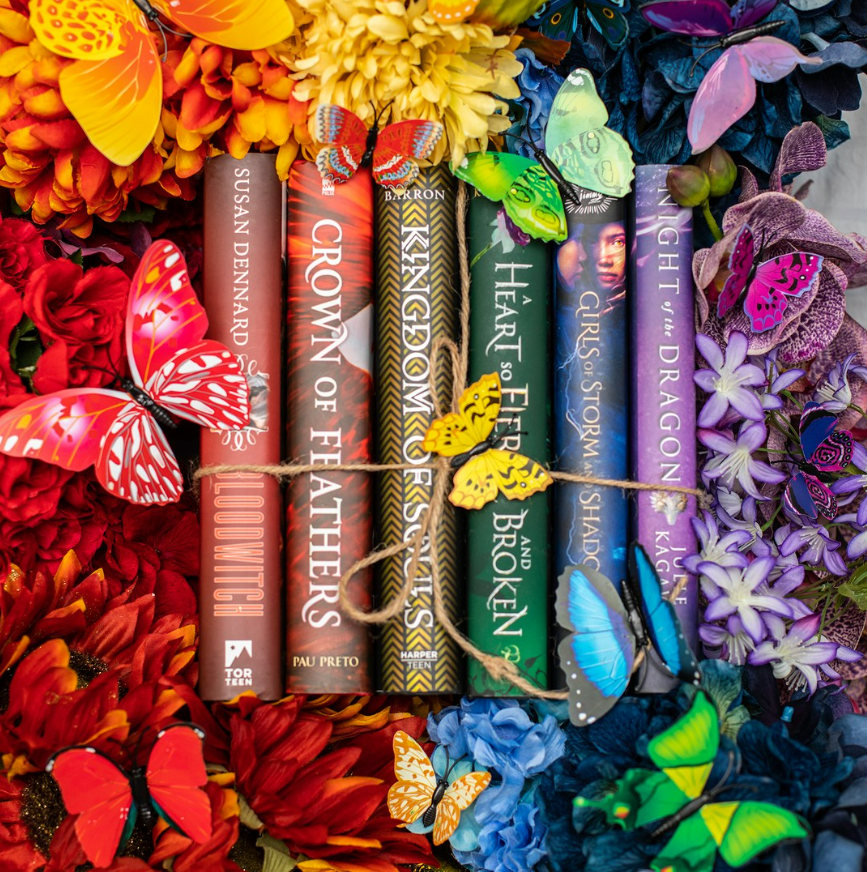
I’m different. I like different, and I’m really ready for an Adult SFF shelf with more than the same 15 names on it.

“…the innocence of brides, the benignity of age; though among the Red Men of America the giving of the white belt of wampum was the deepest pledge of honor; though in many climes, whiteness typifies the majesty of Justice in the ermine of the Judge, and contributes to the daily state of kings and queens drawn by milk-white steeds; though even in the higher mysteries of the most august religions it has been made the symbol of the divine spotlessness and power; by the Persian fire worshippers, the white forked flame being held the holiest on the altar; and in the Greek mythologies, Great Jove himself being made incarnate in a snow-white bull…”

Herman Melville, Moby Dick

Bringing it Back to Fantasy

The Time Testament: Aka the “Back in My Day” Conundrum

And now, we address head on the great forefathers of fantasy.

Photo of the book The Shadow Rising from the Wheel of Time series by  Robert Jordan surrounded by orange flowers and orange and gold butterflies. 
(c) Aimee Davis @writingwaimee on Instagram
I’ve said it before, I’ll say it again: Four million word RPG adventure with ample opportunity for “Gather a Wife” sidequests. Good show, though. And if you were keeping score, Robert Jordan (born James Oliver Rigney, Jr.) is white, a man, and dead.

When I was a wee baby writer churning out horrible drafts of fantasy novels with talking Pegacorns and super-powered, teenage mages who had raging hormones and daddy issues for days, I ran into an issue with my reading. I ran out of reading. For the youths, these were the olden times where YA fantasy was not yet a thing, and fantasy books for teenagers, especially girls in love with love, like myself, weren’t plentiful like they are today.

I’d burned through all the Tamora Pierce and Mercedes Lackey and Anne McCaffrey and Kate Elliott and Elizabeth Haydon. Philip Pullman’s His Dark Materials trilogy was a weekend job. I’d read all the one-off retellings I could find: Confessions of An Ugly Stepsister; Wicked; Ella Enchanted. I’d dabbled with Libba Bray and her fantasy fiction. I’d read all the “classics” from Tolkien to C.S. Lewis.

Then, one fateful day, someone, a boy, naturally, told me if I wanted to be a “real” fantasy author I would have to read Robert Jordan’s Wheel of Time series. Because I was young, and unwise, and lacking in confidence, I believed this boy (and others like him) and continued to do so for the next very miserable decade or more. Dutifully but spitefully, I trod through every last word of that series. At some point, I caught up to Jordan’s releasing, and was given reprieves between books. Unfortunately, other boys came to tell me what a “real” fantasy author looked like (spoiler, not me). I was plied with one miserable recommendation after another, then taunted mercilessly when I expressed the tiniest dissatisfaction with the “masters.”

“What a girl!” “You’ll never be a fantasy author!” “You can’t even remember the lineage? This isn’t hard. Are you stupid?” “Poser.” “Fake fantasy fan.” “You’re only here to chase dick.” “She doesn’t even play D&D!” “What, not enough kissing for you? Get a romance novel. This is serious writing.”

High school to college. My days of writing about Pegacorns and escaping into grand quests with talking animals, best friends, and beautiful castles were over. Killed by the steady thrum of turning pages. Pages that sounded like boots. The boots of the (mostly) dead masters come to school me. Rothfuss. Jordan. Sanderson. Lovecraft. Vance. Wells. Brooks. Pratchett. Adams. Scott Card. Vonnegut. Bradbury. Verne. Clarke. On and on and on it went for years.

These books had stood the test of time. Their authors were widely deemed masters of their craft. If I didn’t like any of them, what did that say about me?

Maybe it said I would never be a real fantasy author after all.

Then, I fretted I was defective somehow. Now, I wonder: is a novel “a great” simply because it lasted? If so, what does that mean for the future exactly? What should we be telling young authors about the so-called masters? Do we tell them to replicate this alleged greatness? Nod to it respectfully? Or do we tell them to ignore them entirely and chart their own path? To own the genre and shape it for themselves?

Do we put fantasy elitism on the tower of Tolkien, who spends paragraphs upon paragraphs describing architecture and flies a banner atop “and behold!” or do we look to modern literary fantasy works like Erin Morgenstern’s The Night Circus? If the latter, do we have room to both admire heartbreaking passages you can pluck from the spine and to acknowledge its containment of the usual despised and oh-so-YA insta-love? Can we dissect that work (and ourselves) with a critical but current eye, demanding to know what sets its brand of “immature” insta-love apart from other works being denigrated for dumbing down fantasy?

You may tell a tale that takes up residence in someone’s soul, becomes their blood and self and purpose. That tale will move them and drive them and who knows that they might do because of it, because of your words. That is your role, your gift.

Erin Morgenstern, The Night Circus
Photo of The Night Circus by Erin Morgenstern with Sky in the Deep by Adrienne Young with a bookmark, black mask and white flowers.
(c) Aimee Davis @writingwaimee on Instagram.
Getting warmer but still pretty white up in here.

TL;DR: Write for You First

Really, though, it’s far past time for authors to take—and be granted—the ability to simply say, I write genre fiction. I write to entertain. I write to try to provide a living for myself and my family. I write to please Netflix. (#goals) I write to make people smile and walk away with a happy sigh. I can and do create art that contains multitudes. Those multitudes include people-pleasing and bringing joy. I write stories about magic and adventure and escapism and yes, romance. I write about other things, too, but full stop I do not have to “prove” I belong here by saying, “I write romantasy, but it has trauma!” or, “I write fairytale retellings, but they take a serious look at systemic, real-world power dynamics!”

I belong here. You belong here. Whoever you are. Whatever fantasy you’re writing. Grimdark. Political. Romantasy. Serious. Literary. Mysterious. Cozy. Sweeping. Epic. Contemporary. Urban. Second World or Portal. Entertaining. Hilarious. Fun. Smutty. It’s all making me better to have experienced it, and if it doesn’t, I stop reading. I’m an adult. This is Adult SFF. I can stop if I want.

And really, does art require grandiosity? Deep meaning? To be smarter than the other book? Better yet, what is something grand or meaningful or smart? If you ask me, making people smile is pretty grand. It also has a pretty deep meaning. Those things are pretty smart. If you don’t know why, consider this my #litficmoment and feel free to analyze authorial intent.

I’ve said it once, I’ll say it again. There should be room for everyone at the table. If you don’t see it, imagine. Then fight for it.

This is fantasy, after all. This is what we do. Dream and do battle.

Photo of a rainbow of book spines including Bloodwitch, Crown of Feathers, Kingdom of Souls, A Heart so Fierce and Broken, Girls of Storm & Shadow, and the Night of the Dragon. All surrounded by rainbow flowers and butterflies.
(c) Aimee Davis @writingwaimee
To all the writers, agents, editors, and other publishing professionals fighting to bring us an Adult SFF shelf as diverse and vibrant as the rainbow, I thank you. May all our many stories and voices find their seats at the table ❤

AI: A Primer from an Insider

Author’s Note: Aimee, you’re writing about AI AGAIN?! Yes. Yes, I am. Sorry, but Twitter is just such a terrible place for nuance and I work in software and it is making me wild over here seeing all the confusion with the tech. That said, this blog really doesn’t encompass even a small fraction of the data ethics issues at play currently, even in publishing. It also doesn’t address many of the AI Models out there, again, only the ones relevant to the exact conversation which is Generative AI and LLM data scraping practices and the harm that’s causing in publishing (artists and authors).

Work Disclaimer: These opinions are my own and are not intended to represent the views or opinions of my employer.


AI, oh my! It’s all over everything everywhere. And everyone has an opinion about it. Usually love it or hate it. Not often anywhere in between.

Shocking no one, I’m the someone in between.

As a VP of Compliance at a software company who spends my days in the trenches of the AI debate, I get it. Some people want to poke at it with a fifty-foot pole while squinting. Some people can’t gobble the tech up fast enough before demanding more.

Almost no one wants to take time to understand the nuance of the intersecting fields of AI. Definitely no one wants to hear about the people behind them.

You know I’m not going to let that slide, right?

Brief History of AI and AI Ethics

Brief AI Timeline
Made using Canva
I didn’t get to include some of my favorites in the timeline, but I hope to find pictures of them somewhere. Anyone remember how scared people were of Furbies being spies for the Japanese government? AI scares have been a thing as far back as I can remember. I’m not saying the scares here aren’t justified, some of them are, but they shouldn’t be rooted in ignorance.

As we can see, AI has been around awhile. And while the federal government (in the United States, anyway) hasn’t been doing much, some states have (California most notably but also Colorado, Virginia, Utah, and Connecticut with more to come no doubt), as have other countries, the biggest note being the European Union’s GDPR.

Interestingly, writers have been debating AI and robotics ethics far longer than legislators. Isaac Asimov (yep, the science fiction writer), penned an ethical code for AI in 1942 in his short story Runaround. That ethical code is actually used as a real framework for some AI ethical concepts to this day. However, until the early 2000s, pretty much the only ones concerned about AI ethics or safety were uh… well, writers. While some scientists and engineers did discuss technological safety, and even published papers on it, until the new millennium, it was primarily still a speculative element portrayed in fiction and movies.

In 2000, the Singularity Institute for Artificial Intelligence (now the Machine Intelligence Research Institute) was created with the purpose of identifying and managing potential risks from artifical intelligence. From there, the AI Ethics movement took off.

Over the next decade, more research institutes focused on AI ethics were founded. Some to prop up the tech companies sponsoring them. Some to do real work. Time sorted some of them out, others still have to be sorted. What the government failed to do, consumers began to take charge of.

In short, capitalism did what capitalism does best: rules by purse.

Now, larger tech corporations hire for positions like “Ethical AI Architects,” “AI Ethics Program Managers,” and “Chief AI Ethics Officers,” and develop responsible AI frameworks and ethical AI policies. Major universities like Northeastern, Berkeley, and Duke, offer post doctoral research programs for AI Ethicists and Ethical AI. Conferences are held across industries to discuss AI and what to do with it. Who can go a day without seeing an email about the latest in AI developments or scandals? All right, that might be just my job, but I’m pretty sure every industry is feeling and seeing the impacts of not only the AI boom but the Responsible AI Revolution.

Great. Tech is teching. Researchers are researching. Capitalists are capitalizing. Legislators are procrasting. But what the hell does it all mean?

Photo of a book, Thunder Head surrounded by a dagger, candles, white and blue fake flowers. 
Image (c) Aimee Davis from @writingwaimee on Instagram
Don’t mind me, I’m just over here waiting for my benevolent robot overlord.

All the Techbro Lingo (Definitions First, Stay with Me)

We use this sweeping phrase “AI” as in artificial intelligence to encompass a huge amount of technology, much of which we use every day and have been using our entire lives without ever caring about. Whether we should’ve cared about it is another question, but let’s set that aside for right now. Some definitions. I swear I’ll apply them right after this, I just want to be clear that AI isn’t AI isn’t AI. There’s loads of different kinds and honestly, some of it isn’t that fancy (some of the least fancy stuff I haven’t even included here).

Artificial Intelligence (“AI”): A field of study within computer science concerned with developing computer systems that perform specific functions or tasks that would normally require human intelligence. Remember, the first AI was literally a program that played checkers. Not fancy. I mean, it was to the computer developer who made it, but not to the average human who has a brain that intrinsically knows how to learn stuff like how to play checkers.

AI Model: The use or creation, training, and deployment of machine learning algorithms that emulate logical decision-making based on available data. The AI Model being used by any given system is what needs to be best understood. Not that it’s AI. Not all possible AI Models are listed here, just the ones relevant to what’s discussed in this blog.

Foundation Model: A large AI Model, Pre-Trained (often on many different data formats like text, images, video, speech, numbers, etc.) which can then be used as the basis for many different types of tasks and operations.

Generative AI: An AI Model that can be used to create new content reflective of the general characteristics of the training data without duplicating the training data.

Large Language Model (“LLM”): An AI Model which can analyze massive volumes of data resulting in the LLM learning to create sophisticated output. This is the modeling system used in Generative AI such as Chatbots like ChatGPT.

Pre-Trained: Also called Transfer Learning this machine learning method reuses a model previously used for one task to reduce cost and time and fine-tune tasks.

Web scraping: Also referred to as data scraping this is the process of using bots to extract content and data from a website to be replicated elsewhere.

Turning this Nonsense into Useful Information: Examples

There are two things to keep in mind when we’re talking about AI: (1) What system(s) is/are being used; and (2) Following the training data.

Example: Generative AI Using Only Your Data

Generative AI is bad.

Well, not necessarily. If I’m an artist, or an author, and I build my own Generative AI system and keep it closed (e.g. the only data ever used is mine, there is nothing Pre-trained and no Foundation Model), then all it’s ever replicating is my work. If it spits out some derivitative based on my work, I edit it, tweak it, alter it further, make it just so, is that really bad, or is it a new way to do art? Is it any different than a computer speeding up the typing process or Photoshop (also a form of AI, by the way) helping a photographer touch up their photo, or a digital notepad for a graphic designer?

Note: This is not the same thing as training on a “closed system.” When you hear someone in software say they’re using a closed system, they mean the opposite of open source in that the specifications are being kept secret and unable to be modified or used by third parties. These still often use open source or purchased Foundation Models or Pre-Trained bases of some sort (which bases need data to create, remember). The company then inputs their data into those bases for specific customization.

Image of a yellow furbie with black hair in grass.
Image sourced via Pixabay.
I told you it was coming. Behold! The Furbie! The AI toy that caused my mother to almost be trampled in a Black Friday stampede only for the nation to be then consumed by Furbie fear.

Example: Generative AI Use in the Same or Similar Industry

In my opinion, the clearest issue of do not do right now in publishing is the use of Generative AI in the same or similar industries. What does this mean?

Well, in the publishing industry right now, there are software products that use Generative AI trained on data scraped from artists’ and graphic designers’ websites and social media pages without their consent (and often knowledge) that produce cover art. Some of these artists do, could, or would make cover art given the opportunity. Using software that does it instead of using a real artist causes economic harm to the real artists. For authors to use this kind of art is an ethical issue in my opinion, because authors’ work can be similarly data scraped and used to train software to create books, so they should have the same concern and care to protect their fellows within the same industry.

Reminder: This can be complicated in traditional publishing because authors often don’t have much control over their covers.

Exception: Bria AI, an Israel-based AI image generator has partnered with Getty Images (to much applause from data ethicists) to create AI models, including Generative AI models, trained only from licensed content. In addition to only training AI on images licensed for that use, Bria AI is implementing technology which will compensate the original creators when the AI platform generates images based on their photos.

Image of a white baby clapping in a bathtub on a white background.
Image sourced via Pixabay.
Everywhere, the youth rejoiced. Maybe they CAN be whatever they want to be when they grow up, not just a software engineer. No one tell them what the average publishing income is. Just kidding, do. Tell them not to major in writing.

Example: Generative AI in a Non-Adjacent Industry

Finally, we get to the squishiest ethical loop of them all. What do we do about… everything else?

We don’t know what is being data scraped or for what purpose, really. Assume everything. Then we have no idea to what extent data is being used to generate Foundation Models for all sorts of systems the original creators never intended their work to find its way into it. And because it’s being taken without the creators’ knowledge, aggregated with billions of other bits of data, then spit out in a new form in systems all over the world, the creator has zero control over their work.

This blog, for example, could be being data scraped. Bots might be taking this content and aggregating it as part of the dataset for an LLM. Let’s say they are. I don’t really care about that because this blog isn’t something I want to sell. Doesn’t matter what I care about though. Into the dataset it goes.

Let’s say instead, I have the first chapter of my copyrighted, published book posted on my website, which is something many self-published authors (and some traditionally published authors depending on contract) do to entice readers to buy their books. I definitely don’t want that going just anywhere. That’s my product. I’m actively trying to sell it. Still doesn’t matter. Into the dataset it goes.

Maybe that dataset is part of an LLM that’s then used to generate a book. I think you can probably see why an author might have an issue with that even if you want to argue it’s not illegal. That falls under the example I discussed above, really.

What if it’s used not to create a book, though, but to create a Foundation Model or a Pre-Trained base for something in a totally different industry? What if all the developer wants is to grab your writing to train its AI to sound human so a company in, say, the pharmaceutical industry, can then input its own drug data into it to have a chatbot educate doctors about its products? Have you ever read a pharmaceutical insert? Training a chatbot on that information alone wouldn’t make it very well… chatty. To have chatbots that can successfully interact with humans, companies need AI trained on something that’s read dialogue. Lots of it.

Now, this hypothetical pharmaceutical company will make money off the chatbot, have no doubt. It’s selling their product with decreased margins!

But what about the people who taught the bot to speak? The people like me who have expensive degrees in English and qualifications and literary agents and copyrighted or copyrightable material that’s been scraped without consent? Who have read thousands of books to learn how to do what they do? Who have written millions of words to get where they are? Who have labored over their craft for hours for no money? Should we get paid now? Does this “count” as someone making a profit off our labor? Our expertise? Our intellectual property? Were we inadvertent consultants to the bot? Should we be paid for our time? But how do you quanitfy that when it’s split into billions? What if some of it was work we intended to sell while some of it wasn’t?

Then what about the people not at all like me? The people who have none of those things but still created original content with zero intent to sell it? They still, arguably, had intellectual property data scraped without their consent then commercialized. What about the rapid fire tweeters who harbor dreams of going viral? Social media mom groups who would love to have sponsorship? Who doesn’t have a secret dream putting something random on the internet and getting rich somehow? And who gets to say whose work matters more, is worth more? When does it become “stealing?” When does it become “sellable?”

The honest answer for me is I’m not sure. I don’t know if the solution is to ban data scraping entirely or if we even can. I suspect it’s uncontrollable, though putting control back into the hands of creators is in fact probably the ideal solution. We focuson PII and PHI in all these laws but not all of our content. Getting control over anything and everything we don’t want fed to mystery machines is the utopian solution, in my opinion. Now, whether that’s feasible or practical and what impact that might have on slowing down what tech is doing positively in so many industries and if I have a moral issue with slowing that down if my work feeding a chatbot for pharma means they have more resources for cancer research… I have no idea. I suspect time will tell for us all.

And I didn’t even get to bias or black boxes or bad data or hallucinations or what happens if your scraped content when aggregated ends up generating something you are so morally opposed to it…

I guess it’s like our parents’ always said: Be careful what you put on the internet, kids.

Don’t Major in Writing

Author’s Note: This blog should really come with a subtitle. Don’t Major in Writing: Some Curmudgeonly Advice from an Elder Millennial Who Deeply Regrets It. I don’t mean it as blanket advice, obviously. There are maybe some reasons to major in writing, though I can’t think of any practical ones right now. Also, you probably won’t listen. 18-year-old me definitely would not have listened.

Finally, I’m not entirely sure I’m an Elder Millennial. Pretty sure I fall smack dab in the middle, but at age 35, I’m feeling Elder and am a Millennial so there you have it. Anyway, this is partly some joking, tongue-in-cheek advice, partly some blowing off of steam on my part, and partly something you might be able to call practical. Don’t take it (or life) too seriously. But also don’t take it so unseriously that you end up majoring in writing.


Checking out of yet another blissful, fun-filled, fourteen-hour-day in software compliance where the phrase “leave it to the real lawyer” gets thrown in my face for about the 872nd time is delightful. Exactly how I thought I’d be spending my thirties, in fact. Who doesn’t dream of long hours, burning eyes, people yelling at you, endless existential crises, doomspiraling, feelings of inadequacy backed up by seething rage about a lack of a singular piece of paper, followed by eating shit you know you’ll regret later while you wonder if your jeans will ever fit again?

Oh, I can think of one person. Eighteen-year-old me.

Photo of a white girl (me) with long blond, crimped hair, wearing a blue tee-shirt, black sweater, and multiple necklaces and rings.
Hey, look, there she is. I bet she didn’t worry about her jeans. Just kidding, she totally did, because society is a monster.

Eighteen-year-old me had more dreams than she knew what to do with, truth be told, but the shiniest of them all was becoming A Famous Author. To that end, she, quite reasonably and without any reservations whatsoever, applied to one single college, intending to enter the writing program there.

Pro tip: If college is your track, don’t apply to only one. I mean I’m sure almost everyone applying to college knows this, but it’s a horrible idea. It worked out for past me, but I really had no idea how much fire I was playing with there. And don’t worry, the hubris caught up. Then lapped me a few times.

I got into The One Single College (UNC Chapel Hill) and immediately registered as an English major with a minor in creative writing, headed toward the honors writing track. Nevermind I couldn’t start the writing program until I was a sophomore. Single-minded, I headed forward, never once considering any other option or career path.

No thought when my professor on the first day of my first writing class suggested to the students if anyone could do anything else they should leave to pursue that. Some did. Shocking no one, I did not.

Pro tip: You absolutely CAN do something besides write. You will almost certainly have to if paying your bills is a thing you want to do. You can be successful at the something else, too. Even more successful if you have the appropriate degree, I expect. The notion that writers can only write and that’s why they write is outdated and ridiculous. Would writing full time be better for many? Sure. For me? Uh… yeah. Does that mean you can’t do anything else? No. You are so much more talented than tying your entire skillset to like… one thing.

Silhouette of a woman in business suit walking up skyscrapers set against a skyscape. 
Image sourced via Pixabay.
Admittedly, I think it’s ridiculous we expect 18 year olds or even 22 year olds to have any idea what they want to do for the next 45 years of their lives but considering many things is a better idea than one thing. Also, internships. Do them.

I didn’t second guess when my friends asked me what the hell I would do with a writing degree, “Teach?” Um, no, be a novelist, obviously. Apparently, I was the only one missing out on this joke.

Pro tip: You can’t actually teach writing with an undergrad degree in writing (or English, either) in a vast majority of public (and even private) schools. You have to have a teaching degree and a whole bunch of certifications to go with it. I learned this when I graduated, couldn’t find a job, thought back to that joke, and was like hmmmm… Nope. Not even private schools would hire me. My lack of teaching degree might have been overlooked if I had a masters or a PhD. But. Alas. I actually couldn’t even get a slot to teach a single writing workshop for free at a local university when my first self-published book was published, and the professor who wanted me to teach the workshop put in a good word in for me. No MFA, no entry. Nor could I get a gig doing a guest appearance at my own high school.

When my impending graduation loomed in the worst economy since The Great Depression, and I had no idea what my prospects were and everyone else I knew was headed to grad school to get a degree in something more uh… useful, I charged forward.

I was unconcerned. My success was on the horizon.

Spoiler. It wasn’t.

Not where writing is concerned, and actually not where my current career is concerned, either. My first job out of college was working at a horse farm on 10-12 hour shifts doing hard labor shoveling literal shit for $8 an hour. This was in 2010, you can adjust for inflation how you will, anyone who majored in anything useful like business or finance or accounting or…

A woman (me) with a green riding helmet rides a bay horse with a pink saddle pad in the snow.
Me circa 2010 on my horse Jules.

My second job was working as a clerk at a law firm answering phones, running (literally, we had a tough set of lawyers) errands, and making hundreds of copies on a single page copy machine. You know, the ones like you have at home where the feeder always breaks and you have to use the glass? Yeah. I made $10 an hour, had no benefits, no time off, and worked at a cramped desk in a fire exit in a basement.

I had no idea what a fax machine was, or how to answer a phone, and despite my impressive English literature degree and minor in creative writing, I’m pretty sure I spelled the word subpoena wrong on the spelling test I had to take to get the job. That’s right. A spelling test.

No one gave a shit about my transcripts, or that I knew how to interpret Milton’s Paradise Lost, or that I had a complicated relationship with Chekhov. In fact, the clerk who took the afternoon shift from me some days (because nope this wasn’t entirely full time) was a high school junior.

When I asked for a raise, I was told frankly, “We pay the position. Not the person.”

To be fair, I was a shit employee. I called out a lot, drank a lot, ditched a lot, and in general was very unpleasant to be around when I was around. At that point, I’d been in a riding accident that damaged nerves in my back permanently, and I was in constant pain. I’d sold my horse. Gained a ton of weight that made the pain worse. I’d quit writing. Hell, I’d quit dreaming. I ducked and covered, pulling into my trauma defenses. Survival was the name of the game. I hardened as I listened to the lectures. To my parents, my bosses, my boyfriends all call me lazy and useless and good for nothing, a waste of space and time and energy, while my degree and my dreams rotted inside this shell I’d become.

The reality is publishing is not really a full-time option for the vast majority of authors. It takes forever to get published, when you finally do the advances are split into unsustainable pieces, the royalties are small, you have to build up backlist which again, takes awhile. It’s a brutal, uncertain business with no health benefits, no steady paycheck, no guarantees. And before the self-publishing folks come in, I wrote a post on that. That’s no piece of cake, either.

Graphic with statistics of publishing facts. 
Made via Canva.
I really wish it wasn’t like this. It’s hard to see your dream made so impossible. But it’s harder to know you reached and burned your wings when you could have done literally anything else.

By the time I started looking for a better job, I didn’t actually think I was capable of working full time I’d been called lazy so many times.

Good news. I was totally capable. Full time and then some. Eventually, I found a place willing to take a real shot on me. Another law firm. The job I applied for was as a legal secretary, a term I think most firms don’t use anymore but would be the equivalent of an administrative assistant. I had to beg the managing partner to give me the job, because he thought my education made me overqualified. He was sure I would get bored and leave.

I stayed at that job for 11 years. Until the day came that uh… I got bored. But more than that, I felt the walls pressing in. They’d done well by me for a small firm. I’d become a paralegal, then a senior litigation paralegal managing a small staff, then a benefits specialist with a fancy certification from Wharton. But I would never be “lawyer.”

In the back of my mind, my ambition wouldn’t let that go.

Majoring in writing was a terrible mistake. Not continuing my education was a bigger one.

Here’s the thing about being a writer: you don’t need a piece of paper to be one. You write, you’re a writer.

Yes, yes, easy for me to say with a writing degree and a literary agent right? Sure. I hear you, mysterious internet voices. But let me tell you, I struggled to get that agent for a looooong time and a big part of how I did involved purging my writing of almost everything I learned during college. First of all, in my writing workshops, we read, wrote, and workshopped literary fiction and short stories in particular. Writing a novel is a totally different thing. A genre novel even different. Everything I learned about writing a novel came from critique partners, beta readers, practice, reading, and craft books I read post-college.

My college courses didn’t talk about beats or accepted word counts or tropes or genre conventions or age groups or anything you need to publish an actual book. We never wrote or discussed a query, a synopsis, an elevator pitch. It was all metaphor and line level and what’s the Deeper Meaning. Flowers with deep meanings, and men having existential mid-life crises, and women with small dogs that mean something, and the fall of the southern aristocracy. They encouraged a lot of things frowned upon in a lot of genre fiction (like writing outside your lane with… abandon.)

What you do need a piece of paper to be is many other things. Doctor, lawyer, pharmacist, veterinarian, actuary, accountant, human resources professional, the list goes on. And those things are the things that put food on the table and a roof over your head. Unless you’re very lucky.

Pro tip: Don’t ever count on being lucky.

There isn’t a day that goes by that I don’t regret going to law school. Or vet school. Or business school. Or majoring in journalism instead of English. Have I done all right for myself? Absolutely. But it’s 10:00 p.m. on a Monday, and all I hear is, “Let the real lawyer…”

Somewhere in the multiverse, I hope the real lawyer version of me is happier.

You know what I could do without a writing degree? Write that story. You know what I can’t be without a law degree? That other version of me.

Do yourself a favor, cut out the multiverse. Don’t major in writing.

Image of a book, Craft in the Real World, surrounded by fake pink flowers and pink butterflies.
Image (c) Aimee Davis on Instagram @writingwaimee
Want a great idea of how crap workshops can be? Read this.