Copyright 101: FAQ For Authors

Legal Disclaimer: I am not an attorney so nothing in this blog should be construed as legal advice. It is not comprehensive and as you’re about to see, this is a nuanced subject that is very fact intensive. If you think your copyright or other intellectual property right has been infringed upon, please consult legal counsel well versed in intellectual property right matters.


As I sit here, preparing my next book to go on submission, reading other books to compare it to in the submission packet, the Twitter discourse of the day rages in the background. Fears of idea theft, copyright infringement, whether authors should participate in pitch events because someone might “steal” something from them.

I’ve written about copyright on this blog before, but that was primarily with regard to the AI and copyright infringement debate and the deeply nuanced concept of Fair Use. What I’m now coming to realize is that many writers need a 101 guide to copyright. No shame in that. Copyright is complicated and there’s a lot of bullshit on the internet.

None of what I’m about to go through will necessarily alleviate the fear of “idea theft.” Just because something isn’t expressly illegal doesn’t mean it doesn’t or can’t happen, or that people have no reason to be afraid of it. So, I’ll preface with this: Ideas have been done and redone a thousand times over. Your story is uniquely yours not because of the idea but because of the bits of you left within it. Sometimes you hit with that story, sometimes you don’t. Sometimes it’s the right moment. Sometimes it isn’t. That doesn’t mean that someone who was inspired by your idea and wrote something similar or compared their story to yours (as I am now doing at this exact moment), did it better or worse. It was simply different. It’s been said a thousand times by a thousand people wiser and pithier than me, but if you want to survive in this industry, comparing yourself to others is a thing you must do your best every day to battle. Fears of idea theft are a good place to start.

Now, onward!

Photo of a book, Revelle by Lyssa Mia Smith, surrounded by pink, purple and blue flowers, and pink and purple butterlifes. © Aimee Davis @writingwaimee on Instagram (or will be when I post it).
One of the books I’m looking at comping for my YA about to go on sub. Also by a fellow Pitch Wars alum (and mentor during my year). 1920s vibe is not copyrightable as you’re about to learn, and I had no idea this book existed before Pitch Wars.

Copyright FAQs (For Authors)

The following FAQ is based on federal, United States copyright law, primarily the United States Copyright Act of 1976, as amended, 17 U.S.C. §, 101, et seq. While US copyright law is generally reciprocated internationally, if the US is not your home jurisdiction, this is going to be less helpful. There are also some state laws around copyright that may up the ante on the federal law that I will not be getting into here. Again, not a lawyer and even if I was, here are just some of the reasons why it’s important to discuss your specific facts with counsel in your jurisdiction.

What does copyright mean?

In general, copyright is one of several forms of intellectual property (IP) protections available to creators and inventors. Other IP protections include things like patent, trademark, and trade secret. Each IP protection covers specific things and has specific laws that cover it (including in the case of patent law, a separate bar that must be passed by practicing attorneys). Copyright is indicated using ©. This mark can be used whether the work is actually registered with the US Copyright Office or not (unlike trademark where there are separate symbols for registered and unregistered marks).

What does copyright protect?

Copyright protects original works of authorship in the following categories:

  • Literary works
  • Musical works (including lyrics)
  • Dramatic works (including music/score)
  • Pantomimes and choreographic works
  • Pictorial, graphic, or sculptural works
  • Motion pictures and other audiovisual works
  • Sound recordings
  • Architectural works

While works may fall into more than one category, for the rest of this FAQ, I will be focusing on copyright protection in general and as it relates to literary works.

What doesn’t copyright protect?

Specifically exlcuded from copyright protection are the following:

  • Ideas
  • Processes
  • Systems
  • Methods of operation
  • Concepts
  • Principles
  • Discoveries, even if they are described, explained, illustrated, or embodied in an otherwise protectable work (this means your great sci-fi tech or computer algorithm is not patentable or copyrightable because you put it in a copyrighted book)

What is a literary work?

Literary works are broadly defined as works, other than audiovisual works, expressed in words, numbers, or other verbal or numerical symbols or indicia, regardless of the nature of the material objects. This includes things like:

  • Books
  • Periodicals
  • Manuscripts
  • Phonorecords
  • Film
  • Tapes
  • Disks
  • Cards
  • Software code (see Apple Comput., Inc. v. Franklin Comput. Corp., 714 F.2d 1240, 1249 (3d Cir. 1983)).

Pertinent to literary works, the US Copyright Act also provides copyright protection to compilations, collective, and derivative works. A compilation is a new arrangement of works (whether they are copyrightable in their own right or not) that is unique and original. A collective work is a specific type of compilation consisting of preexisting copyrightable works including things like encyclopedias, periodicals, and anthologies. A derivative is a transformation or adaptation of one or more preexisting works into something new. These include things like fictionalized versions of factual accounts, movies based on books, abridgements, condensed versions, and my personal favorite, retellings.

The copyright owner of a compilation, collection, or derivative does not inherit the copyright of the original work, only gains copyright ownership over the new work. In simpler terms, this means I don’t get copyright over every Beauty & the Beast story because I’m writing a retelling. I only get protection over my retelling.

When does a work become protected by copyright?

Your work is automatically protected by law as soon as you create it as long as it is something covered under the Copyright Act and is both original (meaning it is independently created by the author and is minimally creative) and fixed (meaning it’s been written or typed somewhere). More on this original bit in a second. There are some weird situations for work produced between 1978 and 1989, but I’m going to assume most of y’all are not interested in copyright for things produced before I was born.

Reminder that a work produced solely by AI is not copyrightable. This was recently upheld by the US District Court of Columbia in Thaler v. Perlmutter, 2023 WL 5333236 (D.D.C. Aug. 18, 2023) (refusal to register a work created entirely by an AI computer system without any human involvement).

What does “original” really mean?

Under the law? Not much. Basically, for a work to be original, you have to have not copied large swaths of it word for word from something else. A work doesn’t have to new or unique to receive protection. It can be damn near identical to something else, even, so long as you did not copy it. Remember, this is COPYright we’re talking about here. Not IDEAright. And honestly, thank goodness? The amount of times I see an idea that has my heart in my throat because how did we think of the same thing and will that get to market before me and… yeah. If that could all be copyrighted a majority of us would never write again.

The work doesn’t even have to be hugely creative. “Minimal” creativity is the standard. Artistic value or merit doesn’t matter (which again, thank goodness). These are judges, after all, not art critics. The amount of effort spent is also irrelevant. If this stings to read, I know it, but let it burn and hopefully soothe because sometimes the cool slap of logic is what we all need.

Essentially, you can copyright just about anything that you wrote on your own with a minimal level of creative thought or assembly. What you cannot copyright is anything made by a robot, stolen word-for-word from another copyrighted work, and things like:

  • Short phrases and single words
  • Book titles
  • Headlines
  • Slogans
  • Typefaces

Some of these may be trademarkable, though. I’d advise (not as a lawyer but as an author who has been around awhile) not trademarking popular words or phrases in your genre and just letting other people have the same title as you. It happens. Both the same title thing and the trademarking phrases thing.

Photo of a book, The Whispering Dark, by Kelly Andrew, surrounded by purple flowers and purple butterflies. © Aimee Davis @writingwaimee on Instagram when I post it.
Photos, like this one, are also copyrightable. The ideas contained in the book depicted are not.

How long does a copyright last?

In general, copyrights for written works last for 70 years after an author’s death.

Do I keep the copyright after I get published?

It depends. If you’re self-publishing, yes. That’s one of the advantages. If you’re publishing traditionally, not usually. While there might be some indie/small presses out there that allow you to retain copyrights or joint-copyrights of some sort, the entire point of having a copyright is to give the owner of the copyright the ability to produce and distribute the copyrighted material. For ease, most traditional publishers require you to transfer your copyrights to whatever they’re publishing to them, that’s essentially what they’re buying. Your agent can help you navigate what rights you’re selling versus keeping and if you don’t have one, there are agents who will still help you negotiate a small press contract if you have questions.

If there’s an issue with you and your press before the book is published, there are often ways to get your copyrights back built into the contract or a way to negotiate for them, but after the book has been published and distributed, that’s usually the end of the road, at least for a good long while, because again, the point of copyright ownership is the distribution and sale. That is what the press bought.

I think someone stole my book, what do I do?

First ask yourself, did they really, or do they have some similar ideas or concepts as you? Even if they stole the idea, it’s not copyright infringement. Even if they have the first twenty pages of your book and a synopsis and tweaked them and wrote their own book, it’s not copyright infringement. It might be professionally yikes when it comes to ethics in my opinion, but it’s not infringement. My advice here? Not as a lawyer but as an author who has been putting her shit out there for a looooong time? Fuck ’em. Learn from this that they’re shady and move along. Only you can write the true book of your heart anyway. Your idea won’t sing to them the way it does to you. If you’re discouraged, put it away and write another thing.

Don’t be afraid to put your work out there, though. The reality is that eventually, you have to. Whether it’s self-publishing or querying or pitching or publishing with a small press or a Big Five, eventually you’re going to put it out there. That’s why you wrote it. If you didn’t, well kudos to you honestly you’re better and more humble than I will ever be. Feel free to lock it down and never put it out there again. For the rest of folks, putting things out there is a great confidence boost on some days and a real lesson on thickening your skin in others. You will need both in this brutal industry.

Now, if they word for word stole your book and you have evidence? I would say call a Real Lawyer™. (Fun fact, the ™ stands for a trademark that is not yet registered with the US Patent Office while the ® stands for a trademark that has been registered).

Happy writing! And sharing!

Photo of a book, Nightbirds, by Kate J. Armstrong, surrounded by blue flowers and blue butterflies. © Aimee Davis @writingwaimee on Instagram whenever I post there again.
Meanwhile, I’m going back to reading these lovely comps. Which definitely will not make me feel insecure about my own book’s chances. Not at all.

Fair Warning about Fair Use

Legal Disclaimer: I am not an attorney so nothing in this blog should be construed as legal advice. It is not comprehensive and as you’re about to see, this is a nuanced subject that is very fact intensive. If you think your copyright or other intellectual property right has been infringed upon, please consult legal counsel well versed in intellectual property right matters.

Length Disclaimer: This post is long. I mean most of my posts are long but this one is really long. And it doesn’t encompass everything I wanted to talk about or could talk about. It’s just a sort of 101 guide tailored to address authors and AI and the use of books in LLM (and other tech).


The Statute

In general, the Copyright Act of 1976, as amended (the “Act”), governs the intellectual property right of copyright (there are other intellectual property rights such as trademark and patent but copyright is the primary source of conversation when we’re talking about intellectual property (“IP”) related to written works). In 1998, the Copyright Act was amended by the Digital Millenium Copyright Act (“DMCA”). Sometimes, the DMCA is referenced independently, but it is structurally part of the Copyright Act and will not be referred to separately here.

The Act grants to creators a swathe of exclusive rights related to their works, including the right to reproduce and distribute the works, create derivative works based on the work, to sell, lend, or lease copies of the work to the public, to perform the work publicly, and to display the work publicly. See, 17 USCA § 106.

Like almost all laws, however, the Act has exceptions. Many of the exceptions are narrow and extremely specific. For example, a library can reproduce one copy of a book without infringing on a copyright if the purpose is noncommercial, the library is open to the public or researchers not affiliated with the library, and the copy has a notice that it’s been copied under the Act’s exceptions. If they want to expand it to three copies, there are even stricter requirements. See, 17 USCA § 108.

17 USCA § 107 (“Section 107”) is different. This section, which outlines the doctrine of Fair Use, is a bit… murkier. Section 107 is quoted in full below.

Notwithstanding the provisions of sections 106 and 106A, the fair use of a copyrighted work, including such use by reproduction in copies or phonorecords or by any other means specified by that section, for purposes such as criticism, comment, news reporting, teaching (including multiple copies for classroom use), scholarship, or research, is not an infringement of copyright. In determining whether the use made of a work in any particular case is a fair use the factors to be considered shall include–
(1) the purpose and character of the use, including whether such use is of a commercial nature or is for nonprofit educational purposes;
(2) the nature of the copyrighted work;
(3) the amount and substantiality of the portion used in relation to the copyrighted work as a whole; and
(4) the effect of the use upon the potential market for or value of the copyrighted work.

The fact that a work is unpublished shall not itself bar a finding of fair use if such finding is made upon consideration of all the above factors.

17 U.S.C.A. § 107

The Fair Use Factors

The four factors listed in Section 107 (the ones with the numbers before them) are the ones courts evaluate to determine whether a use of a copyrighted work is “fair use” and thus, non-infringing (assuming it’s not an obvious case set forth in Section 107’s preamble such as a teacher making copies for a classroom).

So, which factor matters most?

It depends.

Cartoon image of a green cricket shrugging with a sly smile. 
Image sourced via Pixabay.
Could we have just made rules? I mean sure, but that’s hard and annoying. Plus, how would we keep our fellow lawyers gainfully employed? And give them a career path from partner to judge? <– Politicians.

Both federal appellate courts and the United States Supreme Court have repeatedly stated that fair use cases are fact specific, there are no bright line rules, and the factors should be weighed on a case-by-case basis. See, Am. Geophysical Union v. Texaco, Inc., 802 F. Supp. 1, 21 (S.D.N.Y. 1992), aff’d, 60 F.3d 913 (2d Cir. 1994) (no one factor is dispositive in weighing); Google LLC v. Oracle America, Inc., 141 S. Ct. 1183, 1197 (2021) (some factors may be more important in some cases than in others);  Campbell v. Acuff-Rose Music, Inc., 510 U.S. 569, 577 (1994) (there are no brightline rules and each case requires an independent case-by-case analysis).

Because of this, the US Copyright Office created a Fair Use Index, a searchable database compiling summaries of major fair use cases by category and type of use.

I’m going to again repeat that I’m not a lawyer. This is not legal advice. It’s a compilation of generalities to give folks a better understanding of how complicated this can get and why, “It’s on the internet” does not necessarily equal fair use. It’s also to help people avoid pitfalls like “I thought I understood copyright and fair use because I did a Google then went and developed some AI.” Again, not legal advice but uh… I just don’t recommend that as a citizen of the world. For reasons I already touched on but also because you might get sued and honestly, getting sued sucks. 0/10 do not recommend.

Photo of a typewriter with a piece of paper with the words copyright claim.
Image sourced via Unsplash.
You’ve been served. With a fair warning about fair use. Which is definitely not legal advice. Something I can’t give because I’m not a lawyer. I’m going to say that probably four more times this post. Just in case someone didn’t read the whole thing as people are prone to do with legal stuff (and every email I write).

Factor One: Purpose and Character of Use

When someone asks me to “bullet point” legal analysis, I laugh. It simply doesn’t work like that. So in typical “it doesn’t work like that” fashion, there are sub-factors to the factors to consider:

  1. Commercial v. Non-Commercial Use
  2. The so-called “Transformative Use” of the work

Commercial/Non-Commercial Use

Commercial versus non-commercial use is pretty simple. It’s what it sounds like. Is the person using the allegedly infringed upon work profiting off it? There are some interesting exceptions here because (!) we (!) can’t (!) go (!) one (!) paragraph (!) without (!) exceptions (!) Have you gotten the point yet?

But one of the exceptions I want to point out is that a use can be considered commercial if use of the material infringed upon induces someone to purchase something else. See, Compaq Computer Corp. v. Ergonome, Inc., 387 F.3d 403, 409 (5th Cir. 2004) (inclusion of allegedly infringed on book on ergonomic hand positioning included with computer sales induced purchase of computers and reduced potential liability of computer company making use commercial).

In general, a commercial use case will be more likely to be considered infringing than a non-commercial use case but because there are more factors (and sub-factors) which may be given more weight (it depends, after all), commercial use is not dispositive by any means.

Transformative Use

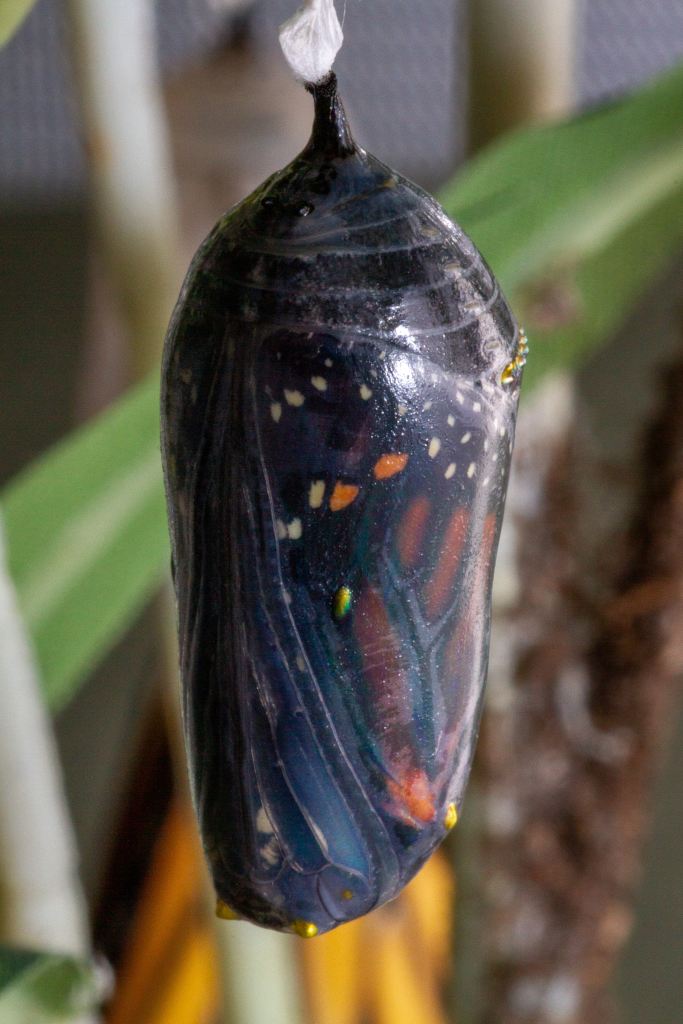
A photo of a monarch butterfly in its chrysalis.
Photo sourced via Unsplash.
*Cracks knuckles* Okay, buckle up, y’all because this one is going to take some work. Actually by the time we get to the end this butterfly might have transformed from its chrysalis into a whole damn butterfly. But this is one of the most important parts for books and AI and all that so stick with me (and the butterfly).

A use is considered transformative if it adds something new to the work so that the new thing has a different function, purpose, or character from the original work. This analysis is about as squishy as it sounds. The case most frequently cited around this concept recently is the Supreme Court Case, Andy Warhol Foundation for the Visual Arts, Inc. v. Goldsmith, 143 S.Ct. 1258 (May 18, 2023). That case goes into great depth about different types of what is and is not transformative. Andy Warhol painting a Campbell’s soup can is transformative. Why? Because despite it being basiaclly an exact replica, the purpose of the soup can label was commercial – to induce people to buy soup through branding. Warhol’s purpose of painting it was to critique consumerism, something totally different. He transformed the work so it had a different purpose and character. However, Warhol’s creation of orange silkscreens based on a photographer’s photo of Prince (the subject of the actual case) were found to not be transformative because the uses by both artist and photographer were commercial and so similar as to not make the derivative Warhol created transformative.

All that to say when two people in similar fields (artists, basically) are creating something for essentially the same reason (commercial or otherwise) and the one copies the other, turning the copy orange isn’t enough to convince a court that it’s been transformed enough to make it new. Green probably doesn’t count, either.

In tech, use of copyrighted works has been found by appellate courts in several circuits to be transformative (but not necessarily non-infringing because again, there are other factors to consider). See, A.V. ex rel. Vanderhye v. iParadigms, LLC, 562 F.3d 630 (4th Cir. 2009) (Archival of student essays in an online database used for plagiarism review is transformative of the original works); Perfect 10, Inc. v. Amazon.com, Inc., 508 F.3d 1146 (9th Cir.2007) (Google’s use of thumbnail images in a searchable index is transformative despite not altering the images at all); Authors Guild, Inc. v. HathiTrust, 755 F.3d 87 (2d Cir. 2014) (a digital library’s full-text searchable database of millions of books is transformative). TL;DR: Databases are transformative but again, that does not guarantee they’re not infringing this is only one sub-factor of many.

How these circuits determine whether a work is transformative also, shockingly, depends. The 9th Circuit has suggested the new work should not be in competition with the old one to be considered transformative. The 2nd Circuit has suggested the new work must be creative or perhaps comment on the old work itself (such as in a parody or in Warhol’s soup can). It has backtracked a bit on the comment uh… comment since then. However, all these cases talk about the “author” of the new work, and closely examining authorial intent when determinining a work’s transformative nature.

Fun fact. The current (but rapidly evolving position) of the US Copyright Office is that AI can’t be an author and that human authorship is a prerequisite to copyrights. However, surprising no one at this point, there are now some notable exceptions you can read about here. There is other tricky stuff about the repercussions around that, but I’m going to pass because we are still on factor one, everyone.

Graphic of a blue alien robot waving. 
Image sourced via Pixabay.
Who says this guy can’t be an author? The US Copyright Office, that’s who. And honestly probably for the best, this guy seems like he would write awful books.

Factor Two: Nature of the Copyrighted Work

Sub factors: (1) Creative or factual; (2) Published or unpublished

These are actually not complicated. The more creative a work, the more likely it is to be protected by the Act. Works of fiction are more protectable than nonfiction. Nonfiction is more protectable than say… lists of numbers (yes, that’s literally a thing that can be copyrighted in some cases please don’t ask me how I know I don’t want to talk about it).

Significantly, exploitation of creativity will weigh against the transformative nature of a work (e.g. if a transformative work transforms in a way that exploits the original creative work it’s not given as much “credit” toward fair use). I mean hypothetically that could mean maybe… I don’t know… if you created an AI program that stole a bunch of super cool creative books written by real people then used that to uh… create other books. Maybe you transformed the books into something totally new (data, an algorithm, a software model, hell a new book making a radical comment on the old). But you did it by uh… infringing then used the thing to compete against the orginal thing. I mean I’m not a lawyer but that just doesn’t seem super fair to me.

An unpublished work will also be more easy to protect than a published one, because a published work already got to have its day in the sun, essentially. It had its commercial debut and is now up for potential commentary and critique.

Factor Three: Amount and Sustainability of Portion Used

Sub-factors: (1) Qualitative; and (2) Quantitative

Qualitative

Using one line can be infringing if the one line is the heart of a work. Or it spoils the movie. See, Video Pipeline Inc. v. Buena Vista Home Entm’t, Inc., 342 F.3d 191, 201 (3d Cir. 2003). Using the whole thing can be appropriate if it’s for a purpose permitted under the other factors. It all really depends here. What is the heart of the work? And how does ripping it out damage the work, its reputation, and the author?

Cartoon of a yellow smiley face holding a white gloved hand to its lips in a shushing gesture.
Image via Pixabay.
Spoiler alert! The Titanic sinks. Darth Vader is Luke’s father. That kid can see dead people. Jon Snow… too soon? Now THERE is a sub-factor. When does it cease being a spoiler? Someone tell my ADHD that it doesn’t need to go figure that out.

Quantitative

While a quantitative analysis is easier to understand: how much of the work was copied and used? It’s not applied in an easy-to-understand way. There’s no rule that says “You’re totally fine if you use less than 5% of the total thing.” Because of the other factors. And also because sometimes the quantity isn’t determined based on the total thing but on how much of the thing competes (Google, Inc., 804 F.3d at 223) and sometimes the quantity is determined based on how much of the thing is “relevant.” See, Am. Geophysical Union v. Texaco, Inc., 802 F. Supp. 1, 21 (S.D.N.Y. 1992), aff’d, 60 F.3d 913 (2d Cir. 1994). You can use 1% and infringe if there’s heavy weight given to other factors or use 80% and not infringe if there’s heavy weight given to this factor. So, again, while I’m not handing out legal advice here because I’m not a lawyer it’s just… not hugely advisable to apply bright line rules where there are none. Even if it would be easier.

Listen, I didn’t make the rules. Because if I had, there would uh… be some.

Factor Four: Effect on the Market

Sub-factors: (1) Direct market harm caused by the alleged infringing work; and (2) Harms that may result from other similar infringements in the future

Direct Market Harm

This is basically exactly what it sounds like. It encompasses loss of sales, profits, revenue, royalties, and potential licensing deals. Basically any allegedly infringing use can be seen as having market harm by depriving the copyright owner of sales. See, Bill Graham Archives, 448 F.3d (2nd Cir. 2006). Also included is market harm for markets the work has not yet entered or fully exploited. To prove such harm, the owner of the copyright must prove that (1) such market exist for it to enter; and (2) the copyright owner is likely to or has plans to enter that market.

What cannot be considered as market harm are uses that criticize the work (even if such criticism results in loss of sales, revenue, licensing opportunity, etc.). This is because the Act does not supersede protected First Amendment Rights to free speech.

Future Harm

Courts also take potential future harm into consideration. The concept here is basically, if we allow this one through, we’re setting a precedent for others like it, and what kind of economic impact will that have on the copyright owner?

This one might be important to pay attention to in some of the upcoming LLM cases (e.g. Silverman, et al. v. OpenAI, et al., N.D.Ca. 3:23-cv-03416) because the stakes there on future harm are potentially quite high not only for the authors involved in the lawsuit but for creators everywhere.

Random Other Things

In typical court fashion, there are also some other random things that have been tacked on during the years that courts consider when making fair use determinations. I won’t belabor the nuance because if you’re not asleep already you’re pretty much a hero. The bulleted key points on some bigger more relevant ones are below:

  • The use is consistent with industry practices
  • The use provides a signficant benefit to the public
  • The infringment was knowing and in bad faith

Conclusion

TL;DR: Copyright infringement is bad. Fair use is complicated. And not always the fairest. There are rules but they sorta suck and can change with a light breeze. I’m not a lawyer. If you’re having an issue with your IP or you want to develop AI that uses IP that isn’t yours (including use an open source base that uses data you’re not sure where it came from, call your In Real Life Lawyer).

Most importantly, keep creating.

Image of pretend photo editor that shows text that says "I'm not a Lawyer Count" with a 6 tally. 
Image created using Pixabay.
Hope that was sufficient to cover me.

AI and Art

Author’s Note: Full disclosure, my full time job is in software (healthcare sector). I’m the Vice President of Compliance, meaning I’m highly involved in data security and data sourcing. I live and breathe data issues not only in my publishing life but in my 8-8 (ha!) as well.

Disclaimer: I am not an attorney and nothing in this post should be construed as legal advice. Please consult an attorney in your jurisdiction should you require legal advice. These opinions are my own and are not intended to represent my employer.


The [Copyright] Act “reflects a balance of competing claims upon the public interest: Creative work is to be encouraged and rewarded, but private motivation must ultimately serve the cause of promoting broad public availability of literature, music, and the other arts.”

Twentieth Century Music Corp. v. Aiken, 422 U.S. 151 (1975)

Right now, a bot is scraping this for my words to train a machine to sound like me. Well, not like me specifically, because I’m a nobody, but like a human who is well-read and well-studied. A human who happened to get an 800 on the English portion of the SAT. Who has a degree in English literature from a highly ranked university. Who has written sixteen or more books. Who has a literary agent. Who has spent seemingly endless waking moments since she was four chasing the dream of becoming a published author. Who has sacrificed other dreams, other lives, other paths in that pursuit. Who has cried, screamed, bled, sweat, studied, pulled all nighters, read millions of words, wrote millions of words, all pushing toward that singular goal.

Thirty-one years of language to eat. Steal. Regurgitate for a profit I’ll never see.

No big deal.

Bonus, it will also get a real legal citation it didn’t just make up. You’re welcome, ChatGPT.

It’s hard to figure out how to come at this topic, honestly. There’s a legal angle. What are the four factors that make a copyrighted work “fair use?” A technical angle. What is data scraping? A large language model (“LLM”)? An emotional angle. Why are writers and artists and actors so pissed? A philosophical angle. What does it even mean for something to be art?

I know them all. Each one pumps through my rapidly beating heart, coursing through my veins, itching to be freed through my fingers. Tabs fly open as I try to discern what angle I’ll take. On my right screen, tabs upon tabs upon tabs of Westlaw copyright cases. On my left screen, emails and articles about LLM and NLP (natural langauge processing) and the differences between the two. Techopedia ready to go, to explain. All the while, thoughts of that horror movie M3GAN flash through my mind.

Does AI write itself as the villain, I wonder?

Perhaps that’s how we know it truly is starting to come alive…

Something shudders through me. An echo. A whisper against the back of my neck. Somewhere, a ripple.

A droplet of water starts a ripple on top of a book.
Image sourced via Pixabay.

My ADHD flies into overdrive. Speared on by the unknown. The unseen. Desperate. Trying to outpace a thing I know I cannot outrun.

On the right screen, I open the Author’s Guild’s open letter to generative AI leaders: Open AI; Alphabet; Meta; Stability AI; IBM; Microsoft—God there are so many already, since yesterday it seems—begging them to stop this madness, to pay writers their fair share. Another tab. The NPR article about median writers’ income for 2022 being $23,000. Poverty levels for the US for 2022. $13,590 for an individual. $18,310 for two. $23,030 for three. There it is. Poverty comes quickly. A single child and a spouse not working for whatever reason, there are so many reasons these days. A single parent and two kids. Options there, too. Nevermind I don’t know anyone who can live off $23,000 on their own in Philadelphia and publishing doesn’t pay for an author’s healthcare.

Our dreams. Our dinner. Our lives. Our livelihoods. Is there nothing they can’t have?

They’re the newage Ursula, stealing our voices and our princes and our happily ever afters. There’s probably a book there somewhere if the bots don’t scrape it first.

My neck aches. I press my fingers into the place where my skull meets my spine, molding my skin like clay. Skin. Clay. Sleep. My stomach growls, reminding me of my humanity. I ignore it. Move forward.

I’ve written this before. Literally and metaphorically. I’ve been drafting it in my mind. But a draft I spent hours on also disappeared. I thought about giving up. It doesn’t matter anyway. I can’t keep up. But it has to come out. I’m angry enough to write it again. And again. And again. Our dreams are being fed to the machine while we aren’t being paid enough to feed ourselves.

Virginia Woolf comes to mind. Money and a room of one’s own is needed to write fiction. Art is for the economically privileged. It always has been. Does it surprise us that art was the first to fall victim to Silicon Valley?

The fair use doctrine permits courts to avoid rigid application of the copyright statute when, on occasion, it would stifle the very creativity which that law is designed to foster.

Stewart v. Abend, 495 U.S. 207 (1990)

So far, there are concrete answers. What is fair use. What is LLM and NLP. Why are authors and artists and actors mad.

What is literature, though. That has me frozen.

Except… maybe there aren’t concrete answers for everything.

I turn to the case the Author’s Guild has cited, Andy Warhol Foundation for the Visual Arts, Inc v. Goldsmith, 143 S.Ct. 1258 (May 18, 2023). In it, the court cites to Andy Warhol’s famous Campbell’s Soup Can series.

Painting of Campbell's Black Bean Soup done by Andy Warhol.
From the case: Figure 7. A print based on the Campbell’s soup can, one of Warhol’s works that replicates a copyrighted advertising logo. Image from Westlaw. © Andy Warhol.

The court notes the purpose of the Campbell’s logo and label was commercial: to advertise soup. Warhol’s purpose in reproducing the image was the opposite: to comment on consumerism. Therefore, the use was fair.

Controversial statement but… I wonder if the designer of the label, someone who was presumably a real human who didn’t profit off the can label nearly as much as Warhol profited off the reproduction of the soup label, finds that particularly fair.

I wonder if that person cares they are unknown for their creation while Warhol is known for its reproduction.

I wonder if I am also afraid of AI replacing me into anonymity.

Art is my only potential legacy, after all.

Pertinent to this discussion, I googled “Who designed the Campbell’s soup logo” and Google highlighted Andy Warhol despite his name not making an appearance in my search because hi, bots. Also, people apparently ask if Andy Warhol designed it. Just saying. But for the record, Dr. John T. Dorrance created the logo in 1897. In 1898, Herberton L. Williams swapped the orange and blue (yikes) colors out for red and white because he saw Cornell’s colors at a football game and liked them better. Herberton later became the company’s treasurer, comptroller, and assistant general manager, so probably we don’t have to cry too hard for that guy.

Is it the intent of our art that makes it art, then?

Because as someone who has spent a lot of time in writing workshops listening to snobbery about the bastardization of literature due to genre fiction’s pandering to commercialization; who has also spent a lot of time listening to programmers talk about programming rules that sound a lot like intent, let me tell you about how that is a slippery slope.

The court goes on.

The Court of Appeals noted, correctly, that ‘whether a work is transformative cannot turn merely on the stated or perceived intent of the artist or the meaning or impression that a critic—or for that matter, a judge—draw from the work. [O]therwise, the law may well recogniz[e] any alteration as transformative.'”

Andy Warhol Foundation for the Visual Arts, Inc. v. Goldsmith, 143 S.Ct. 1258 (May 18, 2023) (Internal Citations Omitted)

Not intent then. Or at least not entirely.

Relief floods me.

Still, legality and literature have entangled in my mind. Day job and dream job comingling again.

What makes something art.

Life.

The answer is life.

It’s a falsity that you must suffer to create art. But you must live. My art requires suffering because that’s my lived experience. All that’s truly required, however, is a lived experience. Write what you know. You.

Art is about the individual life experience. The individual voice. The individual expression. Not a little of me and a little of you and a little of him and a little of her and a little of them strewn together to create one voice, one story, one experience. Art requires many singular voices and stories and experiences. Canon but more importantly, culture, then becomes that body of singular works. The thousand, single stories. Then a thousand more. Art isn’t a single story put together by a thousand voices. That’s what creates the danger Chimamanda Ngozi Adichie warns of in that TED talk. The danger of the monolith. AI puts together experiences that cannot be unified or reconciled. That’s exactly what marginalized voices have been fighting against except so much worse. It’s the stripping of language of all its nuance. All its individuality.

We have forgotten.

Words have power.

We have to pay people appropriately, so they can wield them well.

Maybe then we will remember.

And wake.