Adult Fairytale Retellings, Romantasy, and Why It Matters that We Shelve it Fantasy

Trigger and Content Warnings: This post will delve into my past so contains references to trauma/domestic abuse/childhood abuse. Also contains gaslighting/verbal abuse from a domestic partner. Very brief reference to potential infertility struggles (one sentence, vague reference).

Author’s Note: This is sort of a companion piece to This One where I talk about expanding the options available to readers of Adult SFF but focuses more on the YA/Adult Fantasy differences, why Adult Fairytale Retellings and Romantasy are perfect for a certain target market, and why we should not exclude these from Fantasy shelves.

Disclaimer: I am writing this post at 1:15 a.m. after not having slept more than 2-3 hours a night for 12 consecutive days. I will edit it prior to posting; however, please understand that any references to “Millennials” should not be construed as an attempt to encompass the entirety of this huge and diverse group of people but is being anecdotally genericized for purposes of this post based on trends I’ve noticed, things I’ve watched over the years, being part of this group myself, and having many conversations on this topic with other Millennials. Similarly, the “Target Market” has been roughly defined but is not meant to contain every member of the group stated or exclude any group not specifically stated. Where there are references to fairytale retellings or mythos, I have attempted to acknowledge and honor non-western mythos and tales as well as western mythos, but the reader should understand I write western fairytale retellings from a western lens (even that word, “western” is loaded because it really means American and European, doesn’t it? A specific kind of European, even). There are nuances that go into all kinds of ways of storytelling that cannot be encapsulated well here, but which are all valid, and I believe deserve recognition and seats at the table. Finally, I have attempted to be sensitive of the current discourse regarding this conversation and want to acknowledge the ace and aro perspectives. I have done my best to avoid aro/ace erasure in this regard but acknowledge I am not perfect and welcome input if anyone feels erased or harmed by this post.


Once upon a time, there lived a lonely little girl. She lived a lonely little life in a small house made smaller by violence and noise. With no brothers or sisters to play with, and parents who declared loudly they did not want her and beat her when they saw her (if they could be bothered to stop beating one another), she spent most of her days hidden away with nothing but books and animals for friends.

The little girl grew up, as little girls so often do. Her house got bigger. Her world did not. Violence and noise followed her wherever she went. Like moths to a flame, people like her parents were drawn to her. She let them in. One by one by one. They came, they destroyed, they abandoned. Until she was a ghost of a thing.

Always, though, she had her books.

Black and white photograph of a waterfall over concrete with a white girl (me) in a long black skirt sitting on a pile of rocks and debris in front.
Me, circa senior year of high school.

Among her favorites were fairytales. Not because they had happily ever afters, because many do not, but because they had rules. They followed a pattern. At the end was a lesson explaining what was right and what was wrong. If you trust blindly, you will be eaten. If you open that door you’re told you shouldn’t, you’ll be murdered. If you work hard, you’ll be rewarded. If you abuse your children, your eyes will be pecked out (all right, maybe she liked that one for its ending).

Justice. Order. Black and white. Right and wrong. In all the chaos, fairytales soothed something inside her. They gave her peace and fortitude. The strength to continue to flit and flirt and smile and laugh while the moths gathered and ate up her insides chunk by chunk.

Until one day, one of the moths who she loved more than all the others said he was done with her, too. It was a pattern she should have recognized, because she was so very good at recognizing patterns. But she wasn’t ready to let go. So she did something she hardly ever did. She fought. With words and tears and fisted hands, she screamed and raged and begged like a wild thing caged. The world was big around her but inside her head it was so very small. She thrashed against it. Begging to be freed.

The moth looked upon her with disgust, this caged creature he only now realized was more beast than girl, and he said, “That’s the problem with you. You think life is a fucking fairytale. It’s not. Grow up.” He flickered away.

That day, the girl who was a beast became a woman.

She stopped believing in fairytales.

Sort of.
Now you know my origin story. You know my anecdote and perhaps one reason why I believe there is true power behind fairytales. But there are practical reasons I write fairytales beyond spiting that asshole who told me life isn’t one (which, obviously). Specific reasons I write Adult Fairytale Retellings despite that being the harder path for an author who writes both Young Adult Fantasy (where fairytale retellings exist and are popular) and Adult Fantasy (where they are not). Why do I choose to make things so much harder for myself? Well, I’m so glad you asked.

But First! An Announcement!

This post is about traditional publishing. Specifically, Big Five traditional publishing (and their imprints). I can’t encompass the whole of everything going on in fantasy, this is already too long, but it is important to note that what is trending in the self-publishing space and the indie publishing space (i.e. smaller, independent presses producing primarily digital only or digital first editions of books) is not always the same as what is trending in Big Five traditional publishing. I would argue that is the case in fantasy right now. With the rise of BookTok, this nuance seems to have been lost. For readers who perhaps don’t know or care where their books are coming from (which is awesome, I am highly supportive of self-publishing and indie presses getting more attention), the distinction might not seem to matter, but for authors it does. This disconnect should not be ignored.

Are my posts long? Yes. But this is precisely why. There is so much nuance it’s impossible to capture it all even in a blog, let alone a Twitter thread. Still, when we speak let us try to be clear. When I speak, I will do my best to be so. Self-publishing and indie publishing are not the same as Big Five traditional publishing. What is trending on BookTok does not necessarily represent the whole of traditional publishing (it might not even be traditionally published). For example, Adult Fantasy Romance is killing it in the self-published space right now (thanks in good part to BookTok) and has been for several years. In traditional publishing this is not the case. Do readers know that when they expect certain things from traditionally published adult fantasy authors who are facing different struggles in their markets (which are not Romance, by the way, a point I’ll talk about in a minute)? Perhaps not. Should they care? Also maybe not. But the authors certainly do, and I am about to argue that traditional publishers (specifically the Big Five presses and imprints thereof) should, too.

All right, back to fairytales, and why I tell them for adults…

I Write Adult Fantasy for Millennials

For my Adult Fantasy, my target market is primarily adult women aged 27-42 (aka today’s Millennials). Birth years for this age group range from about 1981-1996. This will be important for the timeline I’m about to set up.

Millennials and Young Adult Literature – A Brief History Source of some of the below, some gathered from life experience

While young adult literature has arguably existed since S.E. Hinton’s The Outsiders (1967), most of the popular young adult literature of the 60s, 70s, 80s, and 90s was contemporary, with the first “Golden Age of YA” occurring in the 1970s ushered in by books such as Go Ask Alice, Beatrice Sparks; The Chocolate War, Robert Cormier; Forever, Judy Blume; and Flowers in the Attic, V.C. Andrews.

In the early 2000s, (when our Millennial age group was aged between 4-19) YA experienced the second Golden Age of YA. This new resurgence in popularity of young adult titles was led by speculative fiction. Since then, fantasy has largely dominated young adult fiction with only recent shifts toward contemporary preferences. Meaning that for a majority of Millennial readers, speculative fiction was the Thing to Read during their formative years with such titles as Harry Potter, JK Rowling (technically shelved as Middle Grade in some instances but crossover as it ages up); Twilight, Stephanie Meyer; City of Bones, Cassandra Clare; and The Hunger Games, Suzanne Collins appearing in the 2000s (and their subsequent books coming out far beyond).

Continuing this trend, in the next decade (when our Millennial age group was aged between 14-29) came the YA powerhouses most of us will know best today: A Court of Thorn and Roses, Sarah J. Maas; Six of Crows, Leigh Bardugo; Ember in the Ashes, Sabaa Tahir; The Young Elites, Marie Lu; Scythe, Neal Schusterman; Children of Blood and Bone, Tomi Adeyemi; The Cruel Prince, Holly Black; The Raven Boys, Maggie Stiefvater; and many, many more.

Less than halfway through this decade, however, by 2014 in fact, our Millennials had “aged out” of YA if you use the technical definition of YA as being for readers between the ages of 12-18.

It was time for them to move upward and onward into greener pastures.

Adult Fantasy, here we…

Wait.

Image of a white clay figure with no face holding a hand up in front of a red stop sign.
OMG, look! It’s a vague, faceless, white guy telling me not to go hang out in Adult Fantasy. I wonder why? Let’s go find out! Image by Arek Socha from Pixabay

Adult Fantasy v. Young Adult Fantasy

Until recently (within the last couple years), I would argue that Adult Fantasy made no meaningful attempts to appeal to a big chunk of Millennials. That chunk being primarily women and marginalized voices. By “Adult Fantasy” I mean traditional publishers, not authors. There were for sure people trying to get things published. But gatekeepers going to gatekeep.

Meanwhile, YA Fantasy continued to offer things that appealed to those people. Like what? Well, like this list I’m about to caveat. Caveat: this list is not intended to be exhaustive, or to represent every point of view from every marginalized group (clearly), nor is it intended to absolve YA of anything that hasn’t happened, hasn’t happened fast enough, or got messy along the way.

The List of Cool Things YA Fantasy has that appeal to Millennials even though we’re now Certifiably Old:

  • Targeted efforts to diversify the stories told (both through movements to push for the publication of more diverse authors and via non-marginalized authors paying more attention to how they depict marginalized people in their works)
  • Faster-paced books
  • Character-focused fantasy that gets deeper into human interiority
  • Shorter books (+ more standalones and duologies as options versus trilogies and beyond)
  • SUBGENRES: High Fantasy; Contemporary Fantasy; Urban Fantasy; Fairytale Retellings (from western and non-western origins); Steampunk; Paranormal Romance; Dystopian (which arguably falls under the Sci-Fi umbrella but in YA, fantasy seems to own it); Portal Fantasies; and Romantic Fantasies (aka Romantasies)
  • Second world fantasy with lighter, more grounded world building and less complex magic systems

While YA has been doing this, Adult Fantasy has largely stayed sort of exactly the same. It’s still primarily dominated by white, cis, male authors writing massive tomes that are grimdark, epic, and/or sword or sorcery. Are there exceptions? Absolutely. Are they hard to find. Fucking yes. And even where the authors themselves are not meeting the classic fantasy author archetype, much of the work still is. Long. Political. Dark. Violent. In short, the age group hasn’t evolved in step with its YA counterpart.

Photo of a white person in a black hoodie holding a black crystal ball to their face. Behind them is a snow covered forest.
Oh hey, maybe this person can scry me up an Adult Fantasy that isn’t more depressing than the year 2020. Photo by petr sidorov on Unsplash

Why This Matters

I’ll be real. I’ve been trying to age myself into Adult Fantasy since YA authors started talking about how creepy it is for grown ass women to be shipping teenage characters. Which I think was the YA Twitter tea of like… 2017. So it’s been a minute.

I’ve tried to embrace Adult Fantasy. I’ve listened to YA readers (who I write for as well) and done my best to remove myself from their space. I hear MG and YA authors (and teachers and librarians and booksellers) now in 2023 begging for YA for younger teens. Wishing for a ramp from MG to YA. Especially for boys. YA Fantasy has become so oversaturated with a particular kind of book (the one appealing to my referenced target market, in fact) that there’s no room for other books actual teens not only want but need. We (authors but also sort of society) are losing readers. This is an actual issue. I hear you. And I agree 100%.

But because there are no books for people like me in Adult Fantasy as it currently exists, we keep reading YA. Because we want to read something. And no, we can’t all just get a BookTok and a Kindle and read self-published authors, nor do we all want to. Plus, many people simply don’t know about BookTok or Kindle Unlimited, because they’re regular people not plugged into the online book communities. They get their books from what’s trending on Amazon, or what they see on the end cap at Barnes & Noble, or what’s recommended by a friend or local bookseller or librarian, and all that marketing force is still dominated primarily by traditional publishing.

So, because publishing is a business that operates on the good old fashioned principles of supply and demand and the facts are that 35 year old women have more buying power than 14 year old boys, publishing keeps feeding the demand. They also keep pushing “YA” further and further up in age. I read a YA book not too long ago that featured characters who were in their early twenties, one of whom was happily married and contentedly pregnant. Listen, I know fantasy is not contemporary, but please point me in the direction of a teen who can relate to the experience of being happily married and contentedly pregnant. I mean I’m sure they exist, there’s an exception to every “rule” of life, but that’s certainly not the teenage norm. Teen pregnancy is absolutely a subject to be covered in YA, but that was not the take I was expecting. Because it’s an adult take gussied up as YA, because YA authors know their real readership is 35 year old ladies who probably are (or perhaps want to be) happily married and contentedly pregnant. (Not this reader, but that’s personal preference).

Basically, for YA Fantasy to be able to grow beyond its current state and embrace even more voices and bring in even more readers, Adult Fantasy has to do the same thing. Which makes sense. Not really sure why it didn’t happen 10 years ago when Millennials were all aging into adult but who am I?

Adult Fairytale Retellings – The Millennial Net

Back to Adult Fairytale Retellings (aka back to me). So, we’ve now learned that my target market is into a Type. The type is short, whimsical, fast-paced, character driven, diverse, with light worldbuilding, and yes, romance (not to be confused with Romance—the genre—which has a set of conventions not at play here, also not to be confused with Fantasy Romance, a subgenre of the Romance genre also not at play).

Adult Fairytale Retellings are perfectly suited for this kind of story for all the reasons I loved them as a child. They’re ordered, meaning there’s something to be reordered. Deconstructed. Genderbent. Twisted. Fractured. Examined from a new perspective. BUT they’re still familiar (if you’re writing from a western lens to a western audience, this can be different if you’re writing from a different mythos, but I would argue that’s still appealing to the target market) so the worldbuilding required isn’t from the ground up. They often don’t require as much exposition or info dumping, which helps the author jump right into the action and the characters’ heads. This quickens pacing and increases interiority (as well as reduces length). Check, check, check. And, they’re very well-suited to romance. But because we’re retelling them, we can make the romance better.

In short, the Adult Fairytale Retelling is the perfect ramp for adults who want to move from YA to Adult Fantasy. BONUS, there are loads of points of views in even western fairytales not yet explored because they are “older” characters not suitable to YA. Which gives fun, fresh, and relevant to the Millennial life stories to tell.

Photo of a blue cake with a glass slipper on top, a bookmark reading "You're never too old for faerytales" and a pink rose in a glass case all sitting atop a white fuzzy blanket.
Millennials: Please tell me you’re not interested in stories about magic folks hating their jobs, juggling kids and their work as a dragon tamer, getting divorced and having to split the castle, figuring out if they’re too old to go back to sorcery school, and other modern day Millennial tales. I’ll wait. Copyright mine.

Romantasy – Yes, it is Fantasy

Similar to Adult Fairytale Retellings (and sometimes one in the same), Romantasy (Romantic Fantasy) is another fantastic way to ensnare the target market and lure them away from YA Fantasy and into Adult Fantasy.

To clarify, Fantasy Romance is different. It’s a subgenre of Romance. The central plot of a Fantasy Romance is the romance. A Fantasy Romance follows the genre conventions of Romance (from the meet cute to the dark moment to the happily ever after). I’m not talking about Fantasy Romance. Not because it doesn’t matter or isn’t great or I don’t have Thoughts (because DO I EVER DON’T GET ME STARTED ON THE POLITICS BEHIND EMOTIONAL WOUNDS), but because it isn’t the same natural pathway from YA Fantasy to Adult Fantasy because it is, again, shelved under Romance not Fantasy.

Romantasy or Romantic Fantasy is what most people mean when they say “there’s a ton of romance in YA Fantasy these days” (or some less polite variation). The primary plot is the external fantasy conflict (curse, heist, palace intrigue, revenge, overthrow the government, save the world, whatever), and the secondary (but often very similarly weighted) plot is the romance. You can extract the romance from a Romantasy and still have a story structure. It might be less meaty with less conflict and not as interesting, but a story would still exist. You cannot extract the romance from a Fantasy Romance and still have a story structure (in theory, I’m sure there are some who would love to argue that with me).

OMG are you still talking? If yes, please tell me why people can’t just read Fantasy Romance and leave Adult Fantasy alone?

The devil is in the details, I suppose. First of all, Fantasy Romance is also sorely lacking in material in traditional publishing. Most of what is available is digital only through indie presses and self-published authors. Not that these aren’t viable options, they’re just not always the easiest to find for the reasons I mentioned above. Or screen. Especially where self-publishing is concerned. There is some… problematic stuff out there and going back to that target market I’m harping on, problematic content isn’t going to hit right with many marginalized groups for somewhat obvious reasons. Does that mean traditional publishing doesn’t also publish problematic content? Nope. But you sure as shit hear about it if you’re plugged in. Versus self-published works there’s so much of it, flagging problematic content is much more challenging. As a person with multiple marginalizations who self-published NA Romantic Fantasy and is hugely supportive of self-published authors and has read a lot of Fantasy Romance, I can assure you I have been burned enough times now I read only trusted self-published recommendations or traditionally published works. It’s just too much to be hit with otherwise.

Further, many people who grew up reading YA Fantasy in the Second Golden Age of YA, while they might want romance, don’t necessarily want only romance. They still love fantasy. They want Katniss to overthrow the Capitol (and fall in love with Peeta), and Kaz Brekker and company to pull off that impossible heist (while falling all over each other along the way), and Laia to save her brother from the clutches of the Empire (while Elias tries to save her from the Commandant). It seems a silly distinction, perhaps, but it is an important one that Fantasy Romance does not often meet.

A Love Story has a right to exist in Fantasy – and in fact makes a statement by doing so

I’ve touched on this before and this post is already massive, so I won’t do it again. The TL;DR version is that despite what it might seem, there’s not actually a lot of Romantasy on Adult Fantasy shelves in Barnes & Noble right now, and excluding a book from the fantasy shelf because it has romance in it is elitist at best, misogynistic at worst.

Fantasy is a genre about imagination being pushed to its fullest potential. Why wouldn’t its arms be opened to the full gambit of potential human experience? Why would anything be excluded?

Opening the shelf to these books not only gives room BACK to YA Fantasy to create more readers while also satisfying a known market demand in Adult Fantasy (so is therefore good business), but it makes a statement about Adult Fantasy and where it wants to go. Which is hopefully forward.

Xoxo,

Aimee

Photo of a white woman (me) in a white sweater bending over to kiss a German shepherd's nose.
I’m just a modern day Millennial making out with my dog. Because I am childfree by choice. Another GREAT topic to talk about in Adult Fantasy!

Not the Darling: A Tale of Two Manuscripts

Note from Aimee: So much about hosting this series has been humbling. I use that word in almost every email I send to an author of one of these posts. Every single story submitted to me has moved me, spoken to me, humbled me. Many of them because I related. Glenda’s story humbled me because I did not. If I could ask one thing it would be for every American reading this post to share it, to think on it, to appreciate what is being said. Because there is so much conversation to be had packed into so few words…


A Tale of Two Manuscripts

By: Glenda Warburton

I have to confess that I have not pitched for many months because I didn’t believe that I could become inured to the effects of another rejection letter.

My son is an actor and his practical advice whenever I bemoan my agent and publisher-less state is: Grow a skin, Mum! Well, the skin is a little raw and sensitive and I am not sure how to toughen it.

My first manuscript I eventually self-published on Kindle, and printed 400 copies, of which over the years I have managed to sell about 350. All those who have read the book say they have enjoyed it, and a number have asked when they can expect a sequel. It is a Middle Grade book, which may be my first mistake, set in the Kruger National Park. It is part fact, part fantasy.

Kindle is not an option for those of us living in this part of the world, Southern Africa, because they do not recognise our banking system, so we cannot get paid. Agents and publishers are the only way to go. Locally, publishers are directly approached, and seem more focused on biographies of politicians and sportsmen, although this is changing now that the COVID years are waning.

My best rejection letter was also my worst. The agent, fascinated by the title: Tell it to the Wind – the Story of an African Lion, said she read the whole manuscript, enjoyed it, but did not love it enough to publish it. I have no doubt she thought she was letting me down easily, but anger and the inability to put word to keyboard for close to a year followed. How dare she admit to enjoying my labours, and yet not want to take it further?

My second manuscript is historical fiction, set in World War I. I have a collection of letters from my grandfather, the holder of an OBE, from the trenches where he not only fought, but was responsible for a small group of 57 Swazis whose task it was to assist in the offloading of ordnance. There is not much available in the archives, but the thought of these rural African men, most of whom had never worn shoes, giving of their best in a war so removed from them and the realities of their lives fired my imagination. Again, well received by a number of people who have read it for me, but little response from international agents, favourable comments from local publishers while politely declining publication. I had thought with the centenary of that war this would be a tale with a difference, but, alas, no.

One comment I had was the difficulty with pronouncing the names. Really? I struggle with many European names, but that doesn’t stop me reading the book! I did include a glossary of pronunciations and meanings. I have another manuscript, and two works in progress and often wonder what the point of it all is. I live on the hope of ‘one day’ and pray it will not be a case of ‘one day never comes.’

Black and white photograph of a lion's head in profile with a yellow eye.
Image added by Aimee, not author. Image by Randy Rodriguez from Pixabay

Bio: Glenda Warburton was born and raised in a small, African country, formerly a British Protectorate called Swaziland, now Eswatini, sandwiched between South Africa and Mozambique. She began her professional life as a journalist in 1973 and worked in various aspects of media until 1987. In 2012, she returned to writing full-time, heeding the voices in her head that needed to get onto paper. Or a laptop! She first pitched the manuscripts described in this post: TELL IT TO THE WIND, in 2013; and SIPHO’S WAR, in 2017. You can read more about her and her writing at her website: https://glendawarburton.com/

Picking an Agent

Author’s Note: This was originally part of my Pitch Wars reflection blog but it got WAY too unwieldly and off-topic, so I split it into a separate post that was more targeted. Hopefully.

Content warning: This post discusses offer calls and how to prepare for them, as well as some (non-confidential things) related to my offer.

Disclaimer: Any links or recommendations made by me are my opinion and are not paid endorsements.


There is so much about querying I wish I’d known before I was in the thick of it. Particularly about agents and how to choose one. You know, the whole point of querying. I mean, I queried for FIVE years, and I had no idea what I was doing until Pitch Wars. Maybe not even then, honestly. I thought I knew what I was doing. Until I watched a whole bunch of other people do it and realized nope, I did not have this right.

So, I wrote this post for anyone who, like me, thinks they know what they’re doing but perhaps could stand to learn a bit more. Or for anyone who has questions they’re too afraid to ask (also me, yeah). This isn’t intended to answer every question about publishing and agents that ever was, because wow, that would be even longer than I imagine this will end up being, but I will try to answer the questions I had in hopes they might help someone else. Also, there will be no querying advice AT ALL because as I’ve mentioned repeatedly my query stats are shit. Please head on over to literally anywhere besides here for tips on writing query letters, synopses, pitches, etc.

Step One: Building Your List

Okay, so you wrote a book! Congratulations! Take time to celebrate, it’s a big achievement! You edited it! Celebrate again! You wrote a query letter! Do a dance! You rewrote your query letter for the 982nd time? That is totally normal and fine, please point yourself in the direction of the nearest piece of cake. You earned it. Now, you’re ready to query. Meaning it’s time to build your list of potential agents.

Photo of a white woman in a black jacket, back to the camera, standing in front of a stone wall with a long list of names inscribed on it.
I once described finding agents as finding rare gems in a forest. Ooh, look, a shiny! Oh, look, another I missed! Because it can really feel like picking truffles at some point. Photo by Milena Trifonova on Unsplash

Assembling Agents

Man, when I did this the first time… well, we aren’t talking about that. First thing’s first. Sign up for Querytracker. It’s free. There’s a premium version too that’s $25 a year and offers some really cool features, but if you can’t swing it, that’s totally fine. The free version is also super helpful. You might also want to start an Excel spreadsheet that tracks information similar to what you’ll find on Querytracker (adding additional columns for more information that might be important to you). Because also, fun fact, there are agents who aren’t on Querytracker (not many, but they do exist).

Querytracker will help you narrow agents down by the genre you write in. That isn’t 100% accurate, but it’s a good start and does a huge lift for you, so it’s where I would start if you’re starting from zero. You’ll probably get a ton of results. Take a breath. Hydrate. Stretch. You’re going to be here awhile. Building a list is kind of a bitch.

Now, ONWARD! TO RESEARCH, MY FRIENDS!

Agent Research

Are you neurodiverse? Cool, me, too. This could swing probably one of two ways for you in particular. You’ll either find it super fun and fall down the rabbit hole forever, or you’re going to get super fucking frustrated really fast. It might switch with the day. Brains, right? Self-care. Medicate if you do that. Chunk out your time but also remember you do not have to attack this all at one time. Just one agent at a time.

Here’s the part where I got irritated as a neurodiverse author who does NOT like agent research. The next step of this process on a lot of blogs/writing advice platforms/Twitter feeds what have you skip right from Querytracker list to: What’s on their manuscript wishlist? What’s on their anti-manuscript wishlist? What do their sales look like? Do they sell to imprints/editors you want your book sold to? Are they from a reputable agency? How long have they been doing this? If not long, who is their mentor? Is there anything about them or their agency that’s a “red flag?”

At this point my brain started to look something like this:

Image of an open book on fire.
I mean, who needs to publish, anyway? I can just like… crawl back into my bed and make a blanket fort until someone brings me a snack, right? Because there’s absolutely no fucking way I am figuring all that out on my own. Image by StockSnap from Pixabay

Where to Find Things About Agents

For my overwhelmed querying friends, neurodiverse or otherwise, I am here to tell you WHERE to find all this mystery information. Sort of. Sadly, the information is not uniform so there isn’t a real cut and dry answer, but I’m going to try:

  • Manuscript Wishlists (“MSWLs”) and Anti-Manuscript Wishlists (“Anti-MSWLs”) can be found most often on either (a) the agency’s website under the agent’s biography; (b) the agent’s personal website (often linked to on their agent page on their agency’s website); or (c) The Official Manuscript Wishlist SPECIAL NOTE: Sometimes, additional information about what the agent is currently accepting can be found on the agent’s Query Manager site if they use one, so it’s not a terrible idea to try checking that before you go down a rabbit hole of research. I have heard many a querying author bemoan doing loads of research only to go to Query Manager to upload their query and find a note at the top from the agent that says *NOT CURRENTLY ACCEPTING [YOUR GENRE]* despite everything else the agent’s MSWL’s elsewhere say. Also make sure to check the drop down menu to see if your genre and age group is listed! So, consider yourself duly forewarned.
  • Sales Information (Agent and Agency) can be found on Publisher’s Marketplace. This includes the agent’s sales and the agency’s sales, and it will show you who the agent/agency are selling to (editors and imprints). PROBLEM. This information, while really helpful, is self-reported, so not always up-to-date or entirely accurate, AND it can only be accessed with a paid subscription to Publisher’s Marketplace (PM) which is quite expensive (I believe it’s about $25 a month). The good news is you can pay monthly and cancel at any time.
  • Reputation and Red Flag Information is harder because this is usually accessed via the “Whisper Network” or by doing some serious sleuthing into the deep dark places on Twitter. You can, however, find some very good information on Writer Beware and its companion Writer Beware Blog (which can at least help you avoid vanity presses and scams). Unfortunately, these resources don’t usually have the latest industry “tea” regarding literary agencies. Comments on Querytracker can often lead you in the right direction on this front and many authors on Twitter are very willing to talk privately as long as you maintain that privacy (going back to my earlier post on community).

So, after all this, what you should end up with is a list of agents (or the start of one, it doesn’t have to be every single one you’re going to query, just some to get your feet wet maybe), that meet some basic criteria. The criteria will differ based on every author and their goals but in general, your group of shiny gem agents should all have some things in common:

  1. They accept submissions for your age group and genre
  2. Your book sounds like something sort of close to something on their manuscript wishlist
  3. It doesn’t sound like something on their anti-manuscript wishlist (if they have one)
  4. Their sales are in line with your goals as an author (i.e. they’re selling the kinds of books you write to the kinds of editors/imprints you’d like to publish your books)
  5. If they’re a new agent and don’t have sales yet, their agency is doing number 4
  6. SUBJECTIVE: Either the (a) agency has been around awhile with a good history of sales or (b) the agent has been around awhile with a good history of sales (this doesn’t HAVE to be the case for you, new agencies with new agents are a thing, they’re just a riskier than I’m willing to do thing, but that’s a personal preference)
  7. SUBJECTIVE: There’s nothing about them or their agency you’ve heard or learned that makes you uncomfy or makes you feel they wouldn’t be a good potential lifelong business partner FOR YOU (totally different for different people)

But what about my Dream Agent, i.e. the One Who Says Yes?

But Aimee, you haven’t addressed the most important criteria: will they say yes to me?

“My dream agent is the one who says yes.” I see this so frequently on Twitter these days it actually makes me wince a little to put it here. Because I get it. Truly. And I know, querying writers, you’re like no, Aimee, you don’t. You have an agent. You have your yes. You can fuck right off into the sunset with your I get it. And I get that, too. I was there for five years with like exactly five requests to my name in that entire time. At one point I told a friend of mine that I would make my main character a two-headed dolphin if it meant getting into Pitch Wars. But getting into Pitch Wars actually taught me how wrong I was. The yes isn’t the dream. Sharing a vision is.

So, sorry to have to be the bearer of bad news, but no. Your dream agent is absolutely not the one who says yes. I mean, listen, your dream agent COULD in fact be the one who says yes. But not BECAUSE they say yes. Because they share your vision and meet all your objective criteria which you laid out while building your list.

Photo of a mountain lion against a black backdrop bursting a bubble with its teeth.
Oh, look, it’s me. The asshole cat bursting your bubble. WITH MY TEETH. Sorry. Truly. It sucks in every way. But you know what would suck more? Having to do this shit multiple times because you just went with whatever yes. Image by Willgard Krause from Pixabay

While much of the old query advice can be thrown out, the adage that a bad agent is worse than no agent remains true. “Bad” agent is also an agent who is “bad” for you. There are tons of agents out there who hit all the right “boxes.” Who have great sales, come from a reputable agency that’s well known, who have impressive client lists, and great references, who represent your heroes, who might even give you a yes and can still be a bad fit for you.

Huh? But you just said… and the list… and… I KNOW! THIS IS WHY IT IS ANNOYING AND CONFUSING. Onward!

Step 2: Preparing for The Call™

You got an email to set up a call! Hooray! BUY YOURSELF A WHOLE DAMN CAKE! I’ll wait.

Photo of a blue cake with gold decorations on top of which is a glass slipper, all set upon a white cloth.
I did, in fact, buy myself a whole damn cake. Five years, I think I deserved it, thanks. Copyright mine. Cake made by these lovely people: https://clarascustomcakes.com/

It’s time to prepare for The Call™. Okay, first, a disclaimer. Hopefully, the purpose of the call was laid out for you in the email scheduling it, but if it wasn’t, I will forewarn you that not all calls with agents lead to offers. This is something I learned during Pitch Wars that SHOCKED me. So if you, like me, wandered around in the querying darkness for many years before now, please know that sometimes agents call to… reject you. Which is weird. They also sometimes call to explain to you a R&R. More rare still, they intend to offer then something goes sideways on the call and an offer doesn’t actually happen.

BUT, before too much panic happens, please know that most calls are in fact THOSE calls.

The Standard Lists

Now, there are loads of resources, blogs, lists, etc. circulating about what questions you should ask on The Call. The most popular one is probably Jim McCarthy’s which you can find here. From what I’ve heard from my friends’ calls, of which I’ve been fortunate enough to hear about many (and in my personal experience), most agents will answer like 95% of these questions without you having to ask, because they know these lists exist. That’s a green flag if they just start answering them, as an FYI.

To be clear, I am 100% supportive of having these lists prepared. I used one myself. That’s a great base, I just am not going to spend time recreating the wheel when others have done it better. What I want to talk about is the shit not on these lists. The things that might help you better suss out not what makes an agent a schmagent or a bad agent but a bad fit FOR YOU.

Photo of white hands backlit trying to put two puzzle pieces together.
Do we go together? The Call is basically your best chance to find out. Photo by Vardan Papikyan on Unsplash

The Nonstandard List

Okay, this is where it starts getting a little dicey, because all of this is immensely personal. So, take everything I’m about to say with like 1,000 grains of salt. I don’t want anyone to come back to me like, “Aimee, I gave up my yes because of something you wrote on your blog.” This is simply what worked for me when I really wanted to evaluate what mattered to me about my writing and my potential relationship with an agent.

Consider critically dissecting the most important elements of your story. Really think about genre and genre conventions. Where does your book fit on the shelf? Do you care if it lands elsewhere? Why? Would you be willing to change the point of view? Add another character? Change the gender of your character? Something critical to who they are or their identity? Rip the structure out and put a new one in? Age the characters up or down to put it into a different age group? List out what’s important to you and really think about what your hard lines are. Knowing this will be incredibly important because it’ll tell you more about your book, yourself, and your future agent.

Identify what’s most important to you about your writing and your career. This will be really different depending on the author, but to get to the bottom of the “will you be a good career partner for me” question, you need something particular to you.

Which means no one can design it for you, unfortunately. But what I can do is give you an example. Genre is really important to me, for the reasons I talked about in this post. For my call, I had several questions tailored around this concept, from revision visions, to submission strategy, to general thoughts about my conception of the market versus Keir’s. Was it awkward to get all hot and bothered over my opinions on the call I’d been waiting to have for the past two decades? Yes. Was I nervous as hell Keir would think I was a messy, scattered human word vomiting slightly disjointed thoughts in faer direction? Yes. Did I still need to say this to figure out if we were on the same page about something I’ll likely come up against for the entirety of my career as a woman writing adult SFF? Also yes.

In short, it’s not a bad idea to have a couple questions prepared to see if you and your agent are on the same page about your career, and where you want your books (and yourself) to land. This should be an honest conversation. Your agent is your future business partner. Transparency is important. And if you don’t share the same vision, there will for sure be problems. If you write MG and your agent wants you to age everything up to YA and that’s a hard no for you, but you say yes anyway, then your edit letter comes and you have to write in an age group you know jack shit about, you’re going to be pissed. And your agent might be less than thrilled with the result. Similarly, if you write fantasy you dream of seeing in hardback on the shelves at Barnes & Noble next to Neil Gaiman, and your agent wants you to turn everything into fantasy romance to be sold digital only, so you can churn out three books a year to compete in the romance space, you’ll run into a problem or two, I’m pretty sure. Trying to figure this out now instead of later is better. Even if the answer is less than ideal.

Photo of a rowboat next to a dock in front of which is a castle across a lake.
Everyone trying to get on that boat and paddle to that castle. It’s a mood. Photo by Artem Sapegin on Unsplash

There should not be a power imbalance. Your relationship with your agent should really feel like it’s mutually respectful. I will caveat this by saying this is a really hard thing to vet on The Call or even in the early stages of the relationship for most new authors, especially those who’ve been querying a long time. I’ve discussed this at length with many of my newly agented friends, including many who already have book deals and they still struggle with fear. This isn’t the fault of most agents, it’s simply a side effect of querying for so long. We’re all afraid of doing something “wrong” and getting “sent back.” Sadly, we also have reason to be in some cases.

Always be ready to say no. I had only one request. One call. Some would say I had one shot. Maybe that’s true. I had at that point essentially given up writing. But the lessons I learned during Pitch Wars about what was important to me about my book combined with what I’d learned in “quitting” (i.e. there was a whole career for me I was very good at and other potential passions I could pursue and still find meaning in) gave me the courage to approach my call with Keir ready to walk away. Obviously, I desperately hoped I wouldn’t have to. But I had a couple questions on my list especially formulated to try and discern whether Keir and I would be a good match not only for this book but for future ones. And they were mostly designed around those things that had gone from “I’ll make Isabelle a two-headed dolphin if someone will just say yes” into “I won’t change this because it really matters to me from a career perspective.” If we couldn’t see eye to eye on what mattered to me, I wasn’t sure how we’d continue.

Of course, this all has to be approached reasonably. It kind of reminds me of when my partner and I were first shopping for our home. We picked out the area and set the budget and had a list of “must haves” and a list of “nice to haves.” The more and more we looked, the more things moved from the “must have” list to the “nice to have” list. However, there were a few things that never left: two toilets, a garage, a fenced in yard, a dishwasher. That was basically it. When you’re researching agents, you can find yourself doing a similar analysis, but it’s important to never end up in a position where your “must have” category becomes only “an agent.”

Step 3: Post Call

I’m going to skip the actual call because I think there’s a ton of information out there on that whirlwind. It’s basically an interview.

So you got an offer, for real! Hooray!!! Time to eat cake! And nudge.

Nudging

I actually didn’t have to do this because, well, whatever. Anyway, after you get the official verbal offer (industry standard is for the offering agent to give you two weeks to notify other agents), you can nudge any agent who has your query. The old advice used to be you nudge only agents who have your full or partial. Throw that advice AWAY. Immediately. Any agent who has your query who you’re still interested in potentially representing you, nudge. As a professional courtesy, do not nudge agents who you really don’t want to represent you now that you have this one on the line. You should withdraw your materials from them.

Now comes the part I really never understood.

How People End up with Multiple Offers

For four years I queried mostly alone, no community to speak of, no friends with agents, very much an outsider trying to find a way in. Authors on Twitter declared they had eight offers. It seemed impossible. The timing. Honestly, how did that work when it took agents 187 days to respond to my queries? How did they get eight all at once to read a whole book? Clearly, I was doing something very, very wrong.

Maybe I’m the only fool out there. There are pros and cons to that, I suppose. But in the event I’m not, the way people get eight offers is by getting ONE single offer then nudging everyone who has their query.

What happens after that is a two-week medley of agents requesting materials in a rush, passing quickly (called a “step aside”), and, if you’re lucky, more calls. When you’re in the trenches, this all sounds super exciting, but from what I’ve seen watching a bunch of people go through it, I think it sort of sucks, honestly. I might just be trying to cheer myself up about not having 37 agents clambering to represent me, but I’ve not seen this be particularly pleasant for anyone who’s done it. I think it’s probably pretty jarring to go from a stream of rejections to… frenzy. But because I haven’t done it myself I’m not really qualified to say much more other than that’s how it works! Oh, and at the end, you have to uh… decide. On one. Or none. Walking away is still always an option!

In Conclusion

There are no guarantees. Not in publishing. Not in life. This isn’t a set of rules any more than anything else I ramble on about. There are exceptions and scenarios I haven’t covered. Anomalies and twists of fate. I am pretty sure I know of at least one story about someone who got an agent without having to query at all, for example (maybe rumors, who knows). But for the most part, we all have to do the same things, and at the end, we have to make decisions that aren’t always easy using the best information we have at the time. Here’s to making some of that a little less nebulous.

Xoxo,

Aimee

Not the Darling: Confronting the Publishing Paradox

Note from Aimee: First, I hope you love this post as much as I did. I read it in line waiting to get TSA Pre-check and couldn’t wait to get home to email Amara back to say how much I loved it so had to email twice, once with gibberish and once with a posting schedule. Second, if you are someone who likes query stats, Amara has kindly provided a Twitter thread I’ve linked to at the end for those (which you can also avoid by not clicking if you don’t want to do query stats). Now, without further ado, the post!


Confronting the Publishing Paradox

By: Amara Cavahlo (Follow Amara @nerdnothuman on Twitter)

There’s this maddening paradox at the core of the traditional publishing process: writers must invest so much time and effort into their work—work which will always have a place in society—and yet writers are rarely invested into in return.

That paradox manifests itself in many ways:

(i)

As a writer, you can spend thousands of hours on perfecting your craft, and yet never become a “professional” within the publishing industry—or, at the very least, one that can make a living off their work.

(ii)

Publishers claim to be making record profits, and yet they can’t pay the employees making them those profits a livable wage.

(iii)

On a more personal note, stories have always been everything to me: movies an addiction; books an obsession; the act of filling a page with words a necessity for my psychological wellbeing. I knew I wanted to be a full-time fiction writer as a small child and became invested in the idea of becoming an editor as a teenager. But when it came time to enroll in university, choosing between studying editing and creative writing or something else felt like choosing between uncertainty or stability. I worried about affording my basic needs if I chose publishing, because I’d already seen what it could do to its own.

I don’t deal well with uncertainty. So I chose not to study writing.

(iv)

During the three-year undergraduate design degree I did choose to do, I wrote three books outside of class—the word count equivalent to three PhD dissertations. While I can proudly present a diploma for my university work and get a job for it, all I’ll likely receive for my writing efforts is the assumption that I can’t be a very good writer, or else I’d have gotten those books published.

(etc.)

Don’t get me wrong; I’m not claiming that those who choose creative professions are always going to struggle (or that choosing something else guarantees success), or that my books are masterpieces that deserve to be published, or that writing a novel is perfectly equivalent to writing a PhD dissertation. None of those things are true. The point is that it’s incredibly disheartening to know that in some areas of my life, what I receive will be proportional to how much I invest, whilst in others—the ones I happen to care about most—I might as well be tossing keys into the ocean out of the hope that they’ll unlock Atlantis.

Accepting the paradox

Image of a green checkmark.
Image added by Aimee, not author. Image by Krzysztof Jaracz from Pixabay

There was a time when I noticed this paradox and felt so frustrated by it that I refused to accept it. Instead, I hoped I’d be the exception—the lucky one. That hope was enough to keep me going for a while: I would think, “My work will get published eventually, and that will make everything worth it. I’ll be content and happy then.”

Over time, though, I started seeing how dangerous that mindset and the writing advice that advocates for it can be. Common advice like “It only takes one yes,” “Just write the next book,” and “You’ll achieve success eventually” sound great on the surface, because they claim that anyone can succeed if only they work hard enough.

I haven’t been querying for that long—only since 2021—so I don’t claim to be a veteran of the process. But even within the short time I’ve been querying, this querying advice hasn’t had quite the positive effect it’s meant to have on me, and I’ve watched how it affects my friends. Now when the rejections keep rolling in, when your every project is unsuccessful, that advice starts sounding like an accusation: “Everyone is good enough to get that one yes, and write that next book, and be successful eventually… except for you.”

Then we can’t avoid the paradox anymore: we gave everything to publishing, and maybe in the past that would’ve been enough to succeed, but now there is a very real possibility that publishing will never give us anything back. In the current publishing climate, perfecting your craft is the bare minimum for getting noticed, but beyond that, luck is the main determinant of your success. Writers have basically no control over their publishing journeys, and there’s nothing we can do to change that.

At this point, it might seem like we should cut our losses and just stop. I’ve seen people stop writing completely, and I get it—if no one else will invest in our writing, why should we? If writing doesn’t spark joy for us anymore, why should we continue doing it? Sometimes choosing to stop writing is the best thing a person can do for themselves, especially if they no longer enjoy the process of writing itself. (Here’s a great article about stopping from this blog!)

But we don’t all want to stop. don’t want to stop—the characters trapped in my head would drive me insane if I did!

So then the question for us who want to continue becomes: having accepted the rather hopeless paradox of traditional publishing, how can we keep going without hurting ourselves with it?

My proposal: punch the paradox in the face

Comic style graphic reading KAPOW in red letters against a blue and yellow background.
Image added by Aimee, not author. Image by Andrew Martin from Pixabay

Now, at the risk of sounding like an enormously inflated smart aleck, I’d like to share how I’ve so far gotten through querying mostly unscathed. It’s a bit of a strange mindset, and one that might not help you, but I share it in hopes that it will help someone (especially considering that everything I’ve said before this is high-key depressing).

Before continuing, though, I want to make one thing clear: while becoming a full-time writer is a dream of mine, writing is currently something I only do as a hobby, meaning I don’t depend on it financially. If I spent the rest of my life being unpublished, or publishing books that make very little money, materially I’d manage just fine. This is how I can (literally) afford to think like I do.

So. As I stated earlier, I made the decision to separate writing from my livelihood very consciously. I made that decision because I noticed that damn paradox and knew I didn’t have the temperament to stake my rent or my sense of success on an industry that runs on luck instead of merit. I also did it because, based on some of my experiences being a musician, I knew that in some ways choosing not to go all-in on writing would be very freeing in publishing’s current trash fire climate.

Let’s go back to that idea of ‘success’, shall we?

There’s this common view about art, which is that it has no worth if it has no financial worth. If someone likes baking, we tell them they should start a bakery. If someone likes knitting, we suggest they sell their creations on Etsy. And if someone likes writing, the assumption is that their writing isn’t very good unless it’s published.

Remember how my past self would say that getting published would make me content and happy? I wish I could go back in time and ask her: why do you need to base your entire sense of success and self-worth, of happiness, on the moving goalposts of an industry that doesn’t care about you?

Why should we wait for the publishing industry’s permission to feel successful?

Because the thing is, sure, getting published would be awesome—I would probably ascend into a celestial plane through sheer excitement if I became a bestselling author, and got fan art, and a movie deal, and… well, you get the idea. But a lot of us didn’t start writing because we wanted to get published (or become a bestseller, or get fan art, or…). We started writing because we had to. In my experience, it feels like the stories picked me to tell them, and they’re not going to leave me alone until I do.

And, while there are many aspects about the traditional publishing process that we can’t control—getting an agent being the first one we encounter—there are still lots we can control: we can choose what stories we want to write. We can choose when to write them. We can choose to take a break. We can choose to read books about craft, or ignore craft completely. We can choose who we share our books with, and what sort of feedback we’d like those people to give—as well as how much of that feedback we take to heart.

I used to worry about whether I could sell a project before I started writing it. But now, I choose to write things because I want to write them, and literally for no other reason. Book two in that weird sci-fi series I haven’t even sold the first book of yet about a girl getting mixed up with an extremist group that thinks demons are real? Epic. That five-season Voltron sequel TV series? That’s insane, I’ll never finish it, it’ll certainly never get made (like, ever), but I’m doing it anyway because it’s fun as hell.

After all, until my writing matters to the industry, why should the industry matter to me?

And here’s the best part of making my art for the sake of making it: I’m still very serious about getting my books published, but the rejections don’t sting as much because the books already fulfilled their purpose of making me happy by writing them. This isn’t to say that the rejections don’t sting, and that I don’t mind shelving projects (if you ever need a shoulder to cry on for those things, hit me up). But I love that if I ever do get an agent or make it even farther into the publishing process, each of those advancements will feel like the most fantastic bonus to an already-fulfilling journey, rather than the bare minimum.

The system of traditional publishing wants us to believe that all our dreams and chances for happiness are wrapped in its cold, money-greased machinery. It wants to control our creative output and, more distressingly for our wellbeing, to define what ‘success’ is for us. But I say screw that. We make our own.

Image of a chalkboard with graffiti style lettering reading SUCCESS - go get it -
Image added by Aimee, not author. Image by Gerd Altmann from Pixabay.

Bio: Amara Cavahlo is a UX and graphic designer who, confusingly, is an Australian citizen with an American accent who also happens to be a native Spanish speaker (and subject of feline overlords). If you wish to summon her to your location, an offering of one (1) chaotic science fiction or fantasy book will do. You can follow her on Twitter @nerdnothuman or learn more about her on her website: https://amaracavahlo.wixsite.com/author/about

Querying Stats for the last book queried: Click on this link to learn more about that book pitched as:

Miska of Serifos presents:

THE “VIRGIN” PRIESTESS’S GUIDE TO RUNNING AWAY: DEMIGOD BOYFRIEND EDITION

✅ Pay the ship fare

❌ Make sure warriors don’t abduct bf

✅ Negotiate with gods for him back

✅ Get dragged into a centuries-long war instead

🔳 Survive

First Reflections on the Not the Darling Series

Hi, this post is being written by me, Aimee, your host for the Not the Darling Series. If you’re new to the blog, you can read about the premise of the series here and can find the blogs by typing “Not the Darling” into the search bar to the right of this post. So, as we wrap up our first month (!) of submissions in this series, I wanted to take some time to reflect on some of the amazing things I’ve learned from the incredible authors who have let me get to know them and their journeys.

Authors at all stages of their career should be reading these.

Let me be clear. This space is and always will be for un-agented, querying (or quitting querying) authors. That is the premise and the purpose and remains my passion behind this project. Accordingly, I thought the main (majority) target audience for these stories would be other querying authors. I’ve since learned that not only do authors at all stages of their career want to read these stories, authors at all stages of their career should read these stories. They’re humbling. And raw. They’re full of passion and pain. They remind us that querying authors are our peers, a fact too often forgotten.

For those of us who queried forever, these stories are a bittersweet reminder of the parts of the journey colored rose when we finally got that yes. They remind us to stay humble and that we are no different than any of the authors writing these posts (which again, is why they’re our peers). For those who did not query long, they teach a lesson thankfully never learned via personal experience but which these authors have been kind enough to do the emotional labor to teach via THEIR personal experiences. To keep you humble.

Humble, I know. It’s a loaded word in an industry where we have so few wins. Where so many of us are crawling and bleeding, scraping our way tooth and nail to be seen, screaming into an empty void for recognition. Where marginalized authors fight every day against stereotypes saying we’re too loud, too angry, too aggressive, too whatever. And I ask for humility. I know. But I don’t ask for humility toward the titans of publishing or Barnes & Noble, toward Amazon or the C-Suites of Big Five imprints. Where they are concerned, I say lift your chin as high as you can and own the fucking room.

I ask for humility toward your peers, who are struggling. Who are just like you, in so many ways. I ask you to check in on them if you can and when you’re able. Because they’re screaming into the void. They’re fighting the industry, throwing ribbons of their hearts into the wheels of the machine that is publishing hoping one might trip over a piece so they might be fed a scrap. For them, yes, I ask you to be humble. We were there once. All of us. And we could be again at any moment, the tables turned. This industry is small, so very, very small. We are stronger together.

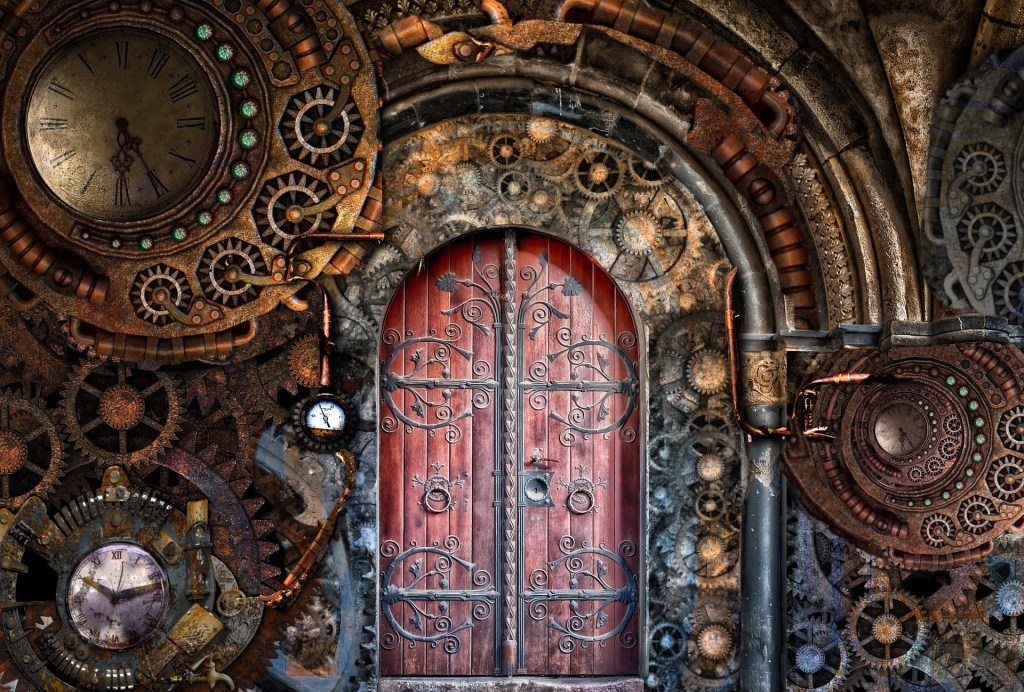
Image of a wooden door with intricate metal carvings surrounded by steampunk brass cogs, wheels, clocks, gears, etc.
I am a fantasy author so might be me, but if publishing had a door, I imagine this would be what it would look like. The gate that the gatekeepers keep, held shut by cogs and clocks that make absolutely no damn sense. Seems right, yeah. Image by Amy from Pixabay

It really is luck.

I will be Brutally Honest because that is my brand. When I opened this space and said the only editing I’d do would be to make sure (to the best of my ability) nothing was harmful to the author writing the post or anyone on the other side of the screen, plus minor grammar stuff, I fully expected some objectively bad writing. For those who don’t know my background, it’s a bit… stuffy. I have an undergraduate degree in creative writing from a school whose sole purpose was to groom its students for an MFA at Iowa which is The US’ Best Writing Program for Serious Writers. Everyone thought I was headed to Iowa. I thought I was headed to Iowa. Why I didn’t go to Iowa is a whole separate thing. However, that education never entirely left me. Combine that with a decade plus working in legal, writing Very Serious Legal Stuff, and you get someone who can be… snobbish. I know. I hate it and work hard to battle it every day.

Why am I admitting this ugly truth to all of you lovely people on the internet? Well, because I want you to believe me when I say not a single thing submitted me to thus far has been edited by me at all (except for minor grammar things), nor have I found any piece of writing published on this blog to be “objectively” bad writing. In fact, I’ve loved everything submitted for entirely different reasons. But objectively, it’s all been well-constructed, with a nice voice, good pacing, varied sentence structure, and excellent continuity. I’ll stop reading something I find objectively bad. Not only have I read everything here straight through (a few times), I’ve actually been late to a couple meetings just to finish reading several of these pieces.

So for me, a bona fide snob, who went into this project fully prepared to accept what I consider objectively bad writing (I’m literally wincing typing this, I’m sorry to be such an asshole, truly), to come to you and report zero bad writing is Saying Something. To take it one step further and say all the writing is in fact very good, is Saying Something Bigger. And the TL;DR something is this: When agents get up on Twitter and say there’s so much good stuff in their inbox it’s impossible to decide, or the quality of the writing has gone up so much recently, or mentors from mentorship programs say this is horribly stressful because they want to choose 20 things, I used to roll my eyes. Because I, a snob, didn’t believe it possible for that many people to be consistently submitting objectively good writing. Selfishly, I also didn’t want there to be that much competition. I have, however, learned through personal experience, this is not the case.

The writing is good. Objectively good. The agents aren’t lying. Neither are mentors. Those aren’t platitudes they’re feeding you. The inboxes are brimming with good stuff. This is all really coming down to subjectivity and luck. Which sucks because you can control neither. This is a shitty consolation. Sorry. I didn’t say this was a positivity post, just a reflection.

Cartoon figure of a white man with a bear and a top hat in a vest and coat holding a pipe, glaring with narrowed eyes.
Oh, hey, look! It’s one of my writing professors come to talk about Faulkner’s brilliance some more because you know… the decline of the southern aristocracy and uh… incest or something. The Next Great American Novel coming to my agent’s inbox T-minus… NEVER. Image by OpenClipart-Vectors from Pixabay

The Conversations are Important and are Happening.

Since the Not the Darling series started, five (5) posts have debuted on the blog. They have been viewed over 700 times in more than a dozen countries. They’ve been shared on Twitter, reblogged on other blogs, shared on Facebook, and appeared in at least one Discord of mine, but others I’ve been told about.

The conversations they’re spurring are as varied and important as the stories themselves. Conversations about mental health and the toll rejection can take, on the taboo topic of giving yourself the okay to quit if you need it. Questions about how to find community in this new era where mentorship programs aren’t as widespread as they used to be, and Twitter pitch contests which were once as much about building community as finding an agent, are fraught and oversaturated. Frustrations and confusion about marketability and publishing trends, about whether you should write to the market or write what you love. The evergreen and always relevant topic of “being too old to debut” by publishing standards. The list goes on and every day it grows, taking on a life of its own I’m so awed and inspired to watch.

When I first started this series, I was a little afraid of these conversations. I was unsure if facilitating them would make me a target if they got out of hand or if I would be held responsible if I couldn’t “control” them. Over the past month, I’ve been so humbled to find that was a shitty and cynical take (I’m really winning on this episode, I know). The dialogue so far has been respectful and nuanced, smart and kind. And for that, I’m so grateful to everyone contributing not only to the blog series, but to the conversations as well. It’s important we have them, and that we have them in this way.

Cartoon image of four people in shades of red, orange, green, blue, with text bubbles above their heads. One reads: "Aimee, did you really think people would be messy On Main?" Another answers "What? Me? No. Never. I was not worried at all. Once." The third says "Funny how that doesn't sound convincing." And the last contains only a question mark.
In case anyone ever wondered what it’s like to sit through a workplace training with me as your host – it involves loads of graphics like these. Edited to include the same kind of bad humor. Image by Gerd Altmann from Pixabay

Thank You. Keep ’em Coming.

Finally, to the authors who have already contributed: Thank you. Each and every one of you is courageous and I’m honored to know you, to host your stories, to be a small part of your journey, wherever it brings you. Reading your words has been a joy and a privilege.

To those thinking of submitting: Please do! Submissions are still open, and there are still so many amazing conversations to be had! Submission criteria can be found here.

Can’t wait to see what the next month brings!

Xoxo,

Aimee

Not the Darling: How I Got an Offer on My First Book… and Am Still Querying 5 Years Later

Note from Aimee: Good morning all! A content warning for this post is that it does contain query stats throughout. But this is another critical perspective that we really don’t talk about enough. The offer that ends in querying. Thank you to the author who was brave enough to submit it!


How I Got an Offer on My First Book… and Am Still Querying 5 Years Later

By: Anonymous

I hope one day this post will form the backbone of a “How I Got My Agent” or “How I Got Published” post…but today is not that day. I’ve queried 5 books since 2017, and here’s a summary of the ups and downs of that experience, from an offer on my first book to querying crickets on my most recent.

Book 1: Dual timeline vampire story (yikes)

I wrote this book without any thought of getting published, until my boyfriend at the time (now fiancé) read it and said he thought I should try to publish it. That sparked a flurry of learning about agents and queries and synopses. I paid for QueryTracker and trawled Manuscript Wish List. I signed up for Twitter and learned about pitch contests. I pulled my hair out writing a good query. I sent about 100 queries and got 3 full requests…which honestly wasn’t bad, looking back.

And then…I got an offer! Wow, an offer on my first book! I’m doing great! What could go wrong?

Well, by the time I got that offer, I was ~10 months into querying. I’d emotionally detached from that book, and moved onto writing something else I thought was better. I’d also learned a lot about the industry, and came to the conclusion that this agent was a “schmagent.” So, I declined the offer, and shelved that book. No regrets.

Book 2: Gilded Age historical fiction

This is when I started to figure out things like “genre” and “reader expectations.” I’d written something that read like a historical romance, except for the fact that the MMC was married and there was a lot of drama relating to that. When posting my query for critique, I learned that that wasn’t going to fly in romance, so I pitched it as historical fiction with romantic elements. I sent about 70 queries, and got 3 full requests.

And then…an agent called me to talk about my book! Wow, I must have done it now! It was a reputable agent with a track record of sales, but…she wasn’t sure she could sell it. She wanted to talk to some editor connections and see what they thought. She got back to me a few weeks later and said she had to pass as she didn’t think it was sellable. But, she was effusive in her praise for my writing and told me she thought I had “it.”

Book 3: Historical romance (if Lisa Kleypas wrote Pirates of the Caribbean)

By now, I’d learned a lot about genre and figured out that historical romance was where I wanted to be. So, I wrote something more “traditional” (no married protagonists), and was sure this was my best work yet. I sent about 70 queries and got 5 requests, which was the best I’d done so far. I was sure this was the one.

And then…an agent wanted to set up a call! Wow! I knew this just had to be it. I compiled a list of questions, made up an excuse to get out of work, and anxiously awaited the call.

The call opened with, “I know you probably thought I was calling you to make an offer, but…”

She was calling to nicely reject me, and that was crushing. She was only interested in representing series, and I’d written something that was firmly standalone (which I had conveyed via email before the call).

Book 4 (not queried): Ancient Roman time travel story

I love this story, but I never queried it because I learned that time travel was a tough sell, and I also recognized some issues with the story.

Book 5: Book 2 rewritten without the married MMC

I loved Book 2 so much and thought it might have better success if I rewrote it to be more in line with romance genre conventions. My writing had also improved a great deal by this time. I sent about 70 queries and got 15 requests! That was triple my best prior request rate. I was sure this book was the one.

And then…it wasn’t. None of those requests panned out. It sucked.

Book 6 (not queried): Ancient Roman historical romance

This book was a weird combination of historical fiction (involving real historical figures) and romance, with a dash of alternate history. It’s my bonkers pandemic book. I love it, but decided not to query it.

Book 7 (querying, about to shelve): Ancient Roman historical romance (yes, another one)

The idea for this book came about when I was reading a Regency romance and was like “Wouldn’t this be cooler if it was set in Ancient Rome?” You can tell from books 4 and 6 that I was really digging the Ancient Rome thing. I was enjoying showing off all the useless bits of knowledge I’d gained through 11 years of Latin classes. I love this book, and I was sure it was the one (sound familiar??).

I sent about 70 queries, and got 4 requests. After the over 20% request rate from my previous experience, this felt extra crushing. I thought things were supposed to get better, after all. I mean, my writing had only improved since 2017. Didn’t that mean I should be getting closer to my goal? Apparently not.

The handful of personalized rejections I got were along the lines of “love the premise, love the characters, but that setting is not marketable.” I guess no one but me wants to read Ancient Roman historical romance. I still have 1 full outstanding and a couple of queries, but I have mentally moved on.

Book 8 (revising): Ancient Roman historical romance (when will I learn my lesson)

I wrote this one while querying Book 7. I now know it’s not going to go anywhere, given that the setting was such a sticking point for Book 7. I’m thinking of maybe submitting to a couple of reputable small presses.

Book 9 (drafting): Gilded Age historical romance

I’m returning to the setting of books 2 and 5, but with different characters. I love this book, and like every book before it, I’m convinced it will be “the one.” Lol. We’ll see.

So, with all of the above in my rearview mirror, what have I learned?

The good:

  • My writing has gotten much better and much cleaner. My drafts require much less editing now.
  • I’ve found my genre (historical romance), and love it. I understand it more, and read almost exclusively in it, when before ~2018 I hadn’t read a single romance novel. It brings me a lot of joy.
  • I’ve come to terms with the fact that publishing is not a meritocracy. I see it as the business that it is.

The bad:

  • While I don’t get upset by rejections, I’ve emotionally numbed myself to the process so much that I can’t even celebrate the small wins. My mind jumps immediately to the next place I’ll fail.
  • I’m jealous of others’ successes. I hate seeing agent or publishing announcements. They make me feel bad about myself.

With all that said, I’m still optimistic. Looking back at this run-down (it was cathartic to write), I’m proud of what I’ve accomplished over the past few years. I know my writing and my stories are more than good enough. Even though it’s clear by now that I’m not a publishing darling, I do believe I’ll find success in this industry in some form. It just seems to be taking a while. 🙂

Photo of Roman bridge over water and amphitheater
Image added by Aimee not author. Image by Rainhard Wiesinger from Pixabay

Not the Darling: Maybe the Real Publishing was the Friends We Made Along the Way

Note from Aimee: This is a special edition of the Not the Darling series. Why, you ask? Because I am impatient and have so many great stories I want to get to you I can’t wait one whole week to bring them to you, obviously. Also because I think it ties in well with my post yesterday about Pitch Wars and the importance of the community ❤ Community comes in so many forms from so many places, as our next author is about to tell you.

Content Warning: This post does contain mention of full requests, but they are brief and not walls of stats but are integrated into the flow of the post itself.


Maybe the Real Publishing was the Friends We Made Along the Way

By: Ceilidh Newbury (Follow Ceilidh @ceilidh_newbury on Twitter)

Full disclosure: I have not been querying for as long as a lot of you. I have not been writing for as long as a lot of you. I started in 2017. I was 21. I always feel like a fraud because of that. I didn’t like writing when I was younger. I didn’t write my first novel at 7 years old or win a bunch of short story competitions in high school. I wrote one short story while studying culture studies, got some positive feedback on it, and decided it was pretty fun. 

So, at 21, I wrote the start of a self-insert contemporary novel and stopped really quickly because… it was boring. Then, I wrote (and finished!!) an adult horror novel despite having hardly ever interacting with the horror genre. And in 2018, I went to a writer’s festival where I pitched that book to agents. I have a really terrible memory and was also going through a huge life change at that time (long story short, it was the wrong gu-uy), so I don’t remember much about the experience, except that it gave me so much hope. The agents were mostly nice, the whole weekend was full of writers just like me, and it felt right. Even as I was moving countries, leaving my cat and best friend behind, I knew that writing was what I wanted to do. 

I didn’t send my first actual query until 2020. I was part way through my Masters of Creative Writing (still my favourite studying experience, especially the short story course!). I queried a YA contemporary fantasy that was four POVs, the first book of a quadrilogy, and had a not like other girls MC. It was… fun to write at the time. And surprisingly queer considering I still thought I was a cishet woman. I read blogs and threads on Twitter and listened to podcasts to get my query materials right. I submitted to mentorship programs and only had a small amount of feedback. I got nothing but form rejections from agents, but I felt sure that this was a stepping stone. I was improving my craft and practising querying for that future book that would be it

In 2021, I queried again, this time with a book that I poured maybe a little too much of myself into: a YA contemporary with speculative elements about an asexual girl grieving the sudden death of her dad and trying to stay in love with her dream of stage management at the same time. Poor Parker got all my trauma. I didn’t query a lot of agents with this book. It hurt too much getting rejected because, well, it was so much of me, my journey to figuring out my asexuality and my grief over the death of my stepfather and the love of theatre that I’d lost after studying it at an institute designed to break you. It was hard for Parker’s story to get rejected, because it was me rewriting a part of my life I wish I had handled differently. 

But, this book WAS the first one that anyone outside of beta readers had ever shown interest in. I received full requests from some awesome mentors from two different programs, who ultimately didn’t choose me, but gave me some nice feedback (and added me to a pretty cool group chat of other people who had submitted to them). And, spurred on by that, I hired one of the RevPit editors to do a developmental edit of the manuscript, which was an amazing experience (spoiler alert: this would not be the last time this editor read my work). 

After all of this, I got ONE partial request from an agent who ultimately passed on the book. But that was a step up from the last book. It was proof that I was improving. And while this book had felt like the one, the book of my heart like everyone always said in agent and deal announcements, it… wasn’t. Because I wrote a better more book of my heart (and I’m sure will continue to write more and more of them).

Image description: a meme of Kenny from We’re the Millers saying “You guys are getting paid?” but the text instead reads “You guys are getting full requests?”
Credit: Warner Bros. Pictures/Rawson Marshall Thurber

Fast forward to last year, I’m skipping a bunch of trauma and failures outside of writing and going straight to the manuscript I’m currently querying. The YA ‘eat the rich’ fantasy that made me a runner up in RevPit 2022 and the lucky winner of a mentor from a mentorship program now defunct (my mentor isn’t though, she’s still here, and I love her). I still can’t really grasp the fact that someone read my 59k fantasy novel and thought: I can see how this could be better, and I want to help. 

Because OH MAN IS IT BETTER. It is now a respectable 80k, it has MORE PLOT, it has MORE WORLDBUILDING, it’s like a whole new book! Except, not quite. It’s still got the same heart. The same anger at the world and wish that by burning it all down we could start something better. I commissioned art of these characters for the first time, and I stare at them hanging on my wall every day just thinking: they’re worth it. And what has all of this help, this encouragement, this craft work gleaned me? A single full request in a sea of form rejections (so far, at least). Don’t get me wrong, that full request feels HUGE to me. It’s my first agent full request EVER. But it is one.

A lot of people talk about the difference between querying 5 years ago and now as a decline in requests and personalised feedback. Which is ABSOLUTELY TRUE. However, because my writing wasn’t actually at a level that warranted any of those things back then, that hasn’t been the case for me. People who had been writing for years before sending their first queries in the 2010s and are still querying now are seeing themselves trend downwards. They aren’t getting requests like they used to, they know their craft has improved, that their books are good enough, but they’re getting the opposite feedback (aka none) from agents. But for me, and maybe for other writers who started querying in that decline, with manuscripts that maybe weren’t up to that standard yet, our trajectories are different. For me, a single full request is a step up. It’s small, so small, so incredibly miniscule in the scheme of request rates from years ago, but it’s huge to me. Even if querying in general still just makes me feel like this song:

https://open.spotify.com/track/3o9kpgkIcffx0iSwxhuNI2?si=XQKLieHbSAuKrha8V9KsBg&utm_source=copy-link (Numb Little Bug by Em Beihold)

Well, that took longer than I thought to explain. I’ve always been a rambler (ask literally anyone I’ve ever beta read for), and I don’t know if my journey is interesting, but it is my context. And it’s important for what I actually want to say here, which is: my champions aren’t agents (yet?). The people who really get my work, the ones who understand it and love it like I do, have so far not been agents.

When I first started, I couldn’t imagine anything better than an agent and a book deal. I hadn’t even found myself or the stories I wanted to tell yet and I was only just starting to find my people (shout out to the MelbNano Discord for being a lot of those people). I hadn’t yet discovered that anyone could enjoy my chaotic screams on their work without the promise of actual Useful Feedback™. And I didn’t realise that sometimes all I needed was someone to love my work, not critique it. I was so focused on the idea of getting an agent that I didn’t realise how important other people could be to my journey.

Remember that group chat those lovely mentors added me to after passing on my manuscript? It’s been over a year, I’ve read a bunch of their stories, and they will never get rid of me (it’s not my fault their stories are so addicting, and they’re all so nice!!). One of them even gave me the motivation to actually finish the YA fantasy that got me my mentor (seriously, without her telling me how much she loved it, I don’t know if I would have fallen back in love with it). And I regularly scream at the mentor who added me as I read their books too! And through them and their fandom I got to meet a bunch of other cool self-published writers!

Remember that RevPit editor I hired? Well, she and her cowriter were kind enough to send me their book to read after I commented on a PitLight pitch they posted. AND IT SLAPPED! And I sent them a word doc back full of incoherent babbling (a lot like this post probably) and they LIKED IT. And now I’ve read two more of that editor’s books and she’s read mine and is patiently waiting for me to finish my next, cheering me on when it feels like it doesn’t matter. And I’m doing the same for her, I’m dying to read her next book (and the next and the next). And not just that! This editor (ace like me) made a Discord for other ace YA fantasy writers (who I LOVE) and there! I met! MY OWN COWRITER!! That’s right! I’m writing a book with a whole other human, and it’s the best thing I’ve ever done (even though she’s evil and scares me)!

And remember that mentor who saw potential in my tiny little seedling of a book and nurtured it and me to being a whole query-able thing? Well she is still here, still supporting me, and graciously letting me read her wonderful words (she just announced her debut book deal, and I’m SO EXCITED). She answers my silly questions and yells nice things at me when I’m down on myself. I am so fortunate to have her in my corner.

I have never been as simultaneously happy and miserable as a querying writer. I am frustrated by the publishing industry and its lack of commitment to fair pay, accessibility, and diversity (looking at you especially HarperCollins), by the way querying writers, agents, and editors seem to be constantly pitted against each other in discourse (seriously we’re all fighting the same enemy! billionaires! (btw this is the plot of my querying book), by the fact that I have read so many amazing books by so many amazing writers that have yet to be signed with agents or publishers (including mine)!! 

BUT. Looking at this website I’m posting on. And looking at any PitLight event. And looking at the discussions in my DMs and Discord servers, I feel so full. I am a sappy, positivity-pass-giving simp first and foremost, and it makes me joyful beyond belief to have so many amazing friends. To have the privilege to read their work and have them read mine. To get to yell at everyone who comes near me about how talented they are and how they are going to change the world with their stories. I know they will, because they already changed my world with them. 

Image description: A screenshot from Mean Girls of an emotional young woman saying “I wish that I could bake a cake made out of rainbows and smiles, and we’d all eat it and be happy.”
Credit: Paramount Pictures/Mark Waters

So, I know I haven’t been writing all that long, in the scheme of things. And I’ve been querying for even less of that. It sucks so much for me, so I can’t even imagine what it’s like for long time queriers (although, I can try, because some of them are kind enough to tell me about it). I know that publishing is hard and it hurts. It hurts so damn much sometimes that we want to quit, go live in a cabin in the woods, and bury our manuscripts in the backyard under the lemon trees. And some of us will, and do, and come back, or don’t. 


But even through all the rage and the hurt and the injustice and unfairness of the whole system, and the burning desire to share my work with the world that I know may never be sated even though I do want it bad enough and I am working hard enough (and so are you), I would not change this path for the world. I would not give up my chance to meet the people I’ve met and love and be loved by them. I wouldn’t trade reading their stories, their struggles, their wins, for anything. Even when I’m jealous of them. Even when I want to tear the world down just to make someone see how talented they are. Even when they give me feedback I bristle at (and then later realise is good, actually). Even when they’re busy and can’t talk for a while. They are the best thing that has come out of this journey so far, and I don’t see that changing any time soon. Every story I’ve written and book I’ve queried somehow led me to the community I have today, and I am so so grateful to be here.

Bio: Ceilidh Newbury (they/she) is a queer, asexual, nonbinary writer living on Tommeginne land in Iutruwita (Tasmania). They hold a Bachelor of Dramatic Art (Production) and a Master of Creative of Creative Writing, and their short fiction has been published by Ezra Arndt, Cloaked Press, East Riverina Arts, and Sinister Soat Press. She is a fierce advocate for and creator of safe queer spaces, especially for young people. When they’re not writing or queering up the community, they can be found singing to their cats and drinking copious amounts of tea. You can also find her on Twitter (@ceilidh_newbury) or her website (www.ceilidhnewbury.com)

A bit about the book they’re querying: In this 80k standalone YA ‘eat the rich’ fantasy set in a queer normal world where magic is easily available (for the right price), an angry aroace girl and a cinnamon roll rich boy team up to destroy capitalism and become best friends. Also there’s a fat cat named Ned.

Not the Darling: What if You Just Wrote the Wrong Book?

Note from Aimee: Today’s post has query statistics at the end for those interested. They follow a picture (which picture and alt text was inserted by me, not the author of this post) so they can be more easily avoided for those who don’t like to see stats. The book referenced in this post is described by the author as an adult, second-world grimdark fantasy and is the first novel written by them. I have also included links to the resources listed by the author, but neither this post nor my inclusion of links is an official endorsement of either (and no one was paid to put them here) and you should always research any paid service carefully before pursuing it. Now, without further ado, today’s amazingly raw, amazingly written, amazingly brave story of realness ❤

What if You Just Wrote the Wrong Book?

By: Anonymous

I knew the book I spent 4 years writing was a no-hoper before I ever sent my first query. I knew it as soon as I looked at agent MSWLs in my genre, as soon as I followed agents on Twitter, as soon as I looked for comps. I also know the book I just shelved is the best book I will ever write. 

As a child, I had vague ambitions of becoming a published writer, for the simple reason that I wanted to achieve something in life and wasn’t good at anything else. But financial stability came first, and so I devoted my teens and 20s to academics and demanding jobs, writing only a few short stories over 10 years. It wasn’t until I managed to downshift to a 40-hour-a-week job that didn’t suck up all my mental energy that I had hope of actually finishing a novel. Even then, I struggled to find a work-in-progress I loved enough to stick with–until finally I did.

Finishing that monster of a 135k first draft (later whittled down to 121k) took me almost 4 years. Coming to the end and actually being proud of what I’d written was the most joyful moment of my life to date–until I got on the internet and realized I’d written the exact book nobody wanted.

My book might have been perfect for the SFF market in, say, 2010. But by 2022, my European military fantasy was exactly what agents in this hugely oversaturated market were begging not to see (which, if I’d been reading recent debuts instead of spending years frantically trying to finish my own book, I would already have known). Readers’ tastes had long since changed, but I was still writing for the teenager I’d been.

My book was second-world and epic when everyone wanted “grounded.” It had three POVs and a heaping of military strategy when everyone wanted intimate and character-driven. It was a bloody grimdark hitting every conceivable trigger warning when a lot of readers were hungry for lightness, romance, and hope. And worst of all, it had a female villain protagonist who sought power not to protect loved ones or to fight oppression but for power’s own sake–and thus was really, truly unlikeable to everyone but me. 

I decided to query my book anyway, because what did I have to lose? I left off anyone for whom my book was explicitly anti-MSWL (quite a few), but between US and UK agents, I still had a healthy list to burn.

I came prepared. I scoured r/pubtips, submitted my query to the wonderful Query Shark, and paid far too much for a manuscript assessment by a freelance editor, because I wanted an honest opinion and was worried seeking unpaid betas would take months and plunge me into social media drama. The verdict: the editor couldn’t understand why anyone would write this sort of thing, and also I needed therapy.  

But by far my most valuable investments were three, 10-minute query and sample chapter consultations with literary agents through Manuscript Academy (US) and Jericho Writers (UK). This is the best $49 you as a writer will ever spend, because it is the only time a professional in your target market will tell you exactly what you did wrong, as opposed to just hitting the reject button.

The agents I spoke to were lovely individuals who put real thought into explaining why, no matter how much I revised my query package or my manuscript as a whole, a book with this premise would never sell. Then, much more difficult, they tried to give me some guidance on what would.

Now, 10 months out, I’m at the end of the query journey for the book of my heart. I’m proud of the requests I received, and not at all surprised that they ended in silence or form rejections, given that the book only gets really controversial halfway through. I’m heartened by a few one-liners praising my prose, which I was afraid was too literary and historical for the current market. I’ve also done some thinking about what I need to do to improve my craft: tighten pacing, narrow my scope, and manage word count better as I go.

But as a thirtysomething woman (seemingly ancient for a debut), I can’t figure out for the life of me what to write next. It doesn’t help that I’m the sort of person who takes years to write one book, while most agented writers appear to have churned out a first draft every few months since age 14. Every time I come up with a new premise for a novel, I stumble over the same hurdles. Is this original? Is this “hooky?” Can I imagine one of the 15 acquiring editors in my target market actually acquiring this? Is this–above all–marketable?

I don’t want this post to sound like I feel somehow aggrieved. I’m in the same position as every other casualty of the query trenches, except that I’m privileged to have money and time and not to have to cope with the additional struggles marginalized writers face. Against reason, I still dream of getting an agent and a tradpub deal someday. But writing for the market has killed the joy of writing for me.

Image of a white woman standing in a body of water. She is wearing a white strapless dress and has auburn hair and is wielding a lightning bolt. Above is a red, angry sky, and she is about to bring it down upon the shadowed image of a small island.
Image and alt text added by Aimee, query stats redacted from the post and follow. Image by Enrique Meseguer from Pixabay

Query Statistics as Provided by Author:

Adult second-world grimdark fantasy

Query start date: April 2022

Queries sent: 86

Partial Requests: 1 (rejected)

Full Requests: 7 (4 form rejections, 2 pending, 1 ghost)

Rejections: 58

Closed No Response (CNR): 20

Opening up the Shelf: Adult SFF

Author’s Note: Today, I am going to talk about my #PitchWars book ALL HER WISHES specifically, but only as a way to address some swirling thoughts I’ve had about adult fantasy in general. For those who don’t know, my 2021 #PitchWars book ALL HER WISHES is a dual-POV, adult fairytale retelling told from the POVs of a selfish fairy godmother who hates her job but is trying to be good at it in order to save her best friend’s Destiny, and the villain (who happens to be the MC’s ex) who is trying to sabotage all that for, well, vengeance, obviously. It is an enemies-to-lovers, second chance love story set within a fractured fairytale world.

When I submitted to Pitch Wars in 2021, I entered All Her Wishes as a Romance (with a capital R). At the time, I had no idea what it actually was. What I did know was I’d never read anything quite like it in Adult Fantasy, though plenty of things like it exist within Young Adult Fantasy. I figured it would never “make it” if I endeavored to set it on a Fantasy shelf beside Tolkien and George R.R. Martin and All the Characters Who Stab. There are no swords, no graphic violence, no wars, no epic quests. There’s no need for a map (I can’t read them and neither can my main character), no invented languages or species, no explanations of geography or the genealogy of my characters going back 700 generations.

I didn’t love the idea of submitting it as a Romance, because somehow, it felt like cheating. But I had sent a few queries prior to Pitch Wars and the only feedback I’d received was “Sounds adorable! I’ve checked with some people, and no one knows who or how to market it.” So, somehow it seemed like because Wishes didn’t have all the above things meant it was “lacking” and therefore not Fantasy and maybe? a? Romance? Which, also felt gross. Because Romance, for the record, is not lacking in shit. Seriously, stop saying, believing, perpetuating any stereotype that Romance is anything but the badass queen of the publishing castle. Facts: Romance is the highest grossing genre in publishing (at $1.44 billion in revenue last year, take that to the bank and suck it). Romance authors are kings and queens of their art, and they deserve so much credit for what they do. The fact they don’t get it is a whole other blog post for another day. Also, Wishes’ love story does not make it less of a Fantasy.

A white woman with auburn hair in a green gown leans back against a tree, pointing her wand downward while a white man with dark hair wearing a dark jacket leans toward her, holding his hand to her foot.
Am I going to take this opportunity to drop this beautiful artwork for the book despite the fact it is everywhere on this website? Absolutely. Image © Jaria Rambaran  

Good news, my mentor also didn’t love that I’d submitted it as a Romance. Primarily because it hit NONE of the Romance beats and to make it do so was going to be a Herculean task that might have destroyed the structure of the actual story. We spoke at great lengths about my feelings on whether it was primarily a Romance or a Fantasy, and though I said to her I didn’t have strong feelings either way and in private said to my friends I would make it whatever the hell she wanted if it got me into Pitch Wars, the more I started to think on it, the more I realized I did have strong feelings about where Wishes ended up on the shelf.

ALL HER WISHES is Fantasy, capital F. It’s a story about magic, about friendship, about villains and heroes and the mistakes they make and the prices they pay. There are princes and princesses, fairy godmothers and evil queens, multiverses, and magic systems. There is world building and palace intrigue, and yes, there’s a whole lot of kissing, and because it’s adult, sex too. There’s love, but when did Fantasy stop becoming Fantasy because there was love?

Would Neil Gaiman’s Stardust find itself on a Romance shelf because it’s primarily the story of a boy out to win the heart of a girl and in so doing falls in love with another? What about one of the most quintessential epic fantasies of all time, the Wheel of Time series where the main character, Rand Al’Thor, is involved in a polyamorous relationship with three women? Do we discount the romance in that series because there’s enough words around it to ignore it? What about a more recent example in Jay Kristoff’s Nevernight? Mia Corvere, that series’ main character is about as ensconced in romance as she is in blood. Or do these authors get a pass because they’re *AHEM* white men? It’s fine, y’all, they’re writing MANLY love stories. Which is totes fine. Manly man’s masculinity is not threatened as long as the love story is also written by a man, am I right? Okay, I should sit down before I refuse to get off this here soap box. WHOOPS.

Drawing of a white girl in a blue dress with a purple bow standing on a soap box washing on a wash board over a large basin of water.
Oh look, it’s me getting back into the time period I’m expected to be in. I kid, I kid.

As I worked on my revisions of Wishes throughout Pitch Wars, these thoughts continued to poke at my brain. Where did my book go on the shelf, and why was I so afraid to say with these others?

Afraid.

Yep. There it was. I was afraid. Because there exists in Adult SFF a sort of elitism not unlike what I remember from my undergraduate days at UNC spent arguing Chekhov and Hemingway and preparing for an MFA at Iowa. Because obviously you go to Iowa. That is the only option for a Serious Writer. In Adult SFF there is a similar feel to this lit fic like discourse that’s more akin to: Obviously you write epic fantasy of a political nature, heavy on the world building, light on the romance, or you are not a Serious Fantasy Writer.

It feels a little… Gamergate to me, truth be told. And after I got done being afraid, I got irritated. If you couldn’t tell.

The thing is, I believe all genres should be for everyone, which means we have to tell lots of different kinds of stories within our genres to welcome lots of different kinds of people into not only our genres, but reading in general. That’s how we cultivate growth, and learning, and a body of literature that expands our experiences beyond what we know which is literally one of the main points of all reading but especially freaking fantasy!

So it’s time to open up the shelf to new stories that go beyond the old elitist thoughts of what Adult Fantasy should look like. Stories that include subgenres like urban fantasy, and contemporary fantasy, and yes, fairytale retellings, and stories from non-western mythos, and romantasy. And stories written from different perspectives than we’re used to seeing. Stories from women, and POC, and LGBTQ folks, and ND people, and disabled people. I want to see stories about Black grandmas riding dragons, 20-somethings in wheelchairs shooting flames from their spokes and owning their sexuality, and stories about brown women trying to juggle being the badass court sorceress while being pregnant and having a baby. It’s time for a new canon of fantasy that is relevant to the readers who fell in love with fantasy during the YA fantasy boom brought on 20 years ago.

Because guess what? We aren’t teenagers anymore, but we still like fantasy. And sure, some of us do like politically epic fantasy with sprawling worlds and all that other stuff (although I can bet you based on my anecdotal research a fair few more of them are reading R.F. Kuang than they are Robert Jordan these days). But loads of us want a fresh array of new stuff. Short stuff. Different stuff. Weird and wacky stuff. Stuff that is relevant to our lives and our world and yes, that’s important even if it’s a fantasy.

Book cover: The Remarkable Retirement of Edna Fisher by E.M. Anderson. A red cover with a dragon flying over a city skyline.
I would be remiss not to mention my agent sib has just such a book coming out soon. Which you can preorder HERE.

So here’s my plea to not only publishing but the readers who love my genre as much as I do: Support new voices in Adult SFF. Writers and readers alike. Don’t push them out because they’re different or you think the books they write or the books they like aren’t “serious” or otherwise “enough” of something for you. If they haven’t read all of the Lord of the Rings books, they can still love Fantasy. If they don’t know with perfect precision the specs of every species from a series they say they love, they can still love that series. If they don’t know which superhero fits into DC or Marvel, they should still be welcome. There should be no criteria to liking fantasy books other than, well, liking fantasy books.

Welcome them! Open up the shelf! You never know, they could be the author who writes your next favorite book!

Xoxo,

Aimee

Not the Darling: The Querying to Quitting Pipeline

Note from Aimee: This is the first post in a new series of blog posts I’m affectionately calling the Not the Darling series. You can read more about the concept of the series HERE. On a personal note, I am so in love with this particular post because it’s raw, real, brave, and completely encapsulates what I had envisioned when I opened this space up to querying writers. I am so proud to be able to host it here.


The Querying to Quitting Pipeline

By: Jean Levasseur (Follow Jean @jeanmlevasseur on Twitter)

I wrote my first novel when I was 19, a sophomore in college.

I’ve since apologized to those few who read it.  But I’m glad I wrote that cliché-filled vampire novel, because it taught me that I could write a whole book.  

Over the next twenty years, I’ve written six more, and actually queried the last three.  

The first novel I queried I was so excited about.  I’d written it as my graduate thesis project, and my professors and readers all loved it.  It was a science fiction novel set in a distant star system with all the things I love – religion behaving badly, people betraying one another, and cool fight scenes in zero gravity.  

I queried that one to about twenty agents over a year, and received mostly no response. After reading it to see what I could do to make it more appealing, I realized it was missing interesting characters and a coherent plot, so I shelved it.  I wasn’t that upset, because I knew I could do better.

I’d already gotten excited about another novel. 

This one was a fantasy novel about a supernatural assassin and master of disguise who could hear the literal voice of Justice and was empowered to act on that voice, serving as judge, jury, and executioner. This was a story about someone losing faith in the face of people using false Justice to grab power, even though Justice was literally a known variable.  

I queried that one to about 100 agents. Had a lot of compliments from critique partners and beta readers.  Even had 2 partial requests and a full.  And 100 rejections, plus the rejections from the various mentorship programs I applied to.  

So I shelved that one. I’d already gotten excited about another novel.  

This one was based on one of my wife’s favorite short stories that I’d ever written. It was about what happened when the Chosen One failed and died, and her father was asked to take up her mantle, but refused.  What would it be like to hate the person that your child had become by achieving every honor that your society had to offer, while being racked with guilt and grief at her death?  Plus, it had demons, so that’s always neat.  

137 agents this time.  One full request, one partial.  All rejections, plus the rejections from the various mentorship programs I applied to again.  

That one almost broke me.  I stopped writing anything but the occasional short story for nine months. But I missed writing. So I decided I was trying too hard to produce something great, and maybe I just needed to write something fun.  After all, this is supposed to be fun, right?  

I’d fallen in love with the idea of writing a western where cowboys ride dragons. I was going to fill it with all the best tropes from all the westerns that I love so much. Waterfalls and caves and single combat and chases through the wilderness and farmers on the frontier and the conflict between encroaching “progress and civilization” and the appeal of the wild.  It was supposed to be a self-gratifying exercise in pure fun for myself.  

I hated almost every moment of writing it.  

And when I finished and read it back a month later, I hated almost every moment of reading it, to the point that I shelved it without editing because I couldn’t find a worthwhile thread to even base my editing from.  

It’s been three months and I haven’t written any fiction since. When I took months off after my previous novel, I never really thought I’d quit, even though I debated it.  This time, I don’t really think I’ll start up again, even though I’m debating it.  

Hundreds of queries have said to me that I don’t write the kinds of books that the traditional industry is interested in.  

So self publish, I can hear you saying.  

I can.  I actually have a background in marketing and am married to a designer. Between the two of us, we have the skills required to do 80% of self publishing ourselves.  And we are lucky enough to have the savings to pay someone to do that other 20%, as well as support some small marketing and advertising efforts.  We have the resources and knowledge needed to succeed.  

What I don’t have is enough belief in any of these stories to be willing to invest that much time and money into them.  So I’m not going to.  

And if I’m not going to be traditionally published, or self published, then what’s the point? 

People say to write for yourself first, and I don’t necessarily disagree.  But I’ve always written with an aim of getting these stories in front of readers. Even when I was writing stories for school, I was always consciously writing them for my teacher. I can tell myself the stories in my head without writing them down, and without going through the effort and agony of editing over and over.  If I’m not going to ever have readers, why bother with all that?  

Michael Mammay wrote a great blog post about how it’s OK to give up, which is the opposite of most advice given in the writing community. But I found that permission so helpful. Anytime you say that you’re thinking about quitting, the number one thing you hear is to never give up, and how your agent could be just one query or one novel away.  But the math says otherwise. For the vast majority of us, there is no agent around the corner, no publishing deal on the horizon, and no standout self published novel just waiting for you to design a cover and press publish.  

And I’m pretty sure that I’m one of the majority of us, not the minority.  

I think it’s time to give up. And even though the idea of giving up makes me sad, and my brain keeps coming up with “but what if” scenarios, I haven’t missed writing over the past few months.  If another twenty years of failure and rejection is what’s coming if I keep pursuing the dream, then I’m not sure I want it anymore.

Bio: Jean is a stay-at-home dad, freelance writer, and woodworker. Follow him on Twitter @jeanmlevasseur