Blog

How I Quit Writing Forever, then Got My Agent


Author’s Note: I revamped my old website so I could do this announcement post, and hilariously, the very last post on my blog before I shut down my website was titled “How I Didn’t Get My Agent.” Written in 2019, you can read that here. It’s been a looooong road, and this is going to be a long post, so please bear with me!

Content Warning: This post contains query stats. But don’t worry they’re probably some of the worst you’ve seen.


Sometimes, you have to quit to be found. In this story, I will not overwhelm you with toxic positivity or tell you to “Just keep going.” Because this is a story about how I was, at almost every critical point in my writing life, not the Darling or the Exception, or the Chosen One. And that got to me so much I quit. Several (dozen if you ask my friends) times. But quitting gave me the perspective to carry on which led me to the infamous single yes (really a single one in my case). So, gather round friends, it’s time for me to get On Brand, aka brutally honest.

Dramatic Kitten yells and falls back. For my #PitchWars peeps – I am the most dramatic kitten still, yes.

I sent my first query when I was 14. The manuscript was called IN THE LIGHT OF DAWN. It featured elemental magic, talking Pegacorns, and a villain clearly taken from many hours reading Magic Knight Rayearth fanfic. I wrote it during the summer between the 7th and 8th grade and never edited it. Why would you have to edit a masterpiece?

Pretty sure that first query (and full manuscript in all its messy glory) went to Tor, my dream publisher (if any editor from Tor is reading this, my books are way better now, call my agent!). I remember putting that big manila envelope in the mailbox and thinking, “Today is the first day of my destiny.” Because I was a prodigy. Obvi. When I never heard anything (bless whatever intern for not responding and shattering my fragile, pre-teen heart), I sent out other queries with sample pages. To agents this time (like I needed one, right? But I supposed I could give these fools a try)… Nothing.

I was not deterred. (Bless me.) I’d written the sequel, IN THE DARK OF NIGHT, and four other books in the same world, the names of which I do not remember but were all horrible, things like ocean depths and thorny something or other. I tried to look them up for shits and giggles but couldn’t find them, they’re probably on a floppy disk somewhere (yeah, I’m dating myself with that).

A stack of floppy disks. To the youths, they’re like old school flash drives. Predated CDs. They stored like 1.4MB of data or some nonsense. You could download one illegal song from Napster (that website that gave everyone’s computer a virus) and that was about it. Unlike Napster, this image is not illegal and was sourced freely via Pixabay.

In addition to the churning out of books, I was also winning every writing competition my teachers entered me in. Short fiction, poetry, essays, whatever it was, I was coming back with medals, and plaques, and awards. I cruised through high school feeling Destined. So when I was approached by UNC Chapel Hill to apply for the Thomas Wolfe Scholarship, a writing scholarship that would cover my full tuition, I was sure I had it.

I… did not have it. That rejection letter was the first rejection letter that broke my heart. Spoiler alert: It would not be the last. I remember lying on the floor in the kitchen, the cool stone beneath my hot cheeks, screaming. My dad called me pathetic. Maybe I was.

Maybe I was a spoiled, entitled 17-year-old who had always won everything. Who had never learned to lose. Or maybe I was a teen with C-PTSD and then-undiagnosed ADHD who had rejection sensitive dysphoria who couldn’t handle someone saying their soul wasn’t good enough. Maybe I was both. We do exist in multitudes, as they say.

I did go to UNC, ultimately. For creative writing. I competed mightily with the recipient of the Wolfe Scholarship (whether she knew it or not). I worked my way up through the ranks of a brutally competitive program where every semester you had to apply to get to the next level, and the class availability got smaller and smaller. Whittling out the weak. Teaching us, whether we knew it at the time or not, to fail.

“So much raw talent, but you’ll never make it in this program writing genre fiction.” That’s what my very first fiction professor told me. I wanted to make it with writing. It was all I’d ever wanted. So, I put away stories about goddesses of dreams falling in love with gods of night and wrote lit fic.

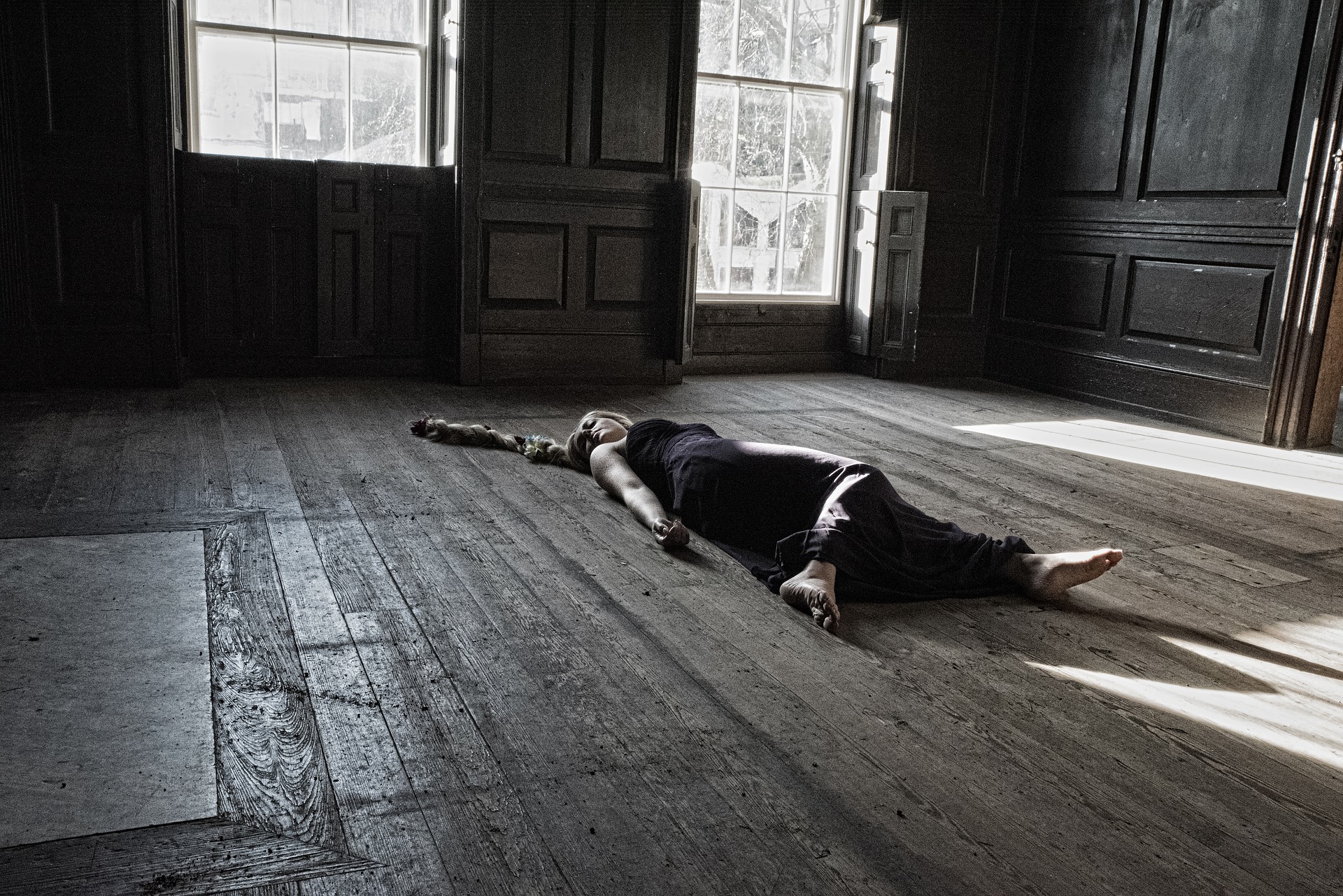
Girl with long brown hair lies on white bed, sleeping with a red rose in her hand and a crown of briars on her head.

I argued Chekhov and Hemingway. I dissected Faulkner and literally got in a fight with Stuart Dybek at a bar. For years, I had my work ripped apart twice a week with ruthless efficiency. I stopped crying. For better or worse, my writing would never look the same.

When I graduated college at age 21, I quit writing for the first time. For 6 years, I didn’t pen a word. I didn’t read. Instead, I drank. Until one day, rehab woke me up. And when I came home, I looked around and the first thing I noticed was that I didn’t have a single book in my apartment. Me, who had loved books all her life.

I went to Barnes & Noble and bought the Miss Peregrine series. The covers looked how I felt. Black and white. Nostalgic. Lonely. And when I had finished them, my fingers itched for a pen. So, I picked one up, and I wrote. Within nine months, I had four more books drafted.

Two of them would become my 2+ year journey in self-publishing. Another failure. I still couldn’t remember how to cry, but I remembered how to pivot. Back to traditional publishing I went. This was what I knew, and how I was trained, even if I was now writing the Big Terrible Genre Fiction. Brand new book. And the age-old query letter. My enemy.

That first book I queried was a YA fantasy, stats as follows:

  • Pitch Wars Entry 2017 (3 mentor requests, did not get in)
  • Pitch Wars Entry 2018 (0 mentor requests, did not get in)
  • Queries to agents: 51 – ALL form rejections or no response
  • Requests: 0
  • Offers: 0
  • Request rate on that book: 0%

While that book died in the trenches, I worked on another YA fantasy that for the first time featured a character with touch aversion and C-PTSD, like me. I would go on to query this book THREE times over the course of the next four years.

A vulture hides its beak in its wing against a black backdrop. IFYKYK.

Between 2019-2020 the revisions blended together and were not big enough to be a different set of queries, in my opinion, so for purposes of this post I am going to lump them together. Stats:

  • Pitch Wars Entry 2019 (1 mentor request, did not get in)
  • Pitch Wars Entry 2020 (0 mentor requests, did not get in)
  • RevPit Entry 2021 (Got cold feet and did not enter at the very last minute)
  • Queries to agents: 64 – ALL form rejections or no response
  • Requests: 0
  • Offers: 0
  • Request rate on that book for that round: 0%

The rejections for that book hit me hard. It was the first time since college I’d tried to write a character so closely related to my life experience it was impossible for me to separate the rejections of the book from rejections of me as a human. I quit writing forever again. Right in the middle of drafting this other book about a fairy godmother who hated her job. For about four (maybe six) months I didn’t write or read a word. Every book I picked up made me want to throw things. The professional jealousy was real, and it was beastly. Why did it feel like everyone was winning all. the. time? Hadn’t I suffered enough? Didn’t anyone give a shit about what was fair? Spoiler alert: Most people don’t care, no, but also, if you too are obsessed with the concept of fairness you might be neurodiverse (just saying, I wish I had looked into this sooner).

I’m not sure why I started writing again. I just… did. And then in four days, POOF, I had a finished book looking thing. It was adult, which was new. And missing a WHOLE bunch of words (which would turn out to be a POV), and was a mess, but it was done.

GIF of the Fairy Godmother from Disney’s Cinderella waving her wand.

That book would get me my agent, but not linearly. Because naturally. That book, ALL HER WISHES, an adult fairytale retelling, would also FINALLY get me into #PitchWars. Mentorship stats below:

  • AMM Entry 2021 (1 mentor request, did not get in)
  • Pitch Wars Entry 2021 (2 mentor requests, AND I GOT IN!)
  • PW showcase requests: 2*
    • *This was one of the lowest request rates of all the Pitch Wars mentees

After the showcase, I was a mess. Five years trying to get in, draft 11 of the book, 19,000 words cut to make room for 16,000 new ones. An ending rewritten THREE times, months of work and for… nothing. I’ve tweeted a lot about the post-PW angst, and I’m sure I will blog about it in the future, but it was brutal.
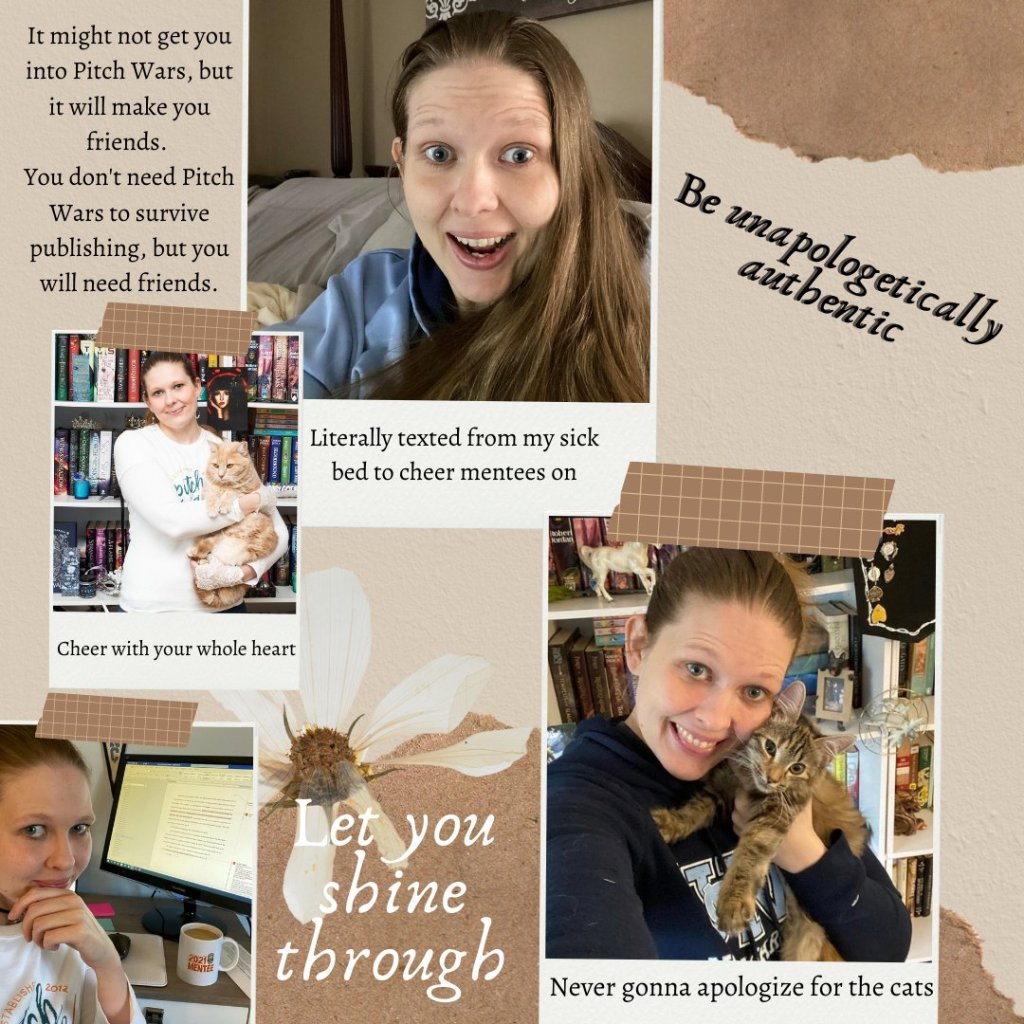
Mood board containing various pictures of me and text advice from my Pitch Wars journey. Including my fave: You don’t need Pitch Wars to survive publishing, but you will need friends – still appropriate, btw.

I queried because I felt like I had to, but I went in with a spirit so thoroughly broken I could barely see straight. Reminder that we’re a couple decades in at this point, if you’ll remember from 100 paragraphs ago. I have written like 14, 15, 16 books at this point, I can’t even keep track. It’s shit for me.

Like honestly, the whole thing is shit. If you’re in the trenches after a lot of years, and you’re feeling like it’s shit, you’re right. It is. I wish I had something inspirational to say to make it better, but I don’t. It’s just absolutely brutal when you aren’t lucky.

And if you’re wondering: What am I doing wrong? Is it me? Probably not. I mean if you’re following the advice, getting CPs, listening to querying tips, taking feedback and help, honing your craft, it’s probably not you. It’s just shit. And luck. And finding that ONE yes.

So, ALL HER WISHES querying, woof. That was awful. I went months and months without a single request. Dozens and dozens of queries. I lamented, cried (remembering how to do that very well at this point), screamed, didn’t sleep, didn’t eat, ate more than was comfortable, bothered my mentor SO much, considered small presses, ultimately decided no and shelved the book. And revised ye old YA of my heart (again, but seriously tore it up this time). For that new revision on the YA (which would be the THIRD time querying this puppy), I had somewhat better luck but still not great. Stats:

  • RevPit Entry 2022 (0 editor requests, I did not get in)
  • Queries to agents: 93
  • Requests: 3 partials, 1 full
  • Offers: 0
  • Request rate on that book: 4.3%

I quit writing forever again. I was pretty serious this time. Wrote a thread on Twitter about it and everything. But my now-agent had kindly passed on ye old YA of my heart with interest in ALL HER WISHES, so I figured I would give it ONE. FINAL. GO. Ultimate stats on the book that got me my agent:

  • Traditional queries (outside the PW showcase): 84
  • Requests: 1
  • Offers: 1
  • Request rate (not including PW showcase requests): 1.2%
  • Request rate (including PW showcase requests): 3.6%
White mood board featuring a pink pair of shoes, pink roses, a white woman with long blond hair in a gold dress, a lilac covered field, and a shaded glen. Text reads “All she could do was stare at the silk in her hand and wish…”

That’s three decades of writing and two decades of querying. Of quitting and returning. It’s starting and stopping. Failing and pivoting. It is not Destiny. It is Determination. It is loss. And grief. It is hundreds of rejections at every turn, some I can quantify and some I can’t. It is 98.8% more failure than success.

Are you waiting for me to tell you not to give up?

I won’t. Because giving up is exactly what gave me the courage to keep going. The day I gave up was the day I finally separated my identity as a human from my identity as a writer. It was the day I realized all those agents were not rejecting me, they were rejecting things I could not quantify. Luck. Timing. Market. Style. Preference. Were some of them rejecting me in that I write neurodiverse, bisexual characters with trauma issues baked in? Maybe. Probably (whether consciously or not, everyone has bias). But that’s a them problem, not a me problem. I have carried so much shame in my life, I don’t need to carry more, especially when it does not belong to me. Giving up gave me time and space to finally see some of this and to find a life on the other side of writing.

Yes, there were days it was hard. There were days I was angry at the stories the gatekeepers were (and continue) holding back. I grieved not only my loss but the ones I saw my friends suffering, too. That thing inside me that screams NOT FAIR revolted, slamming against the cage of my ribs like a feral cat in a trap. I told it to shut up and go to hell. Fair or not fair, life is life, and here we were.

But after awhile, I started to miss writing. A little twinge at first, then a tick, then a pang that turned into a steady beat like a heart, like a need. The grieving was done, but there was still a hole that nothing else would fill, and I was reminded why I started writing in the first place. For myself. For the kid still inside me, longing for escape. For kids like me who deserve to see someone like them being the heroes of their own stories. For kids who are trapped in chaos to know there’s an exit on the other side, an exit that might not be sexy but is real and true and entirely theirs. To have a platform to speak on this, on trauma, on neurodiversity, on socioeconomics, on so many things that leave the kind of scars society doesn’t often see.

Those lessons that led to reasons are what will help me through the 98.8% more failure I know is headed my way. So, I stand by my earlier statement.

Quit if you have to. Quit now. Quit tomorrow. Quit forever or for a week.

YOU are the story most important. Never forget that.

Xoxo,

Aimee

P.s. All the love to Keir Alekseii for making this post possible by becoming my agent. I’m totally kidding about 98.8% more failure, btw, we are going to be fiiiiine! Please pretend you never read that. Jokey joke!

How I Didn’t Get My Agent

2023 Update: This post was originally posted in 2019. It was the last post on my website before I shut it down. Now that I reactivated it to tell my very own How I Got My Agent story, it seemed fitting I leave this here as well, as a reminder. This is not always (or often) an easy journey.

Trigger/Content Warning: This post is sad. It is coming from a really dark place and is my mental illness speaking through me. If you’re not in a good place for that kind of dark content, please tread no further, I would never want the expression my mental health to hurt someone else’s.


You know the posts about How I Got My Agent? A lot of your favorite authors have them on their website. Most of them are stories of victory over adversity. They’re about the pains of the querying trenches all being worth it. They’re about how there’s a light at the end of the tunnel. They’re really cool and often so inspiring.

This post isn’t that.

I’ve been crying for three days. I can’t stop. Every time I think I have it under control, it starts again. My throat burns, and I’m having trouble breathing my sinuses are so choked. I can’t sleep, can’t taste the food I eat. When I go to the gym, I end up sobbing so hard I can’t keep going. The other day after another unsuccessful workout, I curled into a ball on the yoga mat I was stretching on and fell asleep. Things aren’t good with me.

I’ve been rejected. Again. From Pitch Wars, again. For the third time. It’s a new manuscript but the same results. This book was a bright and shiny beacon I was so, so proud of. But I was proud of the last one, too. And it was rejected twice from Pitch Wars and received 27 form rejections or spots of silence after that. The last manuscript didn’t receive a single request from a single agent I submitted to. It seems like this one is headed down the same path.

After I was sure I wasn’t going to be getting into Pitch Wars, I braved the querying trenches once more. I want this so bad. And this manuscript, I assured myself, is different. It’s special. It’s so much of me that someone has to see it for what it is. I have worked so fucking hard.

Not hard enough. I received my first form rejection within 24 hours of sending the first query. Here we go again.

I laid under my desk at my day job where I work as a paralegal, surrounded by smart people I really like but who I’m so jealous of because they will always be more important and make more money than me because they have a piece of paper I don’t, and I wept. And when one of my coworkers found me, I blamed my period and ran to the bathroom to continue crying alone.

This isn’t my period. I haven’t gotten my period in three years. The doctors say it’s stress.  Stress I put on myself, or the world puts on me, I can’t be sure anymore. So no, this isn’t that. This is something else. This is the raw, ripe, stinging pain of rejection after rejection after rejection with no shining hope at the end of the tunnel. I am not good enough. I will never be good enough. I am what I am and what I am is not sufficient.

No one tells you about this part. No one records it. It’s not hopeful or pretty or tied neatly with an HEA and a bright red bow at the end. It’s bad for your look to look like no one wants you. But it’s the truth. And if I had a brand, which I don’t because you need to have a product to have a brand, it would be truth.

Here’s the truth. We aren’t all going to get agents and book deals. There are far more of us than there are of them. We aren’t all going to be able to live the dream and make enough money writing to quit our day jobs and pursue our passion. So we need to have contingent dreams. If I could give any young writer advice it would be that: Have another dream. Have something else to care about. Have something else to pay your bills and sate your passion. Search for it if you have to. Demand it of yourself, even if it doesn’t come naturally, even if you’re sure the only thing you’ll ever want is to be a writer. Find. Something. Else.

For me, something else is photography and fostering kittens. Sometimes, something else can almost be my day job. But whatever it is for you, don’t let writing become who you are. Let it be part of you, but not all of you. Save some of you for you.

And when you’re down, find a way to get back up, no matter how hard it is.

Take care of yourselves,

❤ Aimee

Do Audiobooks “Count”?

Woo! Something bookish (besides a book review) to talk about two weeks in a row! Look at me!

So let’s get right down to today’s topic. Do audiobooks count as books read?

Spoiler alert: Yes. They do. And to be honest, I’m not really sure why this is an issue I keep seeing come up, but I do, and it’s starting to get me a little feisty, so here’s my take on it all.

First off, “reading” a book basically means absorbing it, understanding it. When we’re tested on reading comprehension we’re not tested on can. you. read. each. of. these. individual. words. We’re tested on can you string these words into a sentence and understand them. You don’t actually have to physically read the words with your eyes to string them into a sentence and understand them. Simply put, reading is not a physical act you need sight to complete.

Which leads me to my second point which is: it is ableist as hell to tell someone that audiobooks don’t “count” as reading. What about blind folks? Do they have to get a book in Braille for it to count, per this silly rule? Do you know how few physical books there are that are produced in Braille? And how expensive they are? A copy of The Hobbit is $72.95. Want a more recent young adult book? A copy of Ash Princess is $97.95. Game of Thrones$239.95. Audiobooks are expensive, too, don’t get me wrong, but they’re more widely available, and there are many more library options.

It’s not only blind people who this nonsense excludes, either. “Not counting” audiobooks also hurts neurodiverse people. Audiobooks are often used as an alternative method of teaching for kids (and adults) whose brains aren’t neurotypical. Just because some people mix letters up doesn’t mean they’re not able to comprehend stories and information. It doesn’t mean they don’t count.

I think this is really why this issue fires me up, to be perfectly honest. Because by saying audiobooks don’t “count,” it feels like people are saying those for whom audiobooks are the only viable (or affordable or accessible) option don’t “count” when they in fact do. Very much. They’re just as much a part of the literary community as everyone else. I want them as part of my audience. I want everyone as part of my audience. I want that tent to be as wide and welcoming as possible. I don’t care how you absorb stories; I only care that you do.

Ableism is point one and the most important, but point two is time. Some people don’t have time to read as much as they’d like (or at all). Single parents, workaholic types, people having to hold multiple jobs, people doing school and work, those with long commutes, the people who might make up this category are endless. As you get older and take on more and more responsibilities, you have less and less free time. And what free time you have is precious. Maybe you’re trying to get that side hustle going. Maybe you need to spend more time with your partner or children. Maybe you’re just too damn tired from struggling that you can’t make the words turn into sentences at the end of a sixteen-hour day. Audiobooks give you back a little bit of free time because you can read and do other things. I listen to audiobooks on my long commute, at the gym, while I’m cooking dinner, taking the dog on a walk, cleaning my house, etc. All things that need to happen, all things that cut into the time I have to read a physical book. To have the luxury to have so much free time that you can choose not to “count” audiobooks is a privilege, plain and simple.

Final point on why audiobooks definitely count as books read: because not counting them is silly, really. I recently listened to Furyborn by Claire Legrand on audiobook. I wasn’t taken with the narrator, so I read the sequel, Kingsbane, in hardback. Shockingly, I didn’t have to go back and read Furyborn in hardback to understand Kingsbane. I simply picked up the book, opened the cover, and started to read. This is because I’d read it by listening to it. I mean, this is not that complicated.

So, at the end of the day, this is my word problem: According to Goodreads, Aimee has read 55 books this year. If 27 of them were audiobooks, how many books has Aimee read this year?

Answer: Aimee has read 55 books this year.

As always, be kind to yourself, and keep at those Goodreads goals, however you reach them!

❤ Aimee

Mamas Last Hug
Bookstagram photograph from @writingwaimee of audiobook version of Mama’s Last Hug by Frans de Waal surrounded by red butterflies.

All the Rules We Break

Author’s Note: I know I promised this blog yesterday, but it’s been hectic! But! Here it is, alive and well! It’s not edited well because I just flung it up in a rush, but I did the thing, which is great because this post is about YOU doing the thing!


For a good chunk of my writing career, I thought when people said, “Kill your darlings,” they meant that writers should kill their favorite characters. So I took that “advice” and ran with it. For awhile, I literally killed my favorite characters as a writing exercise, or a weird point of pride. Including at the end of romances, which um… did not go down well with romance readers (as it should not have, sorry, early readers at this life stage!)

I was younger then, and like a bright-eyed student thirsty for the knowledge of those older and therefore (I assumed) wiser than me, I took every bit of writing advice I could glean. When I had it, these gems, these treasures, these bits of knowledge that would surely make me Leigh Bardugo famous, I attempted to use them all.

As you might suspect (since I am not Leigh Bardugo famous), a lot of that advice has many interpretations and is quite subjective. A lot of it simply didn’t work for me. And if I’m honest, some if it made me really hate writing.

“Write what you know.” This is the oldest one in the book. Every writing student and aspiring author knows this one. “Write what you know” and “Show don’t tell” might be tattooed on the inside of my eyelids for how often they float through my mind.

I am not going to recreate what has already been done (both poorly and well) here. Google “Write what you know is wrong” and take everything you read with a grain of salt. Be especially careful about white dudes defending cultural appropriation for the sake of “art.” (Read: their Very Important™ writing). Not all of it is wrong, though. But “write what you know” can mean a lot of things. It doesn’t have to mean you can only write your memoir (although, if you have the urge to do that, do that, I need more memoirs to read!) “Write what you know” in the young adult spectrum might be more akin to, “Stay in your own lane” which I wrote about a few weeks ago. “Write what you know” could also mean that the most powerful writing you’ll do is when you’re writing about an experience that is intimately familiar to you. We all have unique experiences that only we can bring our perspective and voice to. But you also don’t have to do it all at once. “Write what you know” doesn’t have to be “Well, I’ve put every important thing on the page in this very first book and now I’m all dry and whatever will I do? I know nothing else!” Because I mean, that’s silly. We’re always experiencing and learning new things.

And now you’re probably wondering … wasn’t this post supposed to be about rule breaking? Why did you just spend 500 words defending The Rule? Well, partly it’s because when I was looking for a quote about writing what you know being flexible, I found all these articles about write what you know is wrong, and they espoused a lot of “cultural appropriation is okay for art,” and I got mad and had to come to The Rule’s defense. But it’s also partly because I wanted to make the point that all these “rules” are subjective. They can be used, and tossed aside, and bent, and broken, and rocketed into the sun strapped to a Tesla. As long as you have a book you’re proud of at the end, however long it takes you to get to that end, then you’ve done the thing!

Speaking of however long it takes, let me talk about one of the rules that isn’t that subjective and which I think is garbage (for me). Please keep in mind I mean in all of this for me. I always hesitate to give writing advice to anyone because everyone is so different. This advice is probably really helpful for some people. I have friends and professors and mentors who swear by it. But it doesn’t work for me, and I want to assure people here that if it doesn’t work for you, that is okay. You can still be a writer/author/creator without some a lot of this.

The advice goes thusly: “The art of writing is the art of applying the seat of the pants to the seat of the chair.” This quote is attributed to writer and activist Mary Heaton Vorse, but it has taken various forms across the years. Most of my writing professors used to advise taking at least one hour per day to write. To put your ass in the chair and get it done. To ground out words even if they sucked.

No shade to my professors, but as it turns out, academia makes a nice butt cushion. In my experience, 12-16 hour workdays don’t leave much time for the butt in chair exercise every day. My workdays start with household chores at 6:30 a.m. and don’t usually end until 8 p.m (on a good, 10 hours at work, workday). That doesn’t really leave much mental or physical energy for butt in chair time. I know people who get up even earlier to put their ass in a chair, and I admire that. But I have night terrors. If I go to bed at 11 p.m. and wake up at 6:30, with my nightmares, on a good night, I’ll be living on 5 hours of sleep. This is my life. Every day.

I’m not complaining, and I don’t want pity. It’s just my life, which is different than every other life. My life doesn’t have time for butt in chair exercises every day. That’s okay, though. As it turns out, I’ve been able to write 4 1/2 books in less than 4 years just writing when I can. Sneaking it in here and there when work is slow, taking days off solely to write, staying up late on days when I have the energy, putting a lot of time in on the weekends. But it’s not every day, and it isn’t consistent. Sometimes, I’ll go months without writing. I have to put food on my table and my primary job is what does that. No matter what though, I still get back to doing the thing.

And you can, too. You can do the thing. You don’t need every single “rule.” You can tell sometimes. Some stories need more telling than others. You don’t have to write every day. You can write stuff you don’t know (again, I mean like write about six-legged ponies, not cultural appropriation). You can write in tenses that aren’t active. You can throw jargon all over your damn page. You can write sentences so long even lawyers’ eyes will bug out at the sight of them. You can write how you want to write. It is your story and your voice and your art. There are really no “rules” to writing in the end. Only guidelines. Take what works for you and phooey on the rest.

old-1130743_1920

That said, what is your favorite writing “rule” (especially if it’s one you’ve come up with for yourself?)

< Always, Aimee

Dispensing with the “Classics”

This post has been churning around in my head for awhile now. For those who haven’t read the “About” section on this site, I was an English major at the University of North Carolina at Chapel Hill. As such, I’ve read a lot of books considered “classics” (or, in academia, those books which make up the Western canon). I read them because it was required of an English major, not because I liked them. I read them because I wanted to be an author, and it is widely known that to write, you must read. I read them because I was told they would make me a better writer.

And maybe in some ways, they did. But I’m no longer convinced it is these specific books that make one a better writer. In fact, I think in some ways, they can be harmful. Because the authors at issue are almost universally white, cisgender, straight men. Not surprisingly, that makes a lot of their work racist, homophobic, and patriarchal. They do not reflect the reality of the world around us, not anymore (and arguably not when their books were written, either), nor do they reflect the reality of any world I want to live in. To quote one of these men, Albert Camus, “Fiction is the lie through which we tell the truth.” But how can the Western canon represent the current truth? How can it help us learn to write our own truths when it doesn’t even accurately convey its own?

Yet, the thing that haunts me most is the thought of what we could be missing out on by encouraging our students to mimic a Western canon that is no longer relevant. Think of all we could have if we didn’t force this trite old sameness down the throats of every high school student in America. We could have more readers, more writers. We could inspire more voices to tell more stories, more truths. We could lift up creativity, in all fields, across all specialties and scopes. I mean, what if Black students didn’t have to read about the “heroism” of Atticus Finch? What if they were never subjected to a lecture on why it’s “okay” that Twain used the n-word 219 times in Huck Finn? What if indigenous students didn’t have to read the words “the only good Indian was a dead Indian” written by some white woman who didn’t know the first thing about their culture(s)? What if female students didn’t have to read about an all-male cast descending into chaos and savagery (and thereby be forced to contemplate what their role is in placating this behavior) in Lord of the Flies? What if our students didn’t have to follow around a main character who sexually assaults two little girls in A Clockwork Orange? What if none of these children were ever forced to sympathize with their oppressors? Would that really make them worse writers?

Or would it make them better?

Would it make the writing less or would it simply make it different? If we didn’t have these “influences” would we be more or less free? I mean, isn’t literature about freedom? Expressing oneself in the fullest and truest way possible? And how can you be free to write from your own experience and your own culture if none of your “influences” saw you as human?

What kind of impact would it have if instead of To Kill a Mockingbird, we passed out copies of The Hate U Give? Hell, what kind of impact would it have if we just went ahead and accepted the fact that a lot of the Western canon is simply boring? I mean, how many people out there do you think hate reading because someone handed them Moby Dick and they read three pages about how white some whale was and decided books were not for them? Seriously though, even the whale is white? What if we gave them Six of Crows instead? Why can’t books be both instructive and interesting?

The thing is: they can. And they are. There are a lot of books out there that are both; books that academics (and even teachers) snub their noses at because they’re classified as “young adult” or “fantasy” or “genre fiction.” I mean, I have actually seen educators, good educators I know, say things like, “THUG was really great considering it’s young adult.”

Like… what? Seriously, though. What?

Anyway, I think it’s far past time we stop and ask ourselves: Why are these labels seen to be bad things? Is it who writes these stories that make them less? Because if it’s that, it should really be evaluated. Or is it that reading these stories is fresh and interesting and fun? And if it’s that, whoever said that reading had to be boring or painful to be worthwhile? I mean honestly, what kind of message are we sending with that notion?

literature-326075_1920

Anyone else think it’s time that we cancel the classics? And if not, why do you think they should stay? Anyone want a good mix of both? Let me know (respectfully, please) your thoughts in the comments.

❤ Always, Aimee

Inspiration

Trigger/Content Warning: Discussion of physical and emotional violence against humans and animals in dreams, as well as discussion of sexual assault in dreams. Trauma, nightmares, childhood fears.

Anyone who has written well, just about anything, will have heard this question before: Where do you get all your ideas from?

It’s one of the most basic writing questions of all time, and it remains so because it varies for every single person. Some people get their inspiration from life events, from people they know, from observing what happens in the world around them. Some people get their inspiration from their travels, from their neighbors, from the kids on their block. Some people get their inspiration from politics, from social situations they want to change, or history that fascinates them. Some people get their inspiration from other writers, from poets, from songwriters, from artists of all kinds.

I get my inspiration mainly from nightmares.

My very first memory is of a nightmare. I still remember it as viscerally and vividly now as I did when I was small. In it, I am young–maybe four. My hair is as white as the lace nightgown I wear and hangs just to my shoulders. My pink blanket trails behind me as I walk, barefooted, to the base of a mighty black volcano.

I want to shove my thumb in my mouth for comfort but even there, in my haunted sleep, I think of how my mother says big girls mustn’t suck their thumbs. So, because I’m a big girl (and have always been expected to be), I fold the satin edge of my blanket into a sharp point. Holding the fold together with my thumb and middle finger, I run my pointer finger over the once-soft, now-sharp satin again and again, allowing the pain to ground me.

For reasons only the nightmare knows, I start my ascent to the craggy, gurgling summit.

By the time I reach the top, the volcano is erupting, spewing red-hot lava in all directions. There’s no smoke, and it’s warm (not hot), probably because my young mind still doesn’t know anything about volcanoes other than what it’s seen in books or on TV, but I am afraid nonetheless.

Afraid and not alone. Because awaiting me at that summit is the character I fear most, a horror figure I still–at thirty years old–cannot stomach seeing: Chucky.

His hair is as red as the lava, his demented, painted on smile focused entirely on me. My heart hammers in my chest, but the sound of it is drowned out by the toy’s hysterical laughter.

He’s smaller than me, and he moves like a dead thing–stiff and disjointed. Yet, in this nightmare with its strange, uncontrollable dream logic, I don’t think to run, or fight, or even scream as his short, chubby arms reach for me.

Instead, I do what I’ve always done–what I’ll continue to do for decades more–I freeze.

He lifts me up and chucks me into the angry, open mouth of the volcano. As I fall, tumbling into blackness and certain death, my pink blanket floats down with me, followed by the sounds of Chucky’s maniacal cackle.

Never once do I utter a sound.

This is only the first of many. Over the next twenty-six years (from four to thirty), I will have dreams where I am the villain — bashing in the skulls of girls who tease me. I will have dreams where I am already a ghost, staring at my dead, white body hanging from a noose that hangs from a tree. I will have dreams where people I love are cut up and fed to me. I will have dreams where my dog is shot repeatedly at my feet. I will have dreams where random strangers have their limbs sawed off, and I stand there and watch as they are funneled down a bloody conveyor belt into a large vat. I will have dreams where I am being tortured and brutalized. I’ll have dreams about being raped, a lot.

They will all be different, but they will all be vivid and horrible and full of rage and fear and panic. I will wake from them screaming words like, “Get me down!” or “Don’t touch me!” Sometimes, the screaming will be completely incoherent. I will wake from them ripping my hair out of my head in chunks. I will wake from them with blood and flesh under my fingernails from where I’ve gouged my chest or face. I will wake from them sweating, or crying, or whimpering, or shaking, or some combination of all four. I will wake from them and run to the bathroom to wretch and vomit. Sometimes, I won’t wake from them at all, either because I’m too drugged from the latest cocktail the psychiatrist has cooked up for me, or because the emotion wasn’t quite intense enough to wake me, and there I’ll reside, trapped in the dream until dawn. It will go on and on and on until I wake up naturally, my teeth loose and my jaw aching from the constant gnashing and grinding.

Very few of these nightmares will give me anything except bile and panic and exhaustion. But some–some will give me inspiration. Some will provide me with a vivid picture, a snippet of something that could be. It might only be a character, some sparkle of good in these terrible dreamscapes, or it might be one scene that brought me joy in a night full of horror. But sometimes, an entire plot unveils itself.

And when I wake, I write.

volcano-609104_1920

What about you? Where does your inspiration come from?

❤ Aimee

Agency

When we talk about “agency” in literature, we are usually talking about the protagonist of the story: (1) having the ability to act in his/her/their environment, then; (2) acting.

Simple, right?

Well, as it turns out, not for me.

Agency is something I always have to write into my manuscripts after multiple drafts. My critique partners and beta readers always come back to me telling me my characters don’t have enough (or any) agency. The character is supposed to move the plot, not the other way around. It’s a concept taught in every 101 creative writing class.

Yet… it always eludes me.

Struggling with agency is a common problem for a lot of writers, but recently, I’ve been thinking about why it’s such a reoccurring problem for me. You see, it’s not one character or one book or one series that lacks agency for me. It’s all of them. Even though I should know better. Even though I write thinking this time I’m not going to have to edit agency into my character. Thinking this time I’m going to get it right. But I never do, and I have to wonder why.

I think the answer comes from another definition.

Complex Post Traumatic Stress Disorder is a condition that results from chronic or long-term exposure to trauma over which a victim has little or no control and from which there is little or no hope of escape

[Emphasis added]. Source.

I’ve written about my C-PTSD and how it relates to my reading and writing experiences before, but though I’ve previously connected the two things, I never made this particular connection.

It’s hard for me to write agency, because my mind is wired to believe I have none.

My C-PTSD stems from childhood abuse. That’s all I’m really willing to share about that out here, exposed on the internet, but for purposes of this post, I think it’s important that it’s understood this trauma occurred when I was very young and went on for a long, long time. It shaped the way my brain behaves. Seriously. Physical changes in my brain happened and those things impact my worldview. Deeply.

Though I’m older now, and I have agency, and I go to therapy to unravel and unpack all this trauma, I still struggle. I have an extremely difficult time making decisions. I get overwhelmed easily. When I’m in a dangerous or even mildly upsetting situation, I freeze or disassociate. I have the ability to control my environment, but I struggle to do so. It’s uncomfortable, and it makes me nauseous and anxious.

Because deep down, I don’t understand agency. Agency is, at its root, having some kind of control or influence over your life situation. Something I never had. And if I’m honest with myself, it scares me.

My reactions to the world taking hold of the reins for me are much better. When someone dies, for instance, I’m the most level-headed person in the room. Not being in control is something I’m intimately familiar with and have learned to navigate beautifully. Which is… different.

I started to write unhealthy there, then changed it. Because maybe it’s not unhealthy. Maybe it’s simply different. Maybe it’s how I operate. And maybe that’s okay.

And maybe this is all to say that while I believe agency is important (and I do write it into my manuscripts where it’s needed), lack of agency might be just as important with some characters, and is something I would love to see explored further.

Can you tell a compelling story if your character has no agency? And how should we even define agency? Can’t agency be taking actions to survive, even if they’re not active actions? What if agency, for some characters, is not acting but freezing? What if agency is not striking back, but appeasing? What if agency is looking at a hopeless situation from which there is no escape, but hoping for one anyway?

What if agency could be rewritten?

indoors-3278291_1920
Even Rapunzel, locked in her tower, had the agency to let down her hair. But her prince had to find her first. What if he never came? Would her story still be worth telling? Photo courtesy: https://pixabay.com/en/users/Emily_WillsPhotography-8096214/

❤ Always,

Aimee

Let’s Talk: Touch Aversion

Trigger Warning: Discussion of touch aversion/trauma responses including descriptions of panic attacks and discussion of disassociation. 

Anyone who’s been around here for any length of time might remember I’ve mentioned I have touch aversion. If you know me in real life, this is even more apparent due to the fact that I sometimes wear gloves. What isn’t obvious is what touch aversion is and how it affects me.

It recently occurred to me that my touch aversion is something I regularly talk about but never really explain, as if everyone should obviously know what that means. A few days ago, I was having a conversation about relationships with one of my closest friends when I realized she had no idea what the deal with my aversion to touch was about, probably because I’d never explained it, and she felt like it was rude to ask me.

So here we are.

Before we get started, there are some things you should consider while reading this post. First, my touch aversion is a consequence of trauma. Touch aversion is also discussed in the autistic and asexual communities. I’m not a member of those communities, so to hear about touch aversion from their perspective, seek them out. Their experiences are different. Here’s an article about touch aversion from the ace perspective to get you started. Second, as is always the case with marginalized groups, we are not a monolith. My experience may not mirror the experiences of others, even those who have touch aversion stemming from trauma. I’m only one voice.

Furthermore, I don’t expect people to know about my touch aversion, which is why we’re having this conversation. I encourage questions. Not everyone feels the same, though, so respect these boundaries if/when they’re voiced. Mental illness is still extremely stigmatized and some don’t feel (and aren’t) safe discussing their deeply personal experiences. That said, I don’t mind (anymore). It doesn’t make me uncomfortable. If hearing someone talk about these experiences makes you uncomfortable, I encourage you to sit with that and examine why. It likely has to do with some stigma you’ve placed on mental illness that you might want to evaluate further.

Final prefacing note: I have consciously purged this post of the word “suffer”. It’s a loaded word. When I use it, I use it with a great sense of awareness and because I would say it’s an accurate word for my personal experience, but I know it can be painful, so I’ve removed it. Words are powerful.

Okay, this is long, so here we go.

Touch Aversion: An FAQ

Q: What is it?

In its most basic form, touch aversion is exactly what it sounds like. It’s not liking to be touched. When I use it to explain my personal experience, I mean: “Not liking to be touched by other people.” Touch aversion can extend to other living creatures and inanimate objects as well, but for me, it’s mainly people (although when my touch aversion was at its worst, I also had difficulty touching animals, including my own pets).

Touch aversion exists on a spectrum. Some people find human contact to be uncomfortable, others find it debilitating. Some people are okay with hugs but not kissing. It’s all variable and as such, is difficult to nail down. I was going to link to a medical definition, but to be honest, those definitions are all kind of gross to me, using words like “irrational” and “morbid” so I’ll just stick to “not liking to be touched.”

Q: What’s okay and what’s not?

Again, it varies for everyone. For me, I prefer not to make skin-to-skin contact with people (especially strangers). That’s why I’ll often choose to wear gloves when I’m in public. The layer of fabric acts as a shield. If I’m in a situation where I feel relatively safe, I’ll keep them off. If I don’t wear gloves around you, it means I trust you to respect my boundaries.

My stress level can usually be predicted by some common factors: the intimacy of the contact; its duration; my familiarity with the person; and the power dynamics between myself and the person touching me. If someone briefly bumps my exposed skin, I’ll sense it, maybe freeze or falter, but I’ll be able to brush it off quickly. Handshakes I can manage, though I’d prefer to be wearing gloves. Hugs are not my favorite, but I can usually get through them as long as they’re not prolonged, whereas rubbing my back or shoulders (even through clothing) makes me panic. More intimate forms of contact like kissing, cuddling, sex, etc. make me nauseous, skittish, dizzy, and eventually lead to either a full-fledged panic attack, fainting, or an emotional shutdown of some kind (disassociation).

Q: What does it feel like?

It depends. If I’m in a situation where my anxiety is relatively low, the person touching me is someone I trust, and the interaction is short, I’m mostly fine. I notice it, mind you, with acute sensitivity. I consciously register it, whereas someone else might not even think twice, but I can usually move on with relative ease. The flip side is, if I’m in a situation where my anxiety is high and/or with someone I don’t trust and/or am faced with an extended interaction, my anxiety can escalate to dramatic consequence. I might freeze, shake, be unable to breathe, throw up, and in the most extreme cases, pass out. Very, very rarely and exclusively in situations with male romantic partners, I’ll strike. For me, those situations hurt the most. I’m incredibly nonviolent, so when someone pushes me to violence by ignoring my boundaries, it’s soul crushing. The only times this has happened, the end of the relationship followed shortly thereafter.

As to what it feels like in a sensory way, it doesn’t hurt in a traditional sense. It feels almost like an extreme case of caffeine jitters. It’s like an army of ants is crawling just beneath my skin. I want to reach down to my muscles and push them away but can’t. It feels like if there were some way for me to rip my skin open and let all that excess anxiety out, I would feel better. Often, my muscles will twitch and spasm, sometimes lock up and cramp. It’s not pleasant.

Q: Is it worse with certain people?

Yes. I’m much more anxious with men than women, and I have essentially no issue being touched by children. This is definitely tied to power dynamics for me. If you have more power than me (I’m talking mostly physical power, remember, my touch aversion is tied to trauma), then I’m more likely to be on edge.

Trust and choice have big roles to play as well. If it’s someone I trust who gives me the choice to engage (this is where non-physical power comes in), then my level of tolerance for touch tends to be higher.

Q: How does it shape your life?

It’s… hard. Friendships can be hard. Relationships are even harder. Fear of being touched keeps me from public spaces with regularity. For example, before this weekend, I hadn’t been to the grocery store in 6 weeks. People coming near me can throw my entire day into a spiral. It’s physically and emotionally exhausting. I’m worn out all the time from existing on edge. My muscles are constantly knotted, so I live with chronic back pain; I’ve ground my teeth to shit. Because I use clothing as a shield, I wear sweaters and long pants in the summer which can make me sick. I’m prone to fevers and nausea. I throw up so frequently my esophagus never heals, and I vomit blood. And the unhealthy coping mechanisms I’ve tried would take another ten blog posts to unpack.

I walk through life conflicted. Part of me has this deep desire to scream, “I’m not broken, don’t try to fix me.” Side note: If that’s how you feel, that’s incredible and amazing and you are fantastic the way you are. Be you. Whoever you is. If you’re happy, be happy. You don’t owe anyone your touch. You don’t owe society or your therapist or your partner or your friends or your family. It is your body. I cannot say this enough. Because I’m going to talk about change here in the next paragraphs, and I want everyone reading this who might experience touch aversion to understand I am not saying you have to change. If you are happy, be happy. You deserve that. And if you do want to change, dig deep to discern why. Do you want to change because you feel like you have to so you can conform or please someone? Or do you want to change for yourself? That seems like a simple thing, but it’s really, really not. And please, if you’re considering working on this issue, find the right therapist and the right therapy. This is so, so sensitive, and doing damage is so, so easy.

For me, the part of me that wants to say I’m not broken is not a brave voice, proudly declaring, “I’m different, and I am unafraid.” That voice telling me I don’t need to be fixed is the coward within, who is deathly afraid of change. That voice is the voice who says, “This is how I am and there’s nothing to be done about it, so let’s just keep going regardless of whether we’re miserable, regardless of whether we’re doing actual physical and emotional damage.”

Because the truth is, I am miserable. I hate being unable to be touched. It’s a burden. I want to be touched so desperately it hurts. I want to be able to shake hands with someone without flinching, and to have someone jostle my shoulder like a pal without grinding my teeth into nothing, and be able to stand in a checkout line without every muscle in my body tensed, ready to spring away should someone happen to brush up against me. I want to be able to kiss someone without having to turn off my entire emotional experience. I want to be held when I cry. I want so many things most people take for granted, and I can’t have them. And I can’t have them because someone did this to me. I don’t want these things because society tells me I should (though certainly there’s some of that at play), and I wasn’t born this way. This was done to me.

So yes, I’m miserable, and yes, I want to change, and yes, I consciously embrace the language “broken.” I am broken, but I’m not beaten. I’m working to fix myself for myself. Every day I’m working, and I’m getting better. Not better so I can meet some definition my therapists and psychiatrists want to place on me. Not better so I can fit in with the rest of society. Not better so I can please a future partner. I’m getting better for me. I’m defining “better” in a way that’s right for me. And that’s why changing is right for me. I’m not changing to conform, or to “pass”, or to be more pleasing to the rest of the world, I’m changing because I want to.  For me. For my happiness. I’m taking back what was stolen from me.

Have questions? Put them in the comments, and I’ll do my best to answer. And as always, please take care of yourselves.

❤ Aimee

P.s. With regard to touch aversion in literature, Leigh Bardugo’s Kaz in Six of Crows and Crooked Kingdom comes as close to representing me and my experience with touch aversion as I’ve ever read. This is representation of a marginalized group done right.

unnamed

On Failure

I learned how to fail at this gig a long time ago.

When I was eighteen, the University of North Carolina sent me a letter encouraging me to apply for its coveted Thomas Wolfe Scholarship. They’d seen my accomplishments in some writing competition or other and thought I’d be an ideal candidate. The application process was (in my opinion) more rigorous than applying for admission to the University. It required a fifty page prose packet and additional letters of recommendation. I agonized over my submission. UNC was my dream school. It was the only university I applied to; it was the only-thing-I-ever-wanted. Worse, I’d convinced myself that because they specifically asked me to apply, this scholarship was all but in the bag.

It wasn’t.

The rejection letter came in an envelope with the University’s famous Old Well logo on the front. I ripped it open, sure of my imminent success (in those days, I was still a big fish in a little pond, and I was always successful). As my eyes scanned the paper, my heart fell into my stomach. My chest tightened. My hands trembled. They didn’t want me.

I was inconsolable. I screamed and raged like a toddler. I threw fists and spat hurtful words. My father and I got into a terrible argument. I didn’t want to go to college. I didn’t want to do anything. I wanted to curl up and die, and I was sure I would, the rejection hurt that badly. I was a terrible writer. He didn’t understand. Look, there was a letter here to prove how awful I was at this thing-I-wanted-more-than-anything. I was nothing. My dream was dead. I would never write another word.

Little did I know, but that would be the first of many kicks Carolina would deliver to me over my three years as a student in their creative writing program.

If life has taught me anything, it’s that when you get kicked, you get back up, with a snarl and bleeding fingers if you have to. But you keep fighting.

Writing this, I’m torn between a chuckle and a wince. It sounds melodramatic, and truly, it was, but it hurt too. It tore at my foundation, shredded my already fragile self-worth. For someone who has been through as much trauma as I have, you’d think I’d have been tougher. But I wasn’t. Not about this. I lost a lot of innocence too young, but this was the one thing I’d managed to keep pure. This was the one Truth I thought I knew. I was the best writer. It was the only thing I was sure about. When it turned out to be just another lie, it felt like the last of what I thought I was had been stripped away.

One of my ex boyfriends used to call me his “tiger.” He said I was a fighter. He was too. It was the thing that held us together. We were both good at getting back up. Call it stubbornness or stupidity or maybe both. Whatever it is, it’s ingrained deep.

That day was no exception. I got up. I kept writing. I was accepted to Carolina. And when I got in, I realized you weren’t allowed to enter the writing program until your sophomore year. One of my roommates managed to find a way into the screenwriting track early, however–second semester freshman year. That felt like a kick, too. But it hurt less than the one before. And I got up and entered the fiction track my sophomore year.

The first day of class, my professor told the room full of eager students that if anyone would be happy doing something other than writing, they should do that, and there was the door. Four people walked out of that class. I didn’t. This was still my dream, and if I wasn’t the best, I would break myself and rebuild until I was. Fighter’s instincts.

My first piece was a fantasy short. My professor liked it but advised me that writing fantasy wouldn’t help me move forward in the program (when I was at Carolina, you had to apply for a spot at every level of the program, and the spots were limited). Another kick. I gritted my teeth and adapted. I started to write literary fiction. This was still my dream.

I applied for the second level of the program and was accepted. I met the Wolfe Scholar. She was both kind and talented, and somehow, that felt like another kick. I got up. Because this was still my dream.

Every critique I received from my peers and my professors felt like a kick, too. We were clumsy and competitive. We knew there were limited spots available, and we coveted them. We fought for them. Me more than some, maybe more than most. I was eager to fight, to prove myself tough enough. Every time I was kicked, I got back up, heart bleeding. I pushed through it, honing my armor as I honed my craft. And I failed and fell and stumbled and sometimes succeeded. And every kick hurt less and less, until getting up became easier and easier.

I made mistakes (most notably getting into a political argument with Stuart Dybek at a bar. For the record, I had no idea what I was talking about). Sometimes, my competitive edge got the best of me, and I fought those who only wanted friendship. Sometimes, I was more tiger than human, and my teeth were sharp. It’s a knife’s edge that’s hard for me to walk. Sometimes, I don’t know when to stop fighting.

Still, through that program, I learned perhaps the most important lesson you can teach an aspiring writer–how to fail.

So last night, when I arrived at a library where I was supposed to be giving a writing workshop to teens on how to craft a story, and no one showed up, I was pleased to find the armor I’d crafted years ago was still in place.

Don’t get me wrong. It still hurts. Armor only serves you until you take it off, and years of therapy have taught me that I do have to take it off eventually. But at least in public, I was able to maintain my composure, and the armor blunted the worst of the blow, so when I did later remove it, I was able to keep some semblance of control.

Failing is part of this life. It’s probably the reason that professor in my first writing class offered the door. She was trying to present a kindness to those who saw a different way. We all fail. In big ways and small. We are rejected from writing programs and literary agencies. Our writing is torn up by editors and reviewers. Our books flop. Our series are cancelled. We face walls of silence and empty rooms.

But we don’t talk about it much. And when we do, it’s after we’re already safe. It’s when we’ve already attained a measure of success. We don’t discuss the empty rooms when we’re facing one, but only when we’re standing before a packed house. We remember our failure fondly, with a different eye. We talk about our happily ever afters, and our hero’s journey arcs, and that’s okay, but it’s not the only Truth.

Someday, I hope to tell that triumphant story, but right now, I can only tell the story I know, and that is the one of an uncertain ending and an empty room. It’s a story about learning to fail, about getting kicked, and feeling lost and helpless and worst of all–silenced. But it’s a story of triumph too, even if it doesn’t have a happily ever after tied to the end.

Because in this story, I still get up.

words-416435_1280

Broken Girl Cured by Love: On Tropes and the Lies They Tell

Author’s Note: For the past few days I’ve been in Tennessee at a workshop hosted by Madcap Retreats about writing cross culturally. It was an incredible, eye-opening experience, and I’m only sharing a snippet of what I learned there, so I highly recommend you participate in one of their workshops if you ever get the chance to. 


There are ways to create narratives of hope that don’t feel like a lie.

~ Leigh Bardugo

To fully understand this post, you’ll need to watch this video (there’s also a transcript, but if you can watch I recommend doing that).

The idea of a single story is (obviously), not mine, but over the weekend, it was one of the concepts that hit nearest my heart. There are single stories for every marginalized group of people. In the video, you’ll hear some of them. During my workshop, I heard others. I’m not going to talk about the stories of others, because you should listen to their voices for that. What I am going to talk about is what the single story for me has been, why it’s hurtful, and why that matters to your writing (and mine).

For those who might not follow this blog regularly, I’ll start by telling you that I’m a twenty-nine year old, cisgender, female. I was raised outside of Philadelphia. I’m privileged. Most people would not think of me as part of a marginalized group. Mostly, I don’t think of myself that way.

I do, however, suffer from complex post traumatic stress disorder, generalized anxiety disorder, OCD, touch aversion, and agoraphobia. I have an invisible marginalization which I can usually hide, but it affects every aspect of my life.

Complex Post Traumatic Stress Disorder is defined as a condition that results from chronic or long-term exposure to emotional or physical trauma over which a victim has little or no control and from which there is little or no hope of escape. (Source). PTSD and CPTSD are slightly different in that PTSD can result from single events, or short-term exposure to extreme stress or trauma whereas CPTSD is generally associated with long-term trauma. That said, most people don’t know what CPTSD is, so I typically tell people I have PTSD.

When I do “out” myself, the most typical question that follows is, “What war?”

This is the single story in action. (If you haven’t watched the Chimamanda Adichie video or read the transcript yet, go ahead and do it now. Here’s another link. Seriously, it’s that important.)

PTSD is most often associated with veterans. That’s the single story literature, television, and film have created for us. And because of that single story, my experience somehow seems less valid. When I don’t play into people’s perceptions or expectations, my experience is diminished. Surely, I must be faking it. Surely, I must be overly sensitive. Surely, nothing can be as traumatizing as war. Surely, my experience doesn’t matter.

For years, I resisted fighting against this narrative because it felt like fighting against veterans who have PTSD. The single story of PTSD made me feel like I had no right to voice my own experience because by telling my story I was challenging their story. This is not, however, the case. I’m not challenging the narrative at all. There are veterans who have PTSD. But there are people who are not veterans who have PTSD as well, and their stories deserve to be told too. We can tell multiple stories without threatening others. We, as people, deserve more than a single story. We deserve more than two or three or ten stories. Every story gives us a fuller life experience.

The above example is contemporary, but the single story concept extends beyond as well. It permeates every facet of literature. In fantasy, especially young adult fantasy, there is another single story narrative pertinent to PTSD that’s repeated over and over, and it is this: Broken Girl meets The One and is fixed through the curative power of Love.

This narrative hurts me. It is a dangerous lie.

Growing up, I often escaped to fantasy worlds to help me cope with what was unraveling around me. I still do. But especially as a young reader, I internalized much of what I read. And this narrative, the “Broken Girl Cured by Love” narrative, buried itself deep. So deep I didn’t realize how much it had shaped my behavior until this weekend, and to be honest, I’m still trying to untangle a lot of it.

What I have realized, however, is that I truly believed I could be cured by love. In fact, up until recently, one of my primary criterion for a partner was that I could spend a night with them and not suffer nightmares. I was sure that somewhere out there someone existed who would save me from my nightmares. This internalized narrative that I picked up from fantasy books is harmful to me in real, tangible ways.

One of the ways my PTSD manifests itself is through touch aversion. When I’m touched (especially by a stranger), I experience physical symptoms. My heart rate rises, my breathing shallows, I become dizzy, I grind my teeth, I sweat, my pulse hammers in my ears so I can’t hear properly. Often, I freeze, completely debilitated by terror. Sometimes, I lash out, verbally or physically. This is not a comfortable feeling.

Yet, because of the Broken Girl Cured by Love narrative, I’ve put myself in this position time and time again. I’ve retraumatized myself  while I search for The One To Defeat The Nightmares. I’ve spent nights with people I was revolted by hoping this time I’ll find The One. This time, the Magical Cure Love will save me from my PTSD. I’ve numbed myself with drugs and alcohol while I try to find The One Who Wields the Cure Love, hoping that when I do I’ll be able to be touched without the need for chemical alteration.

It has not and will not ever happen. Love is not a cure for PTSD. That doesn’t mean there isn’t hope; it simply means this narrative is not the “hope” people like me need. The lie of this single story has damaged me, and I don’t think it takes much extrapolation to understand it could damage other people, or to see the damage done could be more extreme than it has been in my case.

One of the main takeaways from my weekend workshop is that words are powerful, more powerful than we might realize. As writers, we have a responsibility to our readers and that is to tell the Truth as best we can. It’s not easy, and it’s not always pretty, but it is our duty to try, to put in the work, and to hopefully do no harm.

There is no such thing as a single story of the human experience, and it’s far past time we stopped trying to tell one. As Daniel José Older told me over the weekend, “It doesn’t have to be sexy.” I suppose the Truth hardly ever is.

gloves-1601400_1920