Author’s Note: Hard truths time. Before you go in, some disclaimers about where this is going so you can read it in the right headspace. This isn’t a subtweet blog, but it does vaguely track the relevant discussion of the publishing hour (how an agent rejects you) and my vast experience being rejected by pretty much every agent in this business (including my own at one point). It’s for newer writers and is more relevant to 2023 than not. It’s not particularly positive (or I would argue negative, it’s honest). It’s based on my experiences in both self-publishing and traditional publishing over the past decade, though focuses mainly on traditonal publishing. It can thus be reflective of only one person’s point of view, which as I like to remind folks is white and cisgender. It contains minimal advice except some tricks I’ve seen used and to practice mindfulness and self-care. Finally, I think it’s fair to note that I am (finally) agented, so I do have a rose-colored perspective on querying (sort of, lol).
Content Warnings/Trigger Warnings: Discussion of rejection, loads of it.
Welcome to Publishing, Everything Sort of Sucks Here
I’ll be the first to admit that when I (re)entered the querying trenches in 2017, I was not prepared for what I was about to face.
Neither failure nor rejection were particularly new to me. I was querying on the heels of what I considered two failed self-published books. Those books were rejected by what felt like the world. They had also been specifically rejected by hundreds of bloggers, bookstagrammers, and Goodreads reviewers* who I had to pitch to one by one, according to their varying instructions. Those emails were frequently rejected and ignored. Sometimes, they were accepted, only for me to spend dwindling money on printing and shipping to the result of no review. Once (only once, a victory, honestly!), one was read, resulting in my first one-star review.
Not so unlike querying, truth be told. Except querying never cost me hundreds of dollars.
*(No shade to reviewers, by the way, an honest review is an honest review, and your time is your time! You’re as unpaid as the rest of us, I mention this experience only for a close comparison to the traditional publishing world’s rejection to link the two together).
This is what I told myself as I prepared to query (for real, as an adult) my first novel.
I was ready.
The first of many lies I would tell myself over the next five years.
The Rejections
It’s been awhile since I did a nice chart here, so let’s start with one of those then break it down from there.
Was this a pricing chart before I reformatted it? Maybe. Is it missing Closed No Response? Yes. Did I try to reformat it and give up? Also yes.
The Form Rejection
In 2023, the form rejection is the most common type of rejection to receive (besides potentially Closed No Response, more on that at the end of this section). I hear legends this wasn’t always the case, but for me, it sure as shit has been, so I’ll take people at their word when they say that wasn’t true in 2017. (I also hear that a 20% request rate was a perfectly reasonable thing to aspire to in 2017 but again, rocking that big goose egg for years over here, so I’ll have to believe other people when they say that).
What does the form look like? Well, it depends on the agent. Some agents have forms that say “This is not right for me, but thank you.” Some agents have forms that are so un-formlike I (and others) mistake them for personalized rejections. Some agents have multiple versions of form depending on what (in their mind) went wrong (thanks for submitting this, but I don’t accept this genre versus thanks for submitting, but I didn’t connect the way I’d hoped, for example).
If you’re new to querying and aren’t sure what might be a form, the best way to figure out if you’ve been formed is to go to QueryTracker and read the comments for that agent. Lots of people will record what the form for the agent is or what they believe it to be. If you received the same thing as others, you’ve been formed. Try not to stress, it happens to literally everyone at least ten times (or ten dozen). (If you did not get formed ten times or more, please happy dance elsewhere, this post is not for you).
Sample of someone reporting a form response on Querytracker. I didn’t pick on this agent if you know this form, I literally just signed in and clicked on the first form rejection I saw on my account and scrolled through to find this.
When I started querying, I hated form rejections. I particularly hated form rejections of the “this isn’t for me, bye” variety. I hated them for all the reasons many new (or newly querying) writers hate them. Because they didn’t give me any information about what was “wrong.” And there’s so very much that can be wrong. The query, the pitch, the idea, the pages, the writing, the genre, me.
What. Was. Wrong.
If I knew what was wrong, I could, presumably, fix it.
Hard truth. A lot of the time, you can’t. I’ve said it before, I’ll say it again. If you’re doing The Things (getting beta reads, critiques, improving your craft, putting together a strong query package, listening to fedback and taking it, etc.) you’re probably doing nothing wrong. You are simply having bad luck.
I also hated them because they felt cold. Some didn’t have my name, or the title of the book. I had no indication if the agent had even read the damn thing.
Hard truth. They are cold. I don’t know these people. They don’t know me. I’m a drop in the bucket. It isn’t personal. Therefore, it doesn’t feel personal. That hurts because it is personal. Here I was, putting all this time and effort into something, no not just something, my dream, and on the other side of a screen someone didn’t even take time to read it! It felt unfair. Unjust. Wrong.
Yeah, there’s that word again. Wrong.
I thought if I could prove to an agent I work harder than everyone else I could show I deserved this more.
Wrong. Wrong. Wrong.
I don’t work harder than everyone else. I work hard. There are people who work harder. I know that without a doubt now. I admire these people. Envy them. Sometimes worry about them. There are people who deserve this more. I feel guilty about that. Frequently. There are better writers than me. People who I feel have stories more worthy of being told. My distinguishing factor is I was determined and lucky. I hope loads of others will be too. Some of them already have been, and I cheered for them harder than anyone.
After I got over myself, of course. Some days I still need reminidng, and humbling, yes. That’s normal. Human. Don’t hate yourself for it, but do try to be better in spite of it. Be kind to yourself when you fail to be better, then try again. Forgive when others around you inevitably fail (and with the exception of a few, most everyone will fail at this along the way).
Anyway, back to rejections.
By year four of querying, I started to prefer form rejections. Better than a no-response. Better than a personalized rejection that made me wonder if the agent liked it why not request? Better than feedback that suited one agent but not another. Forms were tidy. An answer to pilot me to QueryTracker to mark this one closed and move to the next. In and out like a wave.
Were they gentle like a lightly lapping wave? Not really, no. Did some of them hit me in the back like a newbie surfer, dragging me off my board into the depths of existential fear? Sure. Was I probably disassociated by year four and rejection many hundred? I mean, yeah. Listen, I said they were like a wave. That can be all kinds of interpreted.
Also by year four I had (sort of) learned that I wasn’t really doing anything wrong and even if I was, agents weren’t here to teach me about it. I had to learn from other writers, from critiques, from doing the work. But more than anything, I needed the right idea at the right time pitched to the right agent in the right way.
Honestly, it’s shocking it only took five years and four books.
The Personalized Form Rejection
According to the Wisdom that Was, personalized form rejections used to be much more common than they are now. Again, I never saw one until Pitch Wars, but I’ll believe people. They’re not common now. At all. If you get one, celebrate. Believe it or not, this rejection is a victory. It’s the partial request of the new querying era. Someone liked your work enough to spare the time to tell you (even if it’s a line, in this overworked, underpaid industry, a line is money not made so you earned that, celebrate it).
If you’re not sure what a personalized form rejection is, usually it’s the form plus something a little extra specific to your book or pages. Maybe it calls out a character or a particular element of your world the agent thought was interesting or unique. Maybe it’s more generic. I received one for my Pitch Wars book that said, “I definitely remember this one from Pitch Wars!” Then go on to praise my writing and premise.
Personalized rejections are (in today’s market) an indicator that your query and sample pages are “working.” They aren’t a reflection of your work.
Hard truth. They still feel that way.
If there’s one thing that’s true in this business, there’s two. Here are two things to know about publishing and personalized rejections:
The goal post will keep moving, so celebrate every win as best you can (this is harder than it seems and doesn’t get much easier). When I was in the query trenches, I always seemed to be doing Worse Than Everyone Else. Friends would bemoan their losses and I would envy them for where they were. Must be nice to be sad about a personalized rejection. I’ve never gotten one. Then, one day I got one. Annnnnd was sad about it. Quickly, my bitterness turned to Must be nice to be sad about a partial rejection, I’ve never had a request. Then, one day I got one. Which wasn’t good enough because it wasn’t a full. Which wasn’t good enough because it wasn’t 10 fulls. You see how this escalates. It’s hard. Keeping your eyes on your own paper isn’t really possible with social media or writing friends and you need at least the latter, I’ll be honest. You’re going to compete against your friends, your peers. You’re going to feel these feelings (probably, or maybe I’m the only asshole, but I like to think not). When you do, acknowledge them for what they are, and keep them on the inside or with an extra trusted friend or two. Better, have a friend to call you on your bullshit, gently and with compassion, but honestly. Megan Davidhizar is mine (ps if you like YA thrillers you should totally Add Silent Sister On Goodreads, it’ll blow your mind I should know I read it FIRST and told her then it would be The One which was of course, correct). Megan parrots my own advice and moving goal posts back to me with the memory of an elephant, and the humor of a patient saint. “Oh, look at that, remember when you said LAST TIME this thing then you moved your own goal post? Funny how it becomes impossible to do things.” Okay sure, fine, she’s right. My sincerest wish is you all find a Megan to annoy the shit out of you with the exact right amount of tough love plus validation you need.
“Near misses” are a thing to seek and destroy from your brain. The concept of a near miss is somehow more haunting than a flat out nope, goodbye. It’s like that partner you break up with not because anyone did anything wrong but something just wasn’t quite “right.” The person you think about every once in awhile, a nagging worm in your brain. You know the one. The one who got away and left you with this whole world of possibility you didn’t explore for reasons that aren’t entirely clear. The one you think about reuniting with on an Oprah episode in some serendipetous act ten years in the future “First Loves Reunited.” After all, it wasn’t bad it just wasn’t right but that could have been fixed, couldn’t it? Nope. That person is not The One. And your book, I’m sorry to say, was not the agent’s The One. There was nothing fixable to make it “right.” Not because it was horribly broken but precisely because it wasn’t. It’s fitting a square peg into a round hole. The square is perfect, the circle is perfect. They just don’t fit. Acknowlege you wrote a great square and you need to find your square hole, and do your best not to let that near miss eat you alive. Easier said than done, I know. Which is why I prefer the form rejection now!
Why this rando image you ask? Well, because the dog on the left looks like Megan’s dog and the calico cat on the right is sassy because calicos always are which is how I feel today. Plus dog and cat, square peg round hole, fits both points. Now you know how my brain works. Welcome to the circus, it’s weird in here sometimes.
Feedback
All right, I’ll be honest here, I don’t know too much about feedback because I’ve literally only received it one time, and it was from my now-agent on a book they passed on prior to offering on another book. The feedback was lovely, in depth, and kind. It made me want to revise the book, which I did. It resonated the way a CP’s feedback resonates, and was in large part the reason I queried my agent with another book immediately thereafter despite having quit writing forever. Because I know feedback like that from anyone, but especially an agent is rare.
Feedback in a rejection (i.e. not a request to revise and resubmit) can be a bit perilous, however. What one agent dislikes or thinks should be revised isn’t always the same and feedback is so rare these days it’s unlikely you’ll get enough of it to see the same thing repeated often enough for you to say okay yes, this is the market saying I need to revise this, or this is objectively a hole in the craft, or whatever. Revising your book for an agent who didn’t offer on it can change something another agent would have liked. Or, it may change absolutely nothing but waste time you could spend working on a new project. Worse, you’ll never know which it was, so there’s a good chance you’ll end up doing that should I should I not have dance forever more. Or, for awhile, anyway.
The best advice I have on feedback is to take it and run with it only if you know in your gut it will make your book better for you. Not anyone else. You.
The book that my now-agent gave me feedback on? I revised it after I’d shelved it. Because I wanted to see if I could make it better. Because the feedback made me excited to write again. I revised that book one final time for me and no one else. It’s a better book for it. I’m a better writer for it. Revise to make the book better in a way you believe in, and your decision will hopefully be easier to swallow regardless of what happens.
CNR (Closed No Response)
Okay so first, CNR means Closed No Response. It took me more years than I’m willing to admit to learn this, so you’re not alone if you’ve been head scratching.
What it means is the agent didn’t respond to your query. That “No response means no” policy you see on many agent websites these days. Next to the form rejection, the CNR is probably the most common form of rejection these days (maybe more common?). It’s the source of much controversy and despair. I hate it. I’ll never learn to accept it. Well, I could, but the only way I could publishing will never be able to accomplish, so I suspect we can both continue to stubbornly ghost and glare.
The way, you ask? Well, as a neurodiverse individual, I could probably be persuaded to grudgingly accept the CNR as I’ve accepted the other forms of query rejections if it followed rules. The hardest thing for me with the CNR has always been how erratic it is. No response means no except not always. No response means no within 6 weeks not in 2023 though, lolz. No response means no for some agents here but not others but good luck figuring out who.
I’m not faulting agents for this. They’re busy. It takes time to send even a form rejection. Time they don’t have because they’re not getting paid unless they’re selling books. Timelines are impossible to keep. Websites are obnoxious to update, so updates are pushed to the neverending to do list of small business life.
It’s a reality, though. CNRs are hard. And sometimes they aren’t actually CNRs. Rejections you closed out in QueryTracker (and your heart) pursuant to a no response means no policy might come again in a form months later. They sneak out of nowhere and knock you right off that surfboard. Shitty, silent waves.
Hard truth. All you can do is brace yourself for them.
I have a CP who marks every single query CNR in her spreadsheet as soon as she sends it. Something about ticking a box from “mystery void” to “known rejection” makes her feel better than taking an empty box and ticking it to “mystery void” after months of waiting (and potentially getting hit again months after with a form). It makes a certain kind of sense to me, really. It’s killing the hope before it gets a chance to breathe. One of those it can only get better from here kind of tactics.
The Conclusion of Care
In my author’s note, I said this blog doesn’t really have advice. I guess it has some, but I don’t profess to know the secrets for everyone. Different things work for different people. I always recommend setting up a separate query email just for that, then turning the notifications off. I know people who have loved ones take control of their query inbox, filtering out rejections for them. Others who only check the inbox when they have the ability to take on the rejections.
Some people try to find meaning in every form, every word. Some people find solace in research, in trying to perfect the query for every agent. Others say fuck it and send queries to everyone (but never in a blind copy or absolutely not carbon copy sort of way). Some people have to space out rejections by querying in batches of 10-20, others prefer the “bandaid method” as I call it of making the query package as strong as possible, then querying every agent on their list all at once.
I’ve done it all. None of it has made the rejection easier.
Friends have made it easier, though. If there’s one piece of universal advice I could give to everyone it would be that: Make friends. Now. Don’t wait. Don’t do this alone.
At the end of the day, rejection is rejection. Yes, it’s part of the business. Yes, you’re going to face a ton of it. No, I’m not going to preach thick skin because some people can’t do art without access to their skin. Me, for one. My trauma history causes me to disassociate when I’m facing a lot of upset. It helps me work well under pressure when the work I have to do is survive. When the work is logical and practical and decision-centric. It doesn’t help me write. I can’t access the feelings I need to write in that state.
What I need to do in those moments isn’t pull up my bootstraps and keep working. It’s grieve. Sleep. Cry. Scream (in private). Rage. Vent (in private). Then heal. And if and when I’m ready, try again. And again. And again.
Hard truth. Rejection is part of the business. There’s no easy way to do it or receive it. It simply is. Naked, plain, true.
Welcome to publishing, everything sort of sucks here.
As Jerry Springer (RIP) used to say, “Take care of yourself, and others.”
Author’s Note: While I write both young adult and adult fantasy, this post will focus on my adult fantasy. Also, I am using the term “women” here to encompass a general target audience in publishing (and to make a snazzy title) but don’t intend this term to be narrowly construed and will use gender neutral language throughout.
My college writing program was highly competitive and well-known. Our school of journalism was equally so. As a consequence, sometime during the fall semester of my sophomore year, I found myself at a Starbucks, sitting across from a 4’11”, journalism major from New York who’d emailed me out of the blue requesting an interview with me for a story she was writing about the creative writing program.
I had no idea this petite girl with a less than petite attitude would become one of my closest friends and future roommate. Honestly, I thought we might not ever see one another again because most of the time we spoke she never took notes, so I assumed she didn’t find me particularly interesting. But when I told her I “used to” write fantasy, she pushed her chai tea to one side and picked up her pen. Apparently that was more interesting than anything else I’d said about the writing program, how it worked, or lit fic.
“Why fantasy?”
It was a question that has followed me ever since. My answer hasn’t really changed, though, even if it has probably become more nuanced.
What I told her then was fantasy gave me a way to address things that mattered to me in a way that didn’t seem so on the nose, something I was constantly getting scolded for in my writing classes when it came to my lit fic. “This isn’t a morality tale, Aimee.” Was a not infrequent comment on my short stories. At the time, I hadn’t learned the subtlety needed to nudge in a real world setting.
Possibly because I’d spent my entire life reading fantasy. Possibly because I sort of hated writing lit fic.
But fantasy gave me that outlet and let me make it as bold as I wanted, because with fantasy the reader is steps removed from the real world. They can disconnect when their ideas are being challenged and come back later. It’s a softer way to influence. A more fun way, too.
What I would add now is that issues can also be targeted and isolated in fantasy. You are the builder of your world. You can throw out some things from our world to focus in on others. (That bit admittedly took me much longer to figure out and is always going to be a work in progress).
I’ve written before about fairytale retellings and why it’s important we market them to adults and shelve them as fantasy. But while I was in Boston for work last week, I was (naturally) asked about my books, and why I write fairytales for adults.
What a question. A good one. More complicated than you’d think.
It took me back to college. To that question about why fantasy. But also to a comparative literature class I took about fairytales and how they affected the socialization of children across the years. Spoiler: Walt Disney was pretty sexist, and racist, and all the isms, really.
Yet, fairytales have a structure that appeals to me as a neurodiverse individual. Plus, their goal is the same goal I seek in writing, well, anything: Influence. They are quite literally morality tales.
Children aren’t the only ones who need morality, though. Adults do, too. But it’s different. Like the adult life, it’s messier, grayer, more complicated. So what do I do with that? Well, I take the structure of a fairytale and I bend it, twist it. As my Pitch Wars mentor would say, I often fracture it.
After all, it’s only when something has been broken that it can be put back together.
My tales are more than once upon a times and happily ever afters, but strip them down and all the elements of a typical fairytale still remain.
Main Components of a Fairytale
Characters
There are three main types of characters in fairytales: goodies, baddies, and allies. The main character “goodie” is typically young, poor, unhappy, and “pure.” They’re likeable. The one you’re rooting for. The Disney Princesses. The baddie is usually the direct opposite of the goodie. They’re often old, rich, miserable, and “evil.” Often, they’ve stolen from the goodie and intend to keep that just how it is, thanks. The wicked stepmothers and vain witches. Then there’s the allies. The allies are across the board in fairytales. Sometimes they’re animals, sometimes they’re friends, sometimes they’re love interests. Dwarves, princes, helpful mice, a well-placed good witch. The baddies have allies too. Flying monkeys come immediately to mind.
You know what I’m on about, right? There are really neat formulas here. We as readers like the goodies and dislike the baddies. There’s not much gray area, so down the yellow brick road we go.
I mean, unless you’re reading one of my fairytales. Then you might not actually know who’s a goodie or a baddie and the traditional roles might not be what you expect. Because that’s life, right? Sometimes we don’t know who to trust and… oh, I’m spelling out my moral again. Guess you’ll have to read the books someday!
Magic
Fairytales have loads of magic. Not only magic systems with evil (and good) witches but also magic numbers (3 and 7 are big ones). And, of course, magical creatures. This puts fairytales in the fantasy genre.
My magic systems are often based on morality concepts I want to explore. What is selfishness? What is really selfless? What happens when the goodie wants to be a baddie? And what makes a baddie a baddie, anyway? They also often deal with power. Who has it, who wants it, and what it takes to get it.
Obstacles or Tasks
The basic structure of a fairytale requires the goodie to overcome tasks or obstacles that often feel or seem insurmountable to reach their happily ever after. Usually they need magic and allies to accomplish these tasks plus one of their handy and winning traits that makes us love them, like courage or cleverness.
Most stories have obstacles or tasks, if we’re being honest. My fairytales are no different. The tasks are just more adult than in a traditional fairytale. Because they’re for adults! Don’t fall in love with this guy even though he’s sexy. Do this job even though you hate it. Kill this dude so you can reclaim your position. You know, normal life stuff.
Happily Ever After
Most fairytales have a happily ever after BUT NOT ALL. Especially in older tales, this was not as much of a genre convention as it came to be. Depending on your definition of happily ever after, you might see this differently, too. If you’re like my partner and have a taste for dark justice, you might see the version of Snow White where the wicked queen is made to dance wearing red-hot iron shoes until she dies as a suitably happy ending. But probably few see The Little Mermaid telling where the prince marries someone else and the Little Mermaid throws herself into the sea, turning into foam as an HEA.
Today’s fairytales, however, do typically require a happily ever after. Mine have them, but they’re never what you expect. #LitFicTaughtMeThat
The Moral Lesson
This is probably the biggest concept in a fairytale, and the reason I love them as a medium for retelling. Fairytales teach the morals of the time period in which they’re told. It’s why they’re told and retold again and again. It’s why we don’t tell the version of Snow White with the dancing on hot iron shoes, or the version of Sleeping Beauty where she isn’t woken by a chaste kiss but by the kicking of her babies because–surprise!–she’s been sexually assaulted in her sleep. It’s why the new live versions of Disney feature a Princess Jasmine who wants to be a Sultan, and a Black Little Mermaid. It’s why our new fairytales expand to a Queen who loves her sister and is ultimately rescued by her, not a prince; a Polynesian “Daughter of a Chief who isn’t a Princess;” a demi god who self-corrects he’s a hero of men, no women, no all; a Colombian family who is magical but traumatized; and a Mexican boy who wants to chase his dream of playing music.
My tales have moral lessons, too. For the millennial primarily. Things we didn’t get in our versions of Disney. But also things that are important to us now, as adults navigating a world that, in many ways, is different than the one we were prepared for.
I joke that my brand of adult fantasy is “fairytale retellings for women with work issues” because I primarily write retellings centered on women who have some kind of issue with work. All Her Wishes is about a fairy godmother who hates her job. My current retelling is a genderbent Beauty & the Beast about a sorceress who is pissed about a promotion gone all sorts of sideways.
At their hearts, though, my books aren’t really only about work, or even mostly about work. They’re about finding your power and your place in the world. My books have morals, but not the ones I grew up with. Ones I’ve learned along the way. And the thing is, while it might be children are easier to influence, they’re not the only ones who need influencing.
I guess in the end, I ignored those comments about morality tales.
Author’s Note: This isn’t a subtweet blog or in response to any discourse, in fact I started drafting it over a month ago, long before the current *state of affairs*. And I might deeply regret dipping my toes back into this water, but with rising difficulties in trad publishing and more and more new writers being inundated with the “Just Self-Publish” advice, I feel it’s time for me to take that on in full.
Please specifically note this blog is not intended for people who are happy self-publishing, have found great success self-publishing, or have otherwise made up their mind about self-publishing. This is for people who are exploring multiple possibilities, are feeling like “just self-publish” might be the answer to querying challenges, or are otherwise interested in different perspectives regarding self-publishing. It is not intended to be an attack on self-publishing as a method of publishing or to pit self-publishing against traditional publishing. They are both legitimate paths forward with different pros and cons. This post is simply an accounting of my self-publishing journey (which was not a Cinderella story), the potential pitfalls I have noticed with the self-publishing narrative, and why it was not a good fit for me.
Content/Trigger Warnings: Alcoholism, rehab, struggles with RSD, financial difficulty, brief discussion of poverty, some brief discussion of writing community gaslighting.
My Self-Publishing Story
It would be disingenuous to talk about this topic from any lens besides my own. As always, I caveat that I am not giving one size all fits advice for anyone. Your story, your journey, your decisions on your path are your own. What I provide here is only information regarding mine. Where and how it went wrong. Why I did what I did. What I wish I’d known. My hope is only that this information can help someone make better informed decisions than the ones I made.
The Decision
In January of 2016, I went to rehab when my struggle with alcoholism nearly took my life. During the early days of my recovery, after not setting eyes on a book for about six years, I’d started to read again, then write. Soon, I finished a book. A book that, for the first time in over a decade, I felt ready to try to publish.
I assumed I’d query this book. That’s what I’d done many years before. What I’d been instructed to do during my creative writing courses in college. “Never pay for something in publishing” was the age old advice. But as I researched agents, query letters, synopses, I stumbled upon blogs about self-publishing. Things had changed. There was a new, legitimate option for writers that didn’t involve agents and publishing houses and years of rejection and waiting.
Control over my own story, the articles told me. No querying rejection. Immediate results. The ability to make all the decisions. And, if I followed the formulas, success. No agents taking 15%, publishers taking even more. I would get 70% of my earnings. I didn’t have to sell nearly as many books to see a return with percentages like that. And getting a return wasn’t so hard, anyway. Good cover, good editor, good mailing list, some great content, and the book would damn near sell itself. Follow the “steps” (to a neurodivergent individual, read: follow the rules), and I’d be all set.
I fell hard for this pitch. Fragile in the early days of recovery, terrified of rejection, and desperate to control my own story after so many years of… not doing that, it seemed perfect. Plus, there were rules. I was great at following rules. I’d been doing that my entire life. Don’t speak. Don’t cry. Tiptoe. Be quiet. Keep your elbows off the table. Chew with your mouth shut. Get only As. 4.0 GPA. Join the proper academic teams. Get a 1450 or higher SAT score. Go to work. Mind your manners. Your voice. Your tone. Not too loud. Or too soft. Don’t mumble. Or stutter. Don’t squirm. Hold your shoulders just so. Maintain your weight. Keep your eyes down. Not like that. Go to the right college. Get the job I tell you. Admit you have a problem. Don’t do drugs. Actually, do the drugs we tell you. Don’t drink. A power greater than you can fix you. That power might just be rules. Follow them at all costs.
Oh yes. Rules I could do.
The decision to self-publish came pretty quickly from there. No querying. All the control. Plus rules to lead me to success. Great.
The Flaw
At the time, there wasn’t much information available about self-publishing failures. Or at least it wasn’t popping up when I searched for self-publishing. Was I explicitly looking for it? Not really. But I wouldn’t say I did zero research, either. I read blogs and articles, followed indie authors on Twitter and signed up for their newsletters, read everything the big self-publishing names were putting out there and none of these folks were saying you’re more likely to fail* at self-publishing than succeed.
*Okay, before anyone jumps at me, let me go ahead and define what I see as “failure.” This is purely economic for me. I see a failure as not making back what you put in (at the very least). If your goal is to simply put a book into the world, and you don’t care about the economic reality of it, you can absolutely succeed and lose money. And if you go into it with your eyes wide about that and have money to burn, I wish you so much success! What I hate seeing is people who, like me, thought they would see a return on their investment instead lose huge amounts of money without realizing this is the more common story than the one of financial success (much like traditional publishing, truth be told but in traditional publishing the author isn’t out the money personally). However, despite my personal definition of failure, it’s also true that a vast majority of self-published authors will never sell more than 100 copies of their book (when I self-published this statistic was 90%. I don’t know what the current number is, however I expect it’s still high, so this is another thing to consider if you’re looking for readership if not economic success).
Certainly, I could have looked harder for information related to self-publishing “failures.” But the overwhelming mass of information out there was so positive it seemed almost impossible to go wrong if you stuck to the self-publishing script: Good book, good editor, good cover design, good website, good marketing plan, good mailing list, ARCs, bloggers, next book on the way. Bingo, bango, you were almost ready to quit your day job.
Spoiler: I was not on my way to quitting my day job. Nor was I alone, though I would spend the next many years feeling very alone and being persecuted for trying to speak this truth.
Buckle up, y’all, we are about to get all kinds of statistical. And transparent. And as per usual, long as fuck. Like really please go get a coffee or bookmark this or find a comfy reading place. I do not know how to write less than a million word blogs I’m sorry.
Book One, Creation and Cost
The Wheel Mages
In November, 2016, I published my first book, The Wheel Mages. But before publication there was development. For this book, I had an alpha reader followed by four beta readers. After five rounds of editing amongst betas, I sent it for professional developmental edits. It went through two rounds of developmental work with an editor (a RevPit Editor actually in case anyone wants to know the credentials). First round developmental edit cost: $700. Second round developmental cost: $250. Total developmental edits: $950. Then, it was professionally line and copyedited. Cost: $1725. My developmental editor helped me create the tagline, back cover material, and written promotional information for online retailers as well. Cost: $150. I had a professional graphic designer create the cover and some graphics for marketing. Cost: $175.
For the first book, I beat my head against a wall repeatedly doing the formatting for the print copy myself. I used Vellum for eBook formatting, which I believe the subscription was somewhere around $100 for unlimited use at that time but don’t quote me (it’s $200 now for ebooks only, and they have a new version that does print and ebook formatting for $250). I launched a website (Cost: $99 a year for WordPress and $19 a year for the domain), Twitter, Facebook, and Instagram in advance of the release and pushed for preorders of the book. I signed up for Goodreads as a Goodreads author. I bought ISBNs from Bowker, 10 of them which at the time I believe cost about $200 (the more you buy the less they cost per ISBN, but you can only buy in increasingly large multiples). I tried to do a pre-sale campaign (which failed, miserably, but I wasn’t horribly deterred, it was my first book, I had things to learn, naturally).
In addition to those fixed costs I can reasonably track, I also spent hundreds on Facebook ads, Instagram ads, buying personal copies to hand sell from CreateSpace (and waaaaaaay more to give away to book bloggers, bookstagrammers, etc. all in the hopes someone would review and promote). I paid I don’t know how much in shipping to places as far as Indonesia. I did giveaways, took days off work to attend events no one showed up to, drove (and a couple times flew) hundreds of miles to hustle wherever I could, go to workshops, industry events, network, etc.
Total fixed costs: $3,418
Total Estimated Costs with Auxiliaries: ~$5,000 (or more)
*Note: I have repeatedly said on Twitter I was in a “strong” financial place and was privileged to be able to set off on this self-publishing endeavor. In preparing this blog, I was reviewing all my financials to get the exact costs because somewhere along the way I lost my spreadsheets, and while I was certainly much better off than many, I was not actually doing as well as I thought. I’m in no way discounting anything I’ve previously said about that,but do note my relative privilege from where I started (I grew up below the American poverty line for reference) tinged my view of where I was in 2016. In an effort to be completely transparent about the financial reality of this journey for me, in 2016, when I started down this path my entire life savings consisted of $5,458. By February 2017, it had dwindled to $776.78. My credit card debt went from $0 to around $5,000.
First book I ever autographed. To my dad. The inscription reads: Dad, Remember the little girl who always said she’d be a writer? She made it. Love you always and forever, Aim. I am still super proud I was able to do this, but honestly it’s good I didn’t sell more copies because this signature would have REALLY been difficult to do in mass.
Book One, Sales
In 2016 when I published The Wheel Mages, things were a bit different in the self-publishing space, so I originally launched on Amazon Kindle, CreateSpace (for paperback), iTunes, and Smashwords which distributed to multiple other online retailors, the most notable being Barnes & Noble. In the first month (November 29, 2016 – December 29, 2016) I sold 58 copies: 27 on Kindle, 23 CreateSpace, 7 hand sold by me, 1 on iTunes. I made a total of $136.81 and €2.18. My goal had been to sell 100 copies in the first month (sweet summer child I was).
The second month (December 30, 2016 – January 29, 2017) I sold only 12 copies: 4 on Kindle, 4 on CreateSpace, 4 hand sold by me. I made a total of $33.50 and £1.85. Bonus fact about European sales and Amazon (at least from 2016): They won’t send you any money until you make more than 100 of whatever currency. I never saw any foreign currency from my years of self-publishing.
The sales declined from there. In months three and four combined I sold only 13 books. I stopped keeping track. In June 2017, I pivoted from the multi-platform model, pulled my book from iTunes and Smashwords, and relaunched on Amazon’s KDP Select Program.
Self-Publishing Side Quest: Amazon’s Murky KDP Select Program
For those unfamiliar with self-publishing, Amazon is the uncontested leader of the self-publishing world. As such, it offers its KDP Select Program for authors who opt to publish exclusively with Amazon and put their books in Amazon’s Kindle Unlimited (“KU”) database. For $9.99 a month, readers can access unlimited downloads of any and all of the 3 million or more books in the KU selection. These are primarily self-published works.
Because the books are offered for free to readers, authors are paid in a somewhat unconventional way. The $9.99 per month paid by each member (minus Amazon’s cut, of course) is put into a total “pool” each month, the transparency of which is murky at best (or was when I was part of the program). That pool is divided up by pages read not books downloaded. So if someone downloads your book and never reads it, tough luck. If someone downloads your book and just flips through the pages without reading a word but it’s logged, cool! You get paid! If you stuff your book with blank pages and random things that make it longer, you uh… also get paid. Amazon has made efforts to crack down on this latter practice which was getting exploited and was hurting the program because readers were unenrolling due to frustration about blank and incomplete pages.
Some positives about the program are that people can’t return your book which actually costs you money in publishing because of complicated weirdness I won’t get into right now. The program also unlocks some great promotional tools on Amazon like the ability to run free promotional campaigns. I found this to be helpful when my second book was coming out (offering the first book for free to get people to preorder the second one is a time-honored marketing technique for series’ writers. Out of 397 free copies given away I gleaned a whole FOUR EXTRA preorders! When you’re hustling though, every sale counts). Also, I actually made more money with the KDP program.
It’s honestly weird to be posting this many pictures of these books I’ve been trying to avoid talking about for so long, but were they pretty or what?
Bottom Line: The Wheel Mages
Fortunately, despite the fact I stopped keeping track, Amazon has a dashboard! Which I can still access. Which is mildly horrifying, but see how much I love you all! I even went there of all places.
I took The Wheel Mages and its sequel The Blood Mage off the market in May 2020 for a few reasons. I wanted to focus entirely on my traditional publishing career and put the self-publishing path behind me, and I was afraid my self-publishing history was hindering my ability to get an agent (I think it wasn’t, but sometimes you need to close doors to prove to yourself the book you’re querying is just not the right book). Prior to that time, I had dabbled with the idea of maybe figuring out a way to finish the series, but I realized I had no desire to return to self-publishing and leaving an incomplete series out there for people to consume and be disappointed by its perpetual incompleteness was pretty rude. Finally, though I’m proud of the work I put into those books, and I think they taught me a lot about working with editors, and being professional, and how a book is put together, and all that goes into the business and marketing and failing at marketing, there’s a few things about the books I’d do differently now. I’m a different person, a better writer, I like to think a better human. I love those books but closing the door on them was the right thing for me.
Plus! I got the thing every author wants, FANART! I mean basically my author goals were achieved so there was no more work here to be done.
Anyway, numbers. For The Wheel Mages from it’s launch in November, 2016 through May 2020, it sold 891 total units through Amazon, 822 on Kindle and 69 in print (not including those I sold originally through iTunes and CreateSpace and the hand selling I did at events and my family members, bless them, did). There were 13,114 pages of this book read. All of that super impressive seeming information amounts to… $253.35 in royalties.
Cost: ~ $5,000.00 (or more)
Sales: $253.35
Loss: $4,746.65 (or more)
Book One, The Emotional Cost
Two and a half years of work. Drafting. Editing. Marketing plans. Ten hour work days that turned into eighteen hours when I put my second writing job on top of it. Trips to the post office to send out ARCS to everywhere and anywhere. Reading blogs for submission information on how to get bloggers to review my books. Querying them. Hundreds of emails. To bloggers. To Bookstagrammers. To influencers. Launching a Twitter. An Instagram. A Facebook. A website. A blog. Creating content for the blog. Spending money on Instagram ads. Facebook ads. Amazon ads. Creating a newsletter and newsletter content. Learning MailChimp. Creating free content to entice people to sign up for the newsletter. Joanna Penn. All the indie authors telling me just do more, just spend more, just try harder. Just market better. Just push harder. Write more. Faster. Learn the algorithms. Do the formulas. You’ll win if you follow the rules.
There wasn’t a win. There never would be. But I didn’t know that yet. I kept going.
Going to local events at libraries where not a single person showed up. Staring at empty chairs with a PowerPoint I’d spent hours on and a box of books to sign and sell while five minutes went by, ten, fifteen, thirty. The librarian awkwardly asking if I needed gas money at the least, she could really only spare $15 though. Never mentioning these things because that would be faux pas and wrong and unprofessional. Certainly never getting the benefit of going viral for them. I didn’t need it. I had formulas and orders to keep going.
Going to other events where people did show up but awkwardly shuffled past the weird girl with the fantasy book to talk to the nice lady with the memoir or the elderly gent with the WWII nonfiction. Where people asked me how long I’d queried before I got my agent and I proudly proclaimed, “None!” and they scoffed at me and chalked me up as a hack. Going weekends without rest as I traveled to local bookstores trying to hand sell to kind bookstore owners who smiled sadly and shook their heads. Soliciting librarians who said they had no idea how to shelve self-published books even when I said I had ISBNs from Bowker just like everyone else. Miles on my car. On my heart. Learning how to create this website even though I hate website development. Learning how to format a print book. Talking to designers, reading sample pages of editors, interviewing developmental editors. Going to workshops, being laughed out of industry conferences or simply refused admittance in the first place, told I wasn’t welcome in professional spaces because I wasn’t a real author. Winning awards at RWA only to be told that didn’t matter. I wasn’t a romance author. I wasn’t a fantasy author. I wasn’t a young adult author. I wasn’t an author.
And that was only book one. Because I am persistent and there were rules, I signed up for a second round!
Unboxing videos just aren’t the same when you’ve bought the copies yourself. Still, I did have a real book with real author copies that arrived just like a real author. Because I was and still am a real author with my name on a real book I worked very hard to get there, thank you very much! And other self-published authors should be treated with the same respect.
Book Two, Creation and Cost
The Blood Mage
While I was running around trying to sell The Wheel Mages I was also editing the already drafted and beta read sequel, The Blood Mage. This hulking beast of a 130,000 word round two went for developmental edits in January of 2017. The first round edits cost about $900. The big takeaway: The book was too long and the entire third act needed to be cut off and put into another book. The planned trilogy had to become a quartet. The good news for me (at the time) was that meant more books to sell. Also, because editing costs are calculated by the word by most editors, the costs for the rest of that book would be less when I cut 30k off the ass end of it. It also made the book a lot stronger, obviously! And was a ton of unexpected work, but hey, so was this whole self-publishing thing.
I got back to work on editing, on marketing book one, on my day job when I could remember to think about it. During this time I was also exploring more marketing techniques, trying to get my newsletter presence established (fail), attempting to establish myself in the self-publishing community more, and learning a lot about preorders and ARCs. I had a plan for book two! I would do the things. I’d learned from book one’s mistakes. Book two would be better.
My second-round developmental edits cost about $330. Total developmental costs: $1230. Copy and line edits for this book were about $1840. My graphic design package was a bit more as well as costs increase so the cover and marketing materials were about $250. This time I decided not to beat my head repeatedly against the wall and paid for a professional formatter for the print book (which, if you can spring it and you too find this process completely fucking miserable, worth it, the product is just so much better). Cost: $150. Good news, I already paid for Vellum, the website, Bowker, all that. So no new fees there.
Bad news, marketing is still marketing. And this time I was convinced I had a Real Plan, so I put more upfront money into print ARCs and ad campaigns (although by the time I launched my second book in July 2017 I had signed up for KDP Select, so I had access to Amazon’s free promo campaigns). However, I’d also learned a lesson this time around about international shipping (sorry international peeps) and did eARCs only for international folks.
Total Fixed Costs: $3,470
Total Estimated Costs with Marketing Included: ~$4,000 (or more)
Fun stats from the past: This book took 3 months to draft, 7 months of editing, 11 total drafts, cutting 30,000 words, and rewriting the ending twice before it was published. Sounds uh… like my Pitch Wars book. At least I am consistent in my chaos drafting and extreme editing I suppose.
Book Two, Sales and the Bottom Line: The Blood Mage
I launched The Blood Mage in July 2017 (approximately 7 months after the launch of the first book). Some brief notes about this: That’s slow for self-publishing. Part of the issue was the unexpected redevelopment of the entire end of the book. Part of it was trying to rework my marketing plan when I pivoted to KDP. Part of it was ignorance and poor planning. I did try to do a preorder campaign in advance on Amazon as mentioned (where I gave The Wheel Mages away for free to drive preorders of The Blood Mage but that resulted in only 4 additional preorders). My ARC campaign failed miserably. No one reviewed the book in time or in coordination. There wasn’t enough driven hype at all. Basically, everything I thought I had carefully planned was a total failure.
As a result, The Blood Mage did as many second books do, and underperformed its predecessor by a significant margin. Between its release in July 2017 and when I removed it from print in May 2020 it sold 170 total units. 145 on Kindle, 25 in print (not including author purchased copies for hand selling, ARCs, etc.). There were only 3,935 pages of this book read. In its lifetime, total royalties amounted to a stunning $151.24.
Cost: ~$4,000 (or more)
Sales: $151.24
Loss: $3,848.76 (or more)
I love these covers. I do wish I had used the tagline on the front though… Hindsight, what’re you going to do?
Book Two, The Emotional Cost
I’m not sure when exactly I ran out of steam for self-publishing, but I’m pretty sure it coincided with running out money. As I mentioned, I grew up below the poverty line. When I started this journey it was because I was fresh out of rehab, seeking control over something. There was control, absolutely. None of that is a lie. Honestly, there’s maybe too much control for someone like me who prefers to focus on what I do best while letting others do what they do best, so I don’t have to worry about those other things.
What isn’t talked about quite as much is the loss of control that can and does happen much more frequently than we think: The loss of control of your finances.
After my first book didn’t do as well as I’d hoped, the self-publishing community rallied to reassure me there was plenty I could do to “fix” what I’d done “wrong” the first time around. Better mailing list. BookBub (which I could never get into). Better planned preorder campaign. KDP and free giveaways. Cutting editing costs (which, admittedly, I refused to do because I loved my editors, and the product they helped me create was one I was proud of). But the primary refrain I heard from the community was: (1) More paid advertising; and (2) More books. There were various tactics that went into this, backmatter, campaign strategies, cutting the cost of the first book in the series and heavily promoting it to get people to pay to read the others, but the overall concept came back to: More investment.
This was a business. I understood that. My day job was to work with businesses. I knew you often had to lose money for awhile before you could make money. But this business had a formula for success if I just got better at following it. I buckled down. Planned. Invested. Kept going. Cut where I could without hurting my product, invested more where I thought it would help most. Put in more time. Learned more. Invested in a business and marketing education. Hustled. Sure, it wasn’t as easy as I’d originally thought, but the best things never are. It would be fine. I was a good writer with loads of passion and persistence who was reasonably intelligent, and I had all these great formulas and information. There was nothing to worry about.
Plus I had these badass books! If anyone is super frustrated by the fact I haven’t told you what they’re about, it’s because you can’t buy them except occasionally by third parties on Amazon for 3x more than I ever sold them for because they’re “rare first edition out of print” things now. Lmao. Anyway, you can still read the blurbs on Amazon if you’re interested.
When book two did worse, I talked about it the same way I’d talked about book one (with transparency, my constant brand). But the self-publishing community response… shifted. Besides being told to write more books faster and market them better, people started getting aggressive with their unprompted and unsolicited advice. They began attacking my choice in editors. They were too expensive. I was stupid to pay. My mailing list was bad. My free content wasn’t worth signing up. My genre was wrong. My covers were wrong. My pitch was wrong. What exactly was my marketing plan, in detail? Did I understand this was a business and marketing was the biggest part of it? Did I think I’d get a better deal in traditional publishing? Didn’t I know they’d just steal all my control (and royalties) then do nothing to market my work? I’d be right back here. And really, how dare I talk about self-publishing like it wasn’t working? Or that it was difficult? Didn’t I care about the stigmas? Didn’t I know I was pulling the community down when they were trying so hard to look legitimate? Who did I think I was, complaining about going quietly bankrupt? Questioning the legitimacy of this process when there were gatekeepers out here gatekeeping everything? I should have known better.
It became very clear very quickly that because I’d not been successful and was being open about that I wasn’t welcome. And the only one to blame for my lack of success was myself. I’d done it all wrong then tried to give self-publishing a bad name.
I could honestly write an entire blog just about this experience alone. About the sleepless nights. The tears. The questioning. The sheer panic. I was deeply in debt, my life savings drained, with an incomplete series I knew I couldn’t finish, and a community that had turned on me. There was no one to help me. As it turned out, the control I’d been promised came at a cost: Help.
Spiraling happened here. I lost track of whatever was left of my marketing plan. I threw everything at the wall. I spent money I didn’t have. I begged everyone for a shot. I said things I deeply regret to people I admire to “prove” I was part of this community that didn’t even want me.
But the truth is, I did know what it felt like to be labeled less than. To be told my books didn’t “count.” To have people laugh at me, roll their eyes, dismiss me, tell me I had no business calling myself a real author, refuse to even consider reading my book or allow me to sit on a panel of local authors because “well, you aren’t one, really.” To be denied the ability to enter competitions or be treated like a peer by my fellow traditionally published authors, to listen with rapt attention while they talked about submission processes and editing and try to contribute to the conversation with my experience with real (!) live (!) editors (!) and cover designers and formatters only to be brushed off and told “different world, not the same” when it sounded really similar in a lot of cases. To be told by these same people that they had no interest in learning about self-publishing despite my interest in their careers and their struggles and traditional publishing’s latest Twitter tea because “self-publishing isn’t really serious publishing.”
I absolutely knew what the struggle was like. But I also knew it was unfair to say because of that we should give a false sense of reality about this path. That because it’s hard to be stigmatized we should therefore act like everything is perfect and when people try to point out things that are not perfect, we’ll make sure they know they are the issue, not the falsities about the method.
I knew I couldn’t allow myself to fall victim to that. I had to be better. Even if it meant abandoning the series I’d worked so hard to develop. Even if it meant disappointing the few faithful readers I had.
I decided to get my finances back in line and turn to traditional publishing. In 2018, I began querying a totally new project. In 2020, despite being no closer to an agent and preparing to shelve my second book from querying, I removed my self-published books from print and closed the door on self-publishing forever.
Gabbo helping me edit The Blood Mage. Look how smol she was then!
Conclusion
In total I lost about $8,600 or more self-publishing. Honestly, by the end, it was most likely closer to $10,000 but who knows. Probably if I’d been a better business person I would know, exactly, to the dime. Probably there are self-publishing people out there doing well self-publishing ready to throw flames at me and shoot 87 holes in my process and plans. But that’s the thing: There is no guaranteed success method, and we have to stop promising it. Business is unpredictable and unknowable. People make mistakes. Plans fall apart. We run out of time and money and capacity. You can set yourself up for better success, but it isn’t something that can be promised. That’s why entrepreneurs so often fail and fail and fail before they succeed. And that’s okay if you’re prepared to do that both financially and emotionally. It’s not okay if you have false expectations of what you’re getting into. There is no “just” in “just self-publish.” Self-publishing is hard. It’s expensive. It’s time-consuming. There are stigmas attached to it that make it more challenging. It’s not something to enter into flippantly or without thought. It’s also not something to enter into without all the information including the potentially bad things.
People often ask me if I could do it again what I’d do differently. My primary, tongue-in-cheek response tends to be: I wouldn’t do it at all. But that’s because self-publishing wasn’t the path for me. Why? Well, it was a lot of work I don’t love doing myself so I had to farm out or figure out which I hated. I also didn’t like losing that much money or bearing that much personal risk. And after years of being silenced, I really didn’t like feeling like I couldn’t speak about the shitty things I was going through or the misinformation I felt I was facing.
For example, you hear a lot in self-publishing circles that “You don’t get marketing help in traditional publishing, either.” And that can be true to some extent in some situations depending on what press you end up with and a myriad of other factors. What they don’t mention is there are marketing components you do get with most traditional presses that you have to do yourself self-publishing. Cover control is not always a positive. Covers are a huge reason why people buy books. It’s not just about what you think looks good. It’s about what sells. Nice to have a professional know something about that. Taglines, same thing. Back of your book blurb. Promo material. Getting your book on NetGalley ($499 per book to be listed for a self-published author, by the way). Access to the publisher’s mailing list of influencers and book bloggers all in one fell swoop without having to independently solicit them. There is a lot besides flashy book tours, big posters at Y’all Fest, Kirkus Reviews, pallets of printed ARCS, and an endcap at Barnes & Noble.
But in all seriousness, if I was giving legitimate advice about self-publishing from my (obviously) jaded perspective it would be this: Set real expectations and budgets. Define in advance what you’re going to consider success and really evaluate if it’s feasible to meet it. Also define what you see as failure. Draw a hard line around that and be prepared to walk away no matter what. How much risk can you tolerate? How much debt? How much until it’s too much? Know that in advance and when you get there, pull the plug and exit. Do not look back. Close your ears to anyone who says otherwise or tries to push you deeper forward into your abyss. You know your own life better than anyone else. Never regret protecting yourself.
If you’re publishing a series, budget for the entire thing in advance and have it ready to go (or mostly ready to go) before you hit publish on anything. That way you can rapid release and capitalize on the power of the series. Use backmatter to link to the next book and keep readers hooked. If you’re looking for financial success, publish in a genre you can do that in – romance is a great one and probably the biggest but there are others. Write short books. Do not rely on only the experiences of the successful but also those who haven’t been so you have a centered perspective. And always take all advice (even this advice) with about 1,000 grains of salt.
And as in all business, be ready at any moment to pivot.
Final request: If you’re going to be mean to me without having read this entire thing (and yeah, I know, it’s super long) please don’t. I’m really only trying to help people not end up in debt, depressed, and potentially multiple years behind in their writing career because someone made self-publishing sound like an easy solution to traditional publishing’s problems. If you’re doing great self-publishing, this blog isn’t for you. If you’ve already made up your mind, it also isn’t for you. If you know exactly what you want and you’re not me or even remotely like me and you love all the things I hate, this blog is not for you. And that’s okay! You’re doing great work and I support it! There are many paths forward, and we’re all beautifully unique in getting to choose them. I only ask we be allowed to provide information without fear of reprisal so those people may actually choose.
Final Fun Fact of the blog because I think the universe sometimes just neatly ties things together or maybe my brain does without me knowing. But the tagline for my first self-published book The Wheel Mages is actually: There is always a choice.
Xoxo,
Aimee
Ohhhh y’all didn’t know I had a Serious Author Photo did you? Yeah, I do. Because I was a real author and had a dust jacket which needed a photo.
Note from Aimee: The author of the following post had me weeping by the end of this poignant, perfectly timed piece. Another #PitchWars alum, the story is one that obviously strikes close to home for me personally but in today’s climate speaks loudly for us all and is a perspective I have yet to host here: a return to the trenches. That said, I do want to note (with the author’s permission) that the agency and agent discussed are not those being discussed at present.
Content/Trigger Warnings: Signing with an agent, agent ghosting, long-term querying (no stats specifically discussed)
An Almost-Darling
By: Anonymous
The beginning was thrilling enough that I thought I might be a darling.
I got into Pitch Wars with the book that was supposed to be my second attempt at querying. Thanks to a whirlwind showcase, I had an offer of rep before I’d sent a single cold query. The agent was a perfect fit—personable and enthusiastic, with a history of sales at a reputable agency. I had no doubts when I signed. Crank up the Hilary Duff, baby, because this is what dreams are made of.
We worked through revisions, made the book shine, and had one close call with an editor. But ultimately, sub went how it goes for most authors: a slow death for a desperately loved story.
Fortunately, my agent and I had picked my next project early, and I’d already sent them the revised draft. I received no response for a couple months. Worry pricked the back of my mind. Were they as enthusiastic about the idea as they’d been before? We had an encouraging check-in, followed by a few more months of silence.
I realized I was decidedly Not The Darling when I received a form letter from the agency, letting me know I’d been dropped. I had moved earlier that year, and because they didn’t confirm my address, the letter took over a month to reach me. My agent hadn’t even signed it.
I don’t know what publishing has in store for me, but I do know, without a doubt, nothing will be more shocking or humiliating than emailing to ask if it had been a clerical error, or if that was really how the only professional in my corner had chosen to part ways.
It wasn’t an error. The agent had decided not to represent my genre anymore, and I never would have gotten an explanation if I hadn’t requested one.
Several agent-siblings and I were dumped back into the querying trenches with nothing to show for our years of professional partnership. Just one little line at the end of the query. I was represented, but we parted ways amicably. Because you had to say it was amicable, or people might think you were the problem.
Months turned to years as I tried to recover emotionally and creatively from what happened. I queried another book. And another. And another.
I used to think even if publishing wasn’t a meritocracy, there was an element of forward motion. That one day, if I took my writing seriously, I could look back at the starting line, and it would be just a pinpoint in the distance. I don’t believe that anymore.
Sometimes I wonder why I keep trying to get published, and I haven’t been able to come up with a good answer, really. Most of the time, I have no idea if I’ll ever get a book deal. The vast majority of people don’t.
But I think somewhere deep, deep down I’m cupping my hands around a flickering candle of hope that after all this, I could still be the exception. I could be the one who gets the deal, and everything else she’s ever dreamed of. A decades-in-the-making darling.
Note from Aimee: This next author is a friend of mine I think many of you will know well. Before we were friends, she was a sort of inspiration for me, someone I actually thought was perhaps too big of a name in the writing community to even approach. Lucky me, she’s a normal person and doesn’t think that of herself and a friendship bloomed out of my first early awkward star struck days. Her querying journey has been long, her pain clear but professional. When she told me she was brainstorming a piece for this blog, I was honored beyond words. That I get to share it with you all now brings me joy and sadness. I love this series so much because I am so glad to know what it’s brought people, but seeing friends and peers here makes my heart ache because because as much as hosting this blogs makes me happy, what would make me happier would be to close it because every talented person hosted here (or reading here) got their happily ever after. And that sentiment rings harder than ever for the following author.
Content/Trigger Warnings: Brief mention of panic/anxiety.
Haven’t I always been giving up?
By: Kyra Nelson (Follow Kyra on Twitter @KyraMNelson)
I had a panic attack on Halloween.
I had gone to a party, telling myself that I’d leave early enough to get a jump start on my NaNoWriMo novel, but like Cinderella, I was having too much fun to be home by the stroke of midnight. By that point, I was rounding out ten years of being stuck at the querying stage, with the past several years being a special kind of hell.
The only way out of query hell was by writing through it, as I was constantly reminded by the onslaught of agent and book announcements that allowed me to watch author after author race past me. And I was (am) so desperate to escape this querying purgatory that I struggled to allow myself to do anything that wasn’t in service of that goal, even if it was celebrating my favorite holiday.
It is very hard to let yourself slow down when you only ever feel like you’re falling behind.
For a little context, the book that spurred my Halloween panic attack was the 19th I’d written. I’ve finished another since then for a nice even 20 completed manuscripts. Five of those I have queried. On paper, I have done everything right. I got beta readers, excellent ones. I went to conferences. I read craft books. I read hundreds of books in the genre I was writing. I networked. I wrote and wrote and wrote and wrote and wrote.
I made writing my whole life.
It wasn’t enough.
People assure me it will be worth it, but the longer I am here the less I can imagine anything would be worth all this.
People also tell me I should be proud because I haven’t given up, but the truth is I have given up. I have given up so much.
Because my time is finite, spending it on writing always means I’m giving up something else. For instance, giving up a Halloween party. Even if I wasn’t giving up the time to be there physically, I certainly was giving up my joy in it.
There are so many things I have given up in the pursuit of publication. That party. Other parties. Sleep. Time with friends. Non-writing hobbies. Peace of mind.
While I knew I was making sacrifices, I don’t think I realized the extent of it until the past couple months. In February, I finished the draft of my twentieth manuscript and began what I thought would be a routine short break.
I haven’t written since. I haven’t wanted to.
For someone who has become accustomed to churning out multiple books a year, a two-month hiatus is pretty drastic. I have done so much with that time though. I’ve been spending more time with friends and family. I actually feel like I have time to pursue a romantic relationship. I’m spending my evenings actually unwinding by playing video games and watching the shows everyone is talking about. I’m more on top of chores and errands than I ever have been. I’ve picked up some new hobbies, like watching baseball and venting creative energy through a TTRPG.
I wasn’t doing any of this stuff, or at least not doing it regularly, when I was giving all my time to writing.
Mostly, I like feeling like my time is mine and not something I owe the fickle gods of publishing. I like ending my work day and not feeling like I have to start another shift.
I don’t know when, or frankly if, I’ll get back to writing regularly. Sometimes I’m haunted by the idea that I have already given so much up for nothing. But I think I’m more afraid of giving up my future with no promises anything will come of it.
While I don’t think I’m quitting writing permanently, it’s nice realizing that whatever writing I do give up will be replaced with another little piece of life for me to enjoy.
The truth is, I have always given up.
I’m finally reclaiming my ability to choose what I give up.
Bio: Kyra is a writer, editor, and recovering academic. During her linguistics graduate program, she studied children’s literature, query letters, and narrative nonfiction.Follow Kyra on Twitter @KyraMNelson or learn more about her at her website: www.kyramnelson.com.
Note from Aimee: Today’s post struck me right from the title. Why not me? I don’t know how many times I asked that question through my querying journey. Every time I read a published book, every time I saw an announcement, every time there was a full request announced. Happy for them. But why not me? This next post addresses that very question I believe so many of us have grappled with, and I’m so honored to have it here.
Content/Trigger Warnings: Minor mention of querying stats; mention of C-PTSD and related trauma (religious); mention of parental homophobia; RSD
Why Not Me?
By: Anonymous
I’ve been in the query trenches for three years.
To some, that’s nothing. A drop in the bucket. To others, it’s an unimaginable eternity.
My first book (YA urban fantasy) was sent to 101 agents. I received 3 requests and 100 rejections. Technically, I still have a full pending an answer.
The overwhelming feedback?
Nothing.
I entered every contest I could toss my hat into the ring for. On more than one occasion, they requested additional material.
The feedback?
Nothing.
The only personalized feedback I received (from two agents independently, and I adore them for taking the time) was that the writing was great, query was strong, but the concept wasn’t new enough.
And here’s a secret for you…
I don’t write new concepts.
I am a traumatized, C-PTSD-having, ADHD-fueled, mentally ill, perfectionist, queer mess.
And all I want in the world is to write stories for people like me. Even the familiar ones. Especially the familiar ones.
So, with my next book, I changed tactics. I laid out my marginalizations so my ‘new take on an old trope’ would be more marketable.
Yes, it’s a concept you’ve seen before, but it’s sapphic. Why does this story matter? Well, you see, I’m functioning from a base of 18 years of religious trauma. Would you like to know what my preacher was arrested for (unrelated to me and my C-PTSD, thank the spaghetti monster in the sky)? Shall I list my dead relatives? My abuses and traumas? My journey of self-discovery that resulted in a very mellow coming out at 27?
The sixteen page Facebook message from a family member the day after describing exactly how I’ll burn in hell? My father’s awkward silence and refusal to acknowledge my identity? My mother’s gentle, ‘Okay, that’s fine, but you can’t tell anyone’?
Would you like me to tally my scars, mental and physical, so you can weigh them against my content and see if my story (and therefore I) am ‘different’ enough? Unique enough?
If I describe myself as ‘neurodivergent,’ is that enough? Will you assume I’m autistic? Will you assume I’m mentally damaged and can’t handle the pressure? Will you show compassion? Or will you reject me out of hand assuming I’m difficult?
If I claim that my work is sapphic, is that enough? It isn’t a romance. Not a traditional one. Should I tell you why? Show you my deep mental and emotional scars that have led to writing emotional intimacy without the physical?
Or is that ‘desexualizing WLW’ and unacceptable?
In the span of two weeks, I witnessed two literary agents talk about rejecting a YA fantasy because ‘we’ve seen this concept before.’
Like me, they were rejecting authors that weren’t writing something different enough.
The feedback on this latest manuscript (again, YA fantasy)? Great writing. Fantastic worldbuilding. *Chef’s kiss* voice.
And a concept we’ve seen before.
I received my first full request so fast it made my head spin. I dared to hope that flaying myself alive was finally getting me in the door. Making an agent take notice of something the same, but different.
And since that request, nothing but form rejection… after form rejection… after form rejection.
Agents are busy. Their time is valuable. They owe me nothing as a querying author. I know and accept all of this.
But the form I receive for ‘too queer’ is the same form I receive for ‘not queer enough’ is the same form I receive for ‘terrible writing’ is the same form I receive for ‘great writing, but a concept we’ve seen before.
What’s wrong with a twist on a concept we’ve seen before?
Why isn’t there space for an urban fantasy starring an ambitious-as-hell girl who can’t connect to other people? Her journey discovering that she can open up without losing herself is valuable. Her choice to turn away from ambition for the sake of people who finally gave her a home is valuable.
Why isn’t there space for a fantasy set in a world where ancient religions are the norm, with all their humor and all their horror? That run-of-the-mill teen’s story is important. Her friends who are devout and questioning and set against the gods and kind and cruel in every combination are important. Her discovery that a system can be horrible to the point of evil and still contain good people, that destroying that system may destroy some of those good people, matters. Her quiet questioning matters. She matters.
The next story I write? That will matter, too.
Duty versus love. The trauma-driven need to protect oneself versus protecting a person who is open and honest and kind. Fighting like hell for something as a neurodivergent person, achieving the same and better than competing neurotypical people, and being betrayed by those people. The choice to burn that world down. Whimsy and humor and boredom and trauma and dissociation and self-discovery.
They matter.
And when I have to reveal intimate aspects of myself with every query to answer the question ‘Why are you the person to write this story?’ when I constantly have to lay myself bare to get a foot in the door, the old advice rings hollow.
‘They aren’t rejecting you; they’re rejecting the story.’
Not anymore. Not when every story’s theme must have roots in my trauma, my marginalization, my life.
I don’t have an answer.
I’m not angry with agents, or even with the system. A form rejection is certainly better than no response. I’m grateful there’s an emphasis on marginalized voices, even if the implementation is sometimes dicey. There are thousands of wonderful writers with millions of beautiful stories all trying desperately to gain representation.
I’m proud of the stories I’ve written. Whether or not they’re important to publishing, they’re important to me.
So I’ll keep writing. I’ll cut myself open to carefully display the traumas that ‘allow’ me to write my stories in the hope that some agent will see and decide that I am enough.
That my queerness is enough. My neurodivergence is enough. My trauma and mental health issues are enough.
Note from Aimee: My fellow 2021 Pitch Wars alum brings this heavy-hitting post on so many topics that could have been penned by me it aches. Nothing is a guarantee in this business, but damn if there aren’t so many clever ways into making us believe there are ways to be the exception to that rule. Thank you to Astra for shining a light on dark nights…
Content/Trigger Warnings: Mention of death in the family; RSD; query statistics
The Long Dark Night of Pitch Wars
By: Astra Crompton (Follow Astra on Twitter @ulzaorith)
I was a Pitch Wars 2021/2022 mentee. When I was accepted, my hope soared. I thought: This is it; I’ve finally gotten my chance! Little did I know that my class was to be the last Pitch Wars class ever and that, through spectacularly bad timing, my book (and my writing) would be dead in the water for over a year.
How did I Get Here?
I’ve had, like many writers, a meandering journey towards traditional publishing. I started self-publishing ashcans (hand-drawn picture books and graphic novels that my parents helped me print off at a local print shop) as a tween. By the time I was fifteen, I had written my first overly ambitious epic fantasy novel (we’ll come back to that), which I printed and mailed in SASEs (self-addressed stamped envelopes) to agents in New York. This was before things like Query Tracker existed and everything was still, mostly, done in hard copy. I got nothing but rejections to my first batch of ten queries, but I figured, I was young yet.
Being brash, and with the advent of print-on-demand self-publishing, I leapt at the chance for creative control and spent a decade self-publishing a series of “unmarketable” dream projects. Some of which I’m still very proud of—even if I’d do things differently now.
By 2018, I decided to return to traditional publishing. A vast array of tools had cropped up since the old SASE days: the Twitter writing community, pitching events, Query Tracker, and mentorships like Pitch Wars. I learned hard and fast all the things I’d done wrong in the past. At first, I thought: “That’s why I failed! My querying skills, my knowledge of the market, and—yes—my storytelling skills were all lacking. But the idea!—surely my ideas weren’t the problem.”
After a brief (but statistically decent) stint trying to query my old epic fantasy, I pulled it from the trenches. I had already written all three books in its trilogy, and I’d spent a Tolkeinesque amount of time in that world: creating maps, conlangs, thousands of years of history, different original species, flora and fauna, recipes, myths, and even a home-grown tabletop RPG . . . It wasn’t right for the TradPub world. I would be too precious about it. To have any hope of getting picked up by an agent, I needed to write something more flexible, relevant, and marketable. But the other advice I saw everywhere was: write what you know.
Not ready to abandon my epic fantasy world, I zoomed into a specific corner of that map, to a more humanoid population and a more accessible culture. I shrank the scope of the story down to something more digestible, too: a genderqueer love story following a soft protagonist who struggles against gendered expectations, societal pressures, and an overbearing mother to come to terms with her own bisexuality and stand up for the love of her life—risking jail and ostracism in the process. It had a lot of me in it. It was the book teenaged me needed and never found. It felt relevant and accessible and meaningful. It was the book of my heart; I believed in it. I queried that book for almost two years. I entered it into mentorships: Pitch Wars and Author Mentor Match.
Guess what? No one loved that book aside from me. Readers didn’t get what I was trying to say. Some of them loved the front half but didn’t like the turning point. Others found the front half stifling but loved the more magical second half. Everyone loved the love interest, but no one loved my protagonist—the one based on myself.
The truth was, writing a “book of my heart” exposed me to rejection in ways I hadn’t previously considered. This wasn’t just a rejection of everything that was important to me, but every comment of “not relatable,” “couldn’t root for her relationship,” and “unrealistic portrayal of sapphic love” felt like a personal attack. How I loved wasn’t valid. I wasn’t relatable. It was around this time that I was diagnosed with ADHD. Add that to being genderqueer and asexual, and I fully felt that there was no space for a voice like mine in this industry. I was too weird, too niche, too other to have a market.
So, for my next book, I decided to break pattern with everything I loved . . . or, nearly everything. I wrote a book entirely trying to be “marketable.” I wouldn’t abandon my principles at the door, so my protagonist was still asexual, but she was also aromantic. There would be no romance subplot. It would still have magic, but rather than my big, beautiful fantasy setting, it would be set in my Canadian backyard: Surrey, Vancouver. It was the first (and thus far, only) book I’ve written set on Earth. The plot would center around hungry ghosts and a witchy woman who could step back and forth across the Veil, solving dead problems for the living and living problems for the dead. It was, in essence, a paranormal murder mystery. Thus was born my Pitch Wars book, GRIGORI BLUES.
HowDid It All Fizzle to Nothing?
The writing of GRIOGRI BLUES was far less fun than anything I’ve written before (or since). Writing an urban fantasy “grounded” in a real place was tedious and required a different sort of research into things I didn’t love: bus routes and police department policies and blooming seasons for certain poisonous garden plants. When I got to slide into the Veil, though, that’s when the book came alive for me. Bit by bit, I began to feel like this book had legs. The story was good, the challenges dire but accessible, the characters clever and memorable. I submitted it to Pitch Wars with no real hopes and went back to working on a more fantastic book. “Wouldn’t it be ironic,” I thought, “if the one book that makes it is the one least in line with the second world fantasies I love to write?”
I wasn’t even watching when the Pitch Wars 21/22 mentees were announced. My writing circle from AMM found out before I did. Their congratulations made me scramble to go check and make sure it wasn’t a dream. Sarah Remy had chosen GRIGORI BLUES (and me) to mentor! I’d applied to Sarah in previous mentorship programs because they seemed like a perfect fit in interests and skillset. I was over the moon—and still am; Sarah has been more generous and supportive than I could have wished for.
Thus began a three-month hyperfixation. Like Douglas Adams was, I’m a “performance writer.” If I have an audience, I eat-sleep-breathe my book with total and utter abandon. Shout out to my queer platonic partner for putting up with my absolutely single-minded obsession during the Pitch Wars revision process. I was learning a lot about comp titles and query letters and logline pitching (all parts of the querying process I still abhor, but Sarah helped guide me through). We did two full-book revisions to deepen character connection, smooth out some plot hiccups, flesh out the second POV, and better establish the villain. I felt (and still do) that Sarah made a good book great. We even finished in plenty of time. Everything was as polished and ready as it could be to dive into the querying trenches—starting with the Pitch Wars showcase.
Now, Pitch Wars is not a sure thing. Everyone warned me: the organizers, my fellow mentees (including one mentee who had been through the Pitch Wars wringer a few years before). Their friendship and support have been invaluable. We were all feverishly crunching stats, looking at the percentage of mentees who typically got agents. I was in the Adult category, which typically fared around middle of the road. In previous classes, about 58% of mentees in my category had gotten an agent within a year of doing Pitch Wars. I thought my expectations were fairly tempered with hope.
When the showcase opened, I got 7 requests from agents. Not as many as my mentor had hoped, but I was just relieved I’d gotten any. Some of them were even from my dream agents list. I felt very optimistic. I can’t speak to my fellow mentees’ experiences (both good and bad), but we had a sense that we were all in this together. Little did we know how much we’d need that support as a series of publishing disasters struck.
First, the day after the showcase closed, Pitch Wars was disbanded. Personally, I was devastated. I felt unmoored, gutted. All of a sudden, this important program that had given fledgling authors a leg up for ten years was gone. Any pressure agents might have felt to treat Pitch Wars’ authors as important seemed to have died with the program. Of course, at the same time, TradPub seemed to enter freefall. It was mired in imprints closing, editors quitting, agents retiring, worker strikes, US Supreme Court cases, and a record influx of pandemic hopefuls pitching their books. It seemed that no one had time for us. All the old data and metrics to tell if your query package was working—such as querying in small batches, 3-month turnaround times, rejection feedback, 30% request rates—none of it held true. There were months where I asked myself “is it really that bad in TradPub . . . or is it me, again?”
Thankfully my Pitch Wars alumni and the wonderful Sarah kept me from utterly despairing. It helped, of course, that this wasn’t a book of my heart. If people didn’t want it, liked some part but couldn’t sell it, or loved the writing but not the second POV, or enjoyed it but weren’t compelled to fight for it . . . well, it was just a perfect storm of bad timing. Everyone was struggling and squeezed too thin. It wasn’t personal.
But what is luck if not “right time, right place”? That one thing I couldn’t control. As the months passed and the rejections rolled in, and the requests turned into rejections . . . I felt my hope oozing away. “That was my one chance. And it could never come again because Pitch Wars—and so many of the other mentorship programs and pitching events—were no more. I had done ‘everything right’ but it still hadn’t been enough.”
In the end, we didn’t get enough data to find a common denominator. These days, authors are lucky to get a form rejection—if we hear back at all. Things are trickling through like molasses. I’ve received form rejections 15 months after submitting. I still haven’t heard back from some of my initial full requests. With the requirements to have your comps be no more than 2 years old, they could expire before you even hear back from the agents you’d queried!
What was I supposed to do with this new reality? I tried writing something I was passionate about: too weird, too ambitious, too rigid for TradPub. I tried writing something personal and specific: too niche, not relatable enough, no market. I tried writing something specific to the market, something edgy but grounded, accessible but inclusive: it still wasn’t enough.
For the first time since I was twelve, this lifeblood thing, writing—that had brought me joy and release and expression—went cold inside me. I felt like I’d let everyone down: my mentor, my father, my partner. My deceased librarian mother who had instilled in me my love of books and my oma (who died during querying) who had “always believed I’d make something of myself.” Maybe it was personal. I had never had writer’s block in twenty-six years, but I had it now. I had it something fierce. I wanted to write, but what was the point? I wanted to write . . . but what?
Where Do I Go from Here?
Thankfully, I write for my day job and for my freelance work. The muscles didn’t get a chance to atrophy, and writing to a brief is far less scary. TradPub claims to know what it wants but “no, not like that!” In truth, it’s all luck: right idea, right style, right time, right agent. Throw enough darts at the board, you might get there, but there’s no guarantee. Accepting that those aspects are outside of my control has been enormously freeing for me.
As the months trickled by with no new writing for myself, I dug into other creative pursuits: sewing a 1780s French Pollonaise dress, learning to embroider, refurbishing worn-out corners of my home, doing fantasy illustrations. I wrote a short story and submitted it to a couple magazines (no luck). And I finally opened up that old epic fantasy trilogy and started editing it from the beginning. Here was a story that didn’t need to be for anyone else. I could see ways to improve it I hadn’t noticed before. I rewrote precious sections, I cut large swaths to improve the pacing, I honed my sentence craft until it sparkled. And it was a relief to see how much I had learned. Yes, I still wanted to write. I still had stories in me itching to get out.
When it became clear that GRIGORI BLUES was dead in the trenches, my mentor asked me what I wanted to do next, and I was honest: I didn’t know, just write. I pitched them a few of my WIP concepts. After some discussion, they encouraged me to work on BLOOD MOONS & BINDING MAGIC. It’s another urban fantasy, but this time it’s second world, where I most love to play. I flailed about in the document for months, drafting random scenes and bouncing things off my lovely CP and my ever-patient partner. I still have no idea if this story has any legs where TradPub is concerned. It might be recognizable enough that an agent knows what to do with it; it might be not unique enough to break out in a crowded market. At this point, I don’t care. The important part is that I’m enjoying writing again. I have characters I love who make me laugh and choke up with tears. My characters matter, even if only to me.
So, I may have lost my one chance with Pitch Wars, but I gained valuable temperance. I learned how to step back into writing for the right reasons. I gained so many creative, talented, supportive writer friends along the way. Whatever happens from here, writing will always nourish my soul.
Bio: As an asexual biromantic author, Astra Crompton is passionate about diverse queer representation that showcases the foundational importance of found family. Her speculative fiction has been published in All Worlds Wayfarer magazine, Anthology for a Green Planet, and Blood Moon Rising anthology. They’ve also written for the Unity RPG and Vampire: The Requiem by White Wolf. By day, she’s an editing and illustrations coordinator who lives in Victoria, Canada with their queer platonic partner and two cats: the snuggly but drooly Abyssinian Deos and the affectionate but anxious tuxedo rescue Schrödinger.Follow Astra on Twitter @ulzaorith.
Note from Aimee: As we traverse through stories and journeys, I find myself saying time and time again I am touched, humbled, honored that you all share them with me and others. Allowing us pictures into your lives at these vulnerable places. There is in some ways nothing more vulnerable than the subject of this post, which hits right where the entire point of this series comes from and hits it hard. What about the stories that do not get told? There is no expiration on the publishing dream, the ever-not-so-helpful anecdotes say. Except for, well, That One.No one wants to talk about That One, present company included. But it’s time to rectify that, so onward we bravely go, thanks to this next author.
Content Warning: This post briefly mentions/explores topics of mortality and dementia.
Mortality and Milestones
By: David Wulatin (Follow David on Twitter @MisterHand1)
I got my first rejection from an agent in 1990. At a 1998 writers retreat, an Oscar nominated screenwriter gave an in-person critique of my screenplay and told me, “There was one part that wasn’t terrible.” I shelved a novel in 2019 after getting 150 rejections for it. I never received an agent like in any Twitter pitch contest, never got accepted into Pitch Wars or any other mentor program.
But there have been some low points, too.
I’ve been openly discussing my failures and setbacks in the Twitter writing community for several years, but my followers are few in number, due in equal parts to a lack of success, a refusal to participate in writer lifts, and a penchant for takes that are only funny in small doses:
Meme text created by David, original image courtesy Paramount Pictures
A person can only take so much of that before pursuing the friendlier confines of, “What assortment of donuts would your MC choose for a baker’s dozen?”
Hopefully at this point I’ve established my Grumpy Old Writer bona fides. (If you’re unconvinced, I’ve got a great little rant about why I’ll never use the word “redirection” in place of rejection.)
But not too old. Because it’s never too late to pursue your dreams. I used to doubt that, but who am I going to believe? The older self-published writers who aren’t pursuing traditional publishing? Or the actuarial table that gives me about 27 more years before I die, and the family history of dementia that could make that window even narrower?
This is the part that doesn’t get talked about much. It’s not something people in my position want to think about, and it’s not something that any author who has reached any traditional publishing milestone can understand. Because once you reach that milestone, you’ll never know what it’s like to go all your life without achieving it.
“But I remember!” Not the same. “But it took me so long before it happened” But it happened. And once it happens, you’re not one of us and never can be again. The never published, the never rep’ped. The tried until they quit. Or died. In other words, most of us.
Most don’t want to talk about that, including the kind host of this platform, who characterized the voices that needed to be heard the most as the “…not yet successful.” Even she can’t quite let go of the idea that this lack of success for those of us who haven’t achieved the milestones is a temporary (albeit long-lasting) state.
The Cult of Persistence is hard to get out of. Persistence is a prerequisite to success, not a guarantee. I lost hope of achieving those milestones years ago. I’m also in the final stages of revisions and plan to start querying another novel next month. I don’t need hope to keep trying.
When I said, “There were some low points, too” earlier in the piece, it wasn’t (just) a throwaway gag. There were much lower points than the ones I mentioned in the first paragraph. There were seventeen years of no serious writing, where the only creative outlet I felt comfortable exploring was writing adventures to run with my gaming group at Gen Con.
So I can compare a life with writing to a life without writing. For me, a life with writing is better. Even a life without achieving those milestones. Or a life without hope of achieving them.
Bio:Mister Hand is a married servant of two cats and works as a school crossing guard and dog walker. He breaks up the monotony of agent rejections by occasionally getting short pieces published in McSweeney’s and an upcoming issue of American Bystander. Follow him on Twitter @MisterHand1
Note from Aimee: The following post has found a special place in my heart (as they all have, really) because it discusses some topics that are only now finding their way to the surface. The one that resonates most heavily with me being Rejection Sensitive Dysphoria (“RSD”). For those unaware what RSD it is, it’s an extreme emotional sensitivity and pain triggered by rejection and criticism (perceived or actual). It is commonly linked with neurodiversity. On a personal note, I had no idea what RSD was before Pitch Wars, until a fellow mentee mentioned I might be suffering from it. I vehemently denied this notion, but mentioned it to my mentor when it wouldn’t stop nagging at me, who sent me some information on it and said she thought my fellow mentee was correct. Despite being diagnosed with C-PTSD my entire adult life, and diagnosed with ADHD semi-recently, no one mentioned this. Not my therapists, not my psychiatrist. It took a fellow neurodiverse person to tell me what it even was. Because there are so many neurodiverse writers putting themselves through this process that essentially demands a near-constant onslaught of rejection, I think bringing this out of the shadows is important. I’m glad this next author was brave enough to write so candidly about it. If you’re looking for information on RSD, here’s an article to start. If ever querying gets too dark, know there’s help. If you live in the US, you can call or text 988 to reach the Suicide & Crisis Lifeline.
Content and Trigger Warnings: Mention of suicidal ideation; struggles with mental health; discussion of effects of rejection sensitive dysphoria; dark thoughts; query statistics.
When Your Brain Works Against You
By: Anonymous
“It is true that I am endowed with an absurd sensitiveness, what scratches others tears me to pieces.”
― Gustave Flaubert
Reader, I am struggling.
Since August 2021, I’ve been querying the book of my heart. The book I’m most proud of. The book I want more than anything to be my debut. And nothing I do seems to be working. I am really starting to think that I am never going to be what gatekeepers want. And that’s ok. Sort of.
Let’s talk about it.
92 queries. 61 form rejections. Too many CNRs to count. 13 fulls, 6 partials, and so, so much waiting. I am still waiting. Only I’m not convinced a response is ever coming.
Like many others, I’ve done everything you’re “supposed” to. I leveled up my craft. I did Pitch Wars. I read through the entire QueryShark archives. At risk of sounding arrogant, I know my shit. I’m an excellent writer with great stories to tell.
It doesn’t matter.
Right now, it feels like book Twitter is populated entirely by people getting agented or getting book deals. Everyone except me. And I am so, so tired of waiting. I’m tired of begging for the things that I want. When will it be my turn? When will all of my efforts and suffering be enough to deserve it?
Here, look. I’m following all of your rules. I’ve laid down my marginalizations at your feet in the prettiest package I can muster. I’m doing everything I’m supposed to. Love me.
I need to make sense of this, but there’s no sense to be found. I go days veering my thoughts frantically away from the open wound inside my skull that is querying. Other times, I go down the rabbit hole. I search for blog post after blog post, all the while seeking an answer to the same question: why is this so much harder for me than it seems to be for everyone else?
I struggle to drum up excitement for full requests, because they no longer seem like signs I am onto something. They end in form rejections, or even worse, ghosting, more often than not.
I struggle to engage in reading in my genre. Querying in 2022’s pandemic environment has sapped all the enjoyment out of a lifelong love of reading. While I used to gobble up book after book, enjoying each for its own merit while fantasizing about someday seeing my own book on the shelves, my time in the querying trenches with the book of my heart rendered each fantasy book I picked up proof of my own failure and inadequacy. Proof of someone else’s “yes” while all I’ve gotten is an unending string of “no. ”
I’ve become a shell of my once joyful reader-writer self.
The way that my brain works makes querying particularly difficult and traumatizing, and it wasn’t until I started to suspect I might be autistic that I fully began to understand why I seemed to struggle with this more than other people. My mind craves order and structure, clear expectations aligned to clear outcomes. If I’ve done something wrong, Ineed to know why and how to fix it going forward. I need clear stepping stones that outline the path to improvement. Without all of this, I’m left feeling lost, unsettled, and confused at best, and angry, depressed, and hopeless at worst.
So much of my life has (unknowingly) revolved around trying to make sense of arbitrary social norms that everyone else seems to understand and easily endure, and querying is all of that and more boiled down into a particularly painful microcosm that stands between me and my dreams. No wonder I’ve been so miserable, for so long.
Querying offers no order, no structure. No clear stepping stones. Querying demands that you continuously bang your head against what feels like a concrete wall, while hoping that an industry gatekeeper on the other side eventually decides they like the particular rhythm of your skull on the stone and extends a hand to guide you through. Some believe that voicing (totally justified!) complaints of the system makes you “negative” or “whiny” and means you “need to grow a thicker skin.” It’s just the price you have to pay. If you can’t handle it, don’t even try, and if you do try, well, just don’t let us hear you cry too loudly. It’s not a good look.
And Twitter is chock fucking full of well-meaning but (for me at least) ultimately useless advice surrounding querying. They’ll say, write through the wait! Write something else! Reader, I wrote TWO WHOLE something elses while querying!! And I was still waiting!! Still as head over heels with my querying MS as the day I sent it out! Writing something else didn’t distract me at all or help me move on from the project. It only made me more and more aware of the fact that this timeline, this process would not be kind to my brain.
Querying is the worst thing I’ve done for my mental health in over a decade. It has very nearly broken me. I still can’t fully articulate how difficult it is to endure. All I will say is this: the first time I seriously contemplated taking my own life, I was 14. The second time? This past year, while watching my dreams slip through my fingers, watching my number of red rejection smiley faces on QueryTracker grow.
It hurts to be told, however indirectly, that your best wasn’t good enough. Who you are isn’t interesting or marketable enough. It hurts so much that sometimes I am jealous of my recently-dead father, because he, at least, no longer has to endure any sort of pain.
I really was not expecting that simply trying to follow my dreams would make me hate myself this much.
My rejection sensitivity means that each rejection, no matter how couched in well-meaning platitudes like “I’ll be cheering from the sidelines!” or “It’s a subjective industry!” feels like a slap in the face. Even worse is the lack of actionable feedback. How am I meant to move forward and move on without knowing what I did wrong? My brain NEEDS that answer.
Why, exactly, would I put myself through that misery again?
It truly feels like a twisted game of Russian roulette. Only the gun is loaded with more live rounds than blanks. If you knew shooting your shot was more likely to hurt you than help you, would you even bother pulling the trigger?
Often, I hate how unfair this all is. I’m so angry I feel like I could spit acid. I see doors open for some people so easily, and yet here I am beating myself bloody against a closed door in the hopes of breaking through. I watch others from my Pitch Wars class get agents, sell books, and have those books near release while I am still sitting here waiting on query responses that feel like they will never come.
With nothing else concrete to point to, I am left to conclude that the problem is me.
I tell myself, this is my last try. If this book isn’t it, I’m done trying for traditional publishing. Since I started querying, my blood pressure spiked, I gained 20+ pounds from pure stress, and I experienced severe anxiety. I am just not made for this.
I hate what querying has turned me into. I hate how thoroughly that trying to claw my way into a place in this industry has warped and muddied my thoughts. I am a miserable, envious, bitter husk of a human. I’m so full of rage and jealousy and despair that it feels like I will simply explode.
I’m not particularly interested in the business aspect of self publishing, but I tell myself I’ll learn because it can’t possibly feel worse than querying. When I contemplate a future of querying book after book over the course of years just to try and finally hit that lightning strike of luck and timing, I feel nothing but dread. I know I won’t survive this process again. I am barely surviving the current round.
I hear stories of people who queried for 5, 10, 15, 20 years before getting an agent, stories that were meant to be inspiring. If that’s you, I admire your perseverance. But I personally fear that I cannot pour that much energy into a system that actively harms me. I worry that I don’t have it in me to endure that much suffering just for a shot at my dream. If trying to do this–the only thing I’ve ever really wanted or cared about–hurts this much and makes me this miserable, I don’t think I can try anymore. And I worry that I am not resilient enough to frequently participate in a system that very nearly killed me, and could, at any time in the future, before I manage to make any progress.
If given the choice between protecting my peace and repeatedly suffering the querying process that stands between my dreams, I don’t blame myself for dreaming smaller. I’m happy to content myself with less if the alternative is literally being suicidal.
But who knows if I can convince myself to stay away? One day, I’m done with it all. No more querying. The next, I come crawling back. I don’t know what to do, only that I can’t do this.
I don’t have any answers. I don’t have any advice. I can see no way through that is within my control. My hope with this is that maybe I can show one person who is suffering like me that they’re not alone in that pain.
Obviously I understand that the industry is on fire. Everyone is overwhelmed, overworked, and underpaid. I get it. So much of what makes querying downright unbearable for me and other neurodivergent writers is simply a business reality that is not likely to change anytime soon.
But I wonder at what point we ask ourselves: When does perseverance and resilience turn into downright insanity? How much are we willing to endure? How much is actually ethical to ask an aspiring writer to endure? And at what point does all of this suffering for the off chance of making your dreams come true stop being worth it?
Photo added by Aimee not author. Graphic from @NeuroClastic (along with a great article and more graphics which can be found here).
Note from Aimee: This post right here grabbed me by the throat, punched me in the gut, then never let go. I thought about it for days. The wisdom, the business acumen, the voice, the message laid brutally honest and bare. I keep saying this, but every single one of these posts has humbled me in a new way with a new perspective. Yes, I find myself saying. Also something I wish I’d heard. Yes, also something we need to talk about more. Yes, true. So thank you all, again and always, for allowing me a window into these truths.
Disclaimer: The links in the post were added by me, not the author. Most of the sites listed are free for querying authors to use and explore. Querytracker.net does have a paid, premium version. This is not an endorsement for any paid product by either the author of this post or myself, simply a tool for folks who might not be familiar with the resources referenced.
The Business Case for Quitting
By: Regina Weaver (Follow Regina @ReginaWAuthor on Twitter)
My writing origin story is unremarkable: I’ve been writing since I was a kid but never really finished much. I drifted away from it for a while when the obligations of work/parenting/adulthood didn’t leave enough time to sustain a writing practice. Then, about 18 months ago, the planets aligned to provide the right mix of financial security, motivation, and free time to start writing again. The end result was a 98,000-word contemporary romance that I absolutely adore.
I wrote it selfishly. It is the book I, a long-time romance reader, have been searching for but unable to find. It was so purely for myself that I didn’t even tell anyone I was writing until I was nearly done. When I did reveal I was writing my own novel to a few close friends in the context of discussions about the romance genre generally, to my surprise, they asked to read it.
My friends are lovely people, so I worked up the nerve and shared it with the folks who asked (2 of 5 actually read it) and got some very nice feedback. It wasn’t a totally horrific experience. I started to toy with the notion of sharing it with even more people.
I Googled “I wrote a novel, now what?” and two things quickly became apparent:
I’ve got a full-time job, a kid, and I suck at self-promotion; self-publishing wasn’t for me.
At 98,000 words, my book was too long for trad pub. Also, it is atypically structured and more slice-of-life than plot-y. Trad pub wasn’t for me, either.
That was where my publishing journey should have ended. But my friends were so encouraging…. As were the online writing spaces I had started lurking in, where folks with books outside the publishing norms were regularly encouraged to query anyway. The daydream of my book being out in the world, finding other people who liked it slowly grew more vivid. I kept researching how to query, feeding that dream like a feral stray, though I knew it was neither wise nor practical, until one day I saw a “how I got my agent” post from the author of a 94,000 word CR debut. I let that post confirm my bias. If other too-long books were being picked up by agents surely mine had a chance? Querying didn’t cost anything after all, so why not shoot my shot?
Thus began a month of querying prep. I read everything on r/pubtips and scoured query blogs. I agonized over comps. I drafted and redrafted query letters, synopses, and 1 and 3-sentence pitches. All of which sucked. I enjoyed none of it. I read Manuscript Wish List and made a list of potential agents on Query Tracker which I cross-checked against agency websites and social media. I made a crappy author website and signed up for all the social medias and even “engaged” on the platforms. All of the free time that, a year ago, had been devoted to writing was now devoted to making me and my book as appealing as possible to agents. I also started another WIP that I barely touched, promising myself I would work on it once the query package was done.
I sent out my first round of 10 queries. The first rejection came 4 days later. I knew almost all authors get rejected. I knew about Steven King’s railroad spike; about all the pillars of the cannon and blockbusting bestsellers that had been rejected scores of times before they were published. I had done my very best to temper my expectations and keep the fact that my book was a longshot for multiple reasons front-of-mind. That first rejection still hurt. Even with all that foreknowledge and my realistic expectations, I cried. The next day, I dutifully sent out another query because that’s what all the blogs said to do.
One month later, I had 6 more form rejections and no indication any agent had ready anything beyond “98,000 word contemporary romance.” I also knew a lot more, not about querying, but about the publishing industry. In that month, I learned that the majority of US agents are only paid when an author is paid and the amount is a) not much per book and b) usually split over YEARS. I learned how under-resourced and over-worked editors are and how much pressure they are under to prove ROI* to the finance bros who actually run the publishing houses. It’s always been this way, but due to a combination of VC** funding in publishing, houses consolidating, and agent and editors leaving during the pandemic, it’s apparently gotten worse. Multiple sources were said querying is harder now than it’s been in modern memory.
With a clearer and more nuanced picture of the publishing business, I reevaluated my book not as a piece of art but as a business proposition. If I were an agent looking through the hundreds of manuscripts in a slush pile for something that would pay my rent, would I pick my book? The answer: No.
A smart agent is going to try and find books in the slush pile that are going to be the fastest, easiest sale so they can maximize their ROI and stand a fighting chance of paying their bills. Their best bet isn’t an outlier; it is a book that has the expected word count, is easy to comp, on trend, with query materials that demonstrate the author can effectively promote themselves. My book could be the objectively best thing in the slush pile (it is not) and the smart agent is still sending me a form rejection and requesting a full on the 83k manuscript with a quirky 24-year-old FMC that lists 5 different tropes in the first paragraph of the query and comps itself to the books most beloved by the BookTok algo last spring.
[This is not a criticism of agents! I, too, like shelter and providing for my family and maximizing the money I get vs. the hours I spend on my work.]
Since I am not a once-in-a-lifetime talent, for my book to be a good business prospect, I would have to make it conform to market. I would have to cut 18,000 words and add in elements and structure that are more expected of the genre (that I consciously omitted or subverted because I am tired of them as a long-time reader). I would have to make it something other than the book I love. However, publishing offers me precious little incentive to do that.
There’s no financial incentive: I am never going to make more writing than I do at my day job. If I’m going to expend effort on something I find neutral to unpleasant for money, I’ll just log a few extra hours at work. I’ll make a lot more and it doesn’t involve hacking up my art. I don’t want to be famous. Being a recognized author would be cool because it would potentially provide opportunities to geek out with readers and other authors but otherwise fame seems like a pain. The only thing publishing offers that I desire is people who know how to make and sell books who could put my book where the readers who might like it could find it. But it wasn’t going to give me that for a cost I was interested in paying.
It also turned out that querying wasn’t free. It was costing me something. Though my query package was done, querying was still occupying large chunks of my very limited free time and mental bandwidth. When I did manage to allocate time to my WIP, the persistent, low-grade angst from the rejections and the silence and the fact that I was constantly thinking about Book 1 made getting into the right headspace to write Book 2 incredibly difficult. After a month, I was dejected, the WIP only had 6,000 new words, and writing, which had once been an absolute joy, had become a slog.
I might not be able to make a business case for my book to publishing, but publishing wasn’t exactly making a compelling case to me.
If my book wasn’t a good business prospect for agents and changing it wasn’t a good business prospect for me, then what was the point? And why should I continue?
The answers were, of course: There is no point, and I should stop.
A proportionally brief digression about the prevailing attitudes around querying:
The refrain of the querying community is overwhelmingly “Just keep querying and you’ll get your turn one day.” A certain amount of irrational optimism is necessary to query and have the fortitude to keep going in the face of repeated rejection. Writers certainly should support and encourage each other in the query trenches. But it is a truth almost universally unacknowledged by the #amquerying world that not all of us will get there one day.
A writer can do everything right–stellar query letter, great comps, snappy synopsis, flawless manuscript–and still not get an agent for one of a dozen reasons that have nothing to do with merit and are wholly beyond their control. A writer with an amazing book who did something slightly wrong–weak query package, book too long or short, doesn’t fit neatly into a genre–has even dimmer prospects. The fact is, there are thousands of wonderful, worthy books we will never read because the system is jacked up.
“Just keep querying and you’ll get your turn one day,” is a lie; a tempting illusion. It gives writers a false sense of control: that if you just tweak your query letter/find the agent with the best Query Tracker stats/revise that log line then you can cause an agent to request a full. It also allows us to blame other writers when they fail to secure representation and differentiate ourselves, so we don’t have to acknowledge that publishing is subjective, capricious, and that worth and merit have a very small role in the process. “If they didn’t get any requests, it was because they did something wrong. I did [online query wisdom] so that won’t happen to me.” Further, it allows the publishing industry to shift the responsibility of its systemic failures to writers. I spent thousands on therapy fighting to keep my illusions of control because admitting you are powerless, that the universe isn’t just, and that good work and good people aren’t always rewarded is terrifying. But illusions help no one. You can’t make good decisions based on lies.
Back to quitting: Though quitting was eminently logical, deciding to actually do it was hard. The dream of being published, of having my book out in the world where other people might love it didn’t get any less lovely, and I didn’t want it any less once I figured out it was impossible. Also, the well-intentioned but relentless drumbeat of, “Just keep trying! You’ll get there!” from the online writing community made even considering quitting felt like cowardice. Acknowledging this might not work out felt like a personal failing, a fundamental lack of tenacity and gumption on my part that made me unworthy of being published.
I spent many days examining quitting, weighing the pros and cons, and “sitting with my feeling” (gross) before I could bring myself to do it. I spent another few days after that figuring out whether I wanted to stop entirely or if I wanted to finish off all the open agents on my list. I opted to finish the list, though it was not strictly rational, for two reasons. 1) My deeply Type-A ass needed that feeling of “completion.” 2) So when I encounter well-meaning folks in writing spaces who try to encourage me to query again because me giving up freaks them out about their own querying prospects, I can say I gave it a legitimate try, with the numbers to back it up.
My last outstanding query closed last week with 0 requests of any kind. The evidence is in: my book was not a good business prospect.
The evidence also shows that quitting was the right decision for me. My morning pages are no longer 30% Publishing Feelings. The rejections that came in after I decided to quit were easier to take. The biggest proof, however, is in the writing. In the two months I was actively querying, I added 6,000 and 6,500 words, respectively, to my WIP. The month after I quit, I added 10,000 even though I couldn’t write every day. The day after I resolved to quit, I wrote 1,500 words, and it didn’t feel like squeezing blood from a stone for the first time in weeks. With some distance, I’m also starting to appreciate the positives of doing this purely as a hobby, most of which boil down to not having to give a fuck about “the market” however publishing defines it at the moment.
If I had known what I know now when I started querying, would I have still done it? I honestly can’t say. I have more than my fair share of hubris, and humans are bad at estimating risk. But I think I would have done it a bit differently. And quitting would have always been a part of the plan.
As for what’s next, I don’t know. This whole exercise has shown me that I do want to share my writing, far more than I realized. I’ll spend some time this year exploring ways to do that and build more community. Though I worry that I’ve limited the spaces I can find community by opting out of publishing. I have no idea what that looks like yet. Whatever I end up doing though, this time I know that if it doesn’t work out, I can quit.
Bio:Regina Weaver is a self-described “chronic overthinker” and author of contemporary romance. Occasional destroyer of worlds. You can follow her on Twitter @ReginaWAuthoror checkout more of her writing on her website: https://reginaweaverwrites.com/
Glossary:
*ROI = Return on Investment. Calculated by dividing the net profit (or loss) by cost. A publisher yields a high ROI when (a) a book sells well; or (b) it is produced cheaply; or (c) both.
**VC = Venture Capital. Private equity funding where a financer provides money to a young company with the intent the money will spur the business into rapid growth ending in an “exit” (usually a merger or acquisition where the company is bought by a larger company for a sum much higher than the investment).









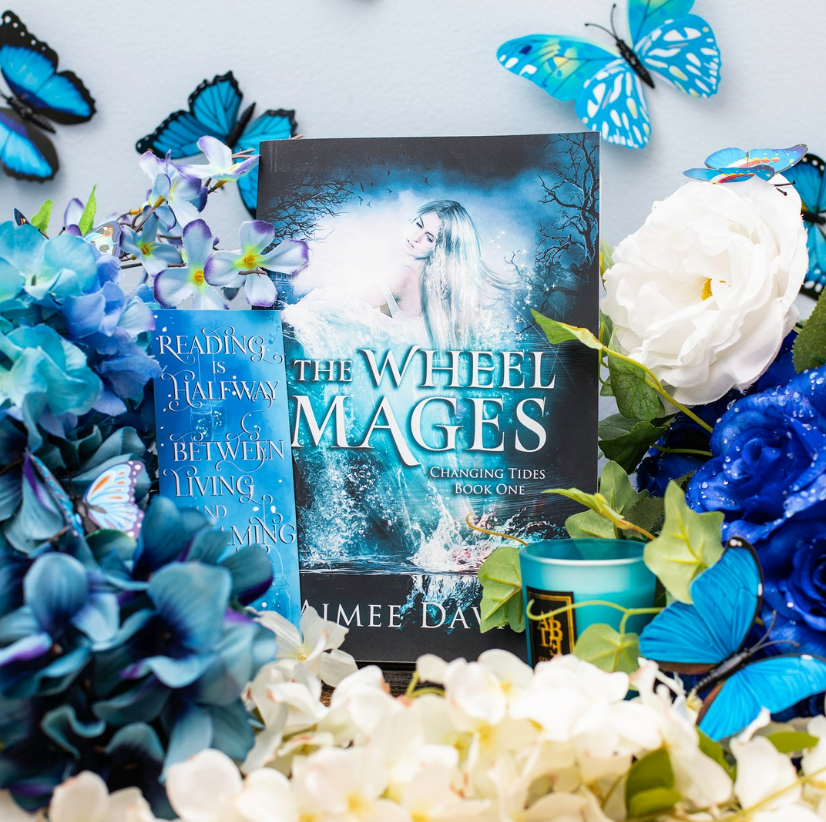


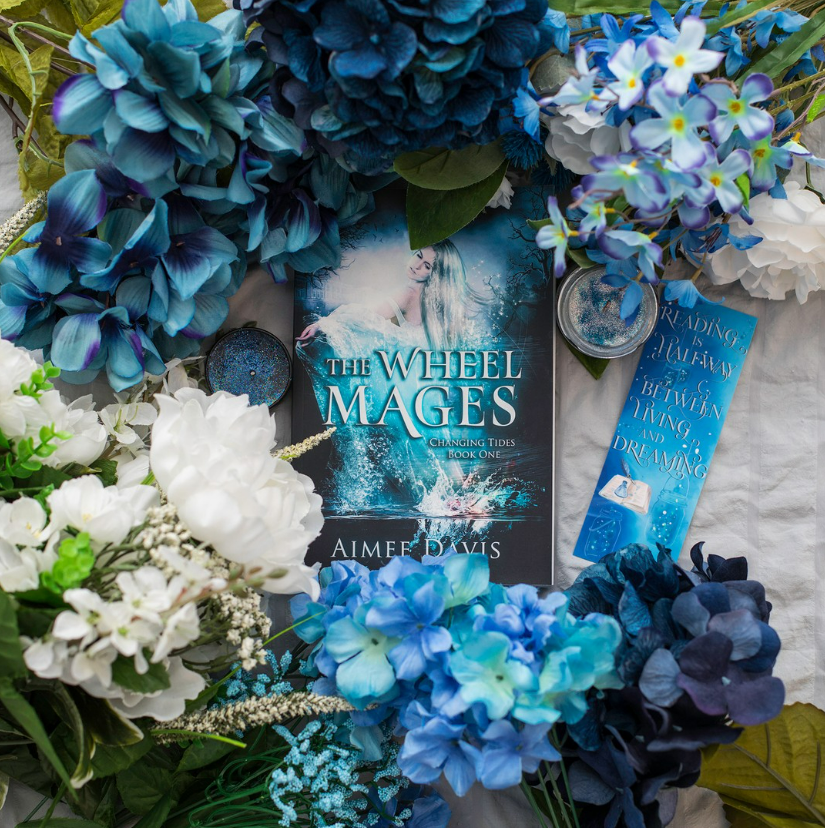





 Aimee Davis