Copyright 101: FAQ For Authors

Legal Disclaimer: I am not an attorney so nothing in this blog should be construed as legal advice. It is not comprehensive and as you’re about to see, this is a nuanced subject that is very fact intensive. If you think your copyright or other intellectual property right has been infringed upon, please consult legal counsel well versed in intellectual property right matters.


As I sit here, preparing my next book to go on submission, reading other books to compare it to in the submission packet, the Twitter discourse of the day rages in the background. Fears of idea theft, copyright infringement, whether authors should participate in pitch events because someone might “steal” something from them.

I’ve written about copyright on this blog before, but that was primarily with regard to the AI and copyright infringement debate and the deeply nuanced concept of Fair Use. What I’m now coming to realize is that many writers need a 101 guide to copyright. No shame in that. Copyright is complicated and there’s a lot of bullshit on the internet.

None of what I’m about to go through will necessarily alleviate the fear of “idea theft.” Just because something isn’t expressly illegal doesn’t mean it doesn’t or can’t happen, or that people have no reason to be afraid of it. So, I’ll preface with this: Ideas have been done and redone a thousand times over. Your story is uniquely yours not because of the idea but because of the bits of you left within it. Sometimes you hit with that story, sometimes you don’t. Sometimes it’s the right moment. Sometimes it isn’t. That doesn’t mean that someone who was inspired by your idea and wrote something similar or compared their story to yours (as I am now doing at this exact moment), did it better or worse. It was simply different. It’s been said a thousand times by a thousand people wiser and pithier than me, but if you want to survive in this industry, comparing yourself to others is a thing you must do your best every day to battle. Fears of idea theft are a good place to start.

Now, onward!

Photo of a book, Revelle by Lyssa Mia Smith, surrounded by pink, purple and blue flowers, and pink and purple butterlifes. © Aimee Davis @writingwaimee on Instagram (or will be when I post it).
One of the books I’m looking at comping for my YA about to go on sub. Also by a fellow Pitch Wars alum (and mentor during my year). 1920s vibe is not copyrightable as you’re about to learn, and I had no idea this book existed before Pitch Wars.

Copyright FAQs (For Authors)

The following FAQ is based on federal, United States copyright law, primarily the United States Copyright Act of 1976, as amended, 17 U.S.C. §, 101, et seq. While US copyright law is generally reciprocated internationally, if the US is not your home jurisdiction, this is going to be less helpful. There are also some state laws around copyright that may up the ante on the federal law that I will not be getting into here. Again, not a lawyer and even if I was, here are just some of the reasons why it’s important to discuss your specific facts with counsel in your jurisdiction.

What does copyright mean?

In general, copyright is one of several forms of intellectual property (IP) protections available to creators and inventors. Other IP protections include things like patent, trademark, and trade secret. Each IP protection covers specific things and has specific laws that cover it (including in the case of patent law, a separate bar that must be passed by practicing attorneys). Copyright is indicated using ©. This mark can be used whether the work is actually registered with the US Copyright Office or not (unlike trademark where there are separate symbols for registered and unregistered marks).

What does copyright protect?

Copyright protects original works of authorship in the following categories:

  • Literary works
  • Musical works (including lyrics)
  • Dramatic works (including music/score)
  • Pantomimes and choreographic works
  • Pictorial, graphic, or sculptural works
  • Motion pictures and other audiovisual works
  • Sound recordings
  • Architectural works

While works may fall into more than one category, for the rest of this FAQ, I will be focusing on copyright protection in general and as it relates to literary works.

What doesn’t copyright protect?

Specifically exlcuded from copyright protection are the following:

  • Ideas
  • Processes
  • Systems
  • Methods of operation
  • Concepts
  • Principles
  • Discoveries, even if they are described, explained, illustrated, or embodied in an otherwise protectable work (this means your great sci-fi tech or computer algorithm is not patentable or copyrightable because you put it in a copyrighted book)

What is a literary work?

Literary works are broadly defined as works, other than audiovisual works, expressed in words, numbers, or other verbal or numerical symbols or indicia, regardless of the nature of the material objects. This includes things like:

  • Books
  • Periodicals
  • Manuscripts
  • Phonorecords
  • Film
  • Tapes
  • Disks
  • Cards
  • Software code (see Apple Comput., Inc. v. Franklin Comput. Corp., 714 F.2d 1240, 1249 (3d Cir. 1983)).

Pertinent to literary works, the US Copyright Act also provides copyright protection to compilations, collective, and derivative works. A compilation is a new arrangement of works (whether they are copyrightable in their own right or not) that is unique and original. A collective work is a specific type of compilation consisting of preexisting copyrightable works including things like encyclopedias, periodicals, and anthologies. A derivative is a transformation or adaptation of one or more preexisting works into something new. These include things like fictionalized versions of factual accounts, movies based on books, abridgements, condensed versions, and my personal favorite, retellings.

The copyright owner of a compilation, collection, or derivative does not inherit the copyright of the original work, only gains copyright ownership over the new work. In simpler terms, this means I don’t get copyright over every Beauty & the Beast story because I’m writing a retelling. I only get protection over my retelling.

When does a work become protected by copyright?

Your work is automatically protected by law as soon as you create it as long as it is something covered under the Copyright Act and is both original (meaning it is independently created by the author and is minimally creative) and fixed (meaning it’s been written or typed somewhere). More on this original bit in a second. There are some weird situations for work produced between 1978 and 1989, but I’m going to assume most of y’all are not interested in copyright for things produced before I was born.

Reminder that a work produced solely by AI is not copyrightable. This was recently upheld by the US District Court of Columbia in Thaler v. Perlmutter, 2023 WL 5333236 (D.D.C. Aug. 18, 2023) (refusal to register a work created entirely by an AI computer system without any human involvement).

What does “original” really mean?

Under the law? Not much. Basically, for a work to be original, you have to have not copied large swaths of it word for word from something else. A work doesn’t have to new or unique to receive protection. It can be damn near identical to something else, even, so long as you did not copy it. Remember, this is COPYright we’re talking about here. Not IDEAright. And honestly, thank goodness? The amount of times I see an idea that has my heart in my throat because how did we think of the same thing and will that get to market before me and… yeah. If that could all be copyrighted a majority of us would never write again.

The work doesn’t even have to be hugely creative. “Minimal” creativity is the standard. Artistic value or merit doesn’t matter (which again, thank goodness). These are judges, after all, not art critics. The amount of effort spent is also irrelevant. If this stings to read, I know it, but let it burn and hopefully soothe because sometimes the cool slap of logic is what we all need.

Essentially, you can copyright just about anything that you wrote on your own with a minimal level of creative thought or assembly. What you cannot copyright is anything made by a robot, stolen word-for-word from another copyrighted work, and things like:

  • Short phrases and single words
  • Book titles
  • Headlines
  • Slogans
  • Typefaces

Some of these may be trademarkable, though. I’d advise (not as a lawyer but as an author who has been around awhile) not trademarking popular words or phrases in your genre and just letting other people have the same title as you. It happens. Both the same title thing and the trademarking phrases thing.

Photo of a book, The Whispering Dark, by Kelly Andrew, surrounded by purple flowers and purple butterflies. © Aimee Davis @writingwaimee on Instagram when I post it.
Photos, like this one, are also copyrightable. The ideas contained in the book depicted are not.

How long does a copyright last?

In general, copyrights for written works last for 70 years after an author’s death.

Do I keep the copyright after I get published?

It depends. If you’re self-publishing, yes. That’s one of the advantages. If you’re publishing traditionally, not usually. While there might be some indie/small presses out there that allow you to retain copyrights or joint-copyrights of some sort, the entire point of having a copyright is to give the owner of the copyright the ability to produce and distribute the copyrighted material. For ease, most traditional publishers require you to transfer your copyrights to whatever they’re publishing to them, that’s essentially what they’re buying. Your agent can help you navigate what rights you’re selling versus keeping and if you don’t have one, there are agents who will still help you negotiate a small press contract if you have questions.

If there’s an issue with you and your press before the book is published, there are often ways to get your copyrights back built into the contract or a way to negotiate for them, but after the book has been published and distributed, that’s usually the end of the road, at least for a good long while, because again, the point of copyright ownership is the distribution and sale. That is what the press bought.

I think someone stole my book, what do I do?

First ask yourself, did they really, or do they have some similar ideas or concepts as you? Even if they stole the idea, it’s not copyright infringement. Even if they have the first twenty pages of your book and a synopsis and tweaked them and wrote their own book, it’s not copyright infringement. It might be professionally yikes when it comes to ethics in my opinion, but it’s not infringement. My advice here? Not as a lawyer but as an author who has been putting her shit out there for a looooong time? Fuck ’em. Learn from this that they’re shady and move along. Only you can write the true book of your heart anyway. Your idea won’t sing to them the way it does to you. If you’re discouraged, put it away and write another thing.

Don’t be afraid to put your work out there, though. The reality is that eventually, you have to. Whether it’s self-publishing or querying or pitching or publishing with a small press or a Big Five, eventually you’re going to put it out there. That’s why you wrote it. If you didn’t, well kudos to you honestly you’re better and more humble than I will ever be. Feel free to lock it down and never put it out there again. For the rest of folks, putting things out there is a great confidence boost on some days and a real lesson on thickening your skin in others. You will need both in this brutal industry.

Now, if they word for word stole your book and you have evidence? I would say call a Real Lawyer™. (Fun fact, the ™ stands for a trademark that is not yet registered with the US Patent Office while the ® stands for a trademark that has been registered).

Happy writing! And sharing!

Photo of a book, Nightbirds, by Kate J. Armstrong, surrounded by blue flowers and blue butterflies. © Aimee Davis @writingwaimee on Instagram whenever I post there again.
Meanwhile, I’m going back to reading these lovely comps. Which definitely will not make me feel insecure about my own book’s chances. Not at all.

Not the Darling: Confessions of a Long-Time Querier

Note from Aimee: Today’s author really hit me in the gut with the story of shelving a heart book, something near and dear to my own heart because shelving my heart book was the thing that made me quit writing not once but twice, and it’s something we don’t talk about nearly enough. All of these stories are so brave, and I continue to be so humbled with everyone who shares them whether it be here or on Twitter, in comments or emails, in Discords or elsewhere. You are all leading conversations that are bringing hard topics out of the dark and into the light. A beautiful, powerful thing for your beautiful, powerful words.

Content warning: There are some (very minor) query statistics interspersed throughout this post. Emphasis on the very.


Confessions of a Long-Time Querier

By: Anonymous

When I started writing in elementary school, like many of us do, I guess I thought that becoming an author was something that just happened after you wrote a book. I was one of those “gifted kids,” constantly lauded by teachers for my incredible performance in every subject, my above-average reading and writing abilities. I see you rolling your eyes, but the point is, perfectionism and achievement were values I internalized throughout my entire childhood, and I can’t shake the feeling of failure and inadequacy even now.

Flash-forward to ten years later. I gave up on writing for a long time, because I was too focused on pursuing a career in the sciences. By the time I finished undergrad, I decided to jump back into it – 15 minutes a day to start – because literature had always been something I was passionate about. I remember talking to a fellow lab-mate, who said something along the lines of “The dream you had when you were 12 is probably your truest dream.” And for me, that was becoming an author.

I spent the next year writing a book (“New Adult Romance” – it did not have a HEA), edited it to the best of my abilities, did my research, and started sending it off to agents in 2016. I somehow ended up with two requests after a year of obstinate determination, but I’m honestly glad that first book never saw the light of day. In hindsight, it was full of telling language, the query letters (I had multiple versions) read more like synopses than an actual pitch, and every time I open the document to reread it, I cringe. On the bright side, I can certainly see my growth as a writer since then.

The next few years, I started my first professional career, and I was unwell both mentally and physically. All the while, I was working on another book, a YA Contemporary retelling of something I loved that incorporated a lot of my professional knowledge. I thought it was amazing, and for the most part, I had great beta feedback, as well as a stellar query letter. There was a big time gap between querying books one and two. I jumped into the trenches with that second book in early 2020, certain that “this was the one.” It was technically my fifth book drafted, so I fell prey to the myth of “Oh, I hear your 5th novel is usually the one that makes it!” Reader, it bombed. One request, and the feedback I received on that full made me question everything I believed about my writing. They didn’t think my craft was where it needed to be, which really hurt.

Between books two and three is where my craft really levelled up. I queried book three in 2021, a YA Contemporary with light speculative elements. Written in third past, it got a few requests, but at one point I received an R&R which suggested “this might work better in first present.” So I set off to rewrite the entire thing, and the final product sparkled. I finally found my “voice,” and ever since then, writing in first present has been my preferred POV and tense.

Here is something nobody tells you about querying. You can get close. You can have requests and significant interest from publishing professionals. You can receive encouraging emails that tell you your writing is impressive, that you have a great voice for YA, that you did an excellent job on your R&R… and then a year and a half later you can be sitting at the same desk, still unagented and unpublished.

So you think, okay, great, that one didn’t work out. I can do this again. I’m almost there. Late 2020, I quit my professional job to go back to school. During that time, I rewrote my first queried book, one I considered “the book of my heart.” I sent out a couple of queries, but it didn’t garner any interest. After getting consistent beta feedback, I decided to do another full rewrite, and this time I was confident in the final product. This is the greatest book I’ve ever writtenThis one will definitely make it. I put so much of myself in that book that I already suspected querying it would be tough. I started querying book 4 (Adult Contemporary) in Summer 2022. I did not expect to have zero interest. Zero. Not a single agent request after pouring time and effort and emotion into a book I thought was the most beautiful piece of art I’d ever written. Even the agents who considered my previous book told me “it wasn’t the right fit.” When I decided to shelve this book after exhausting my query list, I cried for a week straight. I couldn’t write a single word. I’m sorry if it sounds dramatic, but it really felt like my heart shattered into a thousand pieces.

So this is where I’m at now. Four trunked manuscripts later, over 200 agent rejections (I don’t count small presses or short story submissions, but there are probably ~100 of those too), and no concrete proof that I’ve ever written a book. Oh, and I forgot to mention that all the above books apart from the first were submitted to mentorship contests and I never got chosen for a single one.

Frankly, I don’t know where I’m going from here. I don’t know what will happen for me and my writing career. I lost hope a long time ago. I am actively working on two other WIPs, I have several more ideas beyond that, but there are no guarantees whatsoever. There isn’t some magical crystal ball that can say “well if you keep doing this for ten more years, you will have a book deal.”

I don’t really have any advice. I just hope this resonates with others. You’re not the only one struggling, despite what the algorithms seem to suggest. I’ve become so bitter and jaded by this whole process that sometimes I forget that my love of writing is how this journey started. I struggle to connect with other writers because professional jealousy devours me whole. I’m twiddling my thumbs at the starting line while everyone else has lapped me several times over. I’ve stepped back from twitter, I can’t check reddit, and so I sit in my isolated bubble and write my next manuscript and try to ignore all the things I can’t control.

Image of a frozen soap bubble (yellow in the sun) on a frozen ground.
Image added by Aimee, not the author. Image by rihaij from Pixabay.

How I Didn’t Get My Agent

2023 Update: This post was originally posted in 2019. It was the last post on my website before I shut it down. Now that I reactivated it to tell my very own How I Got My Agent story, it seemed fitting I leave this here as well, as a reminder. This is not always (or often) an easy journey.

Trigger/Content Warning: This post is sad. It is coming from a really dark place and is my mental illness speaking through me. If you’re not in a good place for that kind of dark content, please tread no further, I would never want the expression my mental health to hurt someone else’s.


You know the posts about How I Got My Agent? A lot of your favorite authors have them on their website. Most of them are stories of victory over adversity. They’re about the pains of the querying trenches all being worth it. They’re about how there’s a light at the end of the tunnel. They’re really cool and often so inspiring.

This post isn’t that.

I’ve been crying for three days. I can’t stop. Every time I think I have it under control, it starts again. My throat burns, and I’m having trouble breathing my sinuses are so choked. I can’t sleep, can’t taste the food I eat. When I go to the gym, I end up sobbing so hard I can’t keep going. The other day after another unsuccessful workout, I curled into a ball on the yoga mat I was stretching on and fell asleep. Things aren’t good with me.

I’ve been rejected. Again. From Pitch Wars, again. For the third time. It’s a new manuscript but the same results. This book was a bright and shiny beacon I was so, so proud of. But I was proud of the last one, too. And it was rejected twice from Pitch Wars and received 27 form rejections or spots of silence after that. The last manuscript didn’t receive a single request from a single agent I submitted to. It seems like this one is headed down the same path.

After I was sure I wasn’t going to be getting into Pitch Wars, I braved the querying trenches once more. I want this so bad. And this manuscript, I assured myself, is different. It’s special. It’s so much of me that someone has to see it for what it is. I have worked so fucking hard.

Not hard enough. I received my first form rejection within 24 hours of sending the first query. Here we go again.

I laid under my desk at my day job where I work as a paralegal, surrounded by smart people I really like but who I’m so jealous of because they will always be more important and make more money than me because they have a piece of paper I don’t, and I wept. And when one of my coworkers found me, I blamed my period and ran to the bathroom to continue crying alone.

This isn’t my period. I haven’t gotten my period in three years. The doctors say it’s stress.  Stress I put on myself, or the world puts on me, I can’t be sure anymore. So no, this isn’t that. This is something else. This is the raw, ripe, stinging pain of rejection after rejection after rejection with no shining hope at the end of the tunnel. I am not good enough. I will never be good enough. I am what I am and what I am is not sufficient.

No one tells you about this part. No one records it. It’s not hopeful or pretty or tied neatly with an HEA and a bright red bow at the end. It’s bad for your look to look like no one wants you. But it’s the truth. And if I had a brand, which I don’t because you need to have a product to have a brand, it would be truth.

Here’s the truth. We aren’t all going to get agents and book deals. There are far more of us than there are of them. We aren’t all going to be able to live the dream and make enough money writing to quit our day jobs and pursue our passion. So we need to have contingent dreams. If I could give any young writer advice it would be that: Have another dream. Have something else to care about. Have something else to pay your bills and sate your passion. Search for it if you have to. Demand it of yourself, even if it doesn’t come naturally, even if you’re sure the only thing you’ll ever want is to be a writer. Find. Something. Else.

For me, something else is photography and fostering kittens. Sometimes, something else can almost be my day job. But whatever it is for you, don’t let writing become who you are. Let it be part of you, but not all of you. Save some of you for you.

And when you’re down, find a way to get back up, no matter how hard it is.

Take care of yourselves,

❤ Aimee

Do Audiobooks “Count”?

Woo! Something bookish (besides a book review) to talk about two weeks in a row! Look at me!

So let’s get right down to today’s topic. Do audiobooks count as books read?

Spoiler alert: Yes. They do. And to be honest, I’m not really sure why this is an issue I keep seeing come up, but I do, and it’s starting to get me a little feisty, so here’s my take on it all.

First off, “reading” a book basically means absorbing it, understanding it. When we’re tested on reading comprehension we’re not tested on can. you. read. each. of. these. individual. words. We’re tested on can you string these words into a sentence and understand them. You don’t actually have to physically read the words with your eyes to string them into a sentence and understand them. Simply put, reading is not a physical act you need sight to complete.

Which leads me to my second point which is: it is ableist as hell to tell someone that audiobooks don’t “count” as reading. What about blind folks? Do they have to get a book in Braille for it to count, per this silly rule? Do you know how few physical books there are that are produced in Braille? And how expensive they are? A copy of The Hobbit is $72.95. Want a more recent young adult book? A copy of Ash Princess is $97.95. Game of Thrones$239.95. Audiobooks are expensive, too, don’t get me wrong, but they’re more widely available, and there are many more library options.

It’s not only blind people who this nonsense excludes, either. “Not counting” audiobooks also hurts neurodiverse people. Audiobooks are often used as an alternative method of teaching for kids (and adults) whose brains aren’t neurotypical. Just because some people mix letters up doesn’t mean they’re not able to comprehend stories and information. It doesn’t mean they don’t count.

I think this is really why this issue fires me up, to be perfectly honest. Because by saying audiobooks don’t “count,” it feels like people are saying those for whom audiobooks are the only viable (or affordable or accessible) option don’t “count” when they in fact do. Very much. They’re just as much a part of the literary community as everyone else. I want them as part of my audience. I want everyone as part of my audience. I want that tent to be as wide and welcoming as possible. I don’t care how you absorb stories; I only care that you do.

Ableism is point one and the most important, but point two is time. Some people don’t have time to read as much as they’d like (or at all). Single parents, workaholic types, people having to hold multiple jobs, people doing school and work, those with long commutes, the people who might make up this category are endless. As you get older and take on more and more responsibilities, you have less and less free time. And what free time you have is precious. Maybe you’re trying to get that side hustle going. Maybe you need to spend more time with your partner or children. Maybe you’re just too damn tired from struggling that you can’t make the words turn into sentences at the end of a sixteen-hour day. Audiobooks give you back a little bit of free time because you can read and do other things. I listen to audiobooks on my long commute, at the gym, while I’m cooking dinner, taking the dog on a walk, cleaning my house, etc. All things that need to happen, all things that cut into the time I have to read a physical book. To have the luxury to have so much free time that you can choose not to “count” audiobooks is a privilege, plain and simple.

Final point on why audiobooks definitely count as books read: because not counting them is silly, really. I recently listened to Furyborn by Claire Legrand on audiobook. I wasn’t taken with the narrator, so I read the sequel, Kingsbane, in hardback. Shockingly, I didn’t have to go back and read Furyborn in hardback to understand Kingsbane. I simply picked up the book, opened the cover, and started to read. This is because I’d read it by listening to it. I mean, this is not that complicated.

So, at the end of the day, this is my word problem: According to Goodreads, Aimee has read 55 books this year. If 27 of them were audiobooks, how many books has Aimee read this year?

Answer: Aimee has read 55 books this year.

As always, be kind to yourself, and keep at those Goodreads goals, however you reach them!

❤ Aimee

Mamas Last Hug
Bookstagram photograph from @writingwaimee of audiobook version of Mama’s Last Hug by Frans de Waal surrounded by red butterflies.

Agency

When we talk about “agency” in literature, we are usually talking about the protagonist of the story: (1) having the ability to act in his/her/their environment, then; (2) acting.

Simple, right?

Well, as it turns out, not for me.

Agency is something I always have to write into my manuscripts after multiple drafts. My critique partners and beta readers always come back to me telling me my characters don’t have enough (or any) agency. The character is supposed to move the plot, not the other way around. It’s a concept taught in every 101 creative writing class.

Yet… it always eludes me.

Struggling with agency is a common problem for a lot of writers, but recently, I’ve been thinking about why it’s such a reoccurring problem for me. You see, it’s not one character or one book or one series that lacks agency for me. It’s all of them. Even though I should know better. Even though I write thinking this time I’m not going to have to edit agency into my character. Thinking this time I’m going to get it right. But I never do, and I have to wonder why.

I think the answer comes from another definition.

Complex Post Traumatic Stress Disorder is a condition that results from chronic or long-term exposure to trauma over which a victim has little or no control and from which there is little or no hope of escape

[Emphasis added]. Source.

I’ve written about my C-PTSD and how it relates to my reading and writing experiences before, but though I’ve previously connected the two things, I never made this particular connection.

It’s hard for me to write agency, because my mind is wired to believe I have none.

My C-PTSD stems from childhood abuse. That’s all I’m really willing to share about that out here, exposed on the internet, but for purposes of this post, I think it’s important that it’s understood this trauma occurred when I was very young and went on for a long, long time. It shaped the way my brain behaves. Seriously. Physical changes in my brain happened and those things impact my worldview. Deeply.

Though I’m older now, and I have agency, and I go to therapy to unravel and unpack all this trauma, I still struggle. I have an extremely difficult time making decisions. I get overwhelmed easily. When I’m in a dangerous or even mildly upsetting situation, I freeze or disassociate. I have the ability to control my environment, but I struggle to do so. It’s uncomfortable, and it makes me nauseous and anxious.

Because deep down, I don’t understand agency. Agency is, at its root, having some kind of control or influence over your life situation. Something I never had. And if I’m honest with myself, it scares me.

My reactions to the world taking hold of the reins for me are much better. When someone dies, for instance, I’m the most level-headed person in the room. Not being in control is something I’m intimately familiar with and have learned to navigate beautifully. Which is… different.

I started to write unhealthy there, then changed it. Because maybe it’s not unhealthy. Maybe it’s simply different. Maybe it’s how I operate. And maybe that’s okay.

And maybe this is all to say that while I believe agency is important (and I do write it into my manuscripts where it’s needed), lack of agency might be just as important with some characters, and is something I would love to see explored further.

Can you tell a compelling story if your character has no agency? And how should we even define agency? Can’t agency be taking actions to survive, even if they’re not active actions? What if agency, for some characters, is not acting but freezing? What if agency is not striking back, but appeasing? What if agency is looking at a hopeless situation from which there is no escape, but hoping for one anyway?

What if agency could be rewritten?

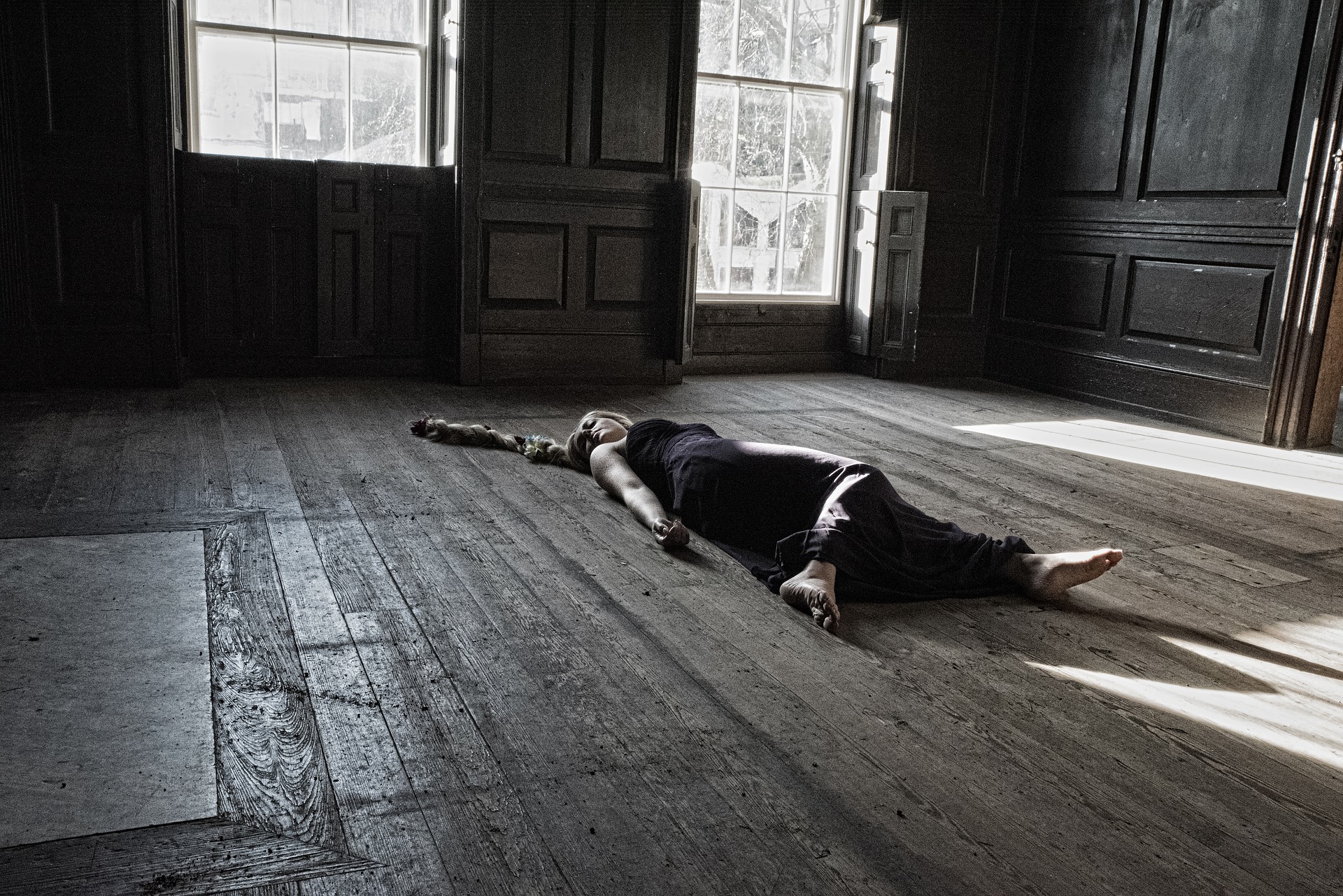
indoors-3278291_1920
Even Rapunzel, locked in her tower, had the agency to let down her hair. But her prince had to find her first. What if he never came? Would her story still be worth telling? Photo courtesy: https://pixabay.com/en/users/Emily_WillsPhotography-8096214/

❤ Always,

Aimee